|
If you read NEXT, then you know I love spending time in an art gallery. I like being surrounded by the contents of other people’s imaginations.
That said, I understand why some people find them tiring — including me, sometimes.
I saw an excellent pointillism exhibition at the National Gallery in London last fall and at first I was like, “Wow, cool, look at how many different colours it took to compose this woman’s hand!” and then approximately an hour in, I was like, “Right, lotta dots. Gift shop?”
Advertisement

People don’t actually spend a lot of time looking at art in a museum setting: on average, it’s about 10 to 13 seconds per work. Sounds a lot like scrolling Instagram, doesn’t it?
But, as I argued in this piece, all art is immersive if you give it time to be. And there’s no better way to shake the cobwebs from your brain or get away from your phone than spending some time with art. The real stuff. Made by humans.
Last week, I had the immense pleasure of writing about Ningiukulu Teevee’s current solo exhibition at WAG-Qaumajuq. She is one of my favourite contemporary Inuit artists; every piece of hers will make you stop and go “her mind!”
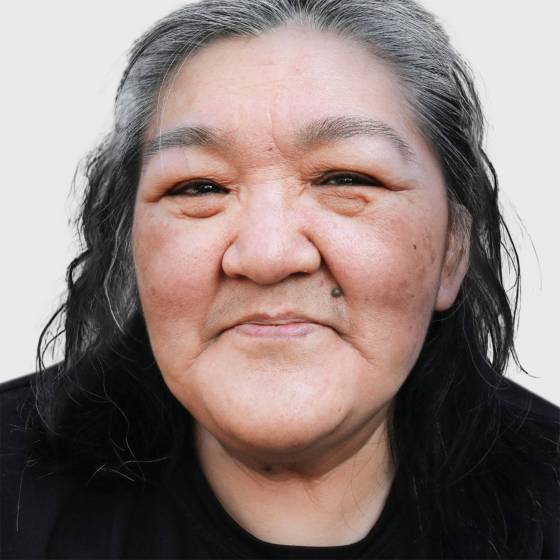
Artist Ningiukulu Teevee (Supplied)
She is a storyteller, rendering the oral tales she heard as a child growing up in Kinngait, Nunavut into bold, graphic drawings and prints.
In particular, Teevee likes to revisit the story of the Owl and the Raven; in fact, some of her Owl and Raven imagery is currently being projected onto the iconic sails of the Sydney Opera House.
The Owl and the Raven is a well-known legend about how the raven came to be black and how the snowy owl came to be spotted. It is depicted a lot in Inuit art, but, while the broad strokes of the story might be familiar, it’s never really told the same way.
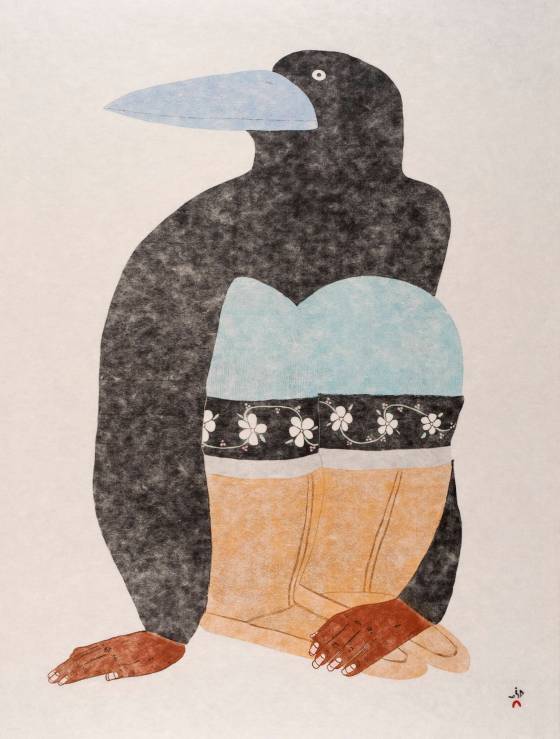
No Turning Back by Ningiukulu Teevee (Supplied)
The gist is this: Raven is using soot from an oil lamp to paint beautiful spots on Owl. But when it’s time to return the favour, Raven will not sit still. Owl finally gets frustrated with Raven, and dumps the entire pot of soot over Raven’s head. And that’s how the Raven came to be black.
In addition to Teevee’s many tellings, I absolutely love the 1973 National Film Board stop-motion short using seal fur puppets. In that one, Raven won’t stop dancing in the new pair of kamiit (sealskin boots) Owl has gifted him for painting him so well.
(There’s an earlier short from 1971 that tells the story of the Owl and the Lemming that’s also worth a watch: Ookpik, a very hungry owl, catches a lemming to feed his family but the lemming convinces Ookpik to dance and distracts him with compliments. His wife — called Mrs. Oopik, naturally — admonishes him when she sees that dinner has escaped. “You furry idiot. Maybe that will teach you to listen to flatterers. Dumb owl.”)
But my favourite version of the Owl and the Raven is the late Omalluq Oshutsiaq’s, who drew them as playful, laughing women, their bird alter egos appearing as shadows on the wall behind them as Owl paints Raven’s body. Raven is still squirmy in this version, spattering Owl with spots.
There are so many different ways to tell a story, so many different directions our imaginations can take us. That sounds simple or obvious, maybe, but in an era in which AI is dulling our creativity and making everything sound and look the same, I’m grateful for the reminder.
|