|
In the last few weeks, a host of videos — some live-action, some animated — portraying various workplace situations have popped up on my social media feeds.
The acting is horrible, the animation is crude and often, the scenarios beggar belief. Or do they?
Advertisement

These videos are formulaic to the point of being the Hallmark Movies of workplace instruction videos: they start with a toxic manager making a monumental miscalculation — that calling in sick is grounds for dismissal, that a person of colour can’t afford to eat at a restaurant, or so on — while the staff members or customers stand up for their rights.
The videos end with the guilty party getting the necessary amount of comeuppance: demoted or fired because firing the employee meant losing a major account or being denied a lease renewal because the diner wasn’t just of colour, but also the new landlord.
Yet, behind the over-the-top scenarios, bad acting and amateurish animation lie some truths: toxic managers are bad for business. Assumptions can be catastrophic.
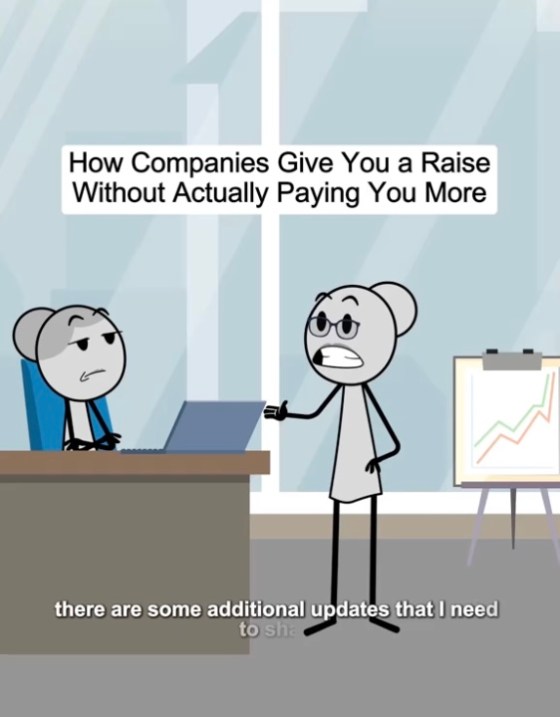
Animated and live-action videos offer insight into staff frustrations. (Lucky Animation / Facebook)
Managing takes skill, and it’s not necessarily something someone learns while “paying their dues.” It takes compassion, it takes an understanding of workplace regulations and, perhaps most importantly, it takes understanding that even with great employees, work is work and life is life.
Good managers can expect high-level performance and respect work-life balance. The two aren’t mutually exclusive, they’re complementary.
The failure, for many companies, is a lack of succession planning. If I’m being honest, the five companies where I’ve worked were all reactionary rather than proactive. Someone leaves and the reaction borders on panic.
Companies with successful planning don’t need to panic: they have a replacement in waiting.
What does it take? It takes managers working on the business rather than in it. Micromanaging is damaging in so many ways: staff are left feeling they can’t be trusted, get fatigue when every decision is questioned or overturned and, eventually, just check out. Keep depositing the money. Thanks.
Most importantly, managers who don’t take the time to ponder the bigger picture are often lost inside it.
Instead of developing staff skillsets, helping staff map out careers and facilitating progression, they’re checking the machinists’ tools for sharpness, sweating over every detail no matter how inconsequential or insisting that if you’re healthy enough to see a doctor to get a sick note, you’re healthy enough to work. (Yeah, as if the rest of us want to catch whatever you’ve got…)
The production quality of most of the videos I’ve watched leave much to be desired. The scenarios may be apocryphal. Yet there are kernels of truth behind many of the central messages. If anything, the part that might be most incredible are the managers actually paying the price for bad decisions.
Perhaps the main message behind them all is the golden rule. Treat staff as you’d want to be treated if the roles were reversed.
|