Biidaajimowin
Winnipeg Free Press Logo
 

Greetings from Iqaluit

Ai! Haluuqagin! Aatituu! Atelihai! Ainngai! Greetings! Bonjour! I’m in Iqaluit this week speaking at the Inuit Educators Association Conference and “beautiful” doesn’t begin to describe the power and life of this place.

I’ve spoken about my love of Canada’s North before, but I’d never been to Nunavut until this week.

This place is fascinating. A former seasonal fish-harvesting site for Inuit, Iqaluit (formerly known as Frobisher Bay) was settled as a permanent site during the Second World War by the United States Army Air Forces.

The air force called this place “Crystal Two” and used it as one of the stopping places on the “Crimson Route” to ferry aircraft to Europe. The site was also later an essential part of the “early warning” system in the event Soviet missiles headed towards the U.S.

In 1944, the Canadian government purchased the base from the Americans for $6.8 million and — while there are still some soldiers who operate radar and other equipment here — decades of debates have taken place amongst Canadian politicians over whether or not to make this a permanent Canadian armed forces base.

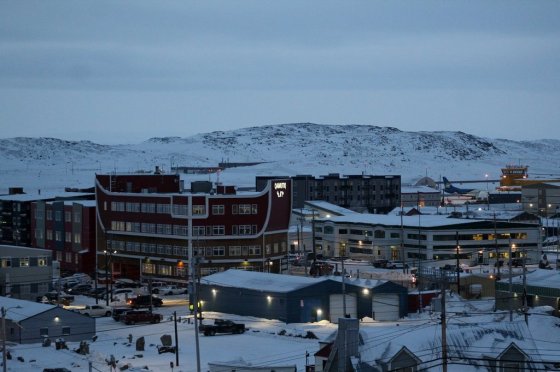
Downtown Iqaluit, Nunavut. (Emma Tranter / The Canadian Press files)

Downtown Iqaluit, Nunavut. (Emma Tranter / The Canadian Press files)

A large part of the concern about doing anything in Iqaluit is its population has exploded in the past 25 years, creating a massive housing crisis.

At the same time, Nunavut’s economy hasn’t kept pace with employment demands and the high cost of living.

While nearly 60 per cent of the population in Nunavut relies on public housing, Iqaluit has a list of nearly 3,300 people waiting for homes — a 10-year wait — which results in nearly 40 per cent of homes being overcrowded and overused.

Add in the high costs for construction, limited land and maintenance issues that require materials from the south and you have “the worst housing crisis in Canada.”

One solution is prefab housing, sent on ships from provinces such as Ontario and — you guessed it — countries such as China.

I, in fact, am staying in a hotel that was prefabricated in China and assembled here in Iqaluit.

At the same time, the culture, language and pride of this community is second to none. I checked off most of this list of the top 10 things to do in Iqaluit, with my favourite being the Nunatta Sunakkutaangit Museum and Unikkaarvik Visitor Centre.

Most things have to be completed by 4 p.m. here as it’s dark by then. Dawn hits around 7 a.m.

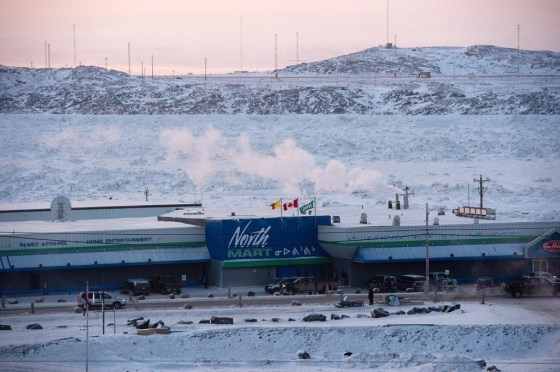
A grocery store is pictured in Iqaluit. (Sean Kilpatrick / The Canadian Press files)

A grocery store is pictured in Iqaluit. (Sean Kilpatrick / The Canadian Press files)

I have found no shortage of things to do; I’ve visited the Nunavut legislature and sat in the Speaker’s Chair, eaten Arctic char and a caribou breakfast wrap, and even bought myself a locally caught sealskin from a local hunter I met in a coffee shop.

The richness of the people and history in this place is immersive and growing. I encourage everyone to check it out.

Iqaluit, I’ll be back.


Niigaan Sinclair, Columnist


Advertisement


FIVE STORIES ON TURTLE ISLAND

It was another beautiful and dynamic Louis Riel Day this past Monday as Manitobans celebrated their first premier.

Since 2007 and the first official Louis Riel Day, hundreds of thousands of citizens and 96,000 Métis celebrate Manitoba’s first leader with jigging, storytelling, and events throughout the city and province.

As my colleague Tom Brodbeck wrote last year, Riel worked all of his life for all Manitobans and this is a day for everyone.

Here’s to keeping it Riel!

Offerings of tobacco, sage, bread and coffee were placed at the base of the Riel monument on Louis Riel Day Feb. 17. (John Woods / Free Press)

Offerings of tobacco, sage, bread and coffee were placed at the base of the Riel monument on Louis Riel Day Feb. 17. (John Woods / Free Press)


When the Reverend Jesse Jackson died Feb. 17, everyone knew about his ardent, lifelong fight for civil rights for African Americans; what is lesser known is his career-long battle for Native American rights.

Jackson constantly identified Indigenous struggles as a part of his “Rainbow Coalition,” such as in this remarkable speech at the 1984 Democratic party convention (jump to 17:15 to hear it!).

Some of Jackson’s notable efforts to support Indigenous struggles include allying with the Colorado River Native Nations Alliance against nuclear waste dumping in 1997 and joining with activists at the Standing Rock Sioux Reservation in 2016 (which actor Mark Ruffalo reminded the world about this week).
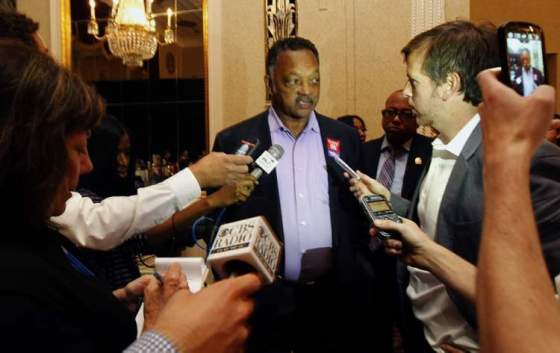
Reverend Jesse Jackson (Gary Porter / Tribune Media archives)

Reverend Jesse Jackson (Gary Porter / Tribune Media archives)

Former U.S. Secretary of the Interior Deb Haaland, who is Laguna Pueblo, also shared on social media that Jackson personally reached out to her to offer support around missing and murdered Indigenous people.

Jackson didn’t just fight for Indigenous peoples in the United States, but on this side of the medicine line, too, such as when he tried to intervene during the 1990 Mohawk resistance at Oka in Québec.

It wasn’t only the United States that lost a champion of humanity this week; Indigenous nations did, too.


The Indigenous-run Yellowhead Institute published this report recently titled The Rematriation of Indigenous Place Names and it’s creating quite a stir.

It has reminded Canadians of the vitality of Indigenous names in understanding the landscape in which we all live.

Returning traditional names and renaming public sites with Indigenous names happens every week in Canada and this public report is worth a read as to why. Check it out.


A wave of fake, AI-generated images and videos of Indigenous “elders”offering sage-like sayings and “knowledge” has started popping up on social media, according to the Indigenous-run online platform Indigenous TV.

At the same time, Indigenous creators online have been using AI to help revive Indigenous languages and preserve elders’ knowledge.

Meanwhile, this Indigenous business operator wants to harness AI to inspire Indigenous economic development.

My take: It sounds like one hand doesn’t know what the other hand is doing.


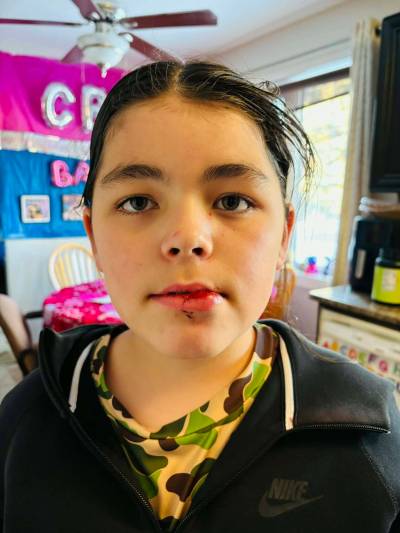
There is a situation worth watching in Steinbach, where a mother has alleged that her Indigenous son was bullied for his long hair and eventually beaten at his middle school by two non-Indigenous boys who received “tap on the hand” punishments.

The boy, who is 11, now feels unsafe going to school.

As someone who was bullied by a non-Indigenous young man and beaten in a bathroom at Ashern Central School when I was 11 — and the perpetrator received no punishment at all — these kinds of attacks are something very close to my heart.

Hanover School Division, which administrates Stony Brook School — where the alleged assault happened — says “the matter remains under active review.”


IN PICTURES
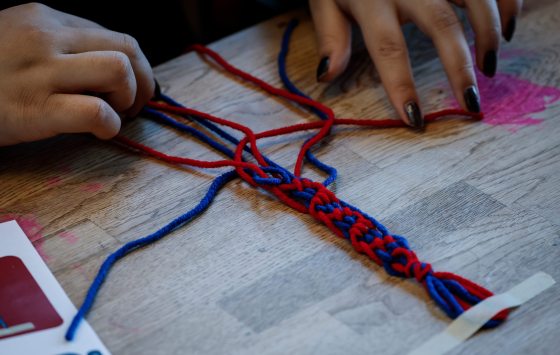
A person practices her sash-weaving skills as people take in Riel Day events at the Forks Feb. 16. (John Woods / Free Press)
A person practices her sash-weaving skills as people take in Riel Day events at the Forks Feb. 16. (John Woods / Free Press)

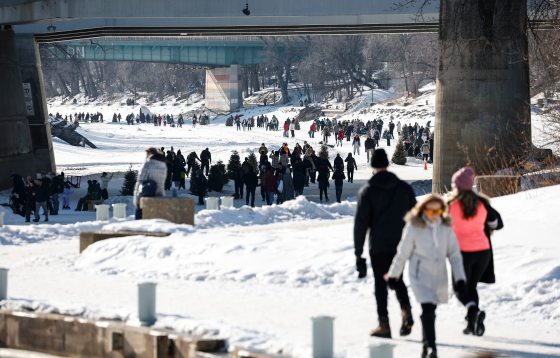
People take in Riel Day events at the Forks Feb. 16. (John Woods / Free Press)

People take in Riel Day events at the Forks Feb. 16. (John Woods / Free Press)

RECONCILI-ACTION OF THE WEEK

Every week I highlight an action, moment, or milestone forwarding reconciliation, illustrating how far Canada has come — and how far the country has yet to go.

This week’s reconcili-action is for everyone who is donating books to the Treaty One book drive for Berens River First Nation, which lost their only school in a terrible fire three weeks ago.

Books are now being accepted and shipments have already been made to help the community, which is now picking up the pieces to help students complete kindergarten to Grade 9.

Anyone with extra children’s books, teen novels, novels, poetry and graphic novels (and any Indigenous literature at all) can drop them off at the Treaty One offices or at individual schools, or at the Louis Riel School Division offices.

This is not the only recent fire to public infrastructure in Berens River; the community’s hockey arena burned down in January 2025 and has not yet been rebuilt.

This is also not the first time Winnipeggers have helped their northern relatives to rebuild their lives after school fires, so let’s celebrate I Love to Read month by helping out!


Advertisement


WHAT I'VE BEEN WORKING ON

Niigaan Sinclair:

Comparing the fatal shootings of Eishia Hudson and Renée Good

It’s very hard not to see very specific similarities. In Minneapolis on Jan. 7, Immigration and Customs Enforcement officer Jonathon Ross shot and killed Renée Good, a 37-year-old mother of three, ... Read More


LOCAL NEWS

Svjetlana Mlinarevic:

Mother says son, 11, bullied, beaten for being Indigenous

The mother of an 11-year-old Indigenous boy says he was the victim of a racially motivated beating by two boys from his class at Stonybrook Middle School in Steinbach. Read More


Chris Kitching:

Tired of waiting, First Nation buys $8M worth of generators

Mathias Colomb chief asks province, feds to ‘cost-share my investment’ Read More


Scott Billeck:

Homelessness a humanitarian crisis, Rattray says

‘We need to do more’: new executive director of End Homelessness Winnipeg hopes to use extensive resumé to fight for disadvantaged Read More


Kevin Rollason:

Bill aims to give MMF self-government treaty with Canada

The Manitoba Métis Federation is one step closer to having a self-government treaty with the federal government. Federal Crown-Indigenous Relations Minister Rebecca Alty introduced Bill C-21 Thursd... Read More


Malak Abas:

‘Nuisance’ protest bylaw stalled after hundreds object

A bylaw that proposed a ban on “nuisance” protests within 100 metres of certain locations has been shelved indefinitely after intense public pushback and and a protest that drew hundreds to city hall Tuesday. Read More


Dean Pritchard:

$5 annuities paid to Treaty 1 members worthless, lawyer tells court

First Nations seek billions in compensation in relation to 1871 agreement Read More


Maggie Macintosh:

Online learning offered for Indigenous languages

Inner-city students and their families are getting more options and flexibility to study Indigenous languages. The Winnipeg School Division is testing out a new model to reach more residents with i... Read More


ARTS & LIFE

Ariel Gordon:

Freeze, please

Relationship with city’s icy waterways warms many a Winnipegger’s heart Read More


FROM FURTHER AFIELD


Share:


Download our News Break app