FIVE STORIES ON TURTLE ISLAND
1. The federal office created to save Indigenous languages and support Indigenous language revitalization is under federal audit after doing little to fund programs over five years and allegedly spending nearly $10 million on one four-day conference in Ottawa.
Created in 2019 with the Indigenous Languages Act, the Office of the Commissioner of Indigenous Languages (OCIL) is headed by commissioner Ronald Ignace, whose five-year term ends next month.
It is supposed to promote research into Indigenous language revitalization and support grassroots efforts to teach, record and create fluency in Indigenous languages.
The conference in question was WAVES 2025, a Global Indigenous Languages Summit held in August 2025 which featured performances, panels and workshops for more than 2,000 attendees from roughly 20 countries.
2. I just got back from Montreal and witnessed an international and independent panel of human-rights experts conclude not only has Canada committed genocide against Indigenous peoples historically, but that it is currently doing so as well.
A grassroots social justice group created in 1979 called the Permanent Peoples’ Tribunal — featuring seven international judges governed by the 1976 Universal Declaration of Peoples’ Rights who investigate human-rights abuses and state violence — held hearings all this past week where evidence, witnesses and testimonies were presented on Canada’s historic and ongoing violence against Indigenous populations.
The interim judgement, presented by three tribunal members — who are writing a report to be released in the fall — is that Canada bears legal, moral and political responsibility for its “systemic policy of assimilation, dispossession and destruction” that has led to “enforced disappearances, torture, sexual violence, enslavement, persecution and other inhumane omissions, such as failure to provide safe and healthy living conditions, systematically applied to Indigenous children, women and families” and altogether constitutes “crimes against humanity, according to international law.”
3. As a part of the federal government’s Spring Economic Update, a nearly $23-million investment was announced last week intended to address four of the Truth and Reconciliation Commission’s calls to action and two of the Murdered and Missing Indigenous Women and Girls Inquiry calls for justice by expanding access to community-designed, culturally relevant sport and recreation programs across First Nations, Inuit and Métis communities.
Allocated by the Sport for Social Development in Indigenous Communities program and focused on supporting provincial Indigenous sport organizations, individual First Nations, Inuit and Métis governments, and grassroots groups such as the Winnipeg Aboriginal Sport and Recreation Association Inc., the funding is intended to “prioritize culturally relevant and community-designed programming to empower Indigenous people, including youth, women, girls, 2SLGBTQI+ individuals and persons with disabilities.”
4. There was an interesting gathering in Ontario this week: residential school survivors and historians seeking to have former residential school locations considered for preservation under international standards as UNESCO World Heritage Sites.
The United Nations Educational, Scientific and Cultural Organization (UNESCO) recognizes and advocates for 1248 world cultural and natural heritage sites of outstanding, universal and human value (see list here).
While there are 22 official UNESCO World Heritage Site designations in Canada — none of which recognize residential schools — the documents of the Truth and Reconciliation Commission housed at the National Centre for Truth and Reconciliation located at the University of Manitoba were formally inscribed into the international UNESCO Memory of the World Register in 2023.
Residential school survivors, all last week at a National Day of Action, continue to encourage Canadians not to reduce efforts on reconciliation despite misinformation and miseducation surrounding continuing searches of potential unmarked graves at residential school sites in Canada.
5. A huge conflict has emerged in Thunder Bay this past week after Nishnawbe Aski Nation Grand Chief Alvin Fidler publicly called out Thunder Bay Police Service (TBPS) for failing to listen to Indigenous peoples offering to help in searches for missing Indigenous peoples, resulting in volunteers and family members searching and finding them on their own.
“The public needs to understand what actually happens when our members go missing. And they need to understand how our Indigenous searchers are proving to be more effective than the police,” Fiddler said on social media.
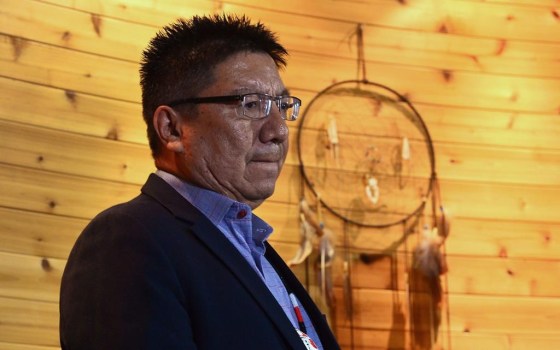
Nishnawbe Aski Nation Grand Chief Alvin Fiddler (Sean Kilpatrick / The Canadian Press files)
In a statement, TBPS police chief Darcy Fleury says Fiddler’s comments “do not accurately reflect the Thunder Bay Police Service’s efforts or commitment.”
In 2018, the late judge Murray Sinclair (my father) led an investigation into the TBPS, finding “the Indigenous community has lost its confidence in the ability and, in many cases, the commitment of the TBPS to protect them,” and made 32 recommendations for change — most of which have yet to be acted upon.
IN PICTURES
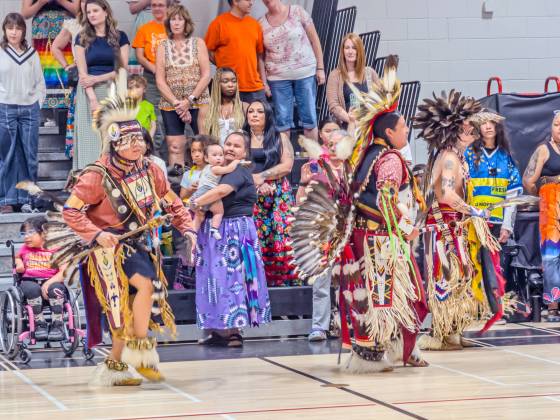
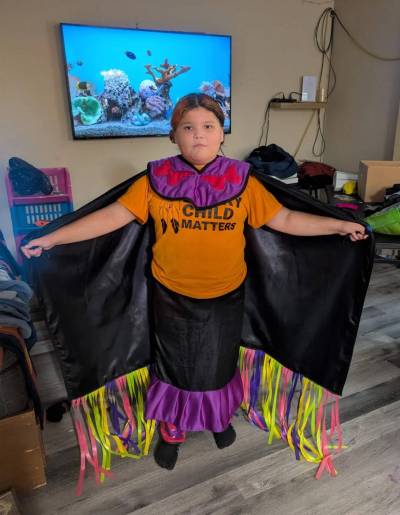
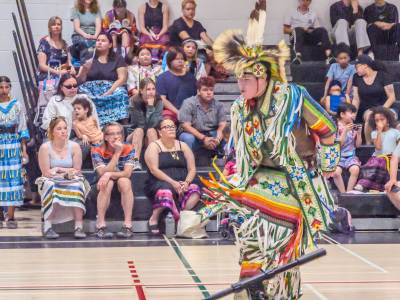
Students, school staff and families gathered at Fort Richmond Collegiate on May 27 for Pembina Trails School Division’s first powwow. (Supplied)
RECONCILI-ACTION OF THE WEEK
Every week I highlight an action, moment, or milestone forwarding reconciliation, illustrating how far Canada has come — and how far the country has yet to go.
The reconciliaction of the week is the team of seventeen leaders from Canada’s private and public institutions who were selected by the Governor General Leadership Conference to spend 10 days in Manitoba and study what leadership looks like here.
The Conference is sponsored by the Rideau Hall Foundation and began last week in Québec City with a meeting and training featuring speakers such as Toronto media personality Cameron Bailey, Inuit Tapiriit Kanatami president Natan Obed, former Ontario premier Bob Rae and some other guy you may know.
Starting in Steinbach and heading to Winnipeg to visit representatives at the National Centre for Truth and Reconciliation and the Canadian Museum for Human Rights before ending their tour in Churchill, the delegates look at “sustainable prosperity” according to economic, ethical, security and Indigenous rights perspectives and offer a final report in Ottawa next week alongside 15 other teams who studied the country from coast to coast to coast.
|