Biidaajimowin
Winnipeg Free Press Logo
 

Hudson’s Bay collapses, but its colonial legacy lives on

In 1665, the year the Bubonic plague hit London, two French explorers and entrepreneurs pitched an idea for a fur-trading business in North America to King Charles II.

Familiar with the rich and intricate networks of the Indigenous fur trade in North America, Pierre-Esprit Radisson and Médard Chouart, Sieur des Groseilliers convinced Charles to fund the operation on the argument the enterprise would lead to profit and economic recovery for England.

So, in 1670, the charter for the Hudson Bay Company was granted, with Charles claiming most of the lands of what would become northern Quebec, northern Ontario, all of Manitoba and parts of Saskatchewan, Alberta and Nunavut (the areas that flowed into Hudson Bay).

He called this territory Rupertsland, after the King’s cousin, Prince Rupert, who acted as governor.

Rupert then used the profits he had gained from the slavery of Africans in the southern colonies to found the Hudson Bay Company (HBC), which was given “the sole Trade and Commerce” over Rupertsland.

With a trading monopoly, the HBC commercialized the fur trade, helped create the economic powerhouse Red River Colony, and enabled traders such as Lord Selkirk to form treaty with Chief Peguis in 1817, creating non-Indigenous settlement on the Red River and — eventually — the city of Winnipeg.
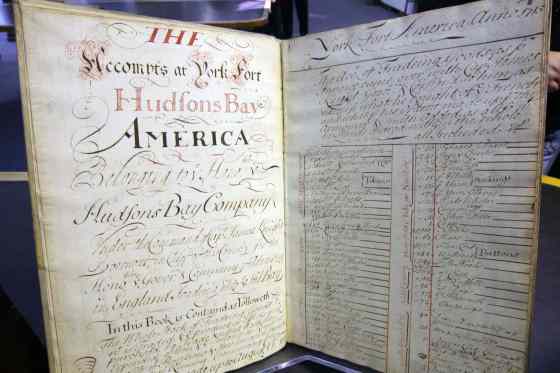
A York Factory accounting book, circa 1714-1715, part of the Hudson's Bay Company collection at Manitoba Archives. (Joe Bryksa / Free Press files)

A York Factory accounting book, circa 1714-1715, part of the Hudson’s Bay Company collection at Manitoba Archives. (Joe Bryksa / Free Press files)

In history books, the HBC is given prominence as the primary force that built the fur trade in the west and mapped the country — but none of this would have been possible without the labour, organization and leadership of Indigenous communities, traders, and their economies.

Simply put, the HBC may get the accolades, but Indigenous peoples did most of the work.

In return, the HBC gave Indigenous communities a few jobs, access to European goods, and the ability to learn valuable languages and skills.

HBC employees also created competition, brought colonizing attitudes and practices, and introduced devastating diseases like smallpox into Indigenous lives.

In other words, Indigenous peoples may have benefited somewhat from interactions with the HBC — but they paid far more than they earned.

On its website, HBC officials admit the company “relied on Indigenous expertise for general survival, surveying, trapping, translating, kinship and much more” to build the company, but when it came to sharing profits and the land (particularly when transferring Rupertsland to Canada in 1870), everything was done “without consulting First Nations or Métis inhabitants.”

While the situation was complicated, the HBC was thoroughly involved with exploiting Indigenous peoples, dispossessing Indigenous peoples of lands and livelihoods, and participating in the colonization of lands now known as Canada.

But don’t just take it from me.

Writing about the HBC’s 300th anniversary, National Indian Brotherhood Chief George Manuel said: “The company was responsible for the misery, deprivation and exploitation of Canada’s Indigenous peoples.”

This week, HBC officials announced that the U.S.-owned Canadian business is broke and needs creditor protection, with plans to liquidate its entire business and close 80 stores across Canada by June 15.

More than 9,000 jobs will be eliminated, and HBC is said to owe $950 million to creditors such as trucking companies, suppliers and leaseholders. In Manitoba, more than $2 million is currently owed to local business owners, many of them small operators.

Seems the HBC didn’t just exploit Indigenous communities.

In 2020, just before HBC abandoned its goliath downtown Winnipeg building — trading it to the Southern Chiefs Organization, which has plans for a massive redevelopmentI wrote this about HBC going out of business:

“So, this is how colonization ends. The people who profit the most take all they can from the land and people within it, and then quietly leave when there’s nothing left to take. Soon, all that will be left is an empty, lifeless pile of plaster and metal that will cost millions to repair or remove for those who actually live here.”

HBC is a massive real estate holding company, with nearly $9 billion in land assets. (Chris Young / The Canadian Press)

HBC is a massive real estate holding company, with nearly $9 billion in land assets. (Chris Young / The Canadian Press)

As I pointed out in that piece, though, HBC hasn’t been a real estate empire for a long time. It is a massive real estate holding company, with nearly $9 billion in land assets.

Just as King Charles II gave Prince Rupert lands that were not his to give, HBC holds deeds to billions of dollars of global property (much within former Rupertsland itself) and there are now questions about the ethics of selling these spaces and territories.

Like most bankruptcies, these stolen lands will probably be sold to the highest bidder at a cheap price.

So, this is not how colonization ends but perhaps how it continues, with new landholders and Indigenous peoples yet again locked out in the cold — or, rather, locked out of the fort.

How fitting for a company that started during a plague.


Niigaan Sinclair, Columnist


Advertisement

The Wrap sent weekday evenings.
 

FIVE STORIES ON TURTLE ISLAND

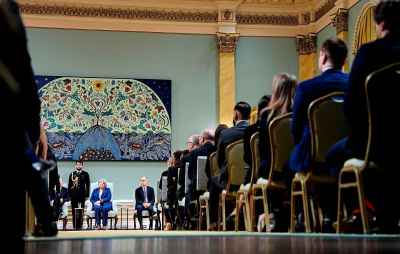
New Canadian Prime Minister Mark Carney announced his pared-down cabinet this past week, with the two faces in charge of Indigenous affairs in Canada remaining in their posts — and one receiving more duties.

Even after receiving a great deal of criticism for her department’s handling of the Jordan’s Principle program, Patty Hajdu remained minister of Indigenous Services Canada while Gary Anandasangaree held onto the ministry of Crown-Indigenous Relations.

Anandasangaree however became arguably the busiest person in cabinet as he received two other, somewhat related posts: Northern Affairs and the Justice Minister and Attorney General of Canada.

With the retirement of St. Boniface MP and well-known Métis politician Dan Vandal, however, there are now no Indigenous faces in the federal Liberal cabinet.

Simply put, the federal Liberals need an infusion of Indigenous talent in their ranks to support Carney if the progressive steps initiated by former PM Justin Trudeau’s government will continue.


This month the Survivors Circle for Reproductive Justice (SCRJ) – a non-profit group founded in 2024 to promote and protect reproductive justice for First Nations, Inuit and Métis peoples – held a conference in northern Québec, where dozens of Inuit women shared that not only were they sterilized, without their knowledge, by medical officials — but the practice continues in hospitals and nursing stations throughout Canada’s North.

“Removing a woman’s ability to have children is a very, very grave injustice,” said Claudette Dumont, co-chair of SCRJ. “These women are traumatized. They continue to suffer. They were suffering in silence, and this has to be addressed.”

After documenting dozens of violations of female and male reproductive rights in Indigenous communities, advocates at the SCRJ have announced they have now built a national registry of Indigenous sterilization – one that continues to grow, exposing an ongoing scandal in Canadian health care. For more information on the SCRJ, click here.


As all United States federal departments adjust to the Trump administration’s ban on diversity, equity and inclusion (DEI) initiatives, Native Americans are being caught in the crossfire.

Last week, the U.S. military removed numerous websites and pages dedicated to the contributions of Native American “code-talkers” who were critical to the war efforts in World War I and II.

This is somewhat baffling considering that Trump honoured code talkers at the White House in November 2017, during his previous presidential term.

Critics have been swift to point out that Trump’s war against DEI is hurting Indigenous peoples.

As VoteVets, a veteran political group wrote recently on social media: “Trump’s Pentagon is erasing Navajo Code Talkers — Indigenous warriors who helped win WWII — from military websites… This isn’t about ‘efficiency.’ It’s about whitewashing history and erasing those who don’t fit his MAGA narrative.”


The Indigenous Prosperity, a think tank located in Ottawa studying Indigenous economic growth and potential, has released a new report called Bridging the Digital Divide: Enhancing Access for Indigenous Entrepreneurs in Canada.

As the report states, Indigenous businesses currently contribute over $30 billion to Canada’s economy and are “primed for growth” but show complicated trends, such as:

  • 65 per cent of Indigenous entrepreneurs “struggle with high internet costs and unreliable broadband”;
  • 39 per cent suffer from a lack of mentorship and resources necessary to finance and expand their business; and
  • 91 per cent of Indigenous female entrepreneurs face financial challenges and experience online harassment, discouraging their participation in digital marketplaces.

As the report states: “Indigenous businesses are among the fastest growing in the country” and “Canada can strengthen its economy, become much more resilient, and ensure long-term prosperity by ensuring support for Indigenous entrepreneurs.” The report is available here.


Next week a new three-part series will launch on the award-winning investigative program APTN Investigates that will expose systemic racism in Canadian policing.

Airing on Mar. 22 and 29 and Apr. 5, the series was prompted by numerous ongoing cases of Indigenous Peoples losing their lives at the hands of law enforcement at an alarming rate — including a three-month period in 2024, where 15 Indigenous people died in police custody or during interactions with officers.

“The numbers are disturbing, but behind each statistic is a life lost and a community in mourning,” said APTN Investigates producer Cullen Crozier.

“With this series, we’re not just reporting on the crisis, we’re exposing the systemic failures that allow it to continue. The demand for justice is growing louder and we’re committed to amplifying the voices calling for change.” For more on the series, click here.


RECONCILI-ACTION OF THE WEEK

Every week I highlight an action, moment, or milestone forwarding reconciliation, illustrating how far Canada has come – and how far the country has yet to go.

This Saturday, the southern Manitoba community-based organization Steps Towards Reconciliation Group in Altona is laying out a giant floor map from the Indigenous People’s Atlas and hosting a workshop to empower members of the community (and, indeed, Manitoba) to travel across Canada, engage with thousands of Indigenous nations, and learn about Indigenous contributions to the Canadian mosaic.

Running from 10 a.m. to noon at the Millenium Exhibition Centre (227 10th Ave. NW, Altona), this 36-foot by 26-foot map will allow individuals and families to learn together in the interests of education and reconciliation.

Mick Friesen, a local teacher and long-time member of the Altona group, invites anyone interested to come join in: “We’re going to walk on it. We’re going to ask people to remove their footwear, so, you’ll be in your sock feet if you come, and you get to walk all over Canada and take a journey across this geography of North America.”

The map can be seen – and booked! – here.


Advertisement

That's a wrap. Today's must-read stories and a roundup of the day's headlines. Get the newsletter sent every weekday evening.
 

WHAT I'VE BEEN WORKING ON

Niigaan Sinclair:

Fight Trump, build the economy — but don’t forget about Indigenous Peoples

As Carney takes steps to confront Trump, build Canada’s economy, and run for election, he must not repeat the mistakes of previous prime ministers and governments by leaving Indigenous Peoples behind or, worse, in a bloody mess. Read More


LOCAL NEWS

Tyler Searle:

‘Bringing them home was within our grasp’

Second set of remains in landfill confirmed as serial killer’s victim Marcedes Myran Read More


Chris Kitching:

‘I want to make the city a better, safer place’

WPS veteran sworn in as police chief; promises greater reconciliation, violent crime strategy, community help with some mental health calls Read More


Aaron Epp:

Indigenous woman seriously hurt in hit-and-run says she was targeted

A young mother is angry and feels traumatized, saying she was “intentionally” run over by a van in a hit-and-run incident early Saturday. Margaret (Macey) Cobiness was walking on Mulvey Avenue East... Read More


Maggie Macintosh:

U of W student teachers get lesson in treaties

Student teachers are getting a crash course in First Nations history and using Treaty 1 as a tool in their future classrooms not unlike traditional textbooks and 2B pencils. Read More


OPINION

Tom Brodbeck:

It won’t be easy, but new police chief has chance to turn city around

Gene Bowers, who was sworn in Monday as the city’s 19th police chief, takes on his new role under a shifting political landscape, one that includes increasing demands from the public for a more proactive approach to crime prevention. Read More


Martin Cash:

Iconic Canadian retailer crown passed to North West Co.

While the Hudson's Bay Co. evolved into a chain of urban department stores and anchor tenants in suburban malls — becoming largely unrecognizable from many of its competitors — its former chain of northern stores, the North West Company, more authentically became the iconic Canadian retailer. Read More


ARTS & LIFE

Conrad Sweatman:

Sensory immersion

Experimental musical collaboration comes together amid Inuit artworks Read More


Ben Waldman:

Setting the stage

Something old, something new in Ann Hodges’ wide-ranging first season at PTE Read More


Conrad Sweatman:

‘A place where we celebrate our stories, culture, resilience’

Raising the curtain on a plan to revive North End’s old Palace Theatre Read More


FROM FURTHER AFIELD


Share:


Download our News Break app