FIVE STORIES ON TURTLE ISLAND
This week, the Okanagan Nation Alliance, a group in British Columbia that represents eight First Nations communities, joined dozens of other Indigenous nations across Canada in issuing travel advisories, warning their citizens about travelling to the United States owing to the recent actions of Immigration and Customs Enforcement officials there.
As written in a statement by the leadership of the Upper Nicola Band in the B.C. interior: “As we strongly condemn all forms of violence which have occurred as a result of actions by U.S. Immigration and Customs Enforcement agents, we have issued a travel advisory regarding travel to the U.S. and urge all members who must cross the border to take precautions and be aware of their rights.”
On Jan. 23, the Assembly of First Nations issued a blanket advisory for all First Nations individuals in Canada to carry proper ID and be aware that U.S. federal law enforcement “may not be familiar with tribal IDs.” Meanwhile, Indigenous peoples south of the border continue to tell of harrowing experiences being unjustly arrested and detained by ICE officers.
The nominees for the 55th Juno Awards, celebrating the best in Canadian music, was released this week.
Peguis First Nation’s William Prince was nominated for Contemporary Roots Album of the Year, amongst many other First Nations musicians such as Crystal Shawanda, Tia Wood, Morgan Toney, Aysanabee and Snotty Nose Rez Kids.
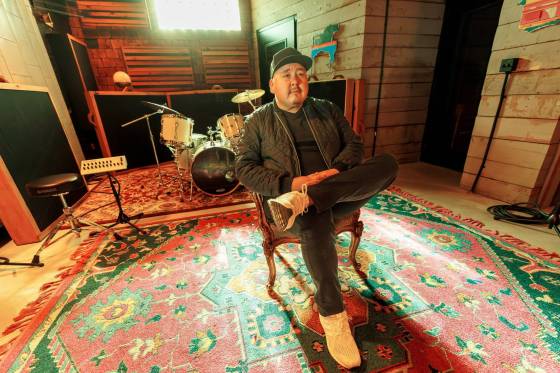
William Prince (Mike Deal / Free Press files)
Prince, who previously won in the same category, is also slated to perform at the awards, which will take place in Hamilton, Ont. on March 29. Here’s the full list of Indigenous music makers up for awards.
A study released by Statistics Canada found Indigenous adults in Saskatchewan are incarcerated at a rate 19.4 times higher than non-Indigenous adults.
While recent data was not available for Manitoba, numbers in this province are sobering too, with Indigenous adults making up over three-quarters of the population in Manitoba provincial jails and 46 per cent of those in provincial youth corrections.
Among the six provinces with available data in the Statistics Canada study, Alberta ranked second at 10.2 times higher, followed by British Columbia at 9.4, Ontario at 8.3, Prince Edward Island at 3.4 and New Brunswick at 3.2, representing an average rate of 10 times more between Indigenous peoples and non-Indigenous peoples in this country.
With much higher stakes and the eyes of a nation watching to see if Manitoba’s Port of Churchill project can become a template for Indigenous-Canadian co-development, the Manitoba provincial government and federal officials will partner with Indigenous leaders and environmental groups to assess whether the biodiverse expanse of the Hudson Bay coast is a good candidate for conservation.
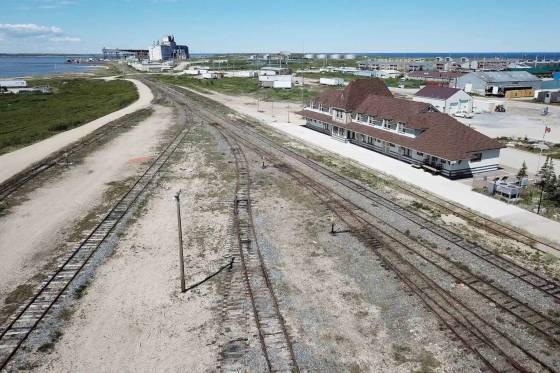
Churchill is home to one of Canada’s most northern deepwater ports. (John Woods/The Canadian Press files)
The study joins with several others in examining how expanding the country’s only Arctic sea port and re-building the train line connecting it with the south would impact what Manitoba Environment Minister Mike Moyes calls, “one of the most ecologically significant marine environments on the planet.”
With little fanfare, the Environmental Protection Agency under the Trump administration has proposed to radically change the national Clean Water Act to limit the authority and rights of states and Native American tribes to regulate and protect waterways in their territories.
Previously, private companies have to consult and work with local governments and also perform environmental assessments meeting certain standards, to obtain certification. But the new law limits the involvement of local leadership and only requires assessments based on the amount of pollution produced.
Tribal leaders have successfully fought these kinds of changes in the past, arguing safeguards must be in place to ensure companies protect land and water but, with an aggressive pro-business development agenda under Trump, time will tell whether anyone will listen this time.
IN PICTURES
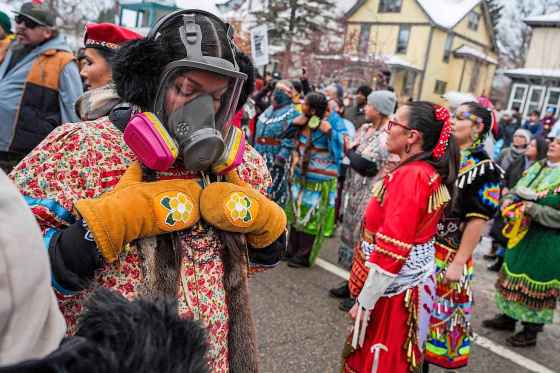
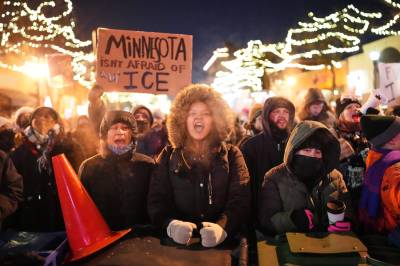
Indigenous people perform in a memorial honoring Alex Pretti and Renee Nicole Good, who were both recently fatally shot by federal agents, on Sunday in Minneapolis. (Ryan Murphy / The Associated Press)
RECONCILI-ACTION OF THE WEEK
Every week I highlight an action, moment, or milestone forwarding reconciliation, illustrating how far Canada has come — and how far the country has yet to go.
This week’s reconciliaction is to everyone in Manitoba’s Muslim, Indigenous and interfaith communities who honoured the National Day of Remembrance and Action Against Islamophobia on Jan. 29.
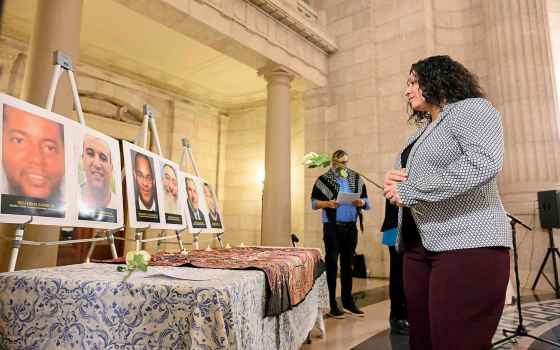
Minister Nellie Kennedy lays a rose in front of a memorial dedicated to the six victims of the 2017 Quebec City Mosque shooting. (Mike Sudoma / Free Press)
The event at the Manitoba legislature commemorated the ninth anniversary of the mosque shooting in Quebec City that killed six Muslim men. The London, Ont., family murdered in a hate-motivated vehicle attack in June 2021 were also remembered.
At the event, 10 white roses were laid before photographs of the dead, and a moment of silence was observed.
Islamophobia continues to be on the rise locally, in Canada and across the world, and we all must join together to stand up against racism, hate and division.
|