How They Lived
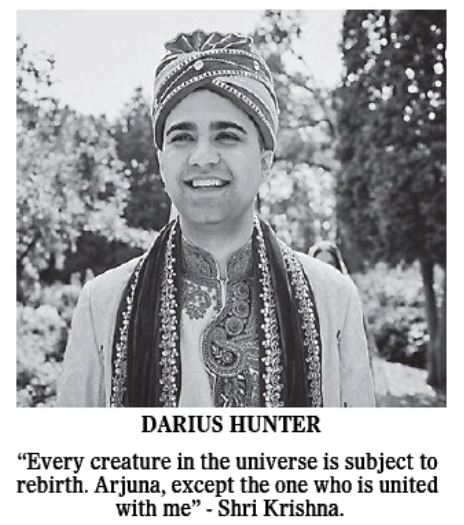
Darius Hunter tragically died just three days after getting married.
Hunter, who died on Aug. 8, at 25, was a champion debater in school, competed at the world championships in 2014, worked as a campaign organizer with Hillary Clinton’s presidential campaign, and was an articling student at a law firm when he died.
He organized many interfaith forums and was called a nationally recognized interfaith dialogue facilitator by the CBC.
Hunter also founded the Hindu Students council at the University of Manitoba while going to school for his law degree. Last year, he began taking a program through the University of California to become a pundit of the Hindu faith and was well on his way to completing it when he died. Read more about Darius.
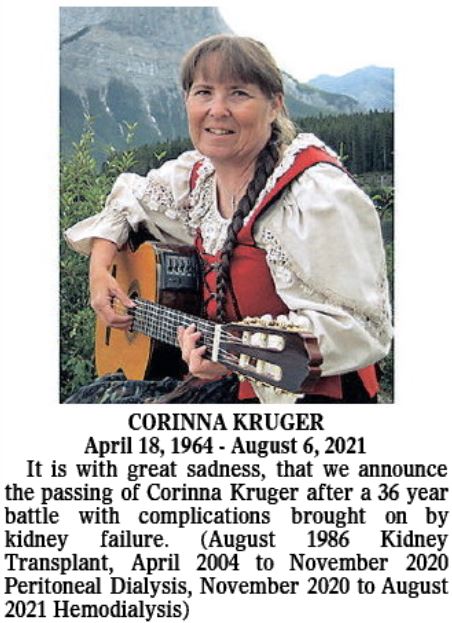
Corinna Kruger was a singer and yodeler for years — but also lived for 36 years with kidney failure.
Kruger, who died on Aug. 6, at 57, received a kidney transplant in 1986. Her new kidney functioned fine until 2004, when she had to go on dialysis. She was still on dialysis when she died.
Kruger specialized in singing Alpine music — both her own which she wrote and performed — as well as other pieces. She performed on radio, television, at several Folklorama pavilions, and at annual Oktoberfests and cultural events in Canada, the United States and Germany. Read more about Corinna.
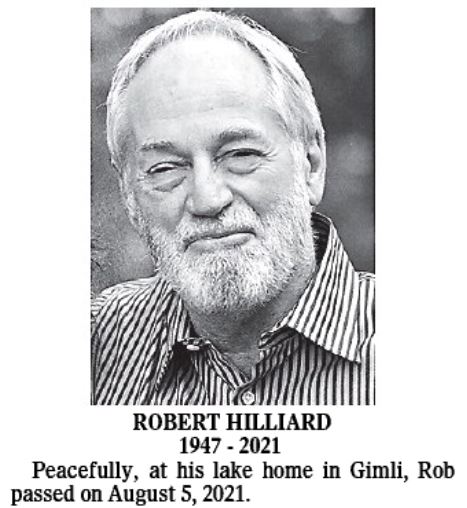
Robert Hilliard stuck up for years for labour.
Hilliard, who died on Aug. 5, became interested in the labour movement when he started working as a miner up north in Thompson and Leaf Rapids in 1969. He later became president of the United Steelworkers of America local in Leaf Rapids and served as a municipal councillor there.
Later in life, Hilliard served for years as the president of the Manitoba Federation of Labour and fought for both individual and collective rights. He was first elected in 1995 and elected to three more three-year terms. Read more about Robert.
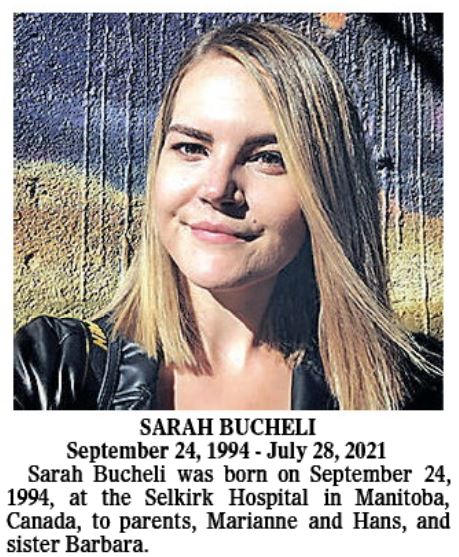
Sarah Bucheli accomplished things her peers won’t accomplish for years.
Bucheli, who died on July 28, at only 26, moved out of the family home right after high school and was only 22 when she bought her own home in St. Boniface.
She had just graduated with honours with a business administration diploma at Red River College in June 2020, when she was diagnosed with a cancer — a rare and aggressive T-cell Lymphoblastic Lymphoma. Read more about Sarah.
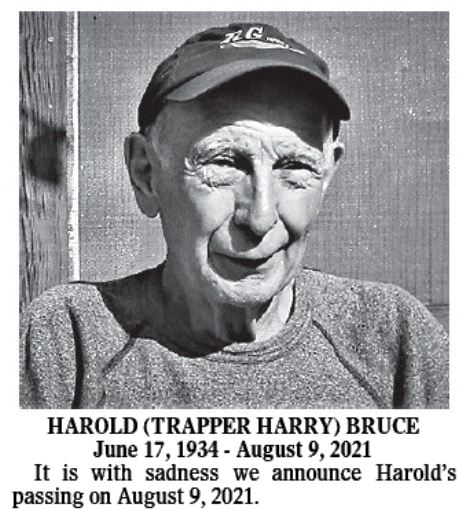
Harold Bruce just decided to drop out of modern life and live like a pioneer. Mostly.
Bruce, who died on Aug. 9, at 87, was born and raised in Eriksdale, and grew up loving the great outdoors, hunting and fishing with his dad.
Bruce worked as a heavy-equipment mechanic and lived in Bissett before he retired and moved to a wilderness cabin on Beresford Lake back in the 1960s.
He spent decades with no phone, hydro, or indoor plumbing. His water came from a nearby spring, there was no road to get there and the only access was by water.
But Bruce did make one concession to the modern world — he used a generator to power his satellite TV so he could watch sports. Read more about Harold.
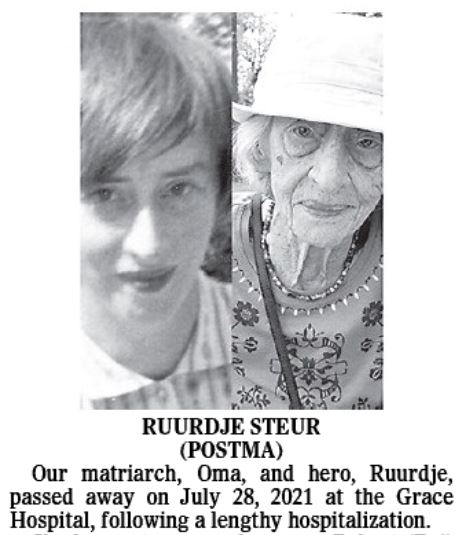
At an age when most teenagers are in high school trying to figure out their lives, Ruurdje Steur was helping foil the Nazis.
Steur, who died on July 28, at 96, was working as a telephone operator during the German occupation of the Netherlands during the Second World War and decided to use her job to help the Dutch resistance.
She helped connect underground fighters, warned people in danger and even helped her Jewish neighbours.
Later, after the war, she worked in Luxembourg with the forerunner of today’s European Union.
Here in Winnipeg, Steur worked in administration at the Children’s Hospital until, in the 1980s, she went back to school, got a certificate in gerontology, and worked as a volunteer with Age and Opportunity and Riverview Health Centre’s palliative care program. Read more about Ruurdje.
A Life’s Story
Rick Borland’s day job for many years was running Winnipeg Transit.
But, once Borland got off work he was running on a tennis or squash court — and he played to win.
Borland, who died of cancer in July just a few days short of his 76th birthday, was recently profiled in the Free Press’ weekly A Life’s Story feature by Geoff Kirbyson.
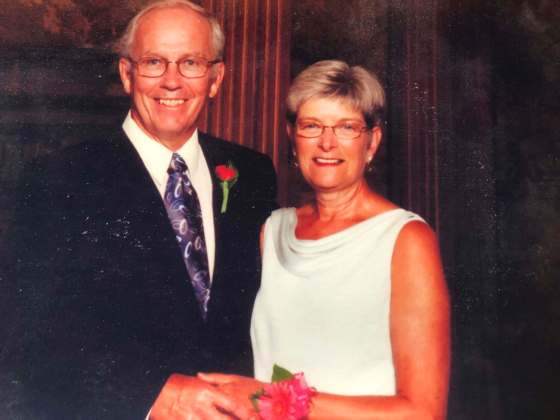
suppliedRick and Heather were married for nearly 54 years.
Borland excelled at both work and play. He was, at age 35, the youngest-ever director of Winnipeg Transit. He helped keep the buses running through two major blizzards (1986 and 1997) as well as making sure people were able to be moved around for two Grey Cups, the visit of Pope John Paul II, and the 1999 Pan Am Games. He also brought in low-floor buses.
At play, Borland, armed with a tennis racquet, won 18 Manitoba Open tennis titles in singles, doubles and mixed, and he was inducted into the Tennis Manitoba Hall of Fame in 2008.
And then Borland picked up a squash racquet in his late 20s, winning a Canadian record 16 senior national squash title. He was inducted into Squash Manitoba’s Hall of Fame. Read more about Borland.
Until next time, I hope you continue to write your own life’s story.
|