Biidaajimowin
Winnipeg Free Press Logo
 

Indigenous peoples, Canadians can be united by current challenges

Donald Trump’s trade war escalated on Friday with the failure to negotiate a deal and the imposition of 50 per cent U.S. tariffs on $20 billion worth of Canadian imports.

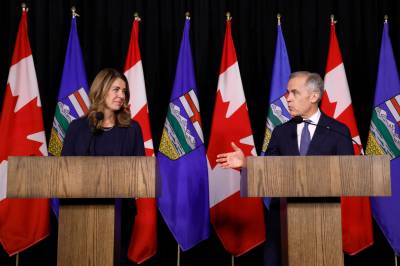
The Canadian government responded Tuesday with the decision to impose retaliatory tariffs on about $20 billion worth of American goods, which includes steel, dairy products, appliances and farm equipment alongside providing $7.5 billion in support for Canadian workers and businesses.

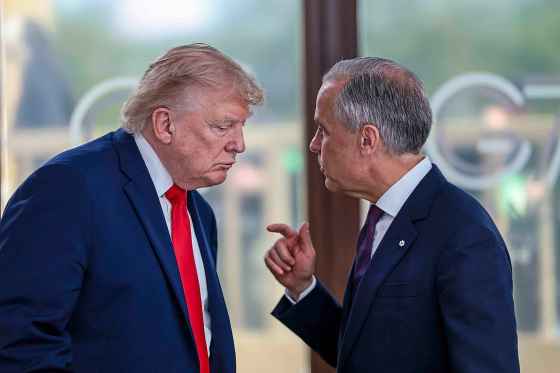
U.S. President Donald Trump and Canadian Prime Minister Mark Carney in June. (Evelyn Hockstein / The Associated Press files)

U.S. President Donald Trump and Canadian Prime Minister Mark Carney in June. (Evelyn Hockstein / The Associated Press files)

Indigenous communities and businesses are also going to be impacted by the tariffs. Approximately 7.5 per cent of Indigenous small and medium-sized businesses — many of which reside in British Columbia in industries such as forestry — rely on exports to the United States.

It’s too early to know, but Indigenous businesses may see some directed support from the federal government. Last week the Canadian Council for Indigenous Business announced they were lobbying for a short-term loan program and support via the federal Trade Impact Program through Export Development Canada.

If there’s anything for certain in all of this economic uncertainty, it is that Indigenous Peoples and Canadians can be united by facing these challenges together.


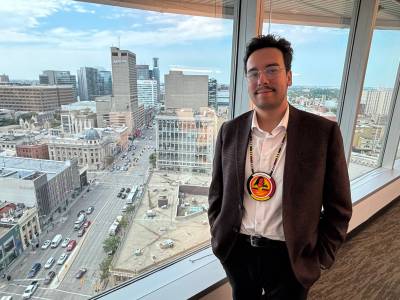
Niigaan Sinclair, Columnist


Advertisement

The weekly playbook. News, notes and analysis from the week in sports - by Mike McIntyre. Get the newsletter sent weekly.
 

FIVE STORIES ON TURTLE ISLAND

1. A big conflict is emerging surrounding how much money the federal government has spent fighting First Nations in court over rights to safe drinking water and housing on reserves.

The lack of transparency is being called unnecessarily secretive and poses the (very sad) question: How much money do Canadian governments spend to deny basic rights — and legal duties — to Indigenous Peoples?


2. In what is one of the most interesting situations in Canada at the moment, the chief of Canada’s RCMP has said he will “review” whether or not Alberta Premier Danielle Smith committed treason under section 46 of the Criminal Code.

On June 16, chiefs from Treaty 6, Treaty 7, and Treaty 8 in Alberta asked the RCMP to investigate whether Smith committed treason when she endorsed a referendum question on separatism. Section 46 of the Criminal Code defines treason primarily as the use of force to overthrow the government or sharing with another state information that may be used for a purpose prejudicial to the safety or defence of Canada.

Chiefs aren’t the only ones throwing around the word “treason” to describe separatist sentiments in Alberta.


3. If anyone wants a great story, check out Dallas Cowboys rookie offensive lineman Shiyazh Pete.

Pete is the first Navajo Nation member to sign an NFL contract and is making big waves for his play in the preseason and this emotional speech after he contributed to a 34-13 win over Arizona.

Pete received a standing ovation from the Arizona crowd during the game and it was well earned, with Arizona being one of the homes of the Navajo nation.

Dallas Cowboys offensive tackle Shiyazh Pete greets fans after a preseason NFL football game against the Arizona Cardinals Saturday in Glendale, Ariz. (Rick Scuteri / The Associated Press files)

Dallas Cowboys offensive tackle Shiyazh Pete greets fans after a preseason NFL football game against the Arizona Cardinals Saturday in Glendale, Ariz. (Rick Scuteri / The Associated Press files)

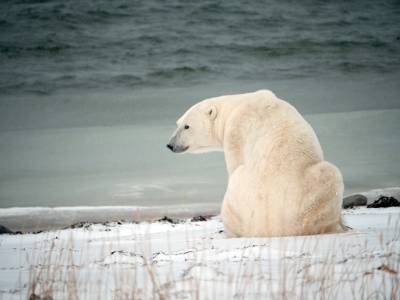
4. Climate change may be terrible in many ways but one positive may be the Port of Churchill could become a year-round shipping port.

In addition to technological advances, Premier Wab Kinew said last week a study suggests the northern waterways leading to Churchill could be navigated year-round by icebreakers costing a few hundred million rather than the billions of dollars it would cost for more heavy-duty ships.

This bolsters the Manitoba government’s argument Churchill should become a central hub for Canada’s future economy.
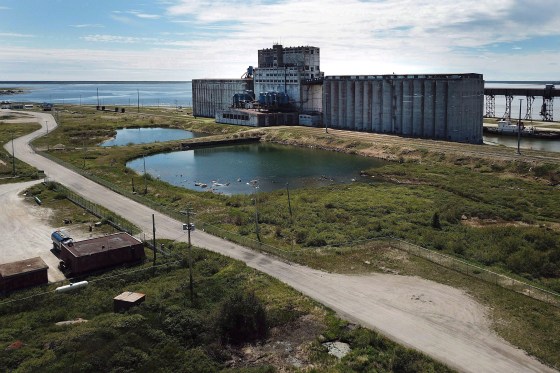
The Port of Churchill could become a year-round shipping port. (John Woods / The Canadian Press files)

The Port of Churchill could become a year-round shipping port. (John Woods / The Canadian Press files)

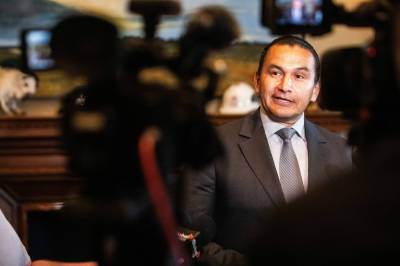
5. It’s pretty fascinating to watch the attention Manitoba Premier Wab Kinew gets when he criticizes U.S. president Donald Trump, bans sale of U.S. alcohol, and comments on the Canada-U.S. trade war.

Here are some interesting links to coverage of Manitoba’s premier in the U.K.’s Independent, the U.S.-based The Daily Beast, and the Native American online news source Native News Online.

IN PICTURES
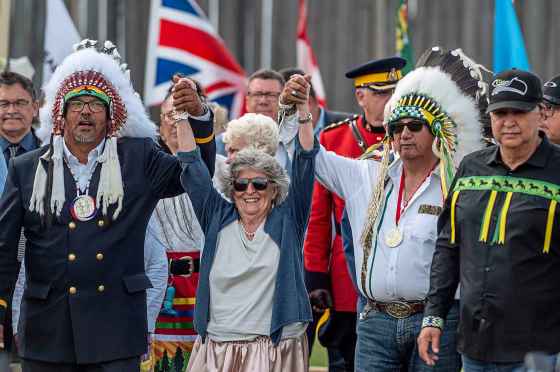
The Gov.-Gen. Louise Arbour (centre) takes part in the Grand Entry with Chief Edwin Ananas of Beardy’s and Okemasis Cree Nation (left) and former Frog Lake First Nation Chief George Stanley at the 150th Commemoration marking the signing of Treaty 6 at Fort Carlton Provincial Historical Park, in Duck Lake, Sask., on Sunday. (Matt Smith / Canadian Press files)

The Gov.-Gen. Louise Arbour (centre) takes part in the Grand Entry with Chief Edwin Ananas of Beardy’s and Okemasis Cree Nation (left) and former Frog Lake First Nation Chief George Stanley at the 150th Commemoration marking the signing of Treaty 6 at Fort Carlton Provincial Historical Park, in Duck Lake, Sask., on Sunday. (Matt Smith / Canadian Press files)

RECONCILI-ACTION OF THE WEEK

Every week an action, moment, or milestone forwarding reconciliation is highlighted, illustrating how far Canada has come – and how far the country has yet to go.

The reconciliaction of the week is a big AHO! and congrats to the Winnipeg-based team who collaborated in creating Thunderhead, Canada’s 2SLGBTQI+ National Monument in Ottawa, which recognizes the historic discrimination faced by 2SLGBTQI+ people in Canada, including during the LGBT Purge.

Unveiled this week and led by well-known Winnipeg activist Albert McLeod alongside artists Shawna Demspey and Lorri Millan, this installation celebrates the resilience and achievements of those who fought for equality, educates visitors and inspires the change still needed so everyone can openly love who they love and express and identify themselves as they choose.
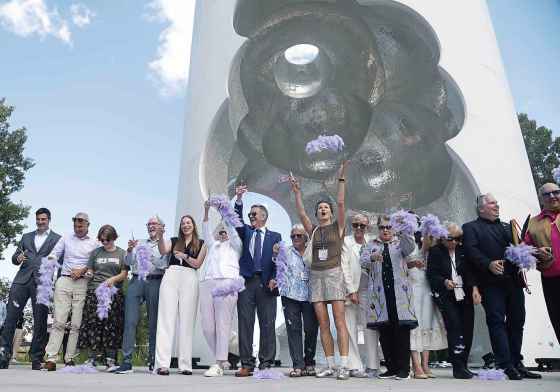
Officials cut a feather boa to mark the official unveiling of Thunderhead, the 2SLGBTQI+ National Monument, in Ottawa on Friday. (Patrick Doyle / The Canadian Press files)

Officials cut a feather boa to mark the official unveiling of Thunderhead, the 2SLGBTQI+ National Monument, in Ottawa on Friday. (Patrick Doyle / The Canadian Press files)


Advertisement

That's a wrap. Today's must-read stories and a roundup of the day's headlines. Get the newsletter sent every weekday evening.
 

WHAT I'VE BEEN WORKING ON

Niigaan Sinclair:

Kinew’s message for PM: don’t back down

Urges Carney to fight for fair trade deal Read More


Niigaan Sinclair:

Indigenous peoples are deeply invested in Canada

First Nations voters have only been allowed the legal right to cast a ballot in Canadian elections since 1960, but many in the past — perhaps rightly — felt a sense of complicity in the country’s colonization or, worse, that voting didn’t make a difference. Not anymore. Read More


LOCAL NEWS

Nicole Buffie:

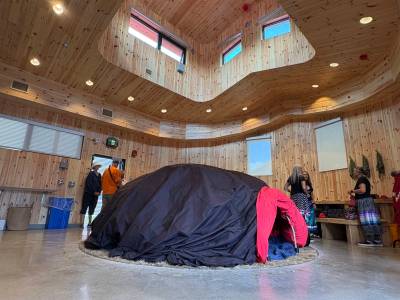
Elders bless, open city’s first urban all-season sweat lodge

Indigenous Winnipeggers now have access to sweat lodge ceremonies all year long. Read More


Erik Pindera:

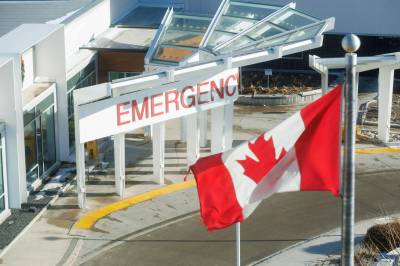
Man sues WRHA, doctors after wrong leg amputated at Grace Hospital in 2024

A man whose left leg was mistakenly amputated — rather than his infected lower right leg — at the Grace Hospital in 2024 has filed a lawsuit against the Winnipeg Regional Health Authority and two doctors involved in his care. Read More


Aaron Epp:

Entrepreneurial spotlight finds IndigiHub

The list of accolades keeps getting longer for the Winnipeg-based founder of IndigiHub, an online resource for Indigenous entrepreneurs. Read More


ARTS & LIFE

Staff:

Dolly Parton made local impact for thousands

When Dolly Parton performed for 8,500 Winnipeg fans at the arena on Sept. 12, 2016 — her final local appearance — Free Press reporter Erin Lebar was there, giving the show five stars and lauding the then-70-year-old multi-instrumentalist’s onstage energy and authenticity. Read More


Conrad Sweatman:

Dreaming of bigger stages

Thespian has lofty goals for province’s theatre scene Read More


Eva Wasney:

Creative dreams

Rural councils work hard, plan big to build local arts scenes Read More


FROM FURTHER AFIELD


Share:


Download our News Break app