|
“Long-range planning does not deal with the future decisions, but with the future of present decisions.”
— management theory guru Peter Drucker
All over the country, plans to build millions of new homes are running headlong into decades of neglect of critical infrastructure. We should have known better.
The Macro
Ontario Premier Doug Ford has been resolute that his province will build 1.5 million new homes by 2031, as he hurtles towards the next provincial election, which, not coincidentally, must be held by or before April 2030. Getting more homes built, and lowering the cost of housing, is a key element in his entire political brand.
How is Ontario faring? Last fall, Ontario Finance Minister Peter Bethlenfalvy said government legislation aimed at expediting housing starts will “continue to build on the work we have done previously to create the conditions for homebuilders to do what they do best and that is to build.”
But has Ontario done all it could to create the conditions needed to build? No — the federal and provincial governments have actually created an enormous deficit of critical infrastructure needed to build new homes.
Whether it’s building new suburbs or higher density housing in urban areas, there is a massive need for infrastructure like water and sewage systems, electricity grids, schools and recreation facilities and — of course — roads. Without money to build or expand this infrastructure, you simply cannot build more homes.
This is a problem all over the country. Consider, for example, the never-ending saga of Winnipeg’s North End sewage treatment plant, desperately needed to protect the watershed north of the city and to help support housing development.
The plant has gone from years and hundreds of millions of dollars to decades of work and — at current estimates — more than $3.1 billion. And it won’t get done until 2032 at the earliest.
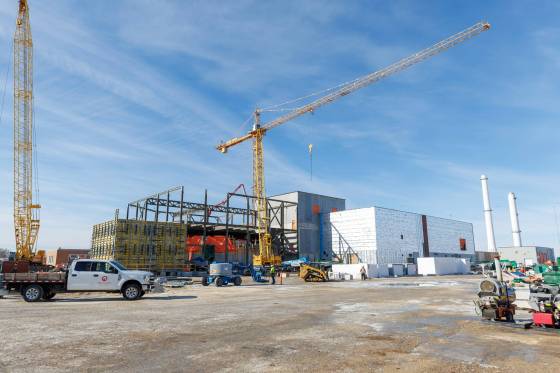
The North End sewage treatment plant (Mike Deal / Free Press files)
In Ontario, two critical infrastructure problems have stalled housing: a lack of water and an aging and unreliable electrical grid.
In the former category, the Waterloo region has become a focal point of concern for government and developers. The Waterloo Region Home Builders’ Association published a report in June detailing the “self-inflicted housing and economic crisis” brought about by the “failure to proactively manage water supply capacity.”
This neglect, the association argues, has triggered a “de facto development freeze” across the region, “blocking thousands of approved, shovel-ready homes and threatening hundreds of millions of dollars in private investment.”
Rampant development that occurred without matching investments in the water supply system has left many of the communities in the heartland of Canada’s biggest province on the verge of a water crisis. The Association of Municipalities of Ontario estimates that local governments need to spend more than $100 billion over the next decade just to keep up with development plans.
Statistics Canada has estimated there is more than half a trillion dollars in wastewater and drinking water infrastructure in this country, and more than $66 billion is in need of urgent replacement.
And that’s just the cost of keeping what we have; if you add in the investments needed to expand our current water/wastewater systems to allow for millions of new homes, you’re talking about hundreds of billions of additional dollars.
There’s a lot of background on this issue, but here’s the short and ugly description of how we got in this mess.
Water and wastewater has largely been framed as a local government responsibility. Unfortunately, municipalities do not have the revenue sources to pay the enormous costs of these projects.
Senior levels of government do have the revenue capacity, but they have not committed to predictable, annual funding. Instead, the federal and provincial governments like to do one-off projects rather than steady, long-term funding.
And if the federal and provincial governments don’t feel like it, they don’t invest. So local government, which can’t do it on their own, sits by and watches the infrastructure decay.
Advertisement

A similar concern has arisen in Ontario over electricity transmission infrastructure.
In Manitoba, generation and transmission infrastructure is controlled by a single Crown entity: Manitoba Hydro.
In Ontario, generation and transmission systems involve a hybrid of public and private entities. In the case of transmission – the maintenance and expansion of the electricity grid — there are 60 Local Distribution Companies (LDCs) that operate and maintain the grid.
However, according a recent report in The Globe and Mail, Ontario LDCs have said they require between $103 and $120 billion worth of investment to protect the existing grid and keep up with Ford’s housing plans.
Again, the LDCs claim they do not have the money to do this work alone. They are undoubtedly right.
This is a problem that could have been solved years ago with modest but regular investments, or by squirrelling away money in reserves to ensure we have the resources to maintain and expand critical infrastructure systems.
But we didn’t do that. And now, we’re paying the price in other ways.
|