|
If you wanted to put the idea of freeing up interprovincial trade in a bottle, it might be bourbon.
As whisky connoisseurs know, there’s character and flavour to the typically Kentucky-made spirit that’s different than usual Canadian or Irish brews. Even if you’re not a whisky drinker, bear with me. This is as much about using one product to illustrate a wider issue as it is satisfying a bourbon-drinker’s palate.
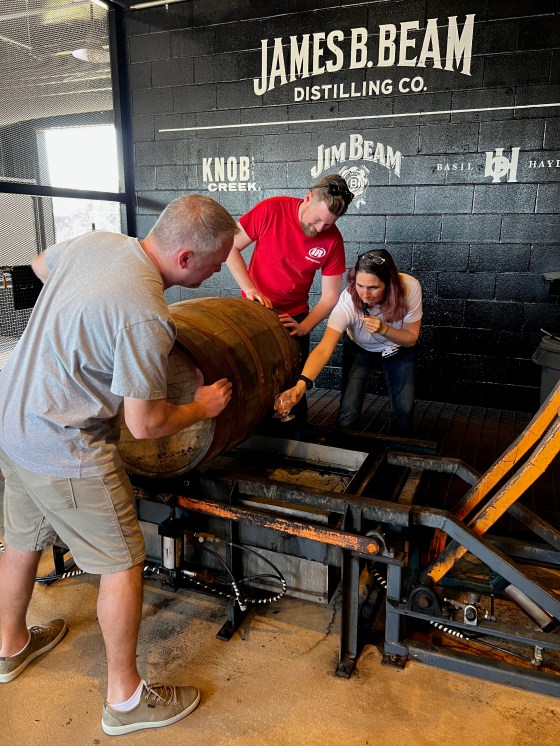
In Kentucky, an industry has grown up around touring distilleries, as in this 2022 photo, in addition to actually distilling whisky. Jim Beam products won’t be available in Manitoba for some time. (Kelly Taylor / Free Press)
Advertisement
A pedantic aside: it’s whisky and it’s whiskey. Without getting into details about the difference, I’m sticking with whisky. Apologies.
With American products off most shelves in Canadian liquor stores, bourbon is perhaps the most missed: Australia, Italy, France, Chile, South Africa, even Canada, can easily fill the void left by American wines. Canadian, Irish and Scotch whiskies, Jamaican rum, Smirnoff vodka (which is made in Canada), Mexican tequila and any number of Canadian beers can satisfy most other beverage needs.
If you’re looking for bourbon, however, you’re out of luck. At least in Manitoba. By law, a product can only be called bourbon if it’s made in the U.S. As I noted in a previous newsletter, my consumption is severely limited these days, but when I do reach for a drink, it’s toward a dwindling supply of Basil Hayden.
Here’s where Canadian free trade could come in handy: British Columbia’s Okanagan Spirits and Saskatchewan’s Last Mountain Distillery both make bourbon-esque whiskies. To skirt naming laws, Okanagan labels its elixir BRBN, while Last Mountain’s is titled Baldur’s Whisky, which its website describes as the culmination of six years of work to recreate the bourbon experience. Top Shelf Distillers in Ontario is also marketing a bourbon-like whisky.
Neither is available in Manitoba, at least according to a Manitoba Liquor and Lotteries spokesman. While it’s true we can import what we want from other provinces, nothing sells as much as a product that’s looking out at potential customers from a spot on a store shelf.
Top Shelf has noticed a spike in whisky sales since the ban on American liquor was enacted. It’s currently focusing on expanding its Ontario presence. However, a spokeswoman didn’t rule out expanding to other provinces.
To be sure, a major hurdle to interprovincial trade is, as Top Shelf says, filling demand in the home province first. Winnipeg companies Patent 5 and Capital K would, I’m sure, love nothing more than ramping up production and selling coast-to-coast. But it’s a process and it takes time and capital, further hampered by the fact aged products such as whisky don’t start creating revenue for two to three years, when they’re ready for bottling.
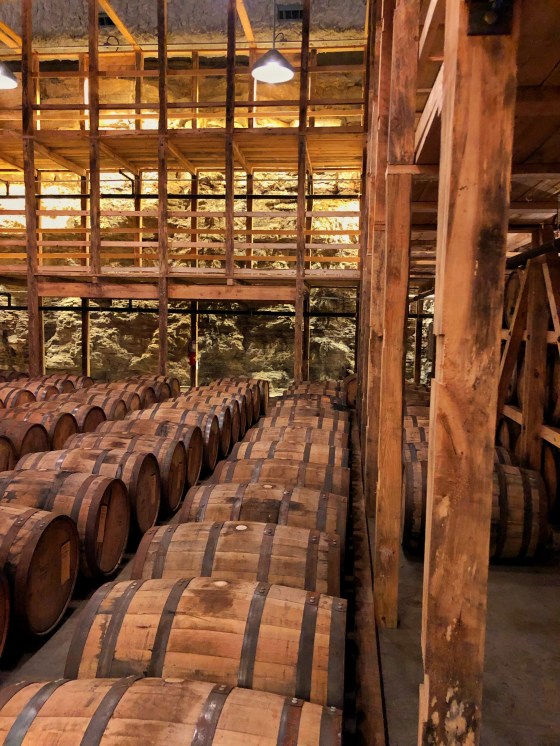
To qualify as bourbon (or at least bourbon-like), it must start with a mash of 51 per cent corn and be aged for two summers in new, charred-on-the-inside oak barrels, such as here at Maker’s Mark. (Kelly Taylor / Free Press)
Aside from the naming laws, bourbon must start with a mash that’s at least 51 per cent corn (the rest is rye or wheat), and be aged in new, charred oak barrels for at least two summers. The charring and the oak instill flavour and colour during the aging process.
It may not necessarily be trade barriers blocking the sale of other province’s products. I mean, we see Okanagan and Niagara wines and Alberta whisky in Manitoba stores. Still, the idea of creating a single Canadian economy, as espoused by Prime Minister Mark Carney, goes a long way toward getting Manitoba products sold elsewhere and other province’s products sold here.
The trick: find out what products, such as bourbon, are missing, either because of tariffs or government decree, and fill those vacancies.
|