What I’ve learned about travelling during a pandemic
Without question, the No. 1 query I’ve received of late has nothing to do with the play of Connor Hellebuyck, the struggling penalty kill, Paul Maurice’s job security or, quite frankly, anything to do with the still winless hockey club.
It has everything to do with the state of getting from Point A to Point B during a pandemic, along with what to expect when away from home, sweet home.
People are anxious to get back out there and see the world, while at the same time hesitant about what might be in store.
I’m by no means a globetrotter, but I’ve had quite a bit of recent experience in that area. I travelled to Montreal and Tampa Bay in July to cover the Stanley Cup Final, just as border rules were changing allowing the fully-vaccinated to return to Canada from the United States without quarantining.
Our family finally got to do our bucket list trip late last month when we went to New York City for a week. And that was quickly followed by this latest trek.
Here’s a few things I can share, based upon learned experience:
1) You need an antigen test to get into the United States. Manitoba is no longer covering the cost of travel-related antigen tests, so you’re on your own. I’ve now done them twice here in town (our family prior to the Big Apple, and me personally before flying to California). Both times, the cost was $170 per person at a private lab. (Pure Lifestyle is the one I’ve used, but there are other options). You get your results within an hour, but keep in mind your test must be done within 72 hours of getting on a U.S.-bound plane. The province announced earlier this week pharmacies will soon begin offering these tests, and I suspect at a much cheaper rate. Shoppers Drug Mart locations in Ontario and Alberta, for example, are currently doing them for $40. Still, be prepared to pay out of pocket.
2) The airlines say you are supposed to show your negative test before you board your first flight, even if you have a Canadian stopover prior to going south. For example, my Winnipeg-to-Los Angeles flight had a brief Vancouver layover. However, you are allowed to fly within Canada without an antigen test, so you could conceivably wait until your layover to secure the test. Most major Canadian airports are offering them with results within 15 minutes. I wish I’d known this prior to our New York trip. We had a five-hour layover in Toronto and could have all done antigen tests for our family of four for approximately $60 each at Pearson. Instead, we thought they needed to be done before leaving Winnipeg, so we ended up paying $680 instead of $240. Ouch. Live and learn. That said, I would not advise leaving it to the last minute if you don’t have a significant amount of time on your layover.
3) You will need a PCR test to return to Canada. Here’s the thing: If you are only going for a very brief time to the U.S. — as in three days or less — your best bet is to get the PCR test before you leave Canada, rather than the antigen test. The one PCR test would actually get you down, and back up, without the need for a second one. This is what I did in July when I left Montreal after Game 4 of the Cup Final to head down for Game 5, knowing I’d be either going back to Montreal for Game 6, or back to Winnipeg if it ended (which it did) within the 72-hour window. This ultimately saved both time, and money.
4) If you are going to be in the U.S. more than 72 hours, you’ll need to plan a PCR test there. And be prepared — it could end up costing you. I say could, because in both my recent experiences I’ve found places in New York and St. Paul where free tests are being done, even for non-residents. Our family used a company called MedRite in New York, getting our tests done basically 71 hours before our scheduled flight home to allow the maximum amount of time. We got the results back within 26 hours. On Monday in St. Paul after Jets practice, I stumbled across a place next to the Xcel Energy Center offering free walk-in PCR tests as long as you could provide an American address. I checked, and they said my local hotel was fine. So I did the test, but they couldn’t promise the results would be back by my 6:30 p.m. Wednesday flight. By 2 p.m. yesterday, I still hadn’t received them, so I resorted to plan B — paying US$199 at the Minneapolis airport for a rapid PCR test from a company called Wandertest that has a kiosk set up by the departures level. The swab was in my nose by 2:15 p.m. and the result (negative!) was in my email inbox 30 minutes later.
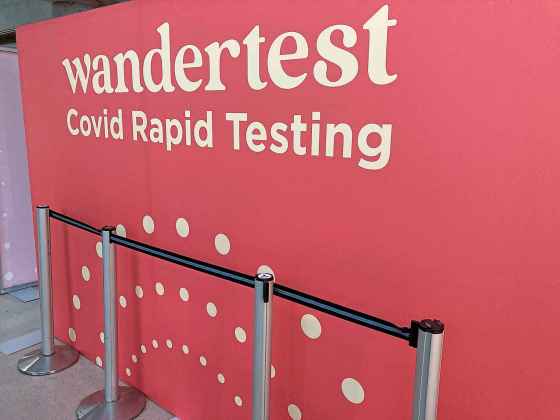
5) Wouldn’t you know it, but at 3 p.m. I got another email — from Vault Health, the company running the free PCR test I’d done Monday afternoon. My negative test result was back. So now I had two tests in my hands, including the one I’d just paid for because I was starting to panic. Better to be safe than sorry, but that stung a bit.
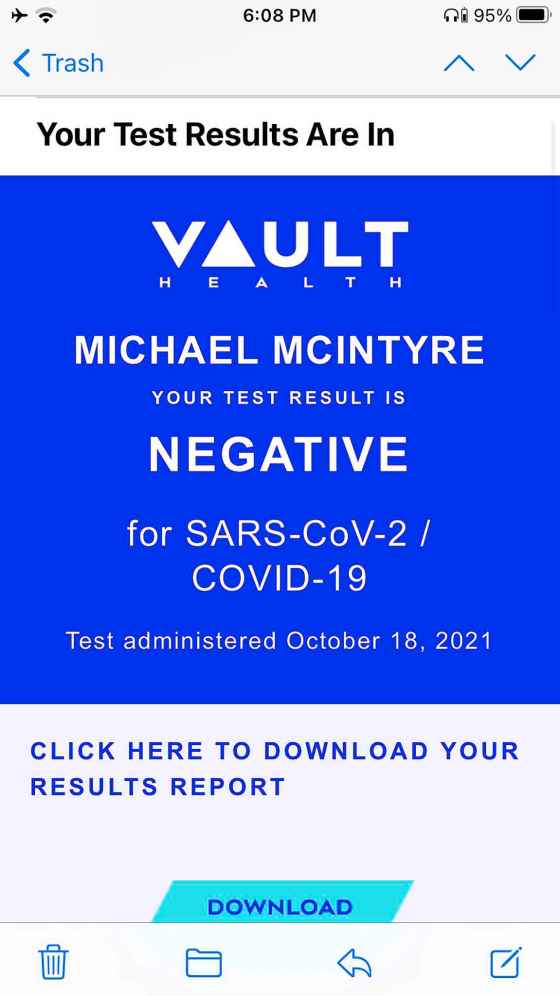
Mike also received negative tests results from a free PCR test done by Vault Health, shortly after he paid US$199 to get a rapid test done at the airport.
6) My advice to all, however, is to look around wherever you’re going. It would seem most cities are offering free tests if you can provide a local address. The key, as demonstrated above, is timing. You MUST show your negative test before you are even allowed to check in, which, if you have a checked bag, means a couple hours before your flight. So be careful not to let the clock run out. The fallback is the rapid PCR test which, as stated, most major airports have. At a substantial price, naturally.
7) You’ll also need to fill out the ArriveCan app prior to departing the U.S. en route back home. This includes not only confirming your negative COVID test, but also uploading proof you are fully vaccinated. (I uploaded two photos without issue yesterday — one showing my Manitoba immunization card, the other showing a screen shot of my Shared Health page with the exact dates and brands of vaccine I received). Once you complete this form, you receive a bar code which is scanned prior to checking in for your flight.
8) Carry your immunization record with you everywhere. I’ve had a printout of my Shared Health record in my wallet since we went to New York, and it’s gotten plenty of use. Showing your Manitoba vaccine card will elicit some strange looks, but the specific page has helped avoid any issues.
9) Some have asked me if I ran into any trouble considering I received AstraZenca as my first dose. I haven’t, but it’s worth noting I also have two Pfizer shots to my name. The first, which was my second shot to reach fully immunized status. And then the booster last month, which I was able to obtain from a local walk-in clinic once I showed them proof of upcoming travel.
10) Not sure there’s much more to add. I’m sure this all sounds a bit scary, at least to some, but trust me when I say it actually has been a pretty smooth process. Everything moves a bit slower, sure, so patience is a virtue. But, as I’ve come to realize, once you get past the extra bit of bureaucracy — and the additional costs, of course — everything else quickly starts to feel rather familiar.
To quote the great Willie Nelson, “I can’t wait to get on the road again.”
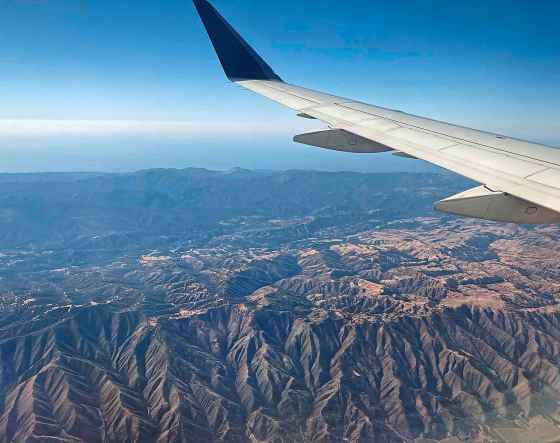
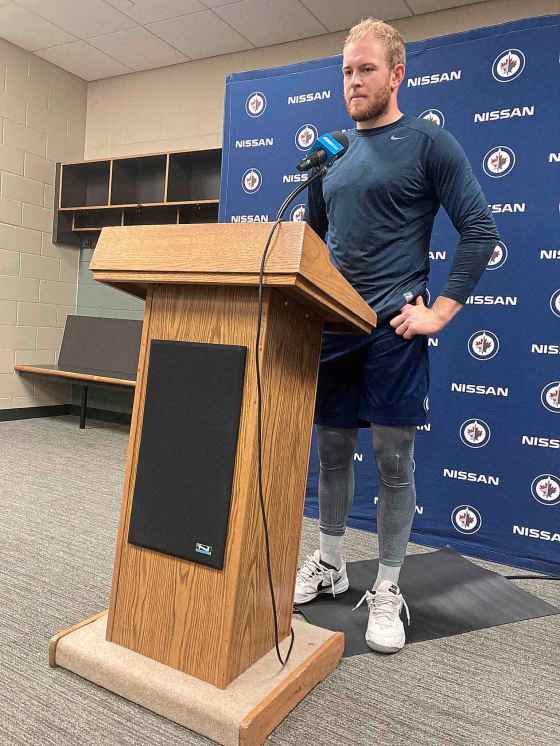
Remember that patience is a virtue when it comes to travelling these days. (Mike McIntyre / Winnipeg Free Press)
By all means, if you have any further questions, don’t hesitate to fire them my way and I’ll do my best to assist. Happy trails to you!
|