All about aphids
Patricia MacKay and Robert Lamb are entomologists. MacKay is a senior scholar and Lamb is an emeritus research scientist, department of entomology, University of Manitoba. They are retired (sort of, as MacKay puts it) and continue to study aphids in their Winnipeg garden and elsewhere.
I talked to them recently about aphids, wondering if red aphids are more voracious than black aphids. Here are some of the fascinating facts they shared:
Different aphid species come in a variety of colours: green, yellow to orange, red, black, brown, and grey. Some aphid species have been collected to provide dyes for colouring fabric for weaving.
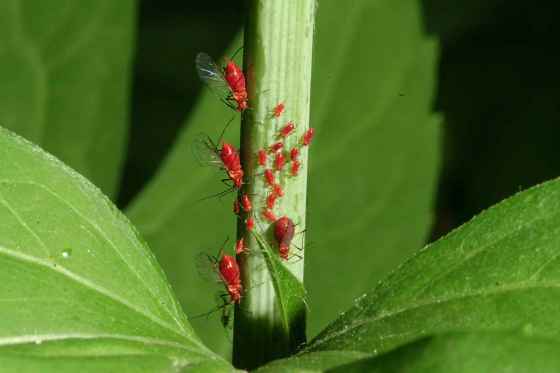
A new colony of aphids (Patricia MacKay and Robert Lamb)
Many of the aphid species that feed on plants in the family Asteraceae are red and belong to the aphid genus Uroleucon, which has a very narrow host range.
Cut-leaf coneflower (Rudbeckia laciniata) is a host plant for the aphid species Uroleucon rudbeckiae. False sunflower (Helianthus helianthoides) is also the only plant that a red aphid species that belongs to the genus Uroleucon will go on.
Why these aphids are red is a good question; MacKay and Lamb said they have never encountered an explanation. The red aphids are eaten by the same predators as aphids of other colours — predators such as lady beetles, lacewings, hover fly larvae, and many other insects.
Warm southerly winds have brought many beneficial predators into our area this year, but they have also brought pest aphids from the south as well.
Aphids are very sedentary — they don’t walk about on the plant. They feed continuously on sap from plants unless they are disturbed and then withdraw their mouth parts.
Aphids produce no eggs during the spring and summer, during which time the young are born alive (parthenogenesis). Eggs are produced in late summer or early fall and are the only cold-hardy stage.
They have four juvenile stages and one adult stage. Adults can be winged or non-winged, depending on the conditions in the colony at the time they were produced.
The aphid growth rate is significant. When born alive, they can become a reproducing adult in eight to 10 days. In the early part of their reproductive life, they produce about 10 young a day over 10 to 20 days. Each of those young aphids grows up in 10 days and produces another 100 aphids each. They can live for as long as a month at temperatures around 20 C. We would be up to our armpits in aphids by the end of August, if it weren’t for natural predation!
Aphids multiply faster in higher temperatures, up to about 25 C. But when temperatures exceed 25 C., their reproduction rates begin to decline.

We would be up to our armpits in aphids by the end of August, if it weren’t for natural predation. (Patricia MacKay and Robert Lamb)
Early monitoring is essential to control the growth rate of aphids.
Spraying infested plants with a strong stream of water from your garden hose — combined with squashing aphids with your fingers — can be a successful means of control. But when you consider their reproductive rate, this control measure needs to be daily. Any adult that survives will go right on reproducing at the rate of 10 young a day. Very quickly, the population comes right back up.
Heavy rainfall can knock aphids off a plant, but not enough so that it would be helpful to the gardener in the long term. Diatomaceous earth is not effective on aphids.
In addition to ornamental plants, peppers and tomatoes can be affected by aphids. The green peach aphid (Myzus persicae), is a common aphid species found on peppers. It is green, small, highly reproductive, and resistant to a number of insecticides. It is a persistent problem for greenhouses. Bringing even one green peach aphid home on your pepper seedling becomes especially problematic if seedlings are kept indoors for too long, because the warm temperatures indoors are conductive to higher growth rates.
Generally, once seedlings are outside, predators take care of the green peach aphid and keep populations low enough that the plant can flower and produce fruit. If the aphid population is not controlled, it can reduce flower production, seed setting, and fruit production.
The tiny size of the green peach aphid makes it harder for gardeners to locate and remove with their fingers so natural predators become especially important, whereas the Uroleucon aphid is big and red and congregates on stems. You can’t miss it.
Life on the farm
The Regnier family first moved to St. François Xavier from Quebec in 1878, and the family has operated Blue Lagoon Organics since 2001. Stefan Regnier and his wife, Lauren Harris, took over Blue Lagoon in 2020 to continue the family tradition of growing organically with regenerative practices.
Recently I caught up with Stefan and Lauren for a glimpse of life on the farm this summer and what awaits their customers at their vegetable stall at the S. Norbert Farmers Market, where you will find them every Saturday.
Customers are excited to see lots of greens especially kale, lettuce, Swiss chard, and beet tops, said Harris. There are many requests for patty pan squash. “We already have flowers on our plants so we are hoping in the next few weeks they will start producing fruit.”
Herbs such as basil, parsley, and lovage are being harvested as well as cucumbers and beets. But the biggest demand is for tomatoes, says Harris. It won’t be too much longer. Eight different varieties of tomatoes are growing in raised beds in the greenhouses at Blue Lagoon Organics. “It’s the best of both worlds, with a protected environment and using rich compost and soil really allows for outstanding flavour,” said Harris.
Tomato varieties they are growing include Hawaiian Pineapple, Bizhiki, Green Zebra, Black Prince, Bogart’s Blunder, Lemon Boy, Black Pineapple, and Sun Sugar. These are packaged in 2-lb. compostable clamshells which Blue Lagoon calls “party packs” showcasing the rainbow of colours.
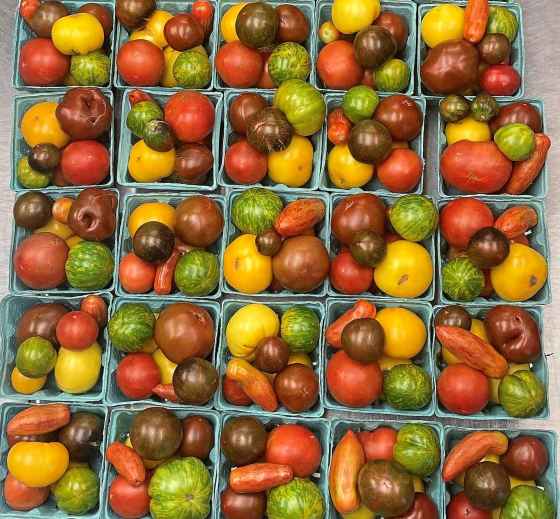
Tomatoes in a rainbow of colours. (Blue Lagoon Organics)
A lack of rain for long periods at a time this growing season has posed some challenges, said Harris. “We use retention dugouts for our irrigation and fortunately, they were still quite full in spring. We try to be very conscious of how we use our water.
“Using drip-tape irrigation, you can be quite exact and water strictly the crop. But with our heavy clay soil, if the ground is dry, the soil will soak up any moisture before the plant can access it. If we do not get any rain, we turn on the irrigation.
“We also use landscape fabric. We burn holes and either direct sow seeds or transplant seedlings. The fabric retains moisture and suppresses weeds.”
What about flea beetles? Blue Lagoon Organics is surrounded by conventional farms that grow canola crops. In recent years, flea beetles have been a significant problem. To protect their brassica crops such as kale, cabbage, radishes, and Brussels sprouts, they use exclusion netting or Agribon row covers. “Both are a very fine mesh,” said Harris. “We do prefer exclusion netting as it is more durable and can be used for years, whereas Agribon can rip with overuse.”
Deer have caused some headaches, too. The installation of temporary fencing early in the season has made a positive difference. “We find if deer don’t have access to any area early in the season, they are likely to get adventurous and start hopping fences once our crops are planted.”
Drought-tolerant hydrangea?
First Editions Little Hottie Hydrangea is a hot new panicle hydrangea from Bailey Nurseries in Minnesota. Introduced in 2022, it is available this year for the first time in Manitoba.
What makes Little Hottie so special? It was developed in Georgia and was bred for heat tolerance. This new variety has been developed to withstand more sun exposure than other panicle hydrangeas on the market without the plant wilting or the flowers browning. In plant trials south of the border, Little Hottie performed extremely well.
Little Hottie is hardy to Zone 3 and its mature size is 3-5 ft tall and wide or 90-150 cm. The blooms start out green then transition to creamy white, turning light pink as temperatures cool in late summer.
Easy to maintain, it requires little to no pruning other than snipping off spent flowerheads. I looked forward to planting Little Hottie in my garden this summer, especially after talking to Michael Dirr, a renowned hydrangea expert at the University of Georgia, about this new variety’s heat tolerance and large, prolific blooms.

A hot new hydrangea introduction, First Editions Little Hottie is loaded with blooms and bred for heat tolerance. (Bailey Nurseries)
When I brought Little Hottie home, I was surprised to read on the plant tag that it is drought tolerant. Nowhere on the tag does the description refer to heat tolerance. Let’s think about that for a moment. Heat tolerance refers to a plant’s ability to tolerate heat stress. Drought tolerance relates to a plant’s ability to withstand dry conditions (minimal rainfall) without supplemental irrigation.
Hydrangeas have a well-earned reputation as plants that prefer moist soil with good drainage. Hydrangea comes by its scientific name honestly: from Greek, hydor, which means water, and angeion, which means vessel. It’s true that panicle hydrangeas have demonstrated greater drought tolerance in the landscape than Hydrangea macrophylla (mophead hydrangea). Hydrangea ‘Limelight’, for example, thrives in the most southern states of the U.S. Nevertheless, mature hydrangea shrubs that are planted in the landscape should be watered deeply once a week during the growing season or twice a week during hot, dry weather.
If you decide to purchase “Little Hottie” hydrangea for your garden, don’t take the reference to “drought tolerant” too literally. Tolerance to heat stress is one thing, but drought tolerance is another matter. Little Hottie is a hydrangea, after all, and is not on the same level as, say, a drought tolerant native plant with a deep root system!
For the first couple of years in your garden, take care to water regularly so that your new hydrangea develops a healthy root system. If you are watering deeply once or twice a week but your new hydrangea wilts during the hot afternoon, wait until evening when temperatures cool to see if the plant recovers on its own. If your hydrangea is indeed thirsty, one method is to apply a slow-drip directly to the root zone of your plant: place the hose on the soil surface at the base of your plant, apply a very slow flow of water — all you need is a trickle. Do this for about an hour or until you notice that water is pooling on the surface and is no longer being readily absorbed. Keep in mind that watering too often promotes root rot.
Expect to see more breeding developments in hydrangeas in the future as plant breeders strive to create hydrangeas that have greater climate resilience. “Grin and Tonic” hydrangea, for example, is a recent Zone 5 introduction by Bloomin’ Easy which has glossy and waxy leaves. A waxy cuticle helps to prevent water loss through evaporation and transpiration.
A less expensive potted hydrangea
When Kanmara hydrangea burst onto the local scene in Spring 2019, it was a runaway success. An annual potted hydrangea bred by the Hydrangea Breeders Association (HBA) from the Netherlands, the Kanmara hydrangea is ideal for full-shade or semi-shade locations on the patio, balcony, or front porch. A macrophylla type of hydrangea, Kanmara’s enormous mophead blooms – whether they start out white, blue, pink or deep pink — eventually transition to green as the blooms age. It amply fills out containers with its hefty size (up to 60 cm in height and 81 cm in width). However, the price tag can be hefty too — anywhere from $35 to $48.
In May I came across an annual potted hydrangea called Garden Envy Heavenly Hydrangea. Sold in an eight-inch pot, the price was just $20. I picked up four.
What I like about Heavenly Hydrangea — apart from the more affordable price — is that it is not as large as Kanmara, which makes it easier to combine with a mix of other annuals in a 14-inch planter. Heavenly Hydrangea is not as dramatic as Kanmara. The blooms, which start out white, are not as large as Kanmara’s and the foliage is smaller, as well.
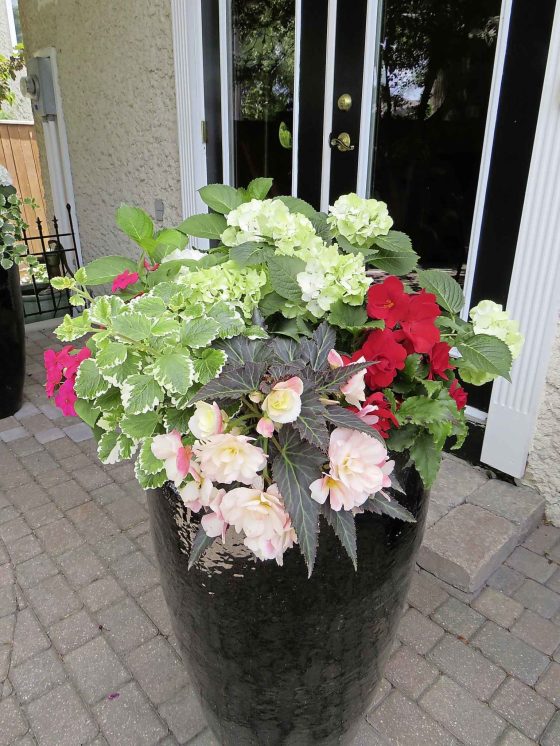
Hydrangeas in a mixed-container arrangement. (Colleen Zacharias / Winnipeg Free Press)
Garden Envy Heavenly Hydrangea is distributed by Bylands Nurseries in Kelowna. I contacted John Leperre, sales representative to learn more about this new potted hydrangea. “My fellow sales reps have experimented with these in the past and find that they bloom into the early summer, but once the initial blooms fade, it takes some time for another flush, sometimes running into the end of the season,” he said.
As of July 7, the blooms of my Heavenly Hydrangeas are going strong. The blooms have transitioned from pure white to soft mint green and the plants have grown larger, producing many new leaves. But new flower buds are also forming! I’m delighted thus far and eager to see how long the blooms last and how well Heavenly Hydrangea performs for the remainder of the summer. I will keep you posted.
I combined Heavenly Hydrangea with Impatiens Beacon Lipstick, I’Conia Begonia La Luna, and Swedish Ivy.
An intriguing new perennial
Delphinium Red Lark won’t go unnoticed in the garden. Its bright coral-red bloom is like a beacon. The emphasis, though, is more on coral than red.
I purchased only one because I am cautious about the Zone 5 hardiness rating. But that classification could change – Red Lark has already overwintered in a number of local gardens. When Karl Foerster grass, the most popular ornamental grass grown today on the Prairies, was first introduced, it also was classified as Zone 5.

Delphinium Red Lark (Darlene Stack)
I planted Red Lark in a location that receives part shade. I staked it to provide support against strong winds and pelting rain. The showy flowers last several weeks. Red Lark is deer and rabbit resistant — they are probably in awe of the eclectic colour.
Darlene Stack also purchased one Red Lark and planted it in a part-shade bed that is visible from her living window. “I love the coral colour which has transitioned from a more pastel version. I’d plant more in a heartbeat and look forward to this plant filling in the space and plan to mulch it so it survives.”
Yellow hosta leaves
Hostas are typically easy-care perennials. They do best in average to moist but well-drained soil that has been enriched with organic matter. A location that provides light, dappled shade is preferable to damp shade with poor air circulation.
When leaf discolouration occurs, there can be a variety of reasons. If hostas are exposed to strong sunlight, sun scorch (bleaching of leaves) can occur. Underwatering or overwatering combined with poorly drained soil can also cause hosta leaves to turn yellow. Another factor may be excessive fertilization or a too-deep layer of mulch (more than one inch/2.5cm). Keep mulch away from the crown of the plant.
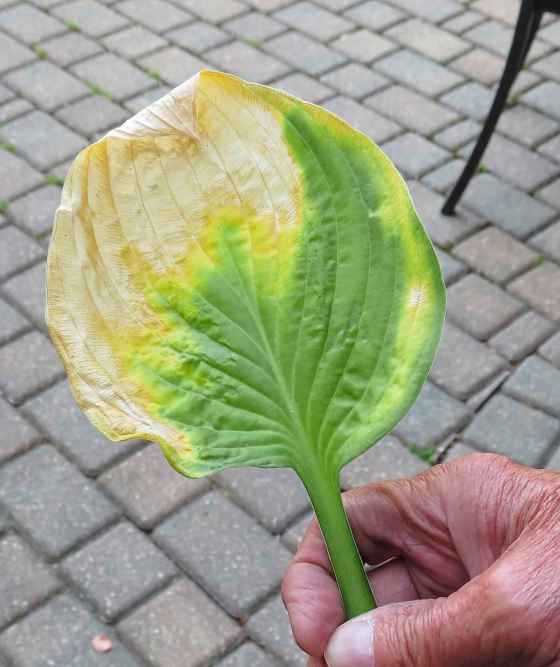
One yellowing hosta leaf can just be removed, but if your plant has multiple yellowing leaves, it could be a sign of a serious fungal infection. (Colleen Zacharias / Winnipeg Free Press)
If your hosta plant has one yellow leaf but otherwise appears healthy, snip off the leaf using a clean pair of scissors. Dip scissors in a 10-per cent solution of household bleach (10 ml of bleach in 90 ml water) before and after each cut.
But if you notice that the tips of multiple leaves have turned yellow, with the damage gradually extending into the centre of the leaf until it withers, check for any signs of rot where the stems (petioles) meet the crown of your plant. Give the affected leaves a slight tug to see if they detach easily from the plant. There may also be signs of a white cottony mass near the base of the stem. These symptoms indicate a serious fungal infection. Dig up the plant and dispose of it in a sealed garbage bag. It is also recommended to replace the soil where the affected hosta was planted. Do not replant hostas in the same area.
Powdery mildew remedy
Powdery mildew is a fungal disease that can ruin the appearance of a perennial or shrub. Susceptible plants include beans, bee balm, caragana, chrysanthemums, cucumbers, currants, dahlias, lilacs, phlox, roses, squash, strawberries, Veronica, zinnias, zucchini, and more. New leaves are the first to exhibit powdery mildew. Hot weather combined with cool nights favours spore formation.
One option is to spray your plant at the earliest sign of powdery mildew with Safer’s Defender Garden Fungicide. Use according to directions. Thorough coverage is essential.
You can also make your own organic homemade fungicide. Mix 1 tablespoon of sodium bicarbonate (baking soda) and one-half teaspoon of liquid, non-detergent soap made from natural ingredients that are biodegradable (for example, Dr. Bronner’s Pure Castile Liquid Soap) with one gallon (3.7 L) of water.
Ideally, though, a regular watering schedule — especially during dry spells when plants are more susceptible — combined with adequate air circulation helps to prevent the reoccurrence of symptoms of powdery mildew.
Sanitation plays a big role, as well. Remove and discard the affected parts of plants as well as any debris around the base of the plant. Plan to do this again in fall to reduce mildew spores that can overwinter.
Less thirsty, sun-loving perennials
Looking for a flowering perennial that doesn’t prefer moist soil? Once established, the following sun-loving perennials are tolerant of drier conditions. But they also share one other thing in common: a requirement for well-drained soil.
Typically, drought tolerant plants are averse to standing water. A yearly application of compost can help you achieve well-drained soil. The plants listed below are available locally.
Black-Eyed Susan (Rudbeckia Goldsturm) — There are many different types of rudbeckia to choose from. Hands down, Rudbeckia Goldsturm is an ideal choice for cold climate gardeners. It is extremely drought tolerant once established and overwinters well.
Gas Plant (Dictamnus alba) — An intriguing specimen plant in the garden, Dictamnus has been cultivated since ancient times. Drought tolerant once established, gas plant develops a tap root. Choose a permanent location if possible, as gas plant does not like to be disturbed. Otherwise, it is very low maintenance. It is called gas plant because the volatile oils in the flower buds and seeds can be ignited with a match. The star-shaped seed pods are ornamental. Deer and rabbit resistant.
Giant Hyssop (Agastache foeniculum) — Heat and drought tolerant, Giant Hyssop is a perennial favourite of gardeners as well as pollinators such as bees, butterflies, and hummingbirds. It blooms from July to August. The deer-resistant flowers and leaves are delicious for tea!
Globe Thistle White Arctic Glow (Echinops sphaerocephalus) — Globe Thistle has spherical, spiky flowers and spiky foliage. If you are growing a globe thistle that has blue flowers, why not pair it with White Arctic Glow, which has unusual white globe-shaped flowers that are excellent for cutting fresh or drying. Arctic Glow has silvery leaves and reddish stems. Attractive to butterflies but not deer.
Lady’s Mantle (Alchemilla mollis) — One of the most durable and consistently reliable perennials, Lady’s Mantle softens the edges of borders and pathways with its velvety leaves and sprays of chartreuse-yellow flowers. Versatile, Lady’s Mantle grows in full sun to shade. Remove spent flowerheads to control aggressive self-seeding.

Yarrow with Lady’s Mantle and coneflower. (Colleen Zacharias)
Magnus coneflower (Echinacea purpurea) — Looking for a coneflower variety that reliably comes back every spring? Grow Magnus coneflower and you won’t be disappointed. No need for fertilizer — in fact, this drought-tolerant perennial prefers lean soil that is not overly rich.
Prickly Pear Cactus (Opuntia polyantha) — Just what your perennial garden may be missing! Prickly Pears are reliably hardy to Zone 3. Silvia and Mario Aiello have been growing Prickly Pears in their front yard rock garden in Fort Garry for the past eight years. “This year we have ribbons of brilliant yellow flowers,” says Silvia. “The cacti are happy and propagating and definitely showing off to many admiring passersby.”

Prickly Pear Cactus in Silvia and Mario Aiello’s Winnipeg garden. (Jessica Aiello)
Silver Mound (Artemisia) — Tolerant of poor soils with dry to medium moisture, Silver Mound has grey or grey-green leaves and a cushion or round mounded shape. It is useful in borders and rock gardens or wherever you need a calming or neutral colour.
Yarrow (Achillea) — With feathery foliage and flat clusters of flowers that bloom from June to September in a range of colours, Yarrow is a classic choice. A full sun location is essential or plants may become floppy. But what about yarrow’s reputation for rampant spread? A dwarf variety such as Little Moonshine Yarrow, with a height of 12 to 14 inches/30-35 cm) has a non-spreading habit, meaning that it is sterile so won’t reseed and spread. Deer and rabbit resistant.
Yucca filamentosa Color Guard — Beat the heat with Yucca Color Guard. The common name for Yucca filamentosa is Variegated Adam’s Needle. In addition to low water usage, this sun-loving architectural perennial is deer resistant. A well-drained location is essential.

Drought-tolerant Yucca Color Guard (Terra Nova Nurseries)
Product profile: The Hillside Planter
Colleen Talbert owns Hillside Solutions. Born in Calgary, she divides her time between Port Alice, a small village on Northern Vancouver Island, and California, where she has a house built on a steep slope.
Fire has ravaged the area in which she lives. Fire-damaged land is subject to erosion, which makes it very difficult to establish perennials and tree saplings. She got so tired of replanting plants that washed away in the rain that she began experimenting with ways to hold plants in place and stop water from running off.
Talbert designed the Biodegradable Hillside Planter, which has a three- to five-year, biodegradation period, allowing enough time to re-vegetate steep slopes. The planter somewhat resembles a plastic pot that has been cut in half. It is suitable for five-gallon plants.

The Hillside Planter is handy for difficult, steep sites such as walkout basements and riverbanks. (Colleen Zacharias)
It’s easy to install: simply dig a hole or trench, place the planter against the front of the planting hole, add your plant and refill the planting hole with soil.
When Talbert first contacted me to trial the Hillside Planter, she could not have known that my property is also on a slope. As flat as Winnipeg may be, many homeowners have difficult, steep sites for a variety of reasons such as walkout basements, riverbanks, etc.
Most of my sloped property is terraced. Last summer I installed three Hillside Planters in a problematic area of my property where the downward slope has made it difficult for me to establish plants properly due to surface runoff. One year later, the Hillside Planter has worked very well in my garden.
The Hillside Planter is made in the United States. It measures 13 inches across and is 9 inches deep and is available at Amazon. The product is advertised as being inexpensive but the cost is a bit steep. One package of three planters sells for approximately $59, although the price may vary. Visit Hillside Planter’s website for more details.
Do you like heavy metal?
Are you drawn to the weathered look of a deep brown-orange rusty patina on vintage items made of steel or iron?
This simple recipe works very well and can be used to weather steel or iron items for your garden such as window boxes, arbors, wall art, privacy screens, raised beds, planters, vintage push mowers (although that last one may have rusted on its own without any help!).
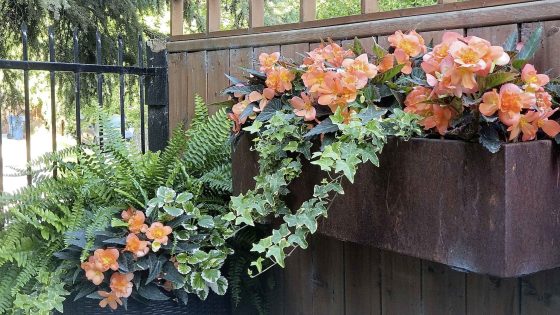
Like the rusty look? Follow my recipe to weather steel or iron items. (Colleen Zacharias / Winnipeg Free Press)
You will need white vinegar, table salt, hydrogen peroxide (three per cent), and degreaser.
Follow the instructions on the bottle of degreaser to clean the steel or iron item, then rinse well.
Spray with white vinegar using a spray bottle.
Next, combine 16 ounces (473 ml) of hydrogen peroxide, 2 ounces (59 ml) white vinegar, and ½ tablespoon (7.3 ml) salt into a spray bottle. Shake thoroughly and begin applying.
Repeat approximately seven times, allowing your steel to dry between each application.
Put the object in direct sunlight under summer’s sizzling heat help to speed up the rusting process.
Be patient. Over the next couple of weeks, the rusty patina continues to develop its weathered look. Each item you rust will have its own character.
Long-lived perennials
I first became interested in the lifespan of perennials when I took the Prairie Horticulture Certificate Program, which at the time (2005) was offered by the University of Manitoba. The course material was written by Sara Williams, a horticultural specialist at the University of Saskatchewan. Over the years I have planted in my garden nearly every one of the long-lived perennials listed in the PHC Herbaceous Plants course. See the list here.
By investing in long-lived, hardy perennials and providing them with the ideal conditions they need, you can look forward to their presence in your garden year after year. Of course, after a while, there may be a long-lived perennial in your garden that has worn out its welcome (in my case, Virginia Creeper vine comes to mind).
What is your favourite (or most detested) long-lived perennial? Reply to this email to let me know.
A not-so-long-lived perennial
Plant breeders are having a field day with Giant Hyssop (Agastache), also mentioned above as a less-thirsty, sun-loving perennials.
Colourful new non-native varieties are being introduced each year that can be grown as annuals in containers or beds. But cold-climate perennial gardeners look to Agastache foeniculum Giant Hyssop, a native variety, for year-to-year performance — except that it doesn’t always survive in the garden as long as many of us would like.
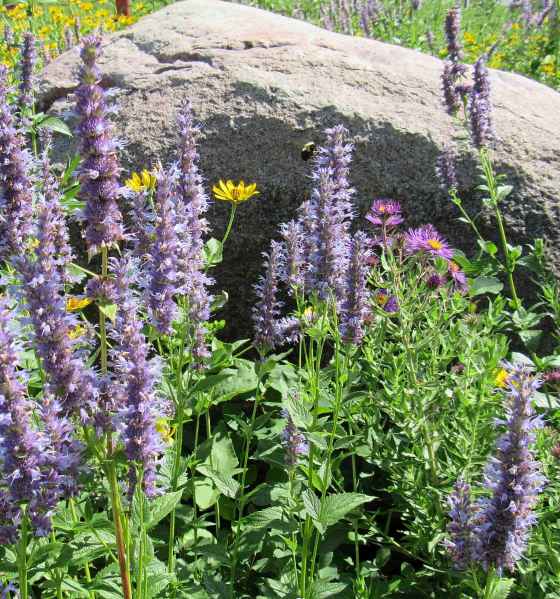
Giant Hyssop is not very long-lived, but it will self-seed. (Prairie Flora)
I asked Aimee McDonald, owner of Prairie Flora which specializes in native plants, how to promote greater longevity in Giant Hyssop.
“Agastache has an average lifespan,” said McDonald. “On average it should live about four to five years in your garden. It prefers spots with full sun and well-drained soil, but it does tolerate drought, light shade, clay-loam or gravelly soils, and acid or alkaline soils. So, in theory, it should be quite adaptive to most garden conditions. If it is not lasting as long as it should, it may not be a variety that is hardy in our extreme weather.”
McDonald said non-native Agastache varieties won’t necessarily survive our extreme weather. “We have seen that -40 C with low snow cover can be quite different from -40 C with lots of snow cover. Our extremely wet springs are much different from our very dry springs. We need reliable plants that can survive. Native plants have survived and adapted to our weather extremes over centuries, having a strong chance of survival when things go unexpectedly.”
Native Agastache foeniculum is winter hardy and unpalatable to deer and rabbits. Attractive to bees, butterflies, and other pollinators, Giant Hyssop is also excellent for cut flowers. But what about that longevity? Agastache will self-seed, said McDonald, almost to the point of being a problem. “This will produce new seedlings and these are very easy to dig out and move to a spot where you would like to have more Agastache in the garden and is a great way to have this beautiful flower indefinitely.”
So, the rule of thumb for relatively short-lived perennials such as Agastache Giant Hyssop is to leave the flower heads on for the winter to allow the plant to self-seed. In spring, take care to not disturb the soil around the area where you planted Agastache. Even though the mother plant may have vacated the premises, tiny seedlings will carry on her legacy.
Have you spotted this pest?
Last summer, a homeowner in south St. Vital began noticed a large black beetle with very long antennae. Susan Southern stepped on the bug the first chance she got, mashing it into the ground, and then told me about it.
If she spotted it again, I asked her to take a photo before squashing it (or capture it in a jar) as this would assist greatly with identification.
When another one landed on her deck this summer, Southern captured a photo (and then she squished it). I can understand why the beetle caused some alarm. Most of us readily identify and embrace beneficial pollinators, but are a little hesitant when we come upon a large bug for the first time.
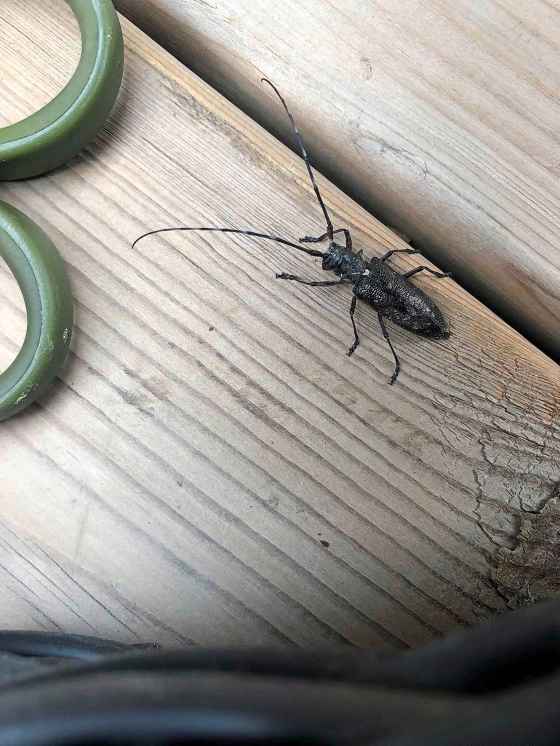
A white-spotted sawyer beetle. (Susan Southern)
The white-spotted sawyer beetle (Monochamus scutellatus), also known as pine sawyer, is a native insect in Manitoba. It is considered to be a minor pest that targets mostly coniferous trees. It’s large (5/8 to one inch or 15-25 mm), and the male beetle’s antennae are nearly twice the length of its body.
The adult beetle gnaws on the bark of small twigs and larva eats the inner wood of pine.
Gerry Engel, arborist and president of Trees Winnipeg, says sawyer beetles are attracted to dead or dying coniferous trees. “Unlike an Emerald Ash Borer, which will kill a healthy tree, sawyer beetles target trees that are already in decline. So powerful are the jaws of the larva, you can actually hear them as they chew through wood.
“Should the beetle inadvertently land on you and thus become threatened, they can give your skin an ‘ouchable’ pinch, too. Not to worry, though, they are native to the area and are on the front end of the process of decomposition, breaking down the dead wood into dust which will be eventually turned into soil.”
Coniferous forests are the natural habitat of sawyer beetles. In the urban setting, sawyer beetles seek out trees that are under some stress. It’s always prudent to keep your trees healthy by watering regularly, pruning when necessary, and addressing issues as they arise.
The mystery behind spots on Monarch butterfly wings
A recent study has caught the attention of lepidopterists and everyone else interested in Monarch butterflies. Andrew Davis, a biologist at the University of Georgia, sought to determine whether the black edges with white spots on Monarch butterflies’ wings provide an aerodynamic advantage that aids in their survival on their long migration from Canada to Mexico.
The amount of black and white in Monarch butterflies’ wings varies from butterfly to butterfly. The study found that the successful butterflies tended to have less black on their wings and more white spots. The painstaking study will continue with further tests, but the findings thus far raise some interesting questions.
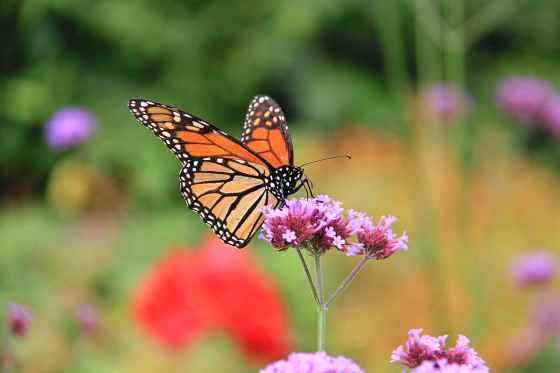
The amount of black and white in Monarch butterflies’ wings varies from butterfly to butterfly. A newly published study found that the successful butterflies tend to have less black on their wings and more white spots. (Alex Henderson)
Jeffrey Marcus, a professor of biological sciences at the University of Manitoba, has studied butterflies throughout his career. In 2016, Marcus and his graduate student Melanie Lalonde identified the Grey Buckeye butterfly (Junonia grisea), the first new butterfly species identified in North America since 2016.
I reached out to Marcus for his thoughts on the findings of the recent study on Monarch butterflies. Below is his reply:
Davis and colleagues report a really interesting pattern: that monarch butterflies closer to the overwintering grounds in Mexico have larger white spots on their forewings than monarch butterflies collected farther North as they begin their fall migration. That’s a novel and noteworthy observation, but the magnitude of the change is small: Mexican monarchs have three per cent more white (and less black) than monarchs from farther North. A three per cent change is not visually obvious to the naked eye of a typical human observer.
Though the effect is small, I accept that the pattern is real. The next big question is what is causing this pattern. The preferred hypothesis of the authors is these changes in the amounts of black and white pigment has consequences for the thermoregulation of the butterflies and the aerodynamic function of their wings as they heat up during flight across the sunlit skies during their fall migration. It’s an interesting hypothesis, but one that is currently untested.
The authors also mention two alternative hypotheses: that white spots have a role in deterring visual predators like birds, which might be particularly important when they are massed at the overwintering sites; or that the butterfly wings get bleached during the migration and become progressively whiter by the time they arrive in Mexico.
All of these hypothesized explanations are possible, but I think there are other possibilities that the authors have not considered (at least in print). For example, pigment variation caused by genetic differences is very common in butterflies. Some genetic differences cause major changes in wing colour (orange versus blue at the primary wing colour), but many more of them just tweak the colours a little bit. There are probably dozens of genes in a monarch butterfly where a minor mutation could leave the overall wing colour and pattern largely unchanged but change the amount of white or black or orange found on the wings by around three per cent.
What is most exciting to me is that the geographic patterns of colour variation in monarchs suggest a whole bunch of really interesting experiments for researchers to try to eliminate some of these alternative hypotheses.
They could have monarch butterflies fly in wind tunnels under different lighting conditions to see if the white spots produce different aerodynamic properties. They could make paper or computer models of monarch butterflies with white spots of different sizes and see if birds can perceive the differences and also determine if they selectively attack models with more or less white on the wings. They could compare metabolic rates of live butterflies with different sizes of white spots in order to see if there are any differences. They could compare the bendiness and other material properties of monarch wings with different amounts of white pigment. And so much more!
There’s lots of interdisciplinary work that would involve scientists with very different expertise in order to get to the bottom of this problem and provide an explanation for this pattern. I look forward to learning what they’re able to figure out.
Your questions, answered
Have a question for a gardening expert? Reply to this email with your question and we’ll seek answers from some of Manitoba’s most knowledgeable gardeners.
If you’re asking about a problem with a plant, please include a photo to help our experts diagnose the issue.
Question: I have raspberry plants/bushes that I planted a few years ago. They have spread in the area but never flower or produce fruit. What can I do?
Answer: When raspberries are unproductive, it is usually related to how and when they have been pruned. There are two commonly grown types, and pruning methods for them differ.
The most popular are summer-bearing or floricane varieties such as “Boyne.” Fruit is produced on canes in their second year of growth. After fruiting, those old canes die and should be removed in late fall or early spring. New canes will develop at the same time and should be left standing, as they will produce berries the following year. If there is winter dieback, the top third of second-year canes can be pruned and will still bear fruit.
The second variety is fall-bearing or primocane raspberries such as “Red River.” These can be cut to ground level in spring and allowed to regrow, as they produce fruit on the current year’s growth in late summer to early fall.
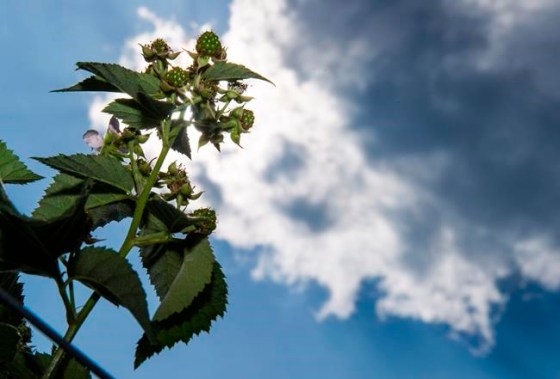
When raspberries are unproductive, it is usually related to how and when they have been pruned. (Cliff Owen / The Canadian Press files)
Raspberries require a sunny location with well-drained soil. If they are growing in heavy clay, the plants may grow and spread, but not produce. Under wet conditions, the roots will develop root rot and die. Apply a balanced fertilizer or compost in spring when new growth is appearing. Water regularly once fruit starts to appear.
Raspberries require insects to pollinate them, so avoid using insecticides harmful to pollinator insects.
Some insect and disease problems can affect plant growth and production, but there would have been evidence such as pale or mottled leaves, dark split canes, or deformed fruit.
Determine which cultivar you have and prune accordingly. Also be sure that it is hardy to our zone.
— Manitoba Master Gardener Association
A great-looking plant
Got a fabulous flower? A handsome houseplant? A ravishing radish or elegant eggplant? An attractive annual or pulchritudinous perennial? We want to see it and share it with our readers.
Reply to this email to send a picture to us and we’ll feature your gorgeous growth in the next newsletter.
Please include a photo, your name, the name of the plant and any information your fellow readers might want to know about it.

Daniel Kennedy, 11, stopped with his mom Mandy on their way home from a camping trip to pick saskatoons at Purple Berry Orchard last Tuesday. The family-owned U-pick orchard is located just outside Winnipeg on the west Perimeter Highway. Saskatoon season started July 4 and usually runs seven to 10 days. Hours range from morning to mid-afternoon, depending on how much crop is picked that day. Call ahead to get more details. (Ruth Bonneville / Winnipeg Free Press)
Mark Your Calendars
The second annual Manawaka Garden Party in support of the Margaret Laurence Home in Neepawa will be held on July 15 from 9:30 a.m. to 3 p.m. Tickets are $20. Register and pick up your garden passport and map at the Margaret Laurence Home, 312-1st Avenue, Neepawa, no later than 2 p.m. on the day of the tour. Tour the home of renowned author Margaret Laurence and three gardens including a large rural garden. This self-guided tour also features seven local artists. Manawaka is a fictional town in Manitoba, frequently used as a setting in Laurence’s novels and short stories. For more details, phone 204-476-3612 or send an email.
The Manitoba Master Gardener Association hosts its annual garden tour on Saturday, July 15 from 9 a.m. to 4 p.m.. The tour will feature 11 gardens in Old Fort Garry and Kildonan areas. Tickets are $20. For details, visit their site.
The South Interlake Garden Club is hosting a garden tour in the Stonewall area on Sunday, July 16 from 2:00 p.m. to 4:30 p.m. Four unique gardens, each with its own style, will be featured. Refreshments will be offered. Tickets are $5.00 for non-members. To register and receive a list of the gardens, email or phone 204.467.2235. Maps will be available at the first garden on the tour, where tickets can be purchased by cash or e-transfer.
The Birtle & Area Garden Tour will be held on July 22 from 10 a.m. to 4 p.m. Registration is $10 at Birtle Centre for the Arts, 671 Main St. For more information, email or visit the centre’s website.
The first annual Holiday Avenue Project Garden Tour in Portage la Prairie is on July 22 from 10 a.m. to 4 p.m. Showcasing eight tour locations including the Best Urban Home Grounds Good Roads 2022 Winner! Tickets are $25 (includes refreshments and a sweet treat) and are available at Portage la Prairie Community Revitalization Centre, 57 Royal Road N. An Indigenous Knowledge Keeper will be sharing information on traditional Indigenous medicines.
City of Brandon Open Garden Tours will take place on the weekend of July 22 and 23. A selection of Brandon’s most beautiful gardens will be on display. There is no cost to visit the gardens. A list of gardens will be made available closer to the date on the city’s website.
The Charleswood Garden Club will host a bus tour on July 24. Tickets are $60 for non-members. The tour includes a visit to Beausejour Daylily Garden, Long Way Homestead, and Northern Grove. The bus departs Charleswood Center Mall, 3900 Grant Avenue, at 8:30 a.m. and returns at approximately 5 p.m. For more details email or visit their site.
St. Vital Agricultural Society will host its 112th annual Display and Fair on August 11 starting at 2:30 p.m. and August 12 at 9 a.m. at the St. Vital Centennial Arena, 580 Ste. Anne’s Rd. Tickets are $2 for one day or $3 for both days. For more details, visit their site.
The Miami Horticulture Show, hosted by the Miami Horticultural Club, takes place on August 17 at the Miami Community Centre, 762 23 Provincial trunk highway. Doors open at 3 p.m. For a complete listing of plant categories, please see the horticultural show booklet.
|