Name this plant
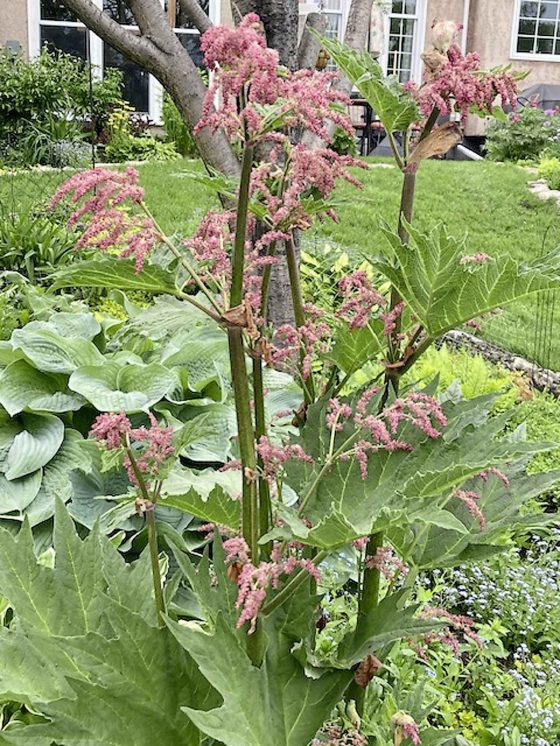
Name this plant! (Hint: it is not false rhubarb.) (Deb Fast photo)
(Hint: it’s not false rhubarb.)
Can you identify this one, too?
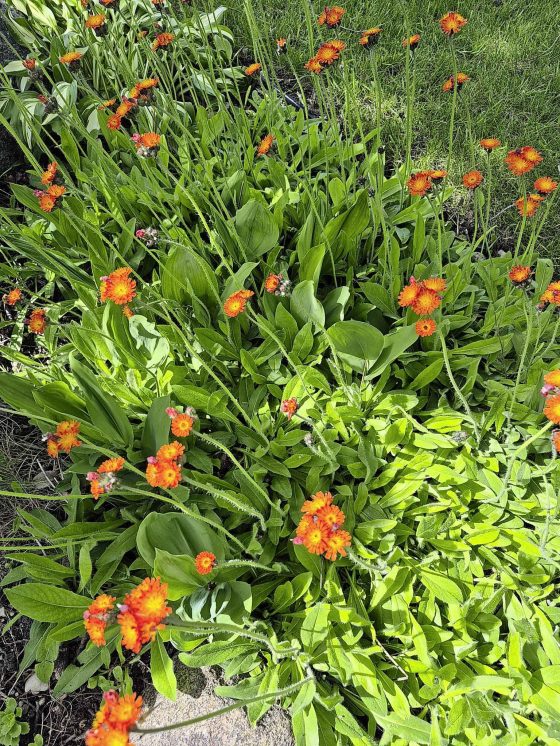
Name this plant — don’t be fooled by its pretty face. (Colleen Zacharias photo)
Scroll down for the answers.
Rain survival checklist
Depending on the amount of rain that fell on June 9 and throughout the rest of the month — and where excess moisture accumulated — the deluge of rain we’ve received has meant misery for some and relief for others.
In the immediate aftermath of an intense rainstorm, it’s important to assess not only the health and resilience of plants but also the flow of water in your landscape.
What to look for:
💧 Standing water. When an area of a garden does not drain quickly after rainfall or irrigation, it is an indicator that soil is compacted.
Well-structured soil contains large and small pore spaces that allow the movement of water, oxygen, and nutrients.
Clay soils contain very small pores, which restrict water movement causing slow drainage and poor soil aeration.
To improve drainage and aeration, amend soil by adding a 5- to 7-cm layer of organic materials, such as well-rotted compost or finely shredded leaves. I like to combine finely shredded natural bark chips with compost and shredded leaves.
Bonus: a shredded mulch layer feeds the soil and aids in the suppression of weeds — and also helps to retain moisture when water is needed. Take care, however, to not add too deep a mulch layer, which runs the risk of trapping excess moisture and depriving plant roots of oxygen.
Improving soil drainage and aeration in compacted soils does not happen overnight. But adding soil amendments annually produces noticeable results in just a few years. The difference is quite amazing!
💧 Water pooling against a house foundation. If the area against your foundation — including patio areas, paving stone walkways, and garden beds — slopes toward your house foundation, take remedial action.
Consult a professional if you think grading is an issue.
Lift and reset uneven pavers adjacent to a house foundation.
Install a weeping tile to direct water away from your house foundation directly into a garden bed planted with moisture-loving plants.

Rain drain beneath downspout; pipe beneath sidewalk directs harvested water to mulched drainage swale. (Colleen Zacharias photo)
Another option is to install a catch basin, also known as a rain drain box, directly beneath your downspout. The catch basin is sunk into the ground, level with the surface. An underground pipe directs the water harvested from your rooftop to either a nearby garden or mulched drainage swale (a shallow trench designed to collect and slowly drain water).
The federal government offers more information on ways to move surface and groundwater away from your home here.
💧Sunken areas. If there is a low point in your landscape where water collects and does not drain, one solution is to create a rain garden.
A rain garden is a shallow depression that is typically 15 to 20 cm deep. It is designed to capture stormwater runoff and slowly sink the water into the ground over a 24-to-48-hour period.

Rain garden installation (Sean James photo)
A rain garden should be located two metres away from your house foundation. After filling the depression with loose, well-draining soil, plant with moisture-loving plants.
🌱 Deep rooted plants. Another strategy for perpetually damp or soggy areas of the garden is to select plants that have deep, fibrous root systems. Plants that are native to Manitoba are especially adaptable to both wet or dry conditions.

Verbena hastata, Blue Vervain (Prairie Originals)
These plants thrive in moist soils but are also tolerant of dry conditions once they have been established:
- Big Bluestem (Andropogon gerardii)
- Red Osier Dogwood (Cornus sericea)
- Daylilies (Hemerocallis)
- Ninebark (Physocarpus)
- Turtlehead (Chelone glabra) and
- Joe Pye Weed (Eutrochium maculatum)
- Blue Vervain (Verbena hastata)
- Golden Alexander (Zizi aurea)
Note: Tiny Tortuga turtlehead (Chelone lyonia) is my number one favourite plant for consistently moist, well-drained soils.
An absolute star in the garden with hot pink, two-lipped flowers in late summer, Tiny Tortuga is a dwarf Chelone (rhymes with “baloney”) that thrives in full sun or partial shade.
However, its performance is not as full and dense in dry conditions.
U-pick flower farm
Everything was set for Sandra Gowan to launch her new flower farm, Seeds to Blooms, in time for July 1st.
Earlier this year I wrote in my Free Press column about Gowan’s decision to transition her long-running hops operation, Prairie Gem Hops, located near Rosser, to a U-pick flower farm.
June’s rainy weather wrecked her plans.
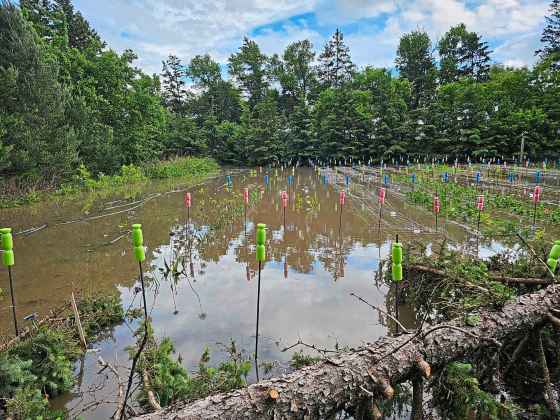
U-pick flower farm under water-felled tree (Sandra Gowan photo)
After several days of transplanting seedlings in May, Gowan says that her farm experienced a once-in-a-lifetime devastating flood.
“We received 10 inches (25.4 cm) of rain on Tuesday, June 9,” says Gowan. This was followed by several days of overland flooding. Sadly, Gowan lost close to 90 per cent of her flower crop. Damage also included felled trees.
Gowan’s primary concern now is to restore the health of her flooded soil by having it tested at a soil laboratory.
This excellent article by North Dakota State University explains how to deal with flooded soils.
A new lab name
Interested in booking soil testing for your property? Farmer’s Edge Laboratories, 1357 Dugald Road, is now called Corvian Labs.
Basic soil analysis starts at $38.95. For more details visit them online or phone 204-233-4099.
Plant ID
The first plant with the large, showy leaves is Rheum palmatum var. tanguticum, growing in Deb Fast’s St. James garden.
Native to China and Tibet, it is a highly variable species with some forms more ornamental than others.
It is commonly known as Chinese rhubarb, but it is not edible. The large, toothed leaves of Rheum palmatum var. tanguticum are dark green with intense rosy-purple undersides. Spectacular on a breezy day.
Rheum palmatum var. tanguticum (Deb Fast photo)
False rhubarb (Rheum rhaponticum), on the other hand, is a wild, European species of rhubarb. It has large, heart-shaped leaves and yellow-green flowers in mid-summer. The stalks of false rhubarb are edible.
“Rheum palmatum var. tanguticum likes rich, moist soil and a site sheltered from the wind,” says Lyndon Penner, author of The Prairie Short Season Yard. “It’s big and dramatic and takes up lots of room.”
“You never know which plants the deer are not going to eat,” says Fast. “This year they left it alone and the plant is giving us great pleasure!”
Interested in growing Rheum palmatum var. tanguticum? It is occasionally available at local garden centres or look for it at specialty mail order nurseries such as Phoenix Perennials.
But don’t plant this! Orange hawkweed (Pilosella aurantiaca) also known as devil’s paintbrush, was spotted in a local garden recently where its glowing orange daisy-like flowers attracted an admiring crowd.
Orange hawkweed (Pilosella aurantiaca) (Colleen Zacharias photo)
It’s pretty face, however, deceptively disguises its bad intentions. Orange hawkweed is a highly invasive perennial plant. It has been classified as a Tier 1 noxious weed in Manitoba. Learn more about orange hawkweed in this handout by the Invasive Species Council of Manitoba.
Sought after peony
Peonies were a scene stealer at this year’s Urban Retreats Garden Tour, which took place on June 19. The rain held off for one perfect day.
At Lenore Linton’s garden, peonies showed off their resilience to June’s buckets of rainfall and gusty winds.

A sought-after peony, Haleigh’s Hallelujah in Lenore Linton’s garden (Colleen Zacharias photo)
Linton grows numerous herbaceous and Itoh (intersectional) peonies. All were beautiful but one incredible specimen stood out for many tour goers — Haleigh’s Hallelujah Itoh peony.
Bred by Donald R. Smith, a former atmospheric research physicist for NASA and renowned amateur peony breeder who specializes in breeding improved intersectional peonies, Haleigh’s Hallelujah is highly sought-after but hard to find.
At the Canadian Peony Society’s Quebec exhibition in 2017, Haleigh’s Hallelujah was a grand winner and declared a “perfect flower.” The romantic, billowy deep pink blooms are like a painting with rosy-pink edges that look almost translucent.
Where did Linton find Haleigh’s Hallelujah? “I bought it several years ago at a nursery in Quebec,” she says.
Hmmm, but which one? I was not able to find a nursery in Quebec that ships peonies to Manitoba.
Coast Farms in British Columbia occasionally stocks Haleigh’s Hallelujah and ships across Canada. If you would like to grow this exclusive peony, add your name to their waiting list.
Great plant partners
At one time, I regularly included lobelia in my annual containers. But tired of straggly stems and poor heat tolerance, I crossed it off my plant shopping list and never looked back.
Until now.
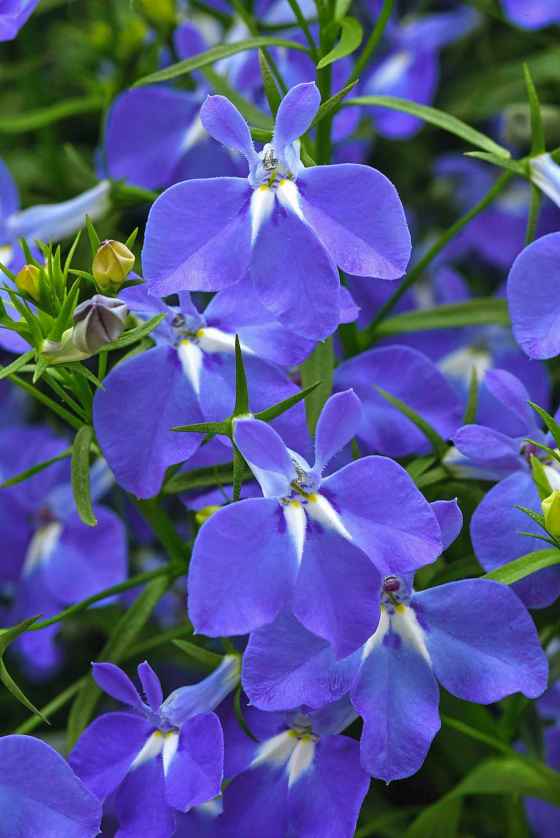
Lobelia Heatopia Blue Improved, new (Ball Horticultural)
Lobelia Heatopia Blue Improved is, frankly, amazing. I first saw it in 2024 in a trial garden and was impressed by its tidy habit and performance in blistering sun.
This year I am growing Lobelia Heatopia Blue Improved in two full-sun containers. It has stood up well to pelting rain.

Scaevola Blazen Compact Blue fan flower, new for 2027 (Ball Horticultural)
I paired it with Scaevola Blazen Compact Blue fan flower, which does not look blue at all. Definitely on the purple side, Blazen fan flower has a beautiful, controlled habit with excellent branching that fans out across the front of a container display without competing with the rest of the plants.
Both annual varieties are new for 2027. I’ll keep you posted on how they stand up to extreme heat.
Edging excellence
There is a lot that could catch the eye in Willy Klassen’s picturesque garden in Portage la Prairie.
Klassen has a flair with plant selection and arrangement as well as creating a captivating layout. But when it comes to the meticulous edging of beds and grassy pathways, his skill borders on the artistic.
Klassen edges his garden beds like a pro using a manual half moon edger. The results look amazing and yet he makes it sound so simple!
“I just use an edger and then I use a battery-operated weed whacker,” he says.

Edging excellence in a Portage la Prairie garden (Willy Klassen photo)
But the secret to his success doesn’t end there.
“In the fall, I usually fill up the trench edge with earth. Then, in the spring, I open it up again so it has that fresh edge.”
I’d like to give this a try, too, but I think Klassen has the edge!
Mark your calendars
Nature Manitoba will host its annual Gardens of Distinction tour on Saturday, July 4.
This year’s tour features 13 home gardens in northeast Winnipeg along with a plant sale at the Seven Oaks Arboretum. Tickets are $20. Purchase online at or at retail locations listed on the website.
You are invited to a garden tour of Alice’s Wonderland on Saturday, July 11, from 1 p.m. to 4 p.m., 212 Strawberry Lane in Neepawa.
Hosted by the Manitoba Regional Lily Society, this beautiful garden owned by Leanne Dowd was featured in the documentary series Ageless Gardens on Vision TV.
This unique opportunity is a chance to see hundreds of collector plants including a large collection of Canadian hybridized lilies. Also on site is the Manitoba Regional Lily Society Heritage Garden.
There is no cost for the event. Light refreshments will be available.
Can’t make the trip on the 11th? Private tours can also be arranged by contacting Leanne Dowd directly at leannekiss.lk@gmail.com.
Birtle Centre for the Arts hosts its annual garden tour on Sunday, July 12. Tickets are $10. The tour starts at Birtle Centre for the Arts, 671 Main Street in Birtle. For more details visit their website.
On July 18, plan to attend the 42nd Annual Lily Show hosted by the Manitoba Regional Lily Society at St. Vital Shopping Centre, 1225 St. Mary’s Rd.
The show is open to the public from noon to 4 p.m. Beautiful lilies will be on display along with expert volunteers who will answer your questions about lilies.
On Saturday, July 18, the Manitoba Master Gardener Association hosts its annual garden tour.
Visit 11 gardens in southwest Winnipeg from 9 a.m. to 4 p.m. Tickets are $20 and are available at local garden centres (see list) or purchase online.
Brandon Open Garden Tours is a free weekend event on July 18 and 19 from 10 a.m. to 2 p.m. Private and public gardens are included on the tour. More details and info on obtaining a garden passport here.
Red River North Tourism Garden and Art Tour will take place on Sunday, July 19 from 10 a.m. to 4 p.m. Features gardens in St. Andrews, St. Clements and Selkirk. Enjoy the works of artists and live demonstrations. Tickets and more details here.
Charleswood Garden Club will host a garden and history bus tour to St. Andrews and Lockport on July 28.
Visit large country gardens and learn about the history of this area which was settled more than 150 years ago.
The tour begins at the St. Andrews Rectory and Heritage Centre. The bus departs at 3900 Grant Avenue (near Safeway, Charleswood Centre) at 8:30 a.m. and returns around 4:30 p.m. Be sure to pack a lunch. Tickets are $60. To reserve your seat, email events@charleswoodgc.ca.
2027 Garden tour to Germany: From May 15 to May 26, 2027, Linda Dietrick, a Winnipeg-based master gardener, will host a garden tour to Germany called Gardens, Castles, and Wine: The German Rhineland.
Tour highlights include the International Garden Exhibition, many historic and modern public and private gardens, a Rhine boat tour, castle visits, and a wine tasting. More details available online. Booking deadline is Sept. 8, 2026.
|