FIVE STORIES ON TURTLE ISLAND
1. Indigenous leaders in Québec are interested and intrigued by the prospect of a new premier after François Legault announced his resignation last week.
After coming to office in 2018 and immediately apologizing for the province’s mistreatment of First Nations and Inuit peoples, the Coalition Avenir Québec (CAQ) leader has had a frustrating relationship with Indigenous communities in the province after promising much but failing to follow through on promises to incorporate the United Nations Declaration on the Rights of Indigenous Peoples into provincial law or sign treaties he committed to do (among many other things).
With the CAQ deeply unpopular, the Québec Liberal party leaderless and the Parti Québécois out to an early lead in the polls (and therefore provincial sovereignty back on the election agenda), one wonders whether Indigenous issues will get any attention this election cycle.
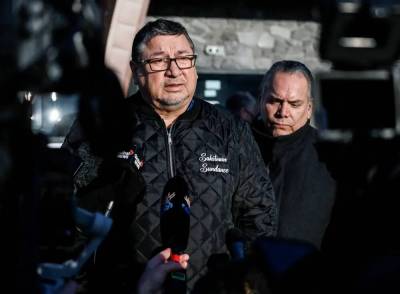
2. Chief and council of Kashechewan First Nation, a community on the edge of James Bay in northern Ontario, have confirmed 19 people from the community have tested positive for a parasite called cryptosporidium.
Caused by eating or drinking water or food infected with feces, symptoms of cryptosporidium are extreme stomach cramps, diarrhea and exhaustion. The parasite emerged after the community’s water treatment plant stopped working owing to defective pipes on Jan. 4, causing sewage to seep into homes, and the declaration of a state of emergency alongside an evacuation of the majority of the population. Now, with multiple emergencies both inside and outside Kasechewan (and the majority of the community now relocated to hotels in Niagara Falls), citizens wait to see what is next.
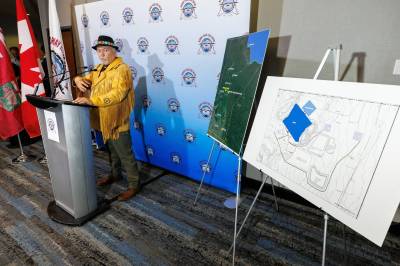
3. Starting this year, if the Canadian Armed Forces needs to purchase a command centre, ammunition storage depots or a medical lab, administrators have the option of buying from an Indigenous-owned defence contractor.
Flowing River Capital, an Indigenous-owned and -led investment firm based out of Saskatchewan, now owns 100 per cent of Marshall Land Systems, a major provider of Canadian military systems located in Moncton, N.B. Former chief of Cowessess First Nation and current Chancellor of the University of Regina Cadmus Delorme is one of the four co-owners of Canada’s newest member of the defence sector.
4. Starting this month, all police officers working with the 12 detachments in the Manitoba First Nations Police Service (MFNPS) now wear body cameras.
Since November 2010 regionally — and nationally for all officers in 2024 — RCMP across Canada have used body-worn cameras when they work in communities.
Body-worn cameras often serve as an independent, unbiased and objective way to capture interactions between officers and the community, often providing a fair recording of events to ensure fairness and justice for officers and the public.
5. Indigenous leaders across Canada continue to condemn U.S. president Donald Trump’s ongoing threats to annex Greenland — a territory made up predominantly of Inuit (Kalaallit) people.
After multiple Inuit groups and governments criticized Trump earlier this month, this week at the Dene National Assembly in Fort Good Hope, multiple leaders criticized the U.S. president, including Assembly of First Nations National Chief Cindy Woodhouse-Nepinak, who said: “I want to take this opportunity to condemn President Trump for his reckless threats to purchase and control Greenland.”
IN PICTURES
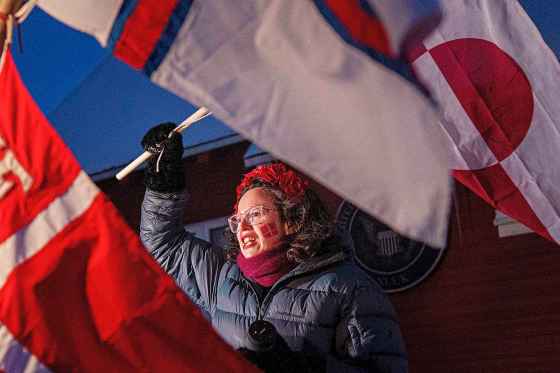
Aviaq Brandt protests against Trump’s policy towards Greenland in front of the US consulate in Nuuk, Greenland, on Tuesday, Jan. 20, 2026. (Evgeniy Maloletka / The Associated Press files)
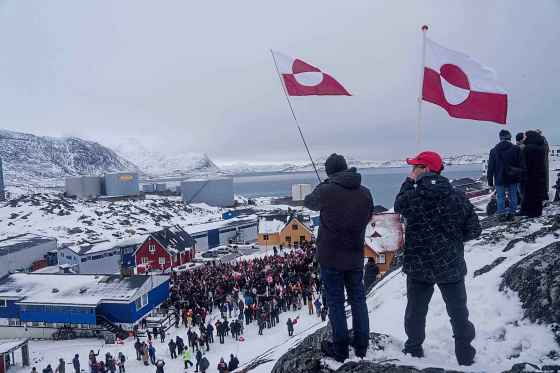
People protest against Trump’s policy towards Greenland in front of US consulate in Nuuk, Greenland, Saturday, Jan. 17, 2026. (Evgeniy Maloletka / The Associated Press files)
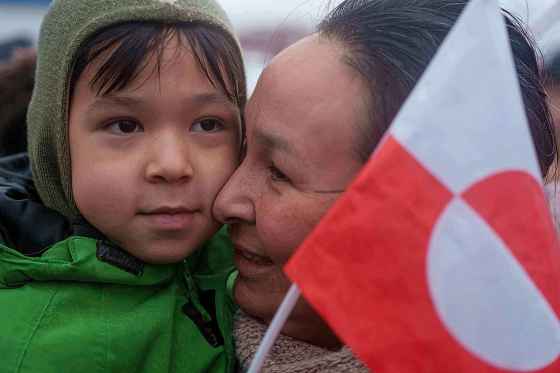
An Inuit woman holds her child during a protest against Trump’s policy towards Greenland in front of the US consulate in Nuuk, Greenland, Saturday, Jan. 17, 2026. (Evgeniy Maloletka / The Associated Press files)
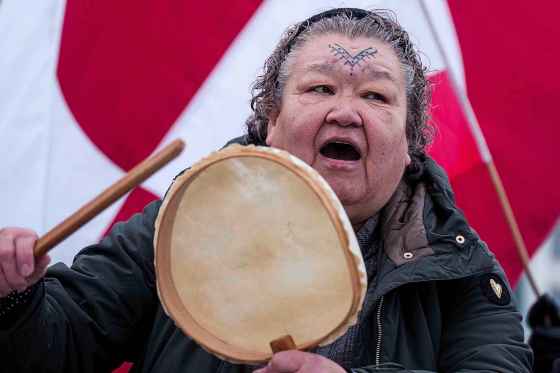
An Inuit woman sings a national song during a protest against Trump’s policy towards Greenland in front of the US consulate in Nuuk, Greenland, Saturday, Jan. 17, 2026. (Evgeniy Maloletka / The Associated Press files)
RECONCILI-ACTION OF THE WEEK
Every week an action, moment, or milestone forwarding reconciliation is highlighted, illustrating how far Canada has come – and how far the country has yet to go.
This week’s reconcili-action is for all of our friends and hard-working colleagues over at the Winnipeg-based Aboriginal People’s Television Network, which had some big announcements this week.
First, there was the return after a six-year hiatus for the landmark investigative program Taken, a show that explores the many cases of murdered and missing Indigenous women, girls and two-spirit people in Canada.
Then there was the announcement that the network will broadcast six NHL contests in the Plains Cree and Inuktitut languages. Then, Canada’s national Indigenous television network announced production on a new season of North of North, a comedy set in the Arctic and featuring predominantly Inuit actors, writers and directors.
This is not to mention, of course, my weekly segment with Indigenous journalist Jennifer Laewetz, the Truth and Politics Panel on APTN National News, which started tapings this past week. Check it out!
|