|
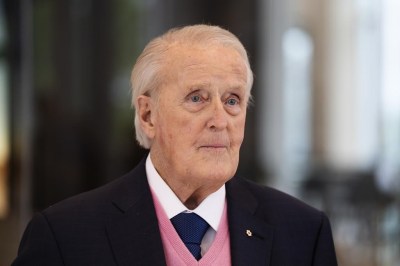
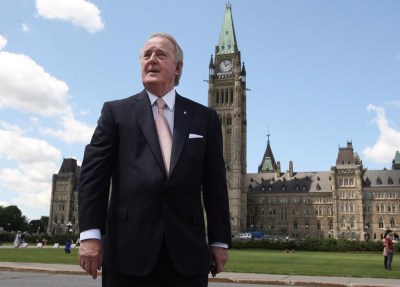
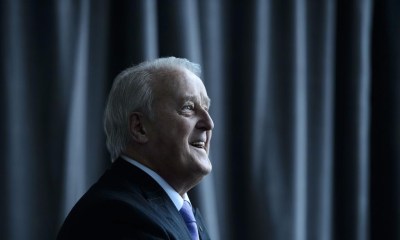
Love him or hate him, it’s hard to imagine a prime minister who did more for Canadian business than Brian Mulroney.
Mulroney, who died Thursday at 84, ushered in free trade, reformed Canada’s tax system by replacing a hidden and confusing manufacturers’ sales tax with a transparent value-added tax he dubbed the GST, and negotiated an agreement on acid rain with U.S. president George H.W. Bush.
For his work on acid rain, as well as establishing eight new national parks and the environmental protection act, Mulroney was named “Canada’s greenest prime minister” in a survey of environmentalists by Corporate Knights magazine.
Advertisement

Free trade is credited as a boon to Canadian exports, though its impact is hard to verify. Trade with the U.S. was already rising, comprising about a quarter of Canada’s gross domestic product, when the free trade agreement came into force in 1989. It rose to more than 40 per cent of GDP starting in 1990. Since 2000, exports have accounted for nearly half.
Unions rallied against free trade, arguing that protectionism was necessary for Canada’s businesses to prosper. The arguments resurfaced again in 1994, when the agreement was expanded to include Mexico, becoming the North American Free Trade Agreement.
As for the GST, consumers hated it, largely because it was so visible. Yet some say it’s a fairer system of applying sales taxes. The former manufacturers’ sales tax, 13.5 per cent, was buried in the final prices of items, so consumers were paying taxes (PST) on taxes (MST).
For businesses, dumping the old tax was helpful in international trade, as the business lobby saw it as hindering Canadian products’ competitiveness. Because businesses can deduct the GST they pay from the GST they charge, the full weight of taxation is borne by the end user.
The tax, plus an unrelated recession, cost the Tories the 1993 election (Mulroney had stepped down the previous June).
Liberal leader Jean Chrétien ran on a platform of abolishing the GST, reducing the wide majority the Tories held at dissolution to just two Progressive Conservative seats. It led to Kim Campbell recording the third-shortest time in office by a Canadian prime minister at just 132 days.
After winning the election in a landslide, Chrétien refused to abolish the GST, perhaps a nod to its inherent fairness.
|