Biidaajimowin
Winnipeg Free Press Logo
 

Portage & Main reclaims its purpose

This week, the iconic Portage Avenue and Main Street intersection in Winnipeg’s downtown will reopen to pedestrian traffic.

As my colleague Dan Lett points out, the city closed Portage and Main 46 years ago, forcing the possibility and promise of its centre literally and figuratively underground.

As the barriers are removed and life returns to this prairie corner, this means reconciling with its complex history and revisiting its complicated centre.

Around the 1960s, the downtown core of Winnipeg was shifting as wealthy citizens moved to suburbs and Indigenous peoples — many struggling after residential schools and other Canadian policies and practices — began to move back to their traditional homeland.

At the same time, urban planners sought to create a downtown economic hub, based on the idea that forcing foot traffic underground into a warm, enclosed commercial concourse would increase vehicle flow and support economic development.

The concept was called the “circus,” an underground circular structure that connected all four corners of Portage and Main. With access via multiple stairwells, citizens would enter a “wheel” with banks, businesses and offices to cross the intersection before travelling upstairs to exit. Meanwhile, cement barriers would stop above-ground pedestrian traffic in the intersection.

The circus was approved by Winnipeg city council and opened in 1979.

Few celebrated, with many locals criticizing the circus as inconvenient, confusing, and an eyesore; discouraging for both citizens and businesses. What was once a place for multiple people from multiple directions and geographies to visit, share, and build a home became a place solely for transactions.

Over the years, citizens and researchers would further identify the lack of wheelchair accessibility, safety issues and how the space was warm for the rich and powerful and unwelcoming for anyone who did not spend money — literally freezing many citizens out. The circus was now a place for some, but not for those who invented it.

​For decades, much debate surrounded Portage and Main. Media reported stories and columnists proposed ideas; politicians decried a decaying downtown and made many promises; referenda promising to revitalize the intersection were held.

But nothing really happened, mostly due to tens of millions of dollars necessary to rebuild and fix the many structural issues and reroute traffic away from the city’s core.

In the end, though, the circus became, itself, a circus.

In early 2024, a city report identified that infrastructure problems compromising the waterproof membrane protecting the integrity of the underground concourse. The cost to fix it: $73 million and up to five years in traffic delays.

A few weeks later, Winnipeg city council voted to open the intersection by July 1, 2025.

And open it will be.

It will not cost a thing now to walk across Portage and Main, and once again people from many literal and figurative directions will come to an intersection full of possibilities and promises.

A complicated, historical, and inclusive place that embraces what it has been and always will be.


Niigaan Sinclair, Columnist


Advertisement

Winnipeg Gardener. A monthly newsletter sharing advice, ideas and tips to keep your outdoor and indoor plants growing.
 

FIVE STORIES ON TURTLE ISLAND

1. The controversial Bill C-5 is now passed, with Canadian prime minister promising “summer consultations with Indigenous leadership.”

Now, as Canada searches for ways to get resource development projects “in the national interest” off the ground, more and more attention is being paid to the Nanticoke Solar project – a 44-megawatt solar facility developed by the Ontario Power Generation in partnership with the Six Nations of the Grand River and the Mississaugas of the Credit First Nation, who own approximately 15 per cent of the initiative.

Located on the site of the former Nanticoke Generating Station, once Ontario’s largest coal-fired plant, the project was completed in March 2019. It has 192,431 solar panels over 260 acres, creating enough energy to power a small town.

This week, the Toronto Star called the initiative proof “Canada could become an energy superpower.”

Speaking of recycling, Canada’s National Observer this week had an incredible story about how B.C. First Nations are repurposing dumps and garbage, inspiring a “waste revolution.”


2. For weeks now, massive layoffs have been happening at schools and family centres across the country due to widescale federal changes to the Jordan’s Principle program earlier this year.

Stories about the cuts and layoffs, alongside the outrage this has produced, are numerous.

In Manitoba’s Hanover School Division, 93 educational assistants were cut, while in Swan Valley School Division, the change has translated into a $2.2 million loss in funding and the cutting of 28 full-time positions intended to support First Nations children.


3. Governor Mary Simon, Canada’s first Indigenous Governor General, entered her final year of her three-year appointment this week with several media interviews in which she made some provocative statements.

In a CTV interview, Simon called on the Hudson’s Bay Company to return artifacts to Indigenous communities, characterized Canada’s movement to adopt the TRC 94 calls to action as “slow,” and stated she “struggles” to support the Canadian government’s agenda sometimes.

Simon also spoke with Mi’kmaq scholar and activist Pam Palmater for her Warrior Life Podcast; she talked about how she handles criticism (including from those in the Indigenous community) and how she wants to build relationships between Indigenous peoples and Canadians. First Nations leaders called on Simon for weeks to delay the passage of Bill C-5, which passed last week.


4. A long piece in The Walrus this weekend has the social-media world buzzing over recent court cases of slander and libel when it comes to accusing those with controversial claims to Indigenous identity.

(In the interests of transparency, I am quoted in one of the cases.)

I’ve written about the intricacies surrounding Indigenous identity more times than I can remember, in pieces like this, this, and this.

Some great primers for the debates on what constitutes Indigenous identity and the consequences for those who claim it fraudulently is in this piece from The Walrus by Michelle Cyca and this CBC documentary by the Anishinaabe writer Drew Hayden Taylor.


5. In the United States, a fascinating class-action lawsuit has been launched by Indigenous leaders against the U.S. federal government in Pennsylvania, alleging that the government “stuck tribes with a bill for Indian boarding schools.”

Launched by the Washoe Tribe and the Wichita and Affiliated Tribes, the suit identifies that much of the $23.3 billion the U.S. government paid for Indian boarding schools between 1871 and 1969 — institutions similar to Canada’s residential school system, which forced Indigenous children to attend assimilative schooling — came from money raised from the sale of Indian lands that were supposed to be held “in trust” for communities.

The law firm that partnered with the tribes is asking for a “full accounting” of the funds used for the schools.

In essence, and if found true, this would mean Native Americans paid for violence against their own children, their own cultural assimilation, and in some cases the death of their own people.


IN PICTURES
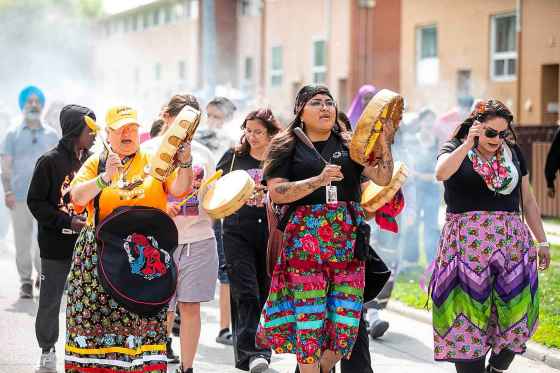
The Binesi Ikwéwag Singers lead the second annual Gilbert Park Smudge Walk down Gilbert Avenue on June 17. (Mikaela MacKenzie / Free Press)

The Binesi Ikwéwag Singers lead the second annual Gilbert Park Smudge Walk down Gilbert Avenue on June 17. (Mikaela MacKenzie / Free Press)

Dancers perform at a powwow demonstration at the Indigenous Day activities at The Leaf in Assiniboine Park on June 22. (John Woods / Free Press)

Dancers perform at a powwow demonstration at the Indigenous Day activities at The Leaf in Assiniboine Park on June 22. (John Woods / Free Press)

RECONCILI-ACTION OF THE WEEK

Every week I highlight an action, moment, or milestone forwarding reconciliation, illustrating how far Canada has come — and how far the country has yet to go.

This week’s reconcili-action of the week is how the country — and particularly Manitoba — responded to National Indigenous Peoples Day (NIPD).

Since the founding of the National Day of Truth and Reconciliation in 2021, there has been considerably less interest in the NIPD, founded in 1996.

This year, however, was different. Our province and city were, of course, the centre as usual and, despite the rain, held great events at Assiniboine Park, The Forks, and a Goldeyes game.

Canada went all-in for NIPD this year and it was nice to see. Check out these pieces, which covered events happening in across the country – and more specifically in Vancouver, Ottawa, Montreal, and Yellowknife. The day was event highlighted at the Vatican (!).


Advertisement

Winnipeg's most read news source. 353,000 Adults Weekly.
 

WHAT I'VE BEEN WORKING ON

Niigaan Sinclair:

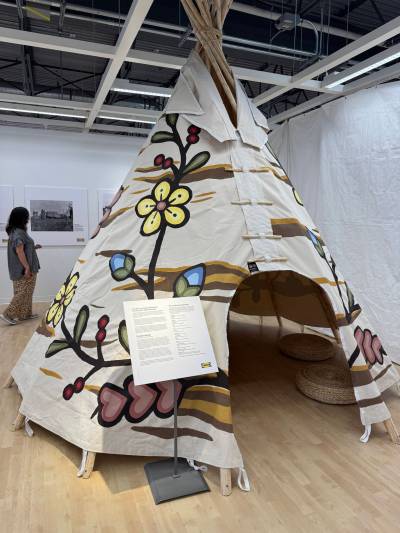
Swedish furniture store an unlikely place to inspire Indigenous pride

If you walk through the popular furniture store IKEA on Saturday, you will see two new installations: an Indigenous ceremonial space and an Indigenous living room. Read More


LOCAL NEWS

Aaron Epp:

‘To us, it’s a symbol of progress’

Opening day nears for south Winnipeg development Naawi-Oodena’s first business Read More


Chris Kitching:

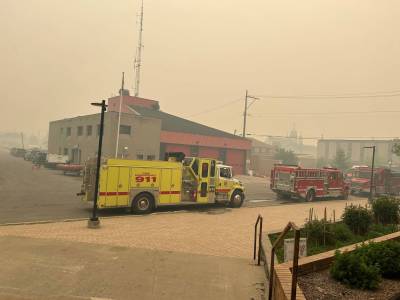
Manitoba lifts wildfires state of emergency

Still ‘very serious’ but extra powers no longer needed; province once again welcomes visitors — as long as they remain cautious Read More


Massimo De Luca-Taronno:

First Nations celebrate culture, resiliency

National Indigenous Peoples Day draws hundreds to The Forks Read More


Gabrielle Piché:

Taxi firms adopt zero-tolerance policy

‘My message for the Indigenous community is that we hear you, we respect you and we stand with you’: Unicity GM Read More


Carol Sanders:

Manitoba’s MDs mandate steps to end anti-Indigenous racism

Manitoba’s doctors are embarking on a path the profession’s regulator hopes will eliminate anti-Indigenous racism in medical care. The College of Physicians and Surgeons of Manitoba is mandating th... Read More


John Longhurst:

Grandfather rock, symbolic sweat lodge on archdiocese grounds described as important symbols of reconciliation

After smudging and a prayer for the Creator’s blessing, a grandfather rock and symbolic sweat lodge were unveiled Friday on the grounds of the Archdiocese of St. Boniface bishop’s residence. Read More


Erik Pindera:

Berens River sues Hydro over Lake Winnipeg project

Berens River First Nation is suing Manitoba Hydro and the provincial and federal governments over a nearly 50-year-old hydroelectric project it alleges has devastated the Lake Winnipeg environment and... Read More


OPINION

Editorial:

Make equality of care part of health care

A new report confirms something that Indigenous and African/Black patients have known for generations — racism is present in Manitoba’s health-care system and it’s harming people. Read More


Steve Ashton and Niki Ashton:

Canada still doesn’t understand respecting Indigenous rights

Thirty-five years ago this week, history was made in Manitoba. Events this week in Ottawa point to just how little we have learnt from that history. Read More


ARTS & LIFE

Ben Sigurdson:

Deerchild collects two honourary doctorates

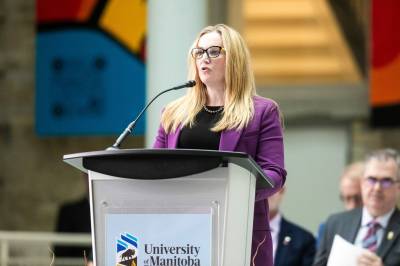
As a writer who wears many hats, it’s perhaps not surprising that Rosanna Deerchild has been awarded a pair of honorary doctorates in one month. The Winnipeg Cree author received an honourary doctor of letters from the University of Manitoba on June 4, then on June 12 had the same honour bestowed on her from the University of Winnipeg. Read More


Zoe Pierce:

Ferguson first

Motocross racer makes Manitoba history with national series title Read More


FROM FURTHER AFIELD


Share:


Download our News Break app