FIVE STORIES ON TURTLE ISLAND
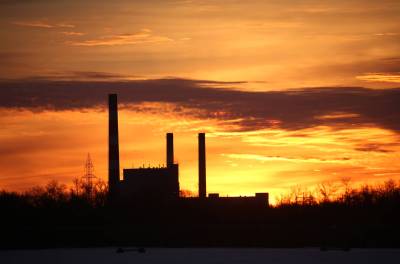
Environmental battle lines are being drawn over the federal government and the province of Alberta’s plans for energy and resource projects on the West Coast and the rights of First Nations there.
This week the Union of British Columbia Chiefs wrote a letter to Prime Minister Mark Carney and Alberta Premier Danielle Smith saying that expanding the oil industry will accelerate climate change and disasters across the world as “the destructive and disastrous consequences of expanding fossil fuel production extend far beyond any single territory… from catastrophic wildfires to destructive floods and rising seas, the impacts of climate change are already being felt across this country. Every new fossil fuel project deepens that crisis.”
The open letter says that other avenues of energy for Canada must be pursued, as “Canadians are witnessing increasingly destructive wildfires, catastrophic flooding, extreme heat, and other climate disasters with growing frequency.
“Governments cannot respond to these disasters while simultaneously approving infrastructure designed to increase fossil fuel extraction and greenhouse gas emissions.”
This month we all get to read an exciting new novel by Michelle Good, my friend and Cree writer, lawyer and Governor General’s Award-winner.

Eliza Sunshine by Michelle Good
Based on the life of her mother Martha Eliza Soonias Stiff, Eliza Sunshine is a powerful novel that explores three generations of Cree women spanning residential schools, returning home, and modern day life.
The much-anticipated novel follows up Good’s Five Little Indians, which won CBC’s Canada Reads contest and was a national bestseller.
I’m doing lots of travelling in Saskatchewan these days and can’t help but notice the advocacy in Indigenous leadership in the province for an “Indigo Alert” system for autistic youth.
Following the tragic loss of Parker Wells, an 11-year-old boy with autism in Alberta in July, Indigenous representatives and leaders from Métis Nation–Saskatchewan are urging the provincial government to establish an emergency “Indigo Alert” system and specifically consider how many Indigenous communities have young people with autism.
Manitoba Advocate for Children and Youth Sherry Gott wrote this great piece in the Free Press last week, bringing up this very issue.
Overlooked (by me, anyways) was some scientific news on the history of smallpox in North America — the disease that rampaged across Manitoba and Canada and in many ways “opened up the land” for European colonization and, eventually, the creation of Canada.
This week, after studying ancient “mummies” in Chile, scientists found the strongest genetic link yet suggesting the virus emerged outside of the Americas and travelled throughout two continents into remote populations.
While some claim the first known case of smallpox appeared in Indigenous communities in the 16th century, this evidence suggests the disease may have arrived in Indigenous communities even sooner.
Finally, with the United States mid-term elections less than three months away, I hope everyone is noticing that just to the south of us, Minnesota Lt. Gov. Peggy Flanagan — a citizen of the White Earth Ojibwe Nation — has expanded her lead according to recent polling in the Democratic primary for the U.S. Senate.
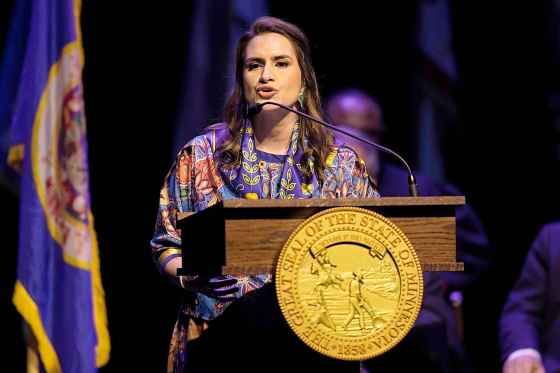
Minnesota Lt. Gov. Peggy Flanagan — a citizen of the White Earth Ojibwe Nation — could become the first Native American woman to serve in the U.S. Senate. (Abbie Parr / The Associated Press files)
It’s no coincidence her traditional Ojibway name is Gizhiiwewidamookwe (“she who speaks in a loud and clear voice”).
By the time this newsletter lands in your inbox, we will know who won the Minnesota Democratic primary — but don’t be surprised if this Anishinaabe could be the first Native American woman to ever serve in the U.S. Senate.
IN PICTURES
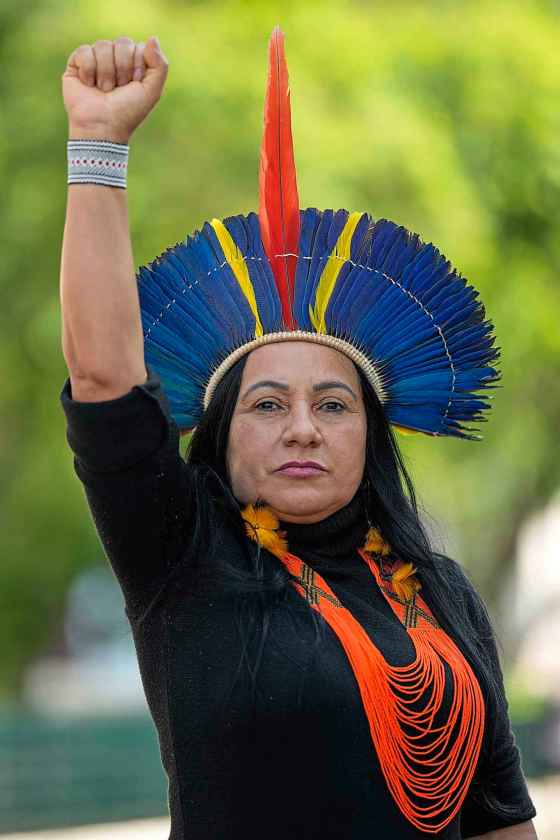
Chirley Pankara, Indigenous candidate for São Paulo state representative, poses for a photo during a gathering to celebrate International Day of the World’s Indigenous Peoples in São Paulo, Sunday. (Andre Penner / The Associated Press)
RECONCILI-ACTION OF THE WEEK
Every week I highlight an action, moment, or milestone forwarding reconciliation, illustrating how far Canada has come — and how far the country has yet to go.
The reconcili-action of the week was a pretty remarkable “seize the day” moment that happened during the Miss Universe Canada Pageant.
Yes, I’m serious.
This past week, Miss Universe Canada hosted its national pageant competition in Windsor, Ont., with 75 contestants competing for this year’s crown.
In the “National Costume” portion of the competition, two contestants wore controversial outfits: a contestant from Brantford, Ont., walked on stage wearing a turquoise, black and white feathered headdress and a small red painted hand on her cheek; another contestant from Kitchener-Waterloo walked out wearing a two-piece “Arctic Beauty” costume with brown fringes on the thighs, two braids and a maple leaf cutout on her back.
In response, 2024 Miss Universe Canada and Cree model Ashley Callingbull criticized the outfit choices on social media and contacted the pageant organizers, calling them examples of cultural appropriation.
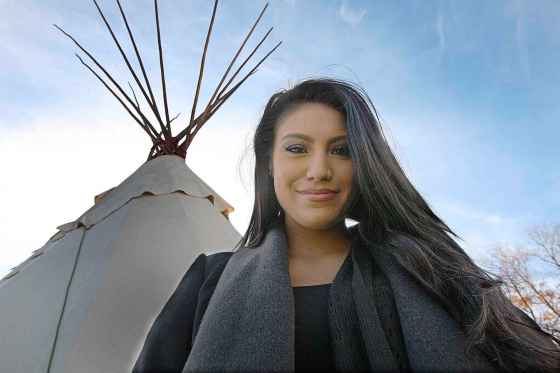
2024 Miss Universe Canada and Cree model Ashley Callingbull criticized the outfit choices made by two contestants at a Miss Universe Canada national pageant competition this past week, calling them examples of cultural appropriation. (Joe Bryksa / Free Press files)
Callingbull, who has never shied away from mixing politics with her platforms, then went on stage before the announcement of the “top twenty” and — before a live televised audience — interrupted the proceedings, and said: “It’s 2026. We should know better, but most importantly a part of reconciliation is that we educate and learn and understand and move on from these things in a good way.”
Here is a video of her intervention.
In response, pageant director Sonny Borrelli apologized and said: “On behalf of all of us at Miss Universe Canada, it was not our intent to offend anybody and if we did, we take full responsibility, we will learn from it.”
Callingbull has agreed to act as a “cultural liaison for the Miss Universe Canada pageant going forward in order to implement guidelines for contestants going forward into the future.”
|