|
It’s a big, bold departure for one of England’s most storied automotive brands.
Jaguar has been taking a lot of heat on social media for what’s been dubbed a bizarre rebranding, with its “Delete Ordinary” commercial completely devoid of vehicles and populated by actors in outlandish, brightly coloured costumes.

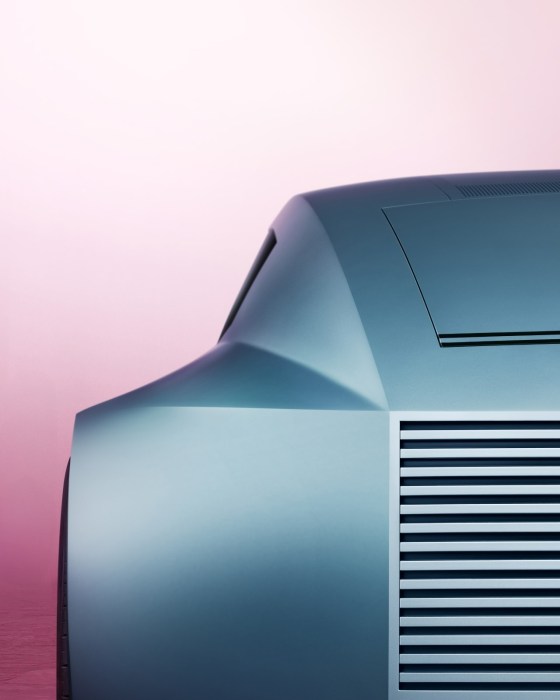
Similarly despised are teaser images of a new electric vehicle concept that combines curvy lines and chiselled hard angles.
Jaguar sales have been falling off a cliff: in Canada in 2022, Jag sold a paltry 4,000 vehicles, according to goodcarbadcar.net.
By comparison, Mercedes-Benz will sell more than twice as many cars in Canada … in just one quarter. (In 2024, Q3 sales were 9,318 vehicles.)
In the U.S., sales have fallen from a peak of 31,000 in 2015 to 8,348 in 2023.
The reasons aren’t too hard to divine: at a time when many brands can barely keep crossovers and SUVs in stock, Jaguar has just three — the F-Pace, all-electric I-Pace and the E-Pace — in its five-vehicle lineup.
The F-Type is a highly regarded sports car, but is in a niche of the market. The XF is a saloon in the Jaguar tradition, but in a market where sedans have little traction.
If it were a hockey team, Jaguar is clearly in “blow it up and rebuild” mode. It’s traded all its top stars and loaded up on draft picks. The company is calling it all “The New Era,” and says it’s a return to founder Sir William Lyons’ ethos of “copy nothing.”
Chief creative officer Gerry McGovern calls the new design scheme “exuberant modernism,” which is “imaginative, bold and artistic at every touchpoint. It is unique and fearless.”
It’s unique and fearless, I’ll give it that.
The rebrand features a new font for the brand name, an art deco new badge of two Js in a circle and an exuberant use of colour. It will switch to manufacturing solely EVs, and the first sign of the new direction will be released Dec. 3 in Miami.

In some ways, it makes sense: clearly what it has been doing has not been working.
Traditionalists who decry the abandonment of its previous direction also aren’t buying in sufficient quantities to have much, if any, of a say. The market, in its sales figures, has spoken.
Essentially, it’s a brand with little left to lose, but it’s carried by sales of sister brand Land Rover — tellingly, Jaguar Land Rover doesn’t separate out Jaguar results from its sales reporting — and is owned by one of India’s wealthiest industrialists.
In other words, don’t count it out just yet.
If anything, the future of Jaguar, however long it may be, will be interesting.
|