|
It had been a minute since I’d seen Disney’s 1937 classic Snow White.
Snow White has the distinction of not only being Disney’s first feature-length animated film but the first feature-length animated film ever. And while parts of it definitely don’t hold up, the animation is stunning. And not “for its time,” either.
Disney had a “look” right out of the gate; all the animals that flock to Snow White — a symbol of her gentleness and kindness — are proto-Chip and Dale, proto-Bambi. The lush backdrop paintings, the hand-drawn animation cels — it is, quite literally, moving art.
I have no interest in seeing the new live-action Snow White — I’ve seen enough of these things now to know they all have their moments of nostalgia but are overall pretty meh — nor can I bring myself to know or care about all the many controversies surrounding it.
But its recent arrival to theatres has inspired a classic Disney re-watch.
And there is something so magical about the hand-drawn stuff.
I felt this way when I reviewed 2019’s live-action adaptation of Aladdin, which I actually didn’t hate but it’s like… to what end? There are some things that only animation can do. I need Genie to be able to turn into a slot machine sometimes, you know?
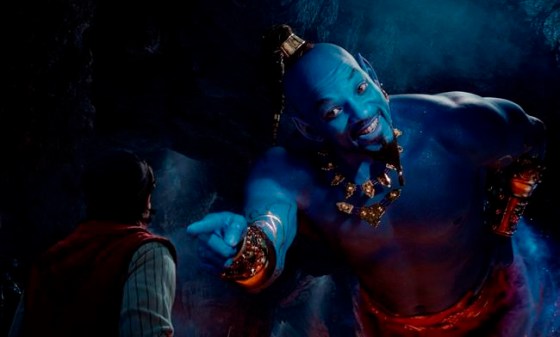
Mena Massoud as Aladdin, left, and Will Smith as Genie in Disney’s live-action adaptation of the 1992 animated “Aladdin.” (Disney via The Associated Press files)
The Little Mermaid (2023) was similarly meh for me. Loved Halle Bailey as Ariel but making Sebastian look like a real crab is diabolical. It was a jump-scare every time he appeared on screen. Also, crustaceans aren’t known for their ability to emote.
While both Sebastians are technically animated, hand-drawn Sebastian is able to have a much more expressive face because the artists were not hemmed in by photorealism. I mean, the original Sebastian is more of a conceptual crab. I feel like the artists tasked with drawing Sebastian for the 1989 movie were like Renaissance artists tasked with painting a cat: “I’ve totally seen a crab before, it’s fine, don’t worry about it!”
But this newsletter is not really about these live-action remakes. It’s about AI.
Advertisement
In recent days, ChatGPT has come under fire for a new tool that allows people to turn their photos into different styles of art — including that of Studio Ghibli.
Co-founded by Japanese animator, filmmaker and manga creator Hayao Miyazaki, Studio Ghibli is known for its specific dreamlike animation style as seen in now-classics such as Spirited Away, Princess Mononoke and Kiki’s Delivery Service.
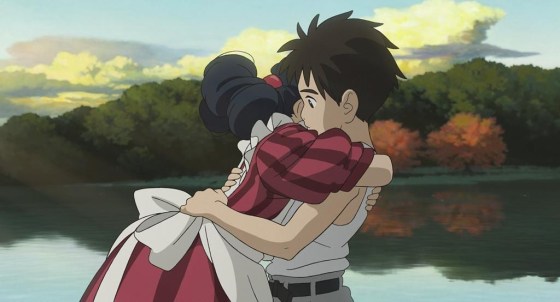
Himi, left and Mahito Maki in a scene from Hayao Miyazaki’s “The Boy And The Heron.” (Studio Ghibli/GKIDS via The Associated Press files)
Miyazaki once called artificial intelligence “an insult to life itself,” so it feels deeply ick that people are now using AI to rip off his style in seconds.
It’s important to note here that CGI, which animation studios such as Ghibli and Disney started using in the 1990s, isn’t the same thing as AI. Creating art digitally, often as a supplement to hand-drawn techniques, still requires human skill. Character design, lighting, editing, colouring — over a dozen people might work on one shot.
AI feels, to me, like the logical endpoint of an instant-gratification society that values outcome and results over process. Everyone wants the thing and they want it right now. They don’t want to spend time mastering a skill, nor do they want to pay someone else who has. Art has become “content.” You can read more of my thoughts on that here.
When I watch 1937’s Snow White, I see art. I see hours and hours of labour and skill and passion. People who started drawing and put in the time to become great.
One of the pro-AI arguments I encounter often is that it “has made art more accessible,” as though expression and creativity aren’t available to all of us.
I think what people mean by “more accessible” is that AI has allowed them to skip over the messy middle, when the process is frustrating and hard, and the result might not be “polished” or even good. But it could be.
I tend to agree with Miyazaki, who told the New York Times in 2021: “I believe that the tool of an animator is the pencil.”
|