|
“What is privacy if not for invading.”
— author and actress Quentin Crisp
Stolen voter lists. A national census campaign. We’re all up in arms about potential privacy concerns without realizing that we’ve already effectively given up our privacy for a 10-per-cent-off coupon.
Advertisement

The Macro
I’m standing in line at the self-checkout of a grocery store when the monitor prompts me for my Scene card number, which this grocery retailer uses as its loyalty card. Unfortunately, the cellular signal inside the store is too weak to access the Cineplex app. Fortunately, there is in-store Wi-Fi.
Unfortunately, to get access, the store wants my name, email, home address and telephone number. I quickly close the browser on my phone, satisfied to leave six Scene points on the table rather than have to provide that much information to get Wi-Fi.
That experience got me thinking about the topic of personal privacy. That, and the fact that privacy is the central issue of two current and developing stories.
The first is the all-too-predictable reaction about the national census. The last census was five years ago which means it’s time again for millions of Canadians to fill out a form detailing who we are, where we live and who we live with, what we believe, and what we do for a living. Is this a violation of privacy?
Some aggrieved libertarians posted videos of themselves tearing up their census forms. Those anecdotes do not mean there is a privacy issue here.
Ottawa has gathered census information for many decades and there has never been a significant data breach. (Although in 2016, 587 hard copy long-forms were stored in a car that was stolen, there’s never been a mass breach. Add to that the fact the information collected by the census is essential for understanding what works and what doesn’t work in our country, and you have mostly a non-story here.)
(Sean Kilpatrick / The Canadian Press files)
The second story is more serious: the brazen, idiotic online publication of official Alberta voters lists with the current names and addresses of three million Albertans.
This mass privacy violation was engineered by The Centurion Project, a rogue political organization hoping to trigger a referendum on Alberta independence. Centurion obtained the list from an unnamed third party, which got it legally from the registered, pro-independence Republican Pary of Alberta.
The list was passed around by about two dozen people connected to Centurion. Another 500-plus people viewed the information online. Elections Alberta got an injunction to get Centurion to take down the list. Charges are pending against some of those involved.
The fallout from this data breach has been worrisome. Supporters of the victims of domestic violence say they’ve already been contacted by women who fear their safety has been compromised now that their current addresses have been posted online.
What do these stories tell us about the state of our privacy?
Both need to be viewed in the context of a world in which we freely provide some of our personal information on a daily basis.
We turn over our email to get a 10-per-cent-off, first-purchase coupon from an online retailer. We frequently allow apps and websites to track our movements online. Our credit card information is logged with online retailers to speed up purchases. Many of us do personal banking while using free public Wi-Fi.
All things that privacy experts say are risky things to do.
Which brings us to “the privacy paradox,” a term used to describe the conflict between how concerned we claim to be about personal privacy, and how much of our privacy we surrender for truly silly or lazy reasons.
First, how concerned are we about privacy? According to the Office of the Privacy Commissioner of Canada, we’re very concerned. An analysis of public opinion polls, done by the OPCC, found that 90 per cent of Canadians were concerned about the invasion of their privacy, with 36 per cent “very concerned.”
At the same time, however, only 27 per cent of Canadians rated their knowledge or privacy laws as good; only six claimed to have a “very good” understanding of the legal framework. Just over half (55 per cent) claim that they know how new technologies impact their privacy, while just under half (45 per cent) claim they know how to protect their privacy.
Uh-huh.

(Jonathan Hayward / The Canadian Press files)
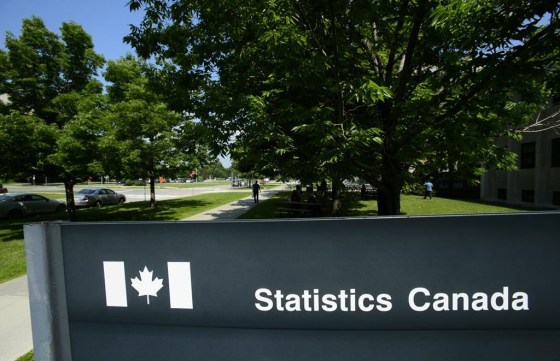
The sheer increase in the number of identity theft and cyber-crimes — most of which involve the illegal use of personal information — would beg to differ. Statistics Canada reported that in 2024, there were 225 police-reported cyber-crimes per 100,000 people, more than double the rate from 2018.
OK, so, what does it all mean and what should we be doing about it?
Don’t click on spam.
Use a burner email account to register for online promotions.
Be wary of conducting sensitive online personal business using free public Wi-Fi.
Tell your apps and websites you visit that you don’t want them to track your activities online.
And tell the Alberta separatists to get stuffed.
|