FIVE STORIES ON TURTLE ISLAND
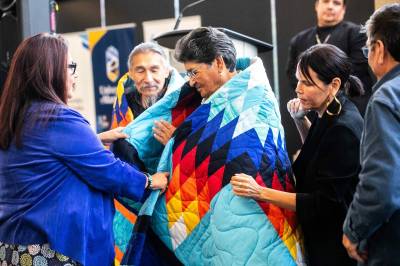
Manitoba lost one of its most well-respected Indigenous elders this week.
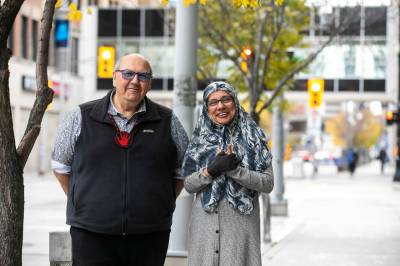
Stan LaPierre died suddenly on Oct. 18. LaPierre, whose Anishinaabe name was Ogimaw Giizhik-iban (“Leader of the sky”) was wolf clan and spent years working with justice workers and Indigenous individuals in correctional facilities throughout the province.
He became an advocate alongside his partner Thelma Morrisseau to search landfills for the remains of Morgan Harris, Marcedes Myran, Rebecca Contois and Ashlee Shingoose.
LaPierre’s legacy is wide-ranging; he built programs and supported people everywhere and anywhere. He was also my uncle.
After a long repatriation campaign by Indigenous groups and the federal government — and a long negotiation process — a series of traditional Indigenous items that were inappropriately taken are coming back to Canada from the Vatican museum.
Among the items are a kayak from the Arctic Inuit, gloves made by Cree people, a Gwich’in baby belt, and a wampum belt from Kanesatake.
Many of the items are from the 1925 Pontifical Missionary Exposition, a world expo overseen by Pope Pius XI, who ordered missionaries to collect Indigenous and non-Christian items of cultural significance and send them to Rome.
The removal of these items left communities harmed, confused and in a state of loss.
For years, the Vatican stated the items for the 1925 Exposition were “gifts,” but they clearly were more like souvenirs — and even stolen property.
An ironic part of this story is the Vatican’s requirement that the Canadian Council of Catholic Bishops receive the items on a “church-to-church” basis rather than let a museum handle them, because to do the latter would spark “a precedent” for governments and Indigenous groups to demand the return of thousands of other inappropriately taken items.
This week, Canada’s Auditor General Karen Hogan will be releasing much-anticipated reports on Indigenous Services Canada.
The reports are expected to delve into the department’s program commitments and spending in key areas such as health-care services in First Nation communities, on-reserve safe drinking water and emergency management planning.
Considering this past wildfire season was the second-highest on record, with Indigenous peoples affected and evacuated more than anyone else in this country, the persistent boil-water advisories and a lack of nursing stations on First Nations, these reports will (hopefully) give Canadians a picture of where the country is at on some critical issues.
Long-sought answers in the death of a Manitoba woman have started to come to light.
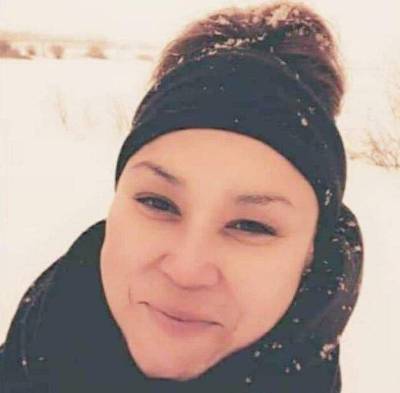
Melinda Lynxleg from Tootinaowaziibeeing Treaty Reserve disappeared in 2020. Her remains were discovered three years after she went missing. but the case remained unsolved until RCMP charged three individuals this week.
Lynxleg, a mother of six, was last seen on the morning of April 2, 2020, after leaving home in the rural municipality of Grandview, about 300 kilometres northwest of Winnipeg.
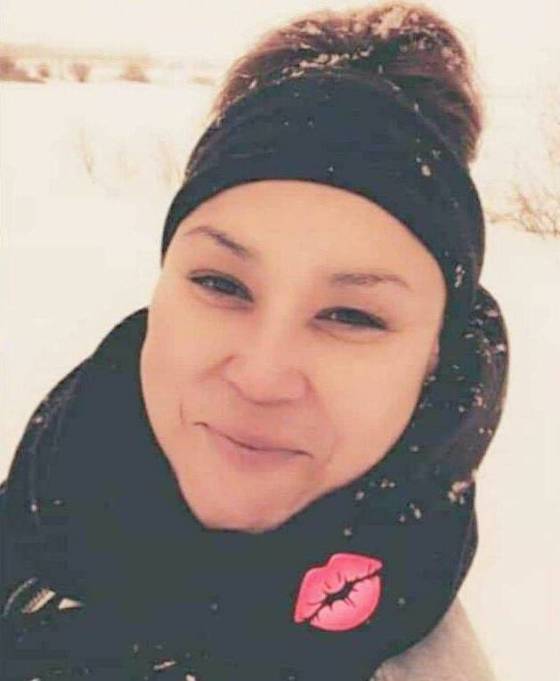
Melinda Lynxleg (Handout / RCMP)
Her remains were found in 2023 at an abandoned property near the Saskatchewan border, around 55 kilometres away.
After declaring her death a homicide, police pursued an investigation that heated up last spring after “new information” was unearthed.
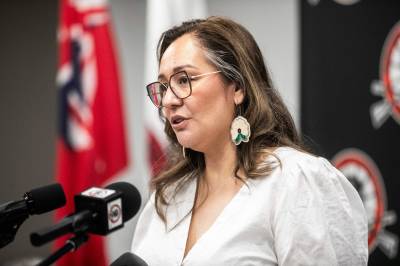
Assembly of First Nations National Chief Cindy Woodhouse spent this week criticizing the federal Liberals for failing to deliver on a long-standing promise for First Nations policing.
Woodhouse said the service must be declared “essential.”
This comes after Woodhouse’s claim last week that she and First Nations leaders have been left out of this week’s first ministers meetings on public safety in Alberta.
First Nations policing has become a hot-button issue for many Indigenous leaders, demanding jurisdiction and pointing to conflicts between Canadian authorities and communities over justice.
In 2023, The Canadian Press reported the federal government’s primary issue with First Nations policing was whether or not they should develop a program or simply offload the responsibility for policing to First Nations (as was done — with very mixed results — with child welfare).
IN PICTURES
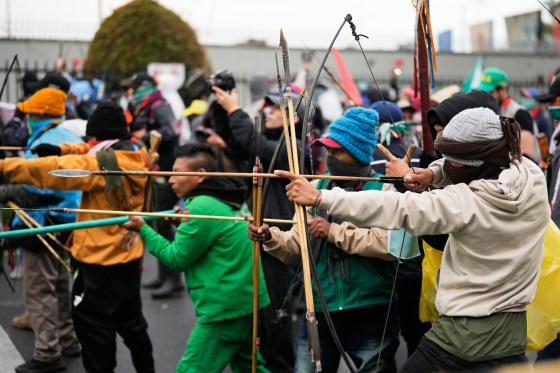
Indigenous people shoot arrows at police officers near the entrance of U.S embassy during a protest demanding action from President Gustavo Petro’s government on social, environmental and security issues in Bogota, Colombia on Oct. 17, 2025. (Fernando Vergara / The Associated Press files)
RECONCILI-ACTION OF THE WEEK
Every week I highlight an action, moment, or milestone forwarding reconciliation, illustrating how far Canada has come — and how far the country has yet to go.
This week’s reconciliaction is for the provincial government of Manitoba.
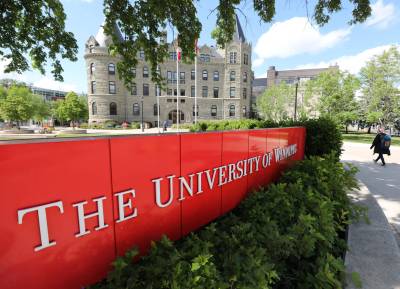
Advanced Education and Training Minister Renée Cable announced $4.5 million in funding for the University of Winnipeg and the University College of the North to create bachelor degrees in Indigenous languages.
Owing to decades of policies and practices that undermined and attacked Indigenous language use, many Indigenous languages are dwindling in speakers and some already have no speakers left.
Focused on developing fluency and language educators, U of W will focus on Anishinaabemowin, or the Ojibwa language, and UCN will focus on Cree. Programming in both languages and others is already offered at the University of Manitoba.
A focus on saving Indigenous languages is quickly becoming part of Premier Wab Kinew’s legacy.
After launching a pilot project to translate legislative proceedings into one of the province’s seven Indigenous languages, the Kinew government implemented changes to Manitoba’s Public Schools Act so it now places Ojibwa, Cree and others in the company of Canada’s official languages in the kindergarten-to-Grade-12 system.
|