|
When the entire trade debacle started — the fault of one man and one man alone — certain segments in Canadian society, rightfully, complained the country for too long had put all its eggs in one basket.
We indeed had grown too complacent on our cosy relationship with the United States. One country shouldn’t account for that much of another country’s trade.
Funny how, now that someone is taking eggs out of that basket and spreading them around, it seems the same people are attacking the concept.
“Get back to the table!” they shout.
Advertisement
I have an analogy that demonstrates, in my view, why that would be the wrong approach.
Consider you’re a car shopper. Is it wise to walk into a dealership, find a nice, bright red Jeep Gladiator, slobber all over it and gush to a sales representative, “I need this vehicle. I must have it! Here, take my wallet, my credit card, my bank account. Take whatever you need to make this deal happen.”
Or is the better approach to whet the salesperson’s appetite by asking some probative questions, appearing open to a deal and then leaving contact information so the salesperson can sweat a bit?
Wait until the salesperson needs the deal more than you do. Find another dealership, compare prices. Let each dealership know about the other.
I don’t intend to downplay the pain of a trade war, particularly that felt by industries caught in the crosshairs. However, locking in long-term economic damage just to get a deal done today is pennywise and pound foolish.
Even former prime minister Stephen Harper, as true-blue a conservative as they come, agreed Canada’s only choice was to walk away from the table. The ask was too great, the offer too little.
That other dealership, by the way, is the European Union, whose president is calling for a relationship at “the highest level possible” between Canada and the E.U. That could even include visa-free working rights for Canadians in Europe. The implications are enormous. Is it a good thing? We’ll have to see the details to know for sure. No, it’s not reasonable to expect those details right now.
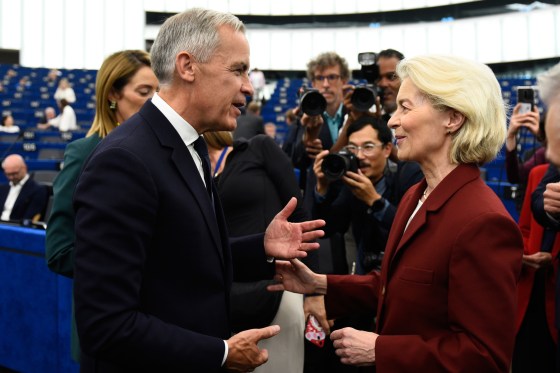
Prime Minister Mark Carney, front left, speaks with European Commission President Ursula von der Leyen at the European Parliament on Sept. 17. (Pascal Bastien / The Associated Press files)
It follows a growth in trade between Canada and the bloc, having nearly doubled since 2016 to €130 billion (C$209 billion) in 2025, according to European Union statistics.
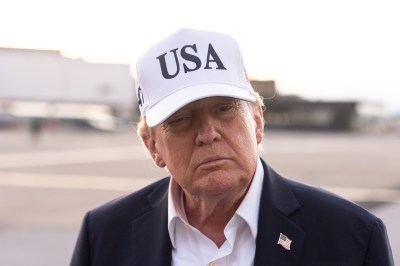
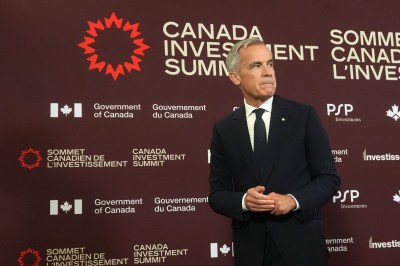
It’s one way of Prime Minister Mark Carney telling U.S. President Donald Trump, “Here’s my card, I have another couple of dealerships to visit. Call me when you’re ready to deal.”
|