|
As regular readers of this newsletter know, I’m fascinated by the language of the pandemic.
We now have a whole dictionary of phrases we didn’t have before. It includes public health terms such as “social distancing” (later amended to “physical distancing”) and “flattening the curve.” It includes slang — referring to the pandemic as a “pandy” or a “panini”; maskne; doomscrolling; Before Times, Blursday. And it also includes instructive phrases such as Pandemic Fine, Anticipatory Grief, Zoom Fatigue and, later, Pandemic Fatigue. I love when language can be put around a feeling, when you can have that moment of: Yes, that’s it!
I’m also quite obsessed by the ways in which we talk about the pandemic. I’m thinking of the folksy “we’re all in this together/now is the time to stay home/things look a little different this year” language from the beginning on the pandemic through to the “it’s a marathon, not a sprint” — ugh, what’s with all the running, I’m tired — through to “it’s a pandemic of the unvaccinated.”
Advertisement

Lately, though, I’ve been thinking about how the usage of “COVID” itself has evolved. I hear this very particular usage all the time: “during COVID,” or “it’s COVID” as though COVID is a season or the weather or some other thing that directly impacts your life but, if you’re lucky, stays largely outside your door.
To that end, I think “during COVID” doesn’t mean “during the pandemic” but rather “during lockdown” — or more specifically, the banana-bread-scented, toilet-paper panicked time of March or April 2020, when we truly were all in this together — a time that the kids on TikTok are already nostalgic for, per this article in The Atlantic.
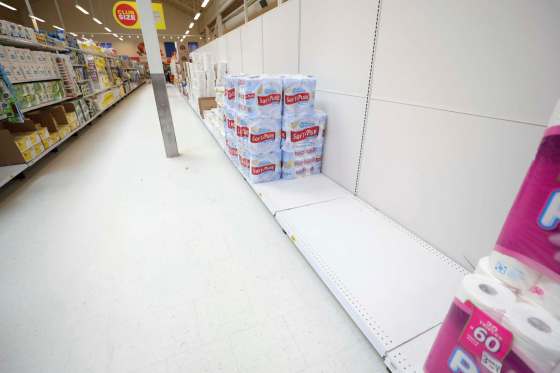
RUTH BONNEVILLE / WINNIPEG FREE PRESSThe rush on toilet paper is an excellent metaphor for the spread of an infectious disease; all it takes is a few isolated cases and before long, we’re all infected, says columnist Dan Lett.
Back then, the pandemic was novel. It was an emergency. It was a crisis to be actively managed and responded to. Now? It’s “still COVID” — but it feels different 19 months in. Those of us who are fully vaccinated have more freedoms that we had before. We can hug our parents and meet up with friends and dine in a restaurant and see a live performance. The pandemic hums in the background.
That’s why a headline from today’s New York Times grabbed my attention: “Past Pandemics Remind Us Covid Will Be An Era, Not a Crisis.”
From the NYT: “We tend to think of pandemics and epidemics as episodic,” said Allan Brandt, a historian of science and medicine at Harvard University. “But we are living in the COVID-19 era, not the COVID-19 crisis. There will be a lot of changes that are substantial and persistent. We won’t look back and say, ‘That was a terrible time, but it’s over.’ We will be dealing with many of the ramifications of COVID-19 for decades, for decades.”
Put another way, COVID isn’t a one-season arc on the television show of our lives. As the NYT piece articulates, the trauma of living through a pandemic will reverberate long after the case counts and death tolls come down and the virus becomes endemic. A pandemic changes our sense of time; isolation and chronic stress has rewired our brains. (I have a viscerally negative reaction to the smell of hand sanitizer now, for example.) The pandemic isn’t over just because sometimes it feels like it is.
But that’s the difference between now and the beginning: sometimes it feels like it is. Perhaps, to evoke another of the pandemic’s phrases, we’re finally learning to live with the virus.
|