|
Remember the “Work Pant?”
If you had a retail, office or serving job in the 2000s, you know — and can probably feel — the specific style of pants I’m talking about. They were black. They were polyester. They were mid-rise and slightly flared, with a hook-and-eye closure. They were probably purchased at Reitmans.
Like the Going Out Top, there was a compulsory element to Work Pants. We all had them, because we all had to have them, because our other pants were low-waisted jeans.
Advertisement

I was thinking about Work Pants when reading a piece in the New York Times written by former BuzzFeed News writer David Mack about how soft pants are a pandemic-era benefit that is here to stay. Mack did not coin the phrase “hard pants” (i.e. most jeans, Work Pants, anything that restricts or binds) but he certainly made it go viral in the lockdown-era of the pandemic when so many people were WFH in sweatpants.
For a long time, sweatpants were synonymous with sloppy and unprofessional. The late fashion designer Karl Lagerfeld famously said, “Sweatpants are a sign of defeat. You lost control of your life, so you bought some sweatpants.” “Comfortable,” similarly, was a dirty word in fashion.
“I don’t think this makes me or my fellow softies slobs. We haven’t given up, per se. We’ve merely let go of what was previously expected of us,” Mack writes. “If anything, it takes a certain grizzled hardness to emerge from the chaos of COVID and embrace softness. It feels liberating, both for my spirit and for my legs.”
Amen.
Of course, the casualization of clothing predates the pandemic (see: the “leggings aren’t pants” wars of 2015.) From normcore (think light-wash jeans and white sneakers a la Jerry Seinfeld in the ‘90s) to athleisure (wearing sporty gear for everything but the gym) to the pandemic-era rise of The Nap Dress (an expensive Victorian nightgown, essentially), there’s been a concerted movement in fashion toward softness, functionality and comfort.
When tech-bro CEOs in Silicon Valley swapped out suits for hoodies, it also ushered in a new “disruptor” era for workwear, too.
But not just any hoodie, mind you — and certainly not a pilling, schlubby hoodie promoting your alma mater or the Vans Warped Tour. An expensive hoodie. A hoodie with some drape to it, made from good-quality materials.
So we’re not talking, then, about people returning to work in PJ pants and stretched-out T-shirts advertising a 5 km fun run. Softness, we’re learning in this new era of fashion, can also mean luxury.
“Quiet luxury,” a trending term coined on TikTok, is evidence. Quiet luxury, which likely has its roots in the saying “money talks, wealth whispers,” is probably most recognizable in the wardrobe on HBO’s Succession (and Gwyneth Paltrow’s recent courtroom looks during the ski accident trial.)
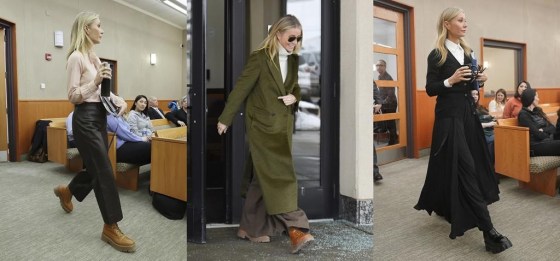
This combination of photos show actor Gwyneth Paltrow at the courthouse for her trial in Park City, Utah on three days in March. For the rich and those who aspire, logo-free fashion with outsized price tags is having a moment. Paltrow wore head-to-toe Prada, cashmere sweaters and Celine boots during her court case. (AP Photo)
Quiet luxury is the opposite of fast fashion. Think monochromatic suiting in understated shades with names like “dove” or “oatmeal.” Minimalism. Streamlined silhouettes. Uniform dressing. Luxurious fabrics in meticulous cuts. Timeless pieces and “elevated basics.”
This is, frankly, a welcome hard-left from the jewel-toned peplums and pencil skirts of the 2010s, when fashion was obsessed with taking us from “day to night” so we all just wore blazers and statement necklaces out clubbing. Big-Janet-from-Finance-letting-loose-to-Lil-Jon energy.
There’s a conspicuous lack of “hard pants” in quiet luxury outfits, too, I’ve noticed. Instead, there’s an emphasis on perfectly slouchy, wide-legged trousers and skimming skirts that are both comfortable and polished owing to how they are made.
“For those who want to hold on to a degree of decorum, the newest thing is sweatpants that don’t look like sweatpants,” Mack writes.
Indeed, work pants need not be hard pants, and soft pants need not be ill-fitting and sloppy. The most well-constructed (and therefore expensive) pants in my wardrobe — some high-waisted workhorses from Lululemon that can be dressed up or down, making them indispensable travel pants, and a pair of wide-legged linen crops from the Vancouver-based slow-fashion Free Label — happen to have elasticized waistbands.
The best part of this move toward softness? The ability to develop a workwear style that feels less hemmed in by the once-ubiquitous Work Pant.
|