|
I do not have particularly strong memories of health class – a.k.a. the subject where sex-ed lives – in school, other than it being pretty basic.
Health, if I recall correctly, was also lumped in with phys-ed, so sex-ed was a real “folder hidden in a folder hidden in another folder” situation.
(School in the ’90s was wild; one day you’re trying to heave yourself over a pommel horse and the next you’re labelling a fallopian tube on a diagram and learning why everyone smells bad now.)
Advertisement

I already knew what was up, though. I got a new baby brother when I was five, which provided a natural introduction to the subject, but also, I could read.
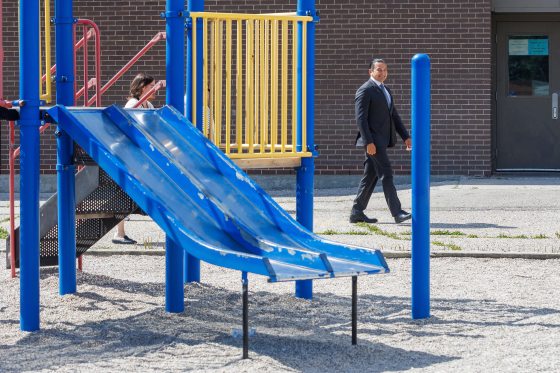
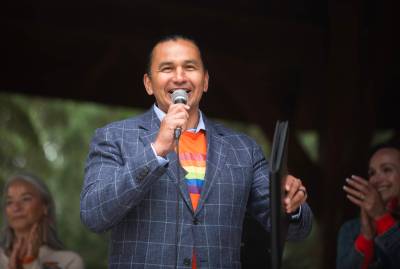
Premier Wab Kinew arrives for a news conference to announce changes to Manitoba’s phys-ed curriculum. (Mike Deal / Free Press files)
In addition to inhaling the entire oeuvre of Judy Blume before it was exactly age appropriate, I also had a book called Where Did I Come From?
Published in 1973 and written by the late British author Peter Mayle, this frank, factual book follows the journey from intercourse to birth and is — and I cannot stress this enough — a picture book.
It’s not pornographic, but there are definitely naked people in it. Sometimes, I would sweetly suggest this book to babysitters as bedtime reading to watch them squirm because, in addition to being a gifted early reader, I was also an early comedian.
There was also the sex-ed that happened at recess, delivered by the hell that is Other Children.
Other Children are amazing sources of misinformation; I once heard a classmate describe ejaculation as “peeing in the woman.” Clearly, somebody didn’t have a copy of Where Did I Come From?
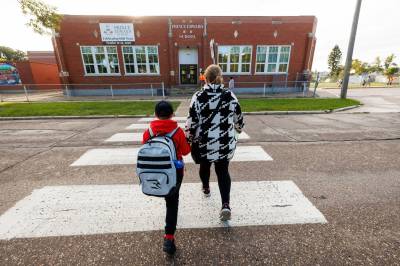
So, I was very pleased to see a suite of changes that are coming for Manitoba students in an updated phys-ed and health curriculum, the first overhaul in 25 years.
Among them: “the talk” isn’t reserved for specific grades but is included at all levels in age-appropriate ways. Menstruation comes earlier, in Grade 4 — which makes sense because some girls get their periods as early as 9; and there is more fulsome discussion about consent (that comes in Grade 7).
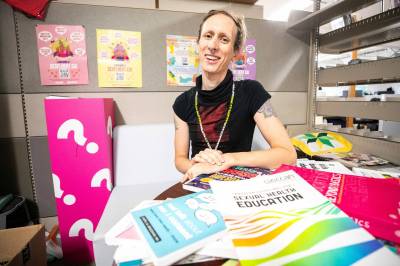
There is also a ton of health education around being a person online, from learning about cyberbullying and emoji use to luring, sexting vs. sextortion and the personal and social effects of viewing sexually explicit media and how it contributes to gender- and sexual-based violence.
All of this is so, so important and, frankly, overdue. Empowering kids with facts is what keeps them safe and helps them make informed decisions later in their lives. Sex education that goes beyond the ABCs of STIs plays a big part in that.
Some people believe that this kind of “talk” doesn’t belong in a classroom. But giving students guidance on how to be a person in the world, IRL and online, is absolutely a role educators can and should play.
When people say it takes a village, this is literally what they are talking about.
For too long, shame, stigma and discomfort around these subjects have kept kids in the dark, which doesn’t keep them safe. It makes them vulnerable.
|