FIVE STORIES ON TURTLE ISLAND
All eyes will be on 366 Henry Ave. in Winnipeg’s downtown core next week as Manitoba’s first-ever supervised consumption site will become operational Aug. 11.
Managed by Aboriginal Health and Wellness, the site is meant to be a safe space in the daytime for adults suffering from addictions to be supervised while using drugs and also having access to health-care staff, supports for overdose prevention, drug testing, and connections to social supports and organizations.
After some delays and political juggling, the site is the fulfilment of an election promise by the NDP provincial government and — as I wrote in 2024 — has tons of research and evidence suggesting supervised consumption is a solution in dealing with the individual and community impacts of chronic addiction.
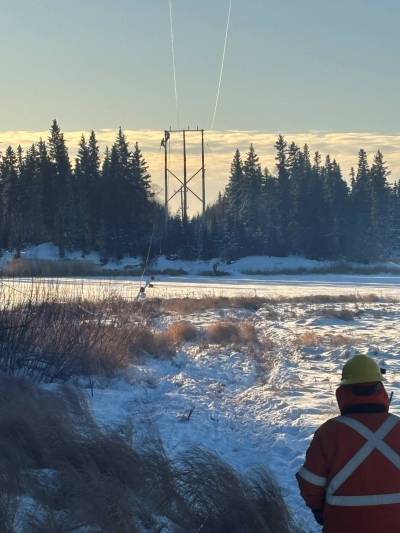
Last week, Pimicikamak Cree Nation (also known as the Cross Lake Band of Indians) filed a proposed class-action lawsuit against Manitoba Hydro, the province of Manitoba, and the Attorney General of Canada.
The lawsuit seeks restitution for severe damages suffered during a 110-hour power outage last December.
Three days before New Year’s Eve, 4,000 residents were evacuated, water and sewage systems froze and burst, and hundreds of homes suffered severe flood or mould damage — with dozens of members remaining displaced for months. The lawsuit calls for the installation of an emergency backup grid.
There’s been lots of conversation this week about outbreaks of Hepatitis A — a sickness caused mostly by contaminated drinking water that is almost exclusively found in Asia, Africa, and Central and South America — in northern First Nations and, eventually, Winnipeg.
Shamattawa First Nation in northern Manitoba this past week declared a state of emergency over an ongoing Hepatitis A outbreak related to poor infrastructure and says it needs immediate support to protect its people.
Hepatitis A is a contagious liver infection caused by the hepatitis A virus (HAV) that spreads through contaminated food, water, or close personal contact with vaccines needed to prevent infection.
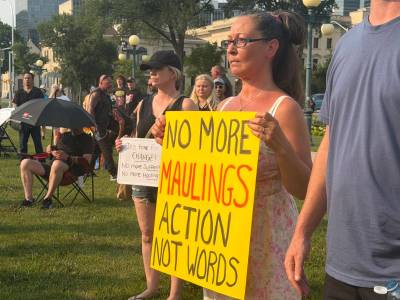
Two domesticated dogs have been ordered to be euthanized by government officials at Sandy Bay First Nation after an animal rescue volunteer was mauled to death.
The volunteer was killed while attempting to take two puppies from a home when the dogs’ owners were not present.
Under the Animal Care Amendment Act in Manitoba, inspectors and animal protection officers are explicitly prohibited from entering a dwelling place without either the explicit consent of the owner/occupant or the authority of a formal warrant.
With the forthcoming United States mid-term elections and U.S. President’s SAVE America Act making its way through congressional approval and, thus, requiring voters to have a passport or birth certificate, Native American leaders are expressing worry that this will disenfranchise many of their community’s voters — who use tribal identification documents.
The issue is not simply about paperwork. For many tribal citizens, it is about Indigenous rights and access to a fundamental right to participate in U.S. elections on Indigenous terms.
IN PICTURES

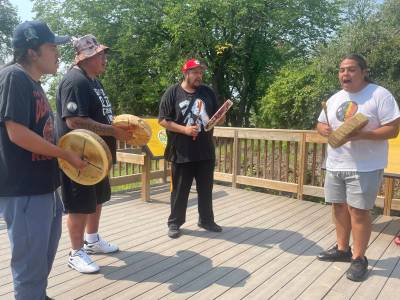
Dancers perform at the First Nations Pavilion as part of Folklorama on Aug. 2. (John Woods / Free Press files)

Dancers perform at the First Nations Pavilion as part of Folklorama on Aug. 2. (John Woods / Free Press files)
RECONCILI-ACTION OF THE WEEK
Every week I highlight an action, moment, or milestone forwarding reconciliation, illustrating how far Canada has come — and how far the country has yet to go.
The reconcili-action of the week is this great piece by my Free Press colleague Zoe Pierce, who wrote about my good friend — and longtime hero in Winnipeg’s Indigenous community — Clayton Sandy’s work in community development and newcomer populations.
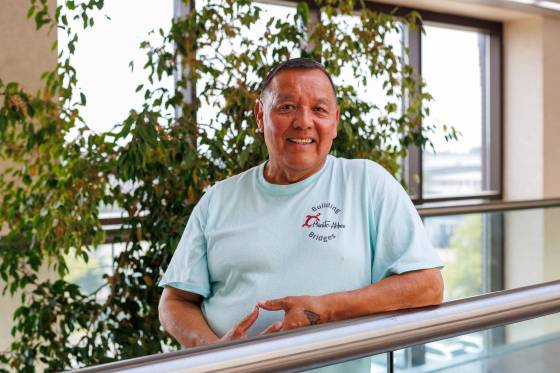
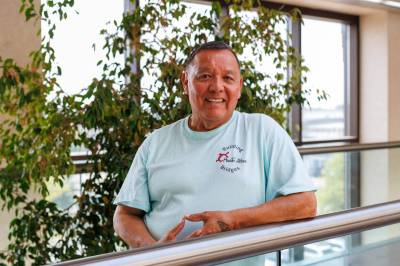
Clayton Sandy spent four decades working in Manitoba’s public service and has spent his retirement working to connect Indigenous and newcomer communities. (Mike Deal / Free Press)
Even if you don’t know Sandy, you’ve likely been impacted by his work at organizations such as McDonald Youth Services, Circles for Reconciliation or throughout the province in departments like natural resources, energy and mines, labour, justice, family services and education and training.
Sandy is a widely known public speaker (check out this testimonial for his work with Skate Canada); and in 2023, the University of Winnipeg gave him an honorary doctorate.
Sandy has been a fierce advocate in sharing his story as a Sixties Scoop Survivor, a ceremonial person and a person committed to societal change — as in this beautiful narrative video he created with the Oral History Centre at the University of Winnipeg.
|