Biidaajimowin
Winnipeg Free Press Logo
 

Who gets to determine Indigenous citizenship?

There has been a lot of confusion — and some unexpected alliances — surrounding the federal government’s proposed Bill S-2, titled An Act to amend the Indian Act (new registration entitlements).

Especially since there has been such an urgency among First Nations leaders for the federal government to make a decision on the proposed bill.

In 1985, in the process of returning Indian “status” to First Nations women disenfranchised primarily because they married non-status men, the federal government introduced the “second generation cutoff” rule.

The rule basically meant after two consecutive generations of non-status parentage, any child produced from that lineage would cease to have “status” — access to Aboriginal and treaty rights.

Classified under Section 6 of the Indian Act, “status” Indians therefore became classified as a person with two status parents or a person with one — basically the legal equivalent of a “full-blood” category and a “half-blood” one.

These groupings based on the amount of racial blood were created without any consultation with Indigenous communities, who determine membership using far more complex means.

So, unsurprisingly, the “second generation cutoff rule” divides Indigenous peoples along racist lines and dissuades status Indians from creating children with non-status peoples such as Canadians, Métis and newcomers.

Some even say it “threatens the future” of all First Nations.

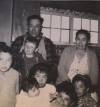
Indian Act’s ‘second-generation cut-off’ poses an existential threat to treaty people in Canada Supplied by Carrie Whiteway Prystupa                                Carrie Whiteway Prystupa poses for a photo in the early 1960s on the “Métis side” of Berens River, along with five of her eight siblings. From left to right (lower) is Carrie, Eileen, Diane (held by Eileen), Myrna and Jo-Ann. At top is Whiteway Prystupa’s maternal grandfather Jacob, who is holding Gilbert, and grandmother Alice. Not pictured is her sister Nancy, while siblings Jackie and Stan hadn’t yet been born. Alice was the granddaughter of the first chief of Berens River First Nation.

In most countries of the world, a government dictating who one should and should not marry to pass on one’s cultural and political rights would be considered unjust and illegal, but in Canada this is just the way things are and continue to be.

Until, perhaps, now.

Bill S-2, introduced in the Senate, seeks to amend the Indian Act to end the second-generation cutoff rule, among other things.

It’s legislation that has received much support by First Nations and other Indigenous leaders, especially those in Manitoba.

The bill has moved very slowly through Parliament for a number of reasons, but mostly because changing the rule would result in the re-affiliation of tens of thousands of individuals as “status” Indians and both federal legislators and Indigenous governments have concerns.

The primary concern is: would re-affiliating these citizens and their rights place a burden that would splinter existing funding for Indigenous governments or come with an increase?

The federal government says this question requires “consultation” and refused to hold a vote by the time Parliament left for summer break this week. This consultation process is expected to take years of negotiations with 640-plus First Nations.

Meanwhile, tens of thousands of individuals who have been left out of their rights as potential First Nations citizens await, frustrated.

Another answer, of course, is for the federal government to stop trying to control the citizenship of First Nations communities — but that conversation isn’t even on the table.

I wonder why?


Niigaan Sinclair, Columnist


Advertisement

Head Start sent weekday mornings. A quick glance at the news for the upcoming day.
 

FIVE STORIES ON TURTLE ISLAND

1. I’m sending good thoughts to all of my relations on Sayisi Dene First Nation, located in Tadoule Lake, as they continue to exist under a state of emergency.

Leaders issued the declaration following a crisis related to drugs, violence and overall community safety. The community continues to suffer from the impacts of the removal from their traditional homelands nearly seven decades ago.


2. A delegation representing industries and governments from across Manitoba have joined with leaders from the Assembly of Manitoba Chiefs as part of a Team Canada trade mission to Japan June 23 to 26.

The AMC delegation intends to ensure First Nations hold key roles as economic leaders and international trading partners, and even brought some hometown culture to the mission holding a round dance at the Canadian embassy there.


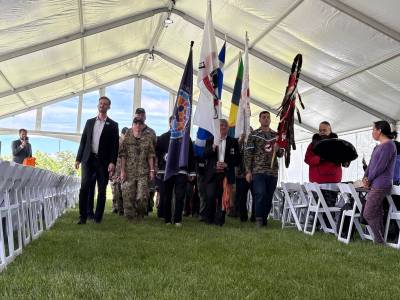
3. Active military personnel, veterans and local Indigenous leaders gathered at CFB Winnipeg for a special reconciliation event on National Indigenous Peoples Day June 21.

If you want to see some live video, check out this report. Hosted in partnership with the Southern Chiefs’ Organization and other groups, the event highlighted the ongoing relationship between the Canadian Armed Forces and Indigenous communities.


4. The Manitoba government announced that the future primary health-care clinic in The Pas will be named after the late Amanda Lathlin, the first First Nations woman elected to the Manitoba legislature.

Lathlin passed away last March after taking a leave for health complications.


5. The honouring of the new Obama Presidential Centre in Chicago allowed many Native Americans to remember one of the more progressive and Indigenous-friendly U.S. presidents in American history.

Some might recall how much Barack Obama inspired a young Wab Kinew, too, long before he decided to run to become Manitoba’s premier.

IN PICTURES
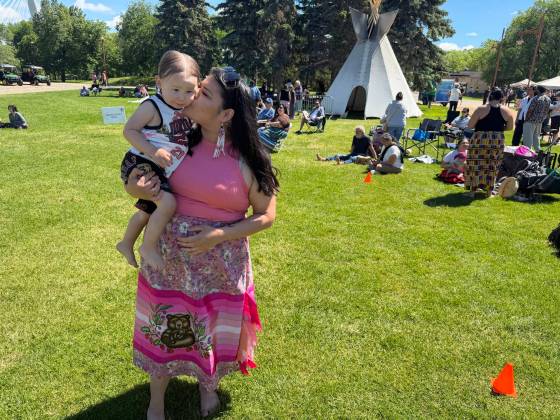
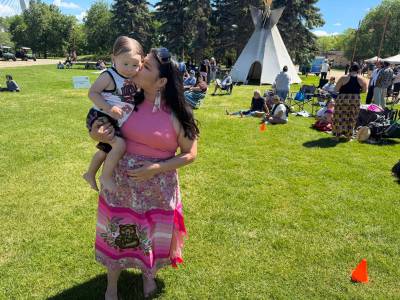
Diandra Ballantyne, from the Mosakahiken Cree Nation, gives her son Denzin, almost two, a smooch on Indigenous Peoples Day at The Forks in Winnipeg on June 21, 2026. She says the event is about celebrating Indigenous people and about the future. (Morgan Modjeski / Free Press)
Diandra Ballantyne, from the Mosakahiken Cree Nation, gives her son Denzin, almost two, a smooch on Indigenous Peoples Day at The Forks in Winnipeg on June 21, 2026. She says the event is about celebrating Indigenous people and about the future. (Morgan Modjeski / Free Press)

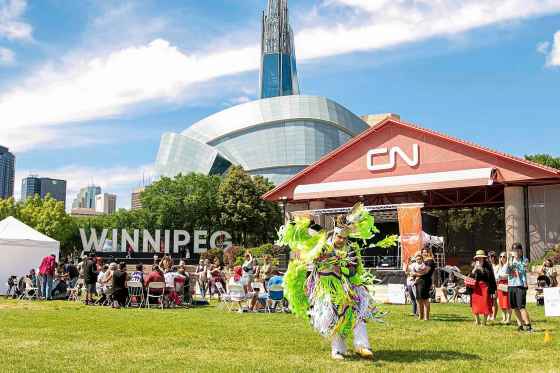
Malaki Kennedy from Sayisi Dene First Nation participates in men's fancy dance during the Wáhkóhtowin Powwow. (Brook Jones / Free Press)

Malaki Kennedy from Sayisi Dene First Nation participates in men’s fancy dance during the Wáhkóhtowin Powwow. (Brook Jones / Free Press)
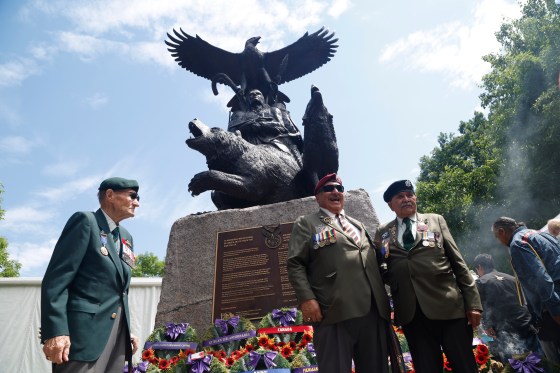
Veterans pose for a photo after a ceremony at the National Aboriginal Veterans Monument marking the 25th anniversary of the monument's unveiling in Ottawa on Sunday. (Patrick Doyle / The Canadian Press files)

Veterans pose for a photo after a ceremony at the National Aboriginal Veterans Monument marking the 25th anniversary of the monument’s unveiling in Ottawa on Sunday. (Patrick Doyle / The Canadian Press files)

RECONCILI-ACTION OF THE WEEK

Every week I highlight an action, moment, or milestone forwarding reconciliation, illustrating how far Canada has come — and how far the country has yet to go.

The reconciliaction of the week is to all of the incredibly dedicated staff, volunteers and fundraisers who celebrated years of hard work this week during the opening of a new Huddle youth hub in Portage la Prairie.

The hub is designed to provide culturally safe, free mental health and wellness services to Indigenous and non-Indigenous youth and was announced in February 2025 with funding from the United Way, private donors, and the federal and Manitoba government.

Way to go! In a world increasing divides and feeling like its full of conflict, this great step in an important direction is proof hard work — and a whole lot of love — really does pay off and create better communities for all.


Advertisement

What's next in Manitoba arts, life and pop culture - curated by Jen Zoratti. Get the newsletter sent weekly.
 

WHAT I'VE BEEN WORKING ON

Niigaan Sinclair:

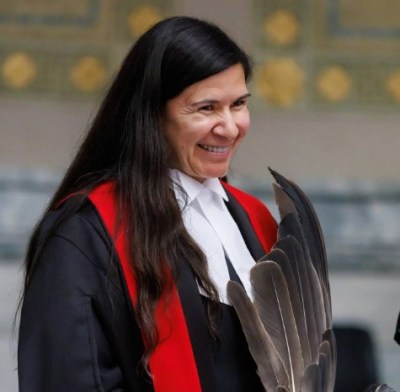
Ryle perfect choice for Manitoba’s first associate chief judge for reconciliation

Judge Jerilee Ryle is more qualified than the majority of Manitoba judges on the issue of how to best serve Indigenous peoples in Manitoba’s justice system. Read More


Niigaan Sinclair:

Importance of Indigenous languages outweighs any soccer tournament

Canada’s parliamentary budget officer says the FIFA World Cup is estimated to cost Canadian taxpayers $1.066 billion to host 13 games over 38 days. That’s $82 million a game, or $28 million a day. ... Read More


LOCAL NEWS

Brittany Hobson, The Canadian Press:

‘Whatever it takes:’ Indigenous group seeks help repatriating items from Switzerland

Sacred pipes, intricately beaded regalia and firearms believed to be associated with the period of the Battle of the Little Bighorn are some of the thousands of Indigenous artifacts a group of First Nations leaders and advocates are trying to repatriate from Switzerland. Read More


Morgan Modjeski:

Thousands celebrate Indigenous Peoples Day

Drums and song filled Winnipeg’s downtown Sunday as thousands gathered at The Forks to celebrate Indigenous Peoples Day and while festivities continued late into the evening, some in attendance said t... Read More


Nicole Buffie:

More than words: Military-Indigenous reconciliation event aims to build bridges between past and future

Bagpipes and traditional Indigenous drums played as one Saturday morning at the Canadian Forces Base in Winnipeg for the first Indigenous Reconciliation Gathering. Ahead of National Indigenous Peop... Read More


Connor McDowell:

Rise in female chiefs ‘a beautiful resurgence’

BRANDON — One month after Birdtail Sioux First Nation member Tréchelle Bunn was elected chief of her community, she was described on the Matriarch Movement podcast as a woman “who truly embodies what ... Read More


Dean Pritchard:

‘It is time to take a step forward… and walk together’

Manitoba appoints Canada’s first judge of reconciliation Read More


Nicole Buffie:

Opposition forms to First Nation’s bid for wind farm

Hydro has yet to award proposal under plan to buy energy from majority Indigenous-owned group Read More


Mason Hausermann:

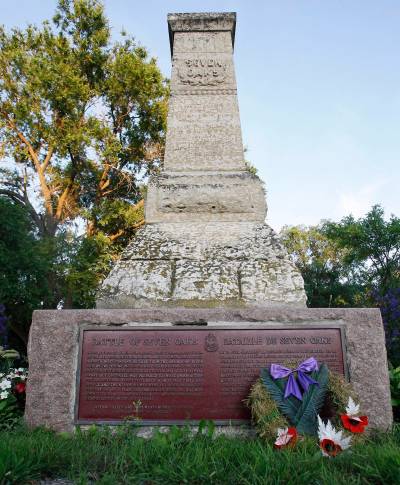
210 years of resistance: the Métis at Seven Oaks

This battle, which took place in present-day Winnipeg, was part of the Pemmican War, which saw several altercations between the Hudson’s Bay and North West companies as they fought for domination of the fur trade between 1812 and 1821. Read More


OPINION

Tom Brodbeck:

Kinew’s political brand appears unstoppable

If Manitoba’s Progressive Conservatives were hoping Premier Wab Kinew’s popularity would fade midway through his first term, the latest polling numbers offer little encouragement. In fact, there ar... Read More


Tom Brodbeck:

Ottawa’s new bail law won’t make cities safer, but it will clog up courts

The federal government has presented Bill C-14 — which received royal assent this week — as a significant public safety measure aimed at repeat and violent offenders. Read More


Peter McKenna:

Clarifying the federal Clarity Act

The act is supposed to bring clarity to any debate and discussion involving the ability of provinces to secede from the Canadian federation. Read More


Dimple Roy:

Can we become Canada’s new capital of fresh water?

Just last month, over 800 limnologists, or freshwater scientists, from North America and East Africa descended upon the RBC Convention Centre for a meeting of the greatest minds on the Great Lakes. Read More


ARTS & LIFE

Reviewed by Susan Huebert:

Sask. Métis village grapples with child abductions, North-West Rebellion

Major events and big personalities can overshadow the lives of ordinary people, but even the youngest and seemingly least important members of a society can help shape communities. In Treat Them as... Read More


John Longhurst:

History of Doctrine of Discovery is complicated

Graydon Nicholas, a retired lawyer, judge and an elder from the Wolastoqey First Nation in New Brunswick, understands only too well the negative impact of colonization on Indigenous people in the Amer... Read More


FROM FURTHER AFIELD


Share:


Download our News Break app