FIVE STORIES ON TURTLE ISLAND
As I wrote about in past newsletters and spoke about in interviews, the Vatican returned 62 items taken over a century ago to Indigenous peoples in Canada this week and the event not only garnered national attention but international coverage. Even CNN covered the story.
The return was emotional for the Indigenous leaders — particularly the Inuit — who met the plane on the tarmack (check out youth leader Katicia Paul at around the two-minute mark in this APTN video to see what I mean).
The items, which included traditional tools, embroidered gloves, a kayak and a baby-carrying sling, are now on display at the Canadian Museum of History while Indigenous leaders determine the next steps in their repatriation.
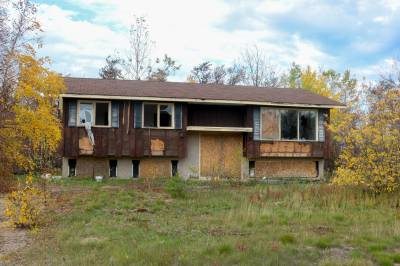
Last Friday, a federal judge ruled in favour of two First Nations in Manitoba (Shamattawa First Nation and St. Theresa Point First Nation) and one in Ontario (Sandy Lake First Nation) who recently sued the Canadian government over its failure to provide safe housing and clean drinking water.
In the decision — which had been reserved for over a year — Justice Paul Favel said the Charter of Rights and Freedoms guarantees equality under the law and the life, liberty and security of all Canadians and Canada is failing to provide these basic rights.
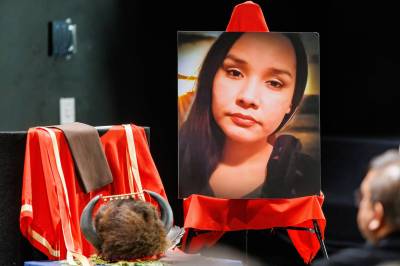
The government of New Brunswick received a failing grade this week from its auditor general for not addressing violence against Indigenous 2SLGBTQ+ people, women and girls.
Just over two years ago, the provincial government released a report entitled Weaving our Voices Together, which featured 39 commitments to address the 231 calls for justice emerging from the National Inquiry into Missing and Murdered Indigenous Women and Girls.
The report was a big part of the government of New Brunswick’s promise to deal with a growing epidemic of violence — but it appears to have stalled.
Our colleagues at APTN aired a fascinating documentary this week on residential school denialism — full disclosure, I am one of many interviewed in the show — and it’s a fascinating take on the issue.
It also documents in detail events from a few weeks ago, when individuals who deny atrocities that occurred in residential school tried to spread this misinformation at Manitoba universities.
With these kinds of events occurring with some regularity (such as the University of Victoria a week ago), and as politicians seek to criminalize this kind of speech, I encourage everyone to become familiar with residential school denialism.
Here is a great podcast discussion on the issue by nationally renowned scholars Dr. Pamela Palmater and Dr. Sean Carleton.
South of the border, tribal leaders are arguing the U.S. Department of Education failed to meet a statutory requirement to consult with Native American leaders and tribes before announcing this week the transfer of dozens of Indigenous education programs to other federal agencies.
As many know, U.S. President Donald Trump handed the Education Department to former professional wrestling executive Linda McMahon — who has spent her time in office dismantling the department, cutting services and firing employees.
This has raised alarm bells for Native American communities who rely on federal funding — and now it appears the cuts and “federal reshuffle” have finally arrived and threatens the livelihood and future of indigenous students.
IN PICTURES

Assembly of First Nations National Chief Cindy Woodhouse Nepinak, right, along with representatives from various First Nations receive a kayak and other indigenous artifacts at Trudeau Airport in Montreal on Dec. 6, after they were returned by the Vatican. (Graham Hughes / The Canadian Press files)
RECONCILI-ACTION OF THE WEEK
Every week I highlight an action, moment, or milestone forwarding reconciliation, illustrating how far Canada has come — and how far the country has yet to go.
This week’s reconcili-action of the week is the recognition of the upcoming 10-year anniversary of the final report of the Truth and Reconciliation Commission.
My Globe and Mail colleague Tanya Talaga wrote this piece this week, APTN did this piece, and the CBC did a “report card” on this country’s progress, or lack thereof.
The Gord Downie and Chanie Wenjack Fund has a nice video here explaining what has happened in the past 10 years.
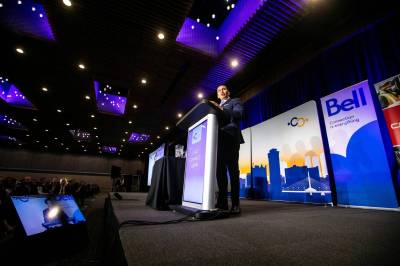
Speaking of the TRC and “doing something,” I’ll be joining a host of residential school survivors, leaders and speakers next week at the National Survivors Gathering in Ottawa to discuss Canada’s progress on truth and reconciliation, with some sessions available online.
|