|
“Football is life.”
– Actor Cristo Fernández as footballer Danny Rojas in Ted Lasso
The FIFA World Cup is just as greedy, corrupt and morally questionable as we thought it was going to be. But it is also glorious in ways nobody thought it would be.
Advertisement

The Macro
This week in the United States — one of three co-hosts for the FIFA World Cup, but demonstrably the main host — politics finally infected the beautiful game.
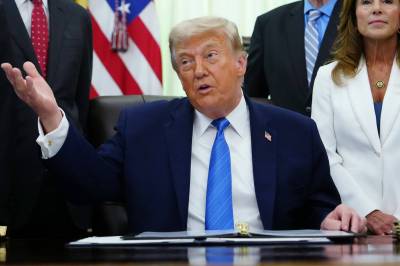
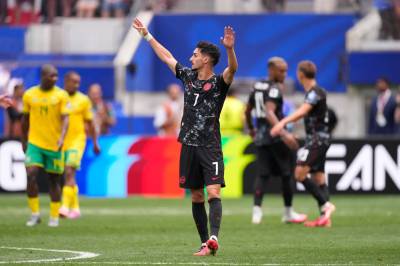
U.S. President Donald Trump intervened personally with FIFA President Gianni Infantino to allow U.S. forward Falorin Balogun to play in a high-stakes round-of-16 knockout game versus Belgium despite the fact that he had been thrown out of his previous game with a red card and suspended for one game.
Infantino did not rescind the suspension, but he agreed to allow Balogun to defer it to some future FIFA match.
It was the first time ever that FIFA has suspended a player suspension. Some red-card infractions have been overturned on appeal, but never just set aside.
In the end, the Footballing Gods intervened and the U.S. was thrashed by Belgium.
But here’s the bigger and more remarkable narrative that this incident cannot erase: despite this ugliness, this World Cup has improbably turned out to be a hugely unifying, motivating, inspiring force.
I absolutely hate myself for writing that last sentence.
Deep down inside, I wanted the World Cup to collapse under the weight of FIFA’s relentless corruption.
FIFA expanded the tournament to a ridiculous 48 teams, offloaded billions of dollars of operating costs to host cities and countries, failed to contest U.S. visa policies that kept hundreds of fans from smaller countries from attending games, and embraced obscene ticket prices driven to perverse heights by its gratuitous dynamic pricing algorithm.
Add threats by the U.S. to use World Cup games as an opportunity to capture and deport legal immigrants, and this was always going to be the Corruption Olympics.
But then, something remarkable happened.
The 2026 World Cup has inspired acts of generosity, compassion and empathy that belie both FIFA’s greed and Trump’s utter contempt for the integrity of the beautiful game.
First, there is the fact that the expanded tournament allows the North American diaspora from many competing nations to support their football teams in person for the very first time. Stories began early in the tournament of immigrant fans flocking by the tens of thousands to attend games in cities across the U.S., Canada and Mexico.
“This World Cup would have looked grimly different without the locally based communities who showed up to bring their love and cultural and civic pride to matchdays,” New York Times correspondent Amy Lawrence noted. “Diaspora supporters have made this World Cup. Arguably, they have saved this World Cup.”
The Ghana-Panama match in Toronto drew tens of thousands of diaspora from both nations. When Ghana beat Panama with a dramatic goal in extra time, Ghanaian fans flooded Sankofa Square and the intersection of Yonge and Dundas streets for a passionate, tear-filled celebration.
The unbridled joy of football diaspora is not the only humanizing narrative. Consider the example set by the good people of Lawrence, Kansas, a city of 100,000 people and home to the University of Kansas, that agreed to serve as the training hub for the Algerian national team.
Lawrence is a committed liberal, progressive-minded community located in an overwhelmingly Republican-voting state. How did the Lawrencians respond to their Algerian visitors?
Lawrence not only welcomed the Algerians, it embraced them. The city held a parade for the team upon its arrival. Local artists were commissioned to create public art honoring Algeria, while the city put signs on lamp posts that said “1,2,3, Viva l’Algérie.” Locals of all shapes and sizes donned Algerian jerseys. The University of Kansas marching band learned to play the Algerian national anthem. And they played it often.
What does it all mean?
In the midst of one of the most xenophobic periods in American history, when the simple act of attending a football match meant risking potential capture and deportation, diaspora fans are showing up. At the same time, and really running directly against the script authored by the Trump administration, Americans are embracing teams from far-flung countries with pride, passion and — yes — love in their hearts.
Inadvertently, the World Cup reveals Trump’s kryptonite: the millions upon millions of Americans who do not hate and dehumanize people from other countries. Americans who, if they voted, likely would not vote for a MAGA-endorsed candidate in this fall’s midterm elections and the 2028 presidential election.
The problem is that electoral turnout math strongly suggests they do not vote. In the 2024 presidential election, only 65 per cent of voting-eligible Americans cast a ballot. Trump won with 49.8 per cent of the votes cast, which means he is governing with the support of less than one-third of all voting-eligible Americans.
Trump may rule America like a monarch — and he and his acolytes are working to reimagine government institutions to embrace his hateful worldview — but there are millions upon millions of Americans who do not want what Trump is selling.
If only they would show up in the midterms and let Trump know that his America is not their America.
|