FIVE STORIES ON TURTLE ISLAND
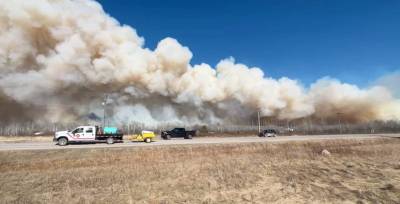
The changing of the seasons means the rise of the impacts of climate change — with the beginning of floods, wildfires and drought impacting particularly northern and remote First Nations, Métis and Inuit communities.
Two communities close to my heart, Peguis First Nation and Opaskwayak Cree Nation, were among the communities that faced wildfires created from the sudden drying and lack of rain.
The Government of Canada released a report last year calling for the “necessity of Indigenous-led climate change adaptation.” Winnipeggers will also be affected, as hundreds of refugees hit by climate-created crises become neighbours, having evacuated to Winnipeg hotels.
International media are taking notice. The Guardian published a piece about extreme weather changes in northern Ontario.
Federal judges are hearing a case this week from more than 100 First Nations in a class-action lawsuit against Canada for failing to fulfil legal treaty obligations and provide adequate housing.
The statement of claim for $5.1 billion in compensation alleges Canada has failed to uphold the honour of the Crown and Canada’s Constitution by using “deliberately underfunded housing on reserves,” while simultaneously isolating First Nations by imposing restrictions on their ability to provide housing for themselves.
The class action was launched in 2023 by St. Theresa Point First Nation in Manitoba and Sandy Lake First Nation in northwestern Ontario, and more than 1oo other First Nations have joined the lawsuit.
“The Crown forced us to move onto reserve land that it deemed economically invaluable, and packed us in like a can of sardines. We were set up to suffer. The housing crisis on reserve is a national shame,” Raymond Flett, chief of St. Theresa Point Ansininew, told APTN.
In the face of wide-scale calls from First Nations to dial back her rhetoric, Alberta Premier Danielle Smith continues to double down on her commitment to reduce the requirements for instigating a referendum on separation from Canadian confederation.
There is sadness and dissatisfaction in Alberta after the election of the federal Liberals to a minority government during last month’s federal election, resulting in rallies promoting Alberta separatism.
I wrote about Smith’s new Bill 54 last week, arguing that sowing the seeds of Alberta discontent is predominantly a political distraction from the many scandals in which the province’s government is currently mired.
Smith has now announced any referendum on Alberta separation will “100 per cent” respect Indigenous treaty rights.
My colleagues over at APTN Investigates exposed a trend happening in Manitoba where government officials are using non-disclosure agreements (NDA) for former employees to mask acts of racism and discrimination.
Former City of Winnipeg employee Dennis Smith, who is Métis, alleged he was harassed numerous times at work — including colleagues sabotaging his work, bullying him, and accusing him of reporting on others — resulting in a conflict with his union, the signing of (what he claims is a coerced) NDA, and a controversial $20,000 compensation deal. APTN has documented other cases as well.
Advocates have long accused forces in the public and private sector of using NDAs to shield violence in workplaces in Canada.
On May 2, U.S. President Donald Trump released his administration’s 2026 budget proposal, which intends to cut $163 billion throughout the federal government, including severe cuts to essential education, business, policing, infrastructure and child-welfare programs in Native American communities.
Specifically, the budget plan calls for a 24 per cent reduction — nearly $911 million — to core tribal programs overseen by the Bureau of Indian Affairs, Bureau of Indian Education, and Department of Housing and Urban Development. The White House claims it is trying to “weed out radical woke grants and programs and streamline other programs for tribal communities that were ineffective.”
Critics and tribal leaders argue the cuts “threaten to undermine the federal government’s treaty and trust obligations to Tribal Nations.”
IN PICTURES
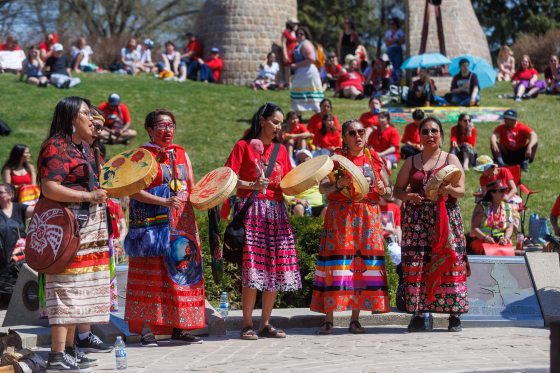
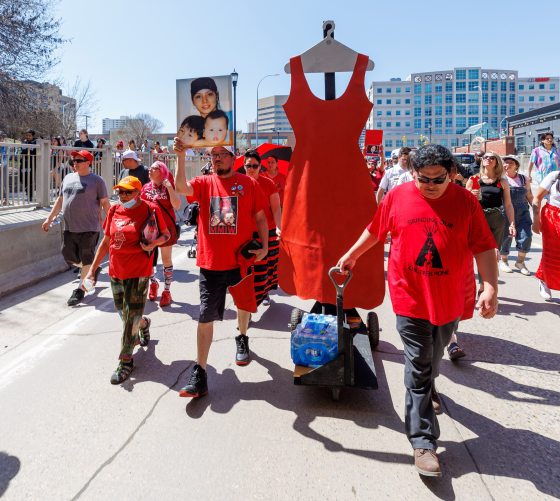
Hundreds of Manitobans gathered for Red Dress Day ceremonies this week, including at The Forks in Winnipeg. (Mike Deal / Free Press files)

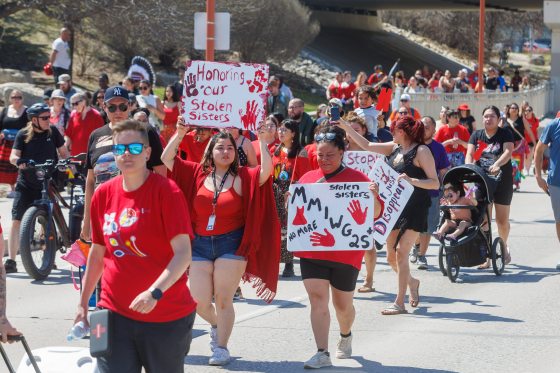
Raven Lacerte and her daughter Cedar, 6, look on as hundreds of people take part in the third Our Women Are Sacred walk of reflection on Songhees-Esquimalt Nation land in Esquimalt, B.C., on Monday, May 5. (Chad Hipolito / The Canadian Press files)

The healing event Our Women Are Sacred took place in Esquimalt, B.C. to raise awareness and honour sacred life givers, members of the 2SLGBTQIIA community and a remembrance for the (MMIW) Missing Murdered Indigenous Women and Girls. (Chad Hipolito / The Canadian Press files)
RECONCILI-ACTION OF THE WEEK
Every week I highlight an action, moment, or milestone forwarding reconciliation, illustrating how far Canada has come – and how far the country has yet to go.
Hundreds of new Indigenous doctors, lawyers, teachers, nurses, business leaders and other professionals graduated from Manitoba’s universities and colleges this month.
A 36th annual traditional powwow ceremony was held at the University of Manitoba last Saturday afternoon, where nearly 500 First Nations, Métis and Inuit students graduated during the 2024-2025 academic year — one of the largest cohorts in history.
Graduates of the university receive a purple stole for their graduation ceremony, while Métis students receive a traditional sash from the Manitoba Métis Federation.
Meanwhile, the University of Winnipeg and RRC Polytechnic graduated their own cohorts on the same weekend, with the U of W wrapping their graduates in a blanket.
|