|
In the coming months, there will be no shortage of civic election coverage in the pages and pixels of the Free Press.
That investment in journalism is increasingly made possible by readers who support a newspaper they trust to cover our city and province, as it has since 1872.
But have you ever considered that this investment in covering City Hall — and the people occupying the mayor’s chair and council seats — is good for the city’s bottom line?
A new research report from Rebuild Local News found a direct link between the costs of civic borrowing and local newspapers.
Spoiler alert: the municipal bond market is wary of lending to municipalities without reporters watching what’s being done with taxpayers’ money.
“Local journalism performs a core fiscal function: continuous, external oversight of public institutions,” says the report. “When that oversight erodes, governments face less scrutiny over spending and procurement decisions, increasing the likelihood of wasteful spending and corruption.
“For these reasons, bond markets perceive greater risk of lending to unmonitored local governments and thus demand a higher interest rate as compensation for bearing the additional credit risk.
“The higher borrowing costs for local governments are ultimately borne by local taxpayers in the form of increased taxes and reduced spending on public services and infrastructure upkeep.”
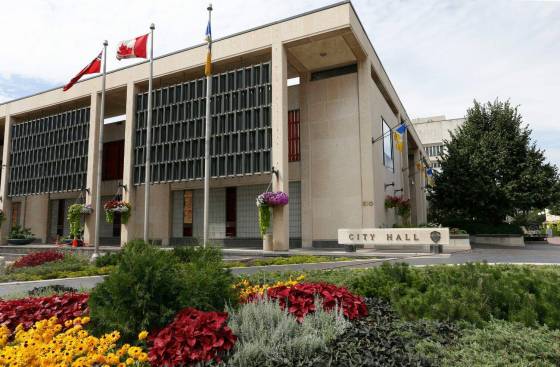
(Wayne Glowacki / Free Press files)
When you add it all up, the report estimates that U.S. local governments in news deserts incur additional borrowing costs of $1.1 billion annually on outstanding municipal bond issues.
Here’s the math behind that billion: borrowing costs rose by five to 11 basis points after a newspaper closure in an area where news coverage was already weak. The average additional interest cost was $650,000 per loan.
Neighbouring areas that still have robust news coverage, the report said, do not see any increase in municipal borrowing costs, ruling out the possibility that poor economic conditions were responsible for both the newspaper closures and higher borrowing costs.
One obvious caveat here is that this study is American and reflects the realities of ever-widening news deserts south of the border.
However, can we really afford to ignore that reality, as if somehow Canadian communities would be immune to the costs incurred when journalists aren’t watching City Hall?
Ask yourself what would have happened if the Free Press and other media weren’t paying attention and asking tough questions years ago about the growing costs of a new police headquarters being championed by then-mayor Sam Katz and his right-hand man Phil Sheegl.
Similarly, what would bond agencies have thought if Winnipeg didn’t have a Free Press reporter spending day after day covering the public inquiry into that overbudget project plagued by bribes, lawsuits, delays and controversy?
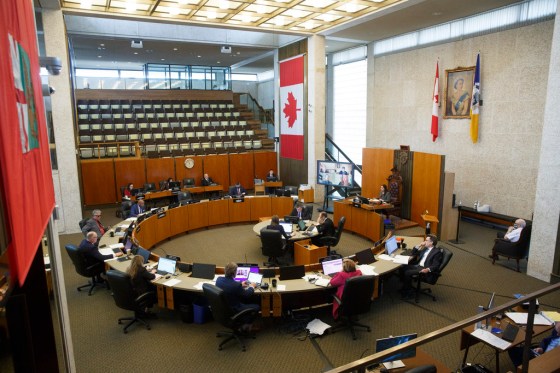
(Mike Deal / Free Press files)
I can guarantee you that mayors and city councillors over the years have not always taken kindly to the questions our reporters have put to them.
But those questions may have helped protect the city from higher borrowing costs. And that’s not to mention the waste, corruption and other costs our sustained scrutiny may have prevented.
So, a big thank-you to Free Press readers. Your subscription doesn’t just keep you informed; it’s also an act of civic duty — and it may help lower your tax bill.
And to those whose names are on the municipal ballot this fall, be prepared for the questions our reporters will be asking. The financial health of the city may depend on someone asking them.
|