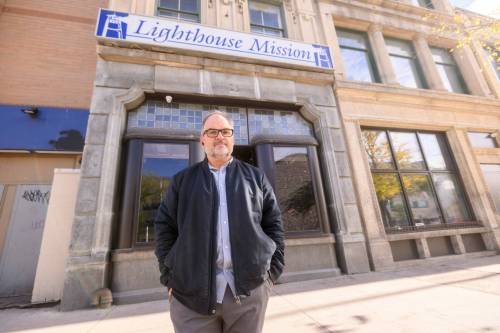
WE not chosen to run volunteer program because of Liberal ties, founders say
Read this article for free:
or
Already have an account? Log in here »
To continue reading, please subscribe:
Digital Subscription
One year of digital access for only $1.44 a week*
- Enjoy unlimited reading on winnipegfreepress.com
- Read the E-Edition, our digital replica newspaper
- Access News Break, our award-winning app
- Play interactive puzzles
*Billed as $5.77 plus GST every four weeks. After 52 weeks, price increases to the regular rate of $19.95 plus GST every four weeks. Offer available to new and qualified returning subscribers only. Cancel any time.
To continue reading, please subscribe:
Add Free Press access to your Brandon Sun subscription for only an additional
$1 for the first 4 weeks*
- Enjoy unlimited reading on winnipegfreepress.com
- Read the E-Edition, our digital replica newspaper
- Access News Break, our award-winning app
- Play interactive puzzles
*Your next Brandon Sun subscription payment will increase by $1.00 and you will be charged $17.95 plus GST for four weeks. After four weeks, your payment will increase to $24.95 plus GST every four weeks.
Read unlimited articles for free today:
or
Already have an account? Log in here »
Hey there, time traveller!
This article was published 28/07/2020 (2274 days ago), so information in it may no longer be current.
OTTAWA – The co-founders of WE Charity argued Tuesday the organization wasn’t plucked to run a student-volunteer program because of any close ties to Prime Minister Justin Trudeau, laying out details about how much the endeavour would likely cost and why the charity used a seemingly complicated structure to manage it all.
Brothers Craig and Marc Kielburger opened four hours of testimony at the House of Commons finance committee by saying they regret not realizing how the deal to have WE run the Canada Student Service Grant would be perceived given Trudeau’s ties to the group.
They testified side-by-side before a webcam in a wood-panelled room, faces unnaturally white thanks to the camera’s colour balance, peppered by questions from committee members scattered across the country.

As the afternoon wore on, the back-and-forth turned rocky with opposition MPs and the brothers talking over each other, and the Kielburgers slamming what they called inaccuracies meant to drag their organization over the coals for political purposes.
The brothers said WE would have never agreed to take part in the federal program had they known it could jeopardize their 25 years of work.
The duo were highly sought by opposition parties as part of a parliamentary probe into a volunteer program budgeted at $912 million, but which federal officials believed would cost $543 million — and that WE believed would actually cost much less.
WE Charity backed out of administering the program in early July amid a controversy over the Liberal government’s decision to award the organization a sole-sourced contract.
Trudeau and his top aide, chief of staff Katie Telford, are scheduled to testify Thursday about the program and the deal with WE.
The Kielburgers said they haven’t spoken with Trudeau or his office about the program.
The federal ethics commissioner has begun investigating Trudeau and Finance Minister Bill Morneau over their involvement in cabinet decisions on the project — Trudeau because of some $300,000 in speaking expenses covered for his family members, and Morneau’s daughter being a WE employee.
Morneau also admitted last week that he repaid the organization more than $41,000 in travel expenses for WE-sponsored trips he and his family in 2017.
“The image that you’re giving here is that you’re getting influence by the kind of power that you have so when you call, man, they call you,” New Democrat Charlie Angus told the Kielburgers at one point in their testimony.
Craig Kielburger said he spoke with Morneau in late April, but the student grant program didn’t come up — echoing Morneau’s testimony last week.
What did come up was a separate proposal WE submitted to Small Business Minister Mary Ng, Morneau and Youth Minister Bardish Chagger to help some 8,000 youth open small businesses at a cost of up to $14 million.
Craig Kielburger said WE was less interested in the volunteer program and was “trying to advance our own proposal” that it had on the table for two years.
Opposition MPs looked to portray the group as having inside track on running the program because of perceived financial difficulties linked to the COVID-19 pandemic. Liberal MPs asked about WE’s involvement with politicians of other political stripes, and funding from the previous Conservative government.
The volunteer program is supposed to provide grants of $1,000 for every 100 hours of volunteering, up to a maximum of $5,000 to help defray the cost of school in the fall.
WE was to connect young people with service opportunities through an online platform and disburse grants. WE would have received $43.5 million if the program reached its full potential.
Government officials told WE it could incur eligible expenses before being awarded the agreement. The brothers said they did so to get the program off the ground quickly, knowing they could lose money if cabinet didn’t approve the deal.
WE has lost $5 million over the aborted deal, MPs heard.
“We did this to be of service to the government, not for the government to help us and it is incredibly unfortunate the fallout that has occurred,” Craig Kielburger said.
A copy of the funding agreement filed with the committee this week showed the government only planned to spend $500 million in grants, even though the Liberals had described the program as having a $912-million budget.
Employment and Social Development Canada, the federal department overseeing the program, said the $543 million in the agreement was what officials estimated it would cost to administer and pay grants to up to 100,000 eligible students or recent graduates — “the expected uptake of the program.” There was extra money available if the demand was higher.
During testimony, Marc Kielburger said WE expected the majority of students to volunteer between 100 and 300 hours, making the true cost of the program to be between $200 million and $300 million.
WE was paid its first fees of $19.5 million on June 30 — seven days after one of its arms, WE Charity Foundation, signed the federal deal on June 23.
Former board chair Michelle Douglas told the committee earlier that the foundation didn’t appear to have a purpose outside of holding real estate, nor did the board receive a satisfactory explanation for its existence.
The foundation didn’t operate or hold any assets before the volunteer program, having been set up originally to limit liability to the charity’s assets, the committee heard.
Marc Kielburger cited unspecified expert advice that WE use the foundation to oversee the program because the government expected WE to assume full liability during a health crisis for youth volunteers and partner non-profits. He said ESDC was aware of how WE planned to use its various structures.
On July 3, WE backed out of the agreement. It has promised to repay every dollar it received, about $30 million, but was still sorting out details.
At the time, WE said a program structure was largely in place for the federal public service to manage. It handed everything to the government “hoping to save the program,” but problems with what WE put in place have since emerged. The government has yet to open applications.
This report by The Canadian Press was first published July 28, 2020.
Video: Taking on student-volunteer program a mistake, Kielburgers say
Craig and Marc Kielburger told a House of Commons committee probing the abortive plan for a national volunteer program that the WE organization they run never should have taken it on. Politics took over, threatening both the program and WE, and they should have seen it coming, they testified.
Craig and Marc Kielburger told a House of Commons committee probing the abortive plan for a national volunteer program that the WE organization they run never should have taken it on. Politics took over, threatening both the program and WE, and they should have seen it coming, they testified.
A timeline of the Liberals’ WE controversy
OTTAWA – A timeline of events regarding the Canada Student Service Grant program, based on public documents, events and statements from cabinet ministers, government officials, and WE Charity:
March 6, 2020: WE Charity staff prepare a concept paper on service learning for public servants at Employment and Social Development Canada.
April 5: Finance Minister Bill Morneau and Prime Minister Justin Trudeau talk over the phone about how to help students whose summer job and volunteer opportunities were vanishing due to the COVID-19 pandemic. Finance Department officials are tasked with considering options the next morning.
April 7: Small Business Minister Mary Ng and WE co-founder Craig Kielburger have an introductory phone call in which Ng asks WE to send what it calls a “pre-established proposal” to help young people launch businesses.
April 7 or 8: Morneau’s office contacts the WE organization, among other groups, to get their input on potential programs. Morneau says the call was on April 7 while WE says it was April 8.
April 9: WE Charity sends the unsolicited proposal for a youth business program to Youth Minister Bardish Chagger, Ng, Morneau and Trudeau’s office. The price tag is between $6 million and $14 million to provide digital programming and $500 grants, plus “incentive funds,” for 8,000 students.
April 16: ESDC officials mention WE in the context of the student program in an email discussion with Finance officials.
April 18: Morneau’s officials raise the idea of partnering with a non-profit, or for-profit group to administer the program. (ESDC officials suggest the same day that WE might be an option.) Morneau said it was the first time he was involved in any talk about WE and the grant program.
April 19: Wernick contacts Craig Kielburger. WE says the call was to discuss launching a youth service program in the summer and that Wernick asks Kielburger to develop a proposal to fulfil that objective. During the call, Wernick learns of the April 9 proposal for a youth business program and Kielburger agrees to send both proposals.
April 20: Morneau’s office contacts WE to ask about its ability to deliver a volunteer program. An official’s record of the call notes “WE Charity will re-work their 10-week summer program proposal to fully meet the policy objective of national service and increase their current placements of 8,000 to double.”
April 21: Morneau approves going with an outside organization to run the volunteer program, but no specific group is chosen.
April 22: Trudeau announces a $9-billion package of student aid, including the outline of a volunteer program paying students up to $5,000 toward education costs, based on the number of hours they volunteer. WE sends Wernick an updated proposal to reflect the announcement. The message is forwarded to Chagger, Ng and Morneau.
April 26: Morneau speaks with WE co-founder Craig Kielburger, but told the finance committee neither of them talked about the Canada Student Service Grant program.
April 27: Volunteer Canada, a charity that promotes volunteering and helps organizations use volunteers well, meets Chagger and raises concerns about paying students hourly rates below minimum wage and calling it volunteering.
May 4: WE sends a third proposal to ESDC, this time with more details and specific to the grant program. Finance official Michelle Kovacevic, who was working on the program, told the finance committee she received it May 7.
May 5: Chagger goes to a special COVID-19 cabinet committee with the recommendation to go with WE for the program. Morneau isn’t at the meeting.
May 22: Cabinet, including Trudeau and Morneau, approved handing the reins of the program to WE.
May 23: The public service officially begins negotiating a contribution agreement with WE, which would have paid up to $43.5 million in fees to the group.
May 25 to June 3: In a series of meetings with Volunteer Canada, WE suggests the target for placements through the program had gone from 20,000 to 100,000.
June 12: WE co-founder Marc Kielburger says in a video chat with youth leaders that he heard from Trudeau’s office about getting involved in the volunteer program the day after it was announced by the prime minister. He later backtracks, saying the contact came the week of April 26 from Wernick, and not the PMO.
June 23: WE Charity Foundation signs a contribution agreement with the federal government. WE signatories include Scott Baker, named as president of the one-year-old foundation and executive director of WE Charity, and chief financial officer Victor Li. Chagger signs for the government.
June 25: Trudeau unveils more details about student aid. A government release notes that WE will administer the student-volunteer program.
June 26: Facing questions about WE, Trudeau says the non-partisan public service made the recommendation, and the government accepted it: “As the public service dug into it, they came back with only one organization that was capable of networking and organizing and delivering this program on the scale that we needed it, and that was the WE program.”
July 3: Citing the ongoing controversy, WE and the Liberals announce a parting of ways and the federal government takes control of the program. Ethics commissioner Mario Dion tells Conservative and NDP ethics critics in separate letters he will examine Trudeau’s role in the awarding of the agreement because of the prime minister’s close ties to the group.
July 9: WE says it has paid Trudeau’s mother Margaret about $250,000 for 28 speaking appearances at WE-related events between 2016 and 2020. His brother Alexandre was been paid $32,000 for eight events, and Trudeau’s wife Sophie Gregoire Trudeau received $1,400 in 2012 for a single appearance. The organization says Trudeau himself has never been paid by the charity or its for-profit arm.
July 13: Trudeau apologizes for not recusing himself from discussions about WE over his family’s longtime involvement with the organization. Morneau also issues an apology.
July 16: Dion says he will investigate Morneau’s actions in the affair. Chagger testifies at the finance committee, saying Trudeau’s office didn’t direct her to go with WE.
July 21: Ian Shugart, clerk of the Privy Council, tells the Commons finance committee there is no evidence to suggest Trudeau spoke with WE before the organization was awarded the deal to run the student-volunteer program.
July 22: Morneau tells the finance committee he just repaid over $41,000 to WE for travel expenses the organization footed for the minister and his family. The Opposition Conservatives call for Morneau to resign.
Trudeau’s office says he and his chief of staff, Katie Telford, have agreed to testify before the committee with a date and time to be set.
The House of Commons ethics committee also calls on Trudeau to testify, and votes to seek copies of records for Trudeau and his family’s speaking appearances dating back years. Six opposition members outvote five Liberals to have that committee start its own investigation.
July 23: Conservatives and New Democrats ask Dion to launch a new probe of Morneau over his travel expenses.
July 27: A copy of the contribution agreement with WE Charity Foundation is filed with the finance committee. It lays out the details of the program, including a provision for a maximum contribution of $543.53 million — $500 million for grants, and $43.53 million to WE.
July 28: The co-founders of WE Charity say their organization was selected to run a student-volunteer program because of their history, not because of any close ties to Liberal cabinet ministers. Craig and Marc Kielburgers say they would have never agreed to take part in a federal student-volunteer program had they known it could jeopardize the work the WE organization has done over 25 years.
This report by The Canadian Press was first published July 28, 2020.