Opportunities await as oil demand declines
Read this article for free:
or
Already have an account? Log in here »
To continue reading, please subscribe:
Digital Subscription
One year of digital access for only $1.44 a week*
- Enjoy unlimited reading on winnipegfreepress.com
- Read the E-Edition, our digital replica newspaper
- Access News Break, our award-winning app
- Play interactive puzzles
*Billed as $5.77 plus GST every four weeks. After 52 weeks, price increases to the regular rate of $19.95 plus GST every four weeks. Offer available to new and qualified returning subscribers only. Cancel any time.
To continue reading, please subscribe:
Add Free Press access to your Brandon Sun subscription for only an additional
$1 for the first 4 weeks*
- Enjoy unlimited reading on winnipegfreepress.com
- Read the E-Edition, our digital replica newspaper
- Access News Break, our award-winning app
- Play interactive puzzles
*Your next Brandon Sun subscription payment will increase by $1.00 and you will be charged $17.95 plus GST for four weeks. After four weeks, your payment will increase to $24.95 plus GST every four weeks.
Read unlimited articles for free today:
or
Already have an account? Log in here »
Hey there, time traveller!
This article was published 16/09/2020 (2232 days ago), so information in it may no longer be current.
Coming, as it does, from a major global petroleum producer, it’s a rather startling prediction.
And if it turns out to be true, the economic and environmental implications could be profound for Manitoba, Canada and the world.
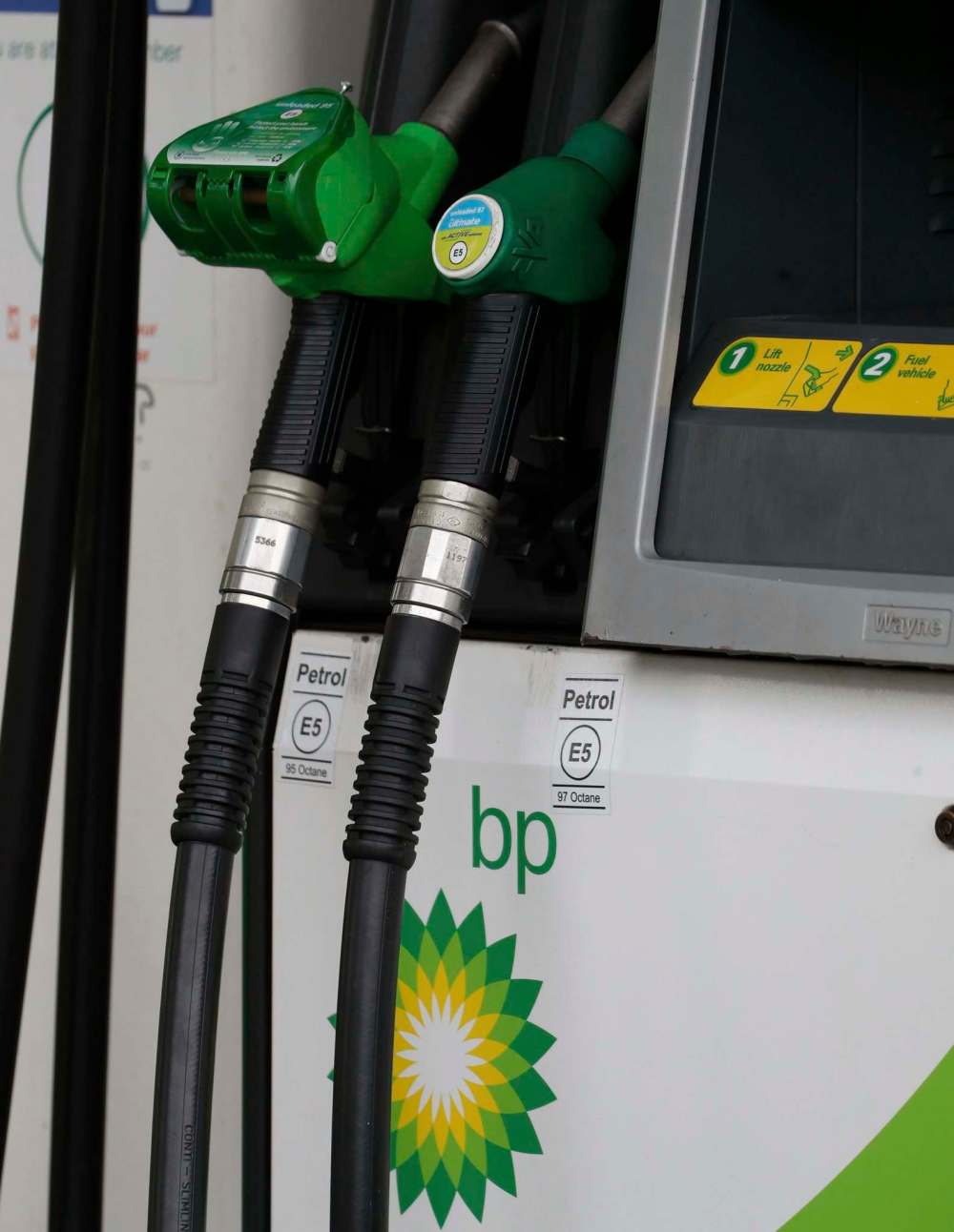
Energy giant BP issued a report this week forecasting an unprecedented permanent downturn in fossil fuel consumption. The company’s 2020 Energy Outlook, released Monday, predicts global economic activity will only partially recover from the current COVID-19 pandemic and that while energy consumption will continue to grow at a slower pace, fossil fuels will play a significantly smaller role as societies transition to renewable sources of energy.
According to BP’s chief economist, Spencer Dale, the company’s assessment that the world has reached “peak oil” is influenced by both the COVID-19 pandemic’s effects and the increased urgency of the global effort to fight climate change.
The BP report offers three scenarios for future energy consumption. In the more aggressive of BP’s predictions, which include a more forceful global effort to meet the goals of the Paris agreement to limit global warming to 2 C above pre-industrialized levels, demand for oil declines sharply by between 55 and 80 per cent over the next 30 years.
According to Mr. Dale, each of the scenarios represents an unprecedented shift: “Never in modern history has the demand for any traded fuel declined in absolute terms.”
Other recent predictions, including one from the International Energy Agency, forecast a post-pandemic growth in global oil demand, but BP is sufficiently committed to its projections that it told investors this week it plans to be a carbon-neutral energy company by 2050.
The implications for Canada, the world’s fourth-largest producer and exporter of oil, cannot be overstated. Income derived from the oil and gas sector represents 5.6 per cent of the nation’s GDP. And for Alberta, where fossil fuel-related revenues are expected to reach their lowest point in nearly half a century, the impact has been, and will be, devastating (Alberta’s current deficit projection stands at $24.2 billion).
And what of Manitoba? If BP’s report is to be believed, the energy sectors set to grow exponentially as oil’s fortunes decline include solar, wind and hydroelectric power — the last of which has long been touted as this province’s perpetual clean-energy advantage. BP’s prediction is that increasing global reliance on clean energy will push renewable energy sources from five per cent of global consumption to between 20 and 50 per cent by 2050.
Such a future is one from which Manitoba clearly stands to benefit.
In that context, this week’s reports that Manitoba Hydro International — the international consulting arm of the provincial utility — was recently advised to curtail its activities seems all the more puzzling. According to a leaked memo obtained by the Free Press, staff were told “MHI is not to aggressively pursue new work. This means it is not to actively pursue bids or seek out new customers.”
A Manitoba Hydro spokesman said the directive to pause at MHI is part of an overall strategic review of the Crown utility’s operations. MHI employees, however, have expressed concern that the subsidiary’s future is in doubt.
Given the clean-energy future envisioned by one of the world’s largest petroleum companies, one might expect Manitoba Hydro to be gearing up to capitalize on the opportunities that await. In the meantime, some clarity about Hydro’s future intentions — from the company itself, or the provincial government to which it’s answerable — would be most useful.