
‘We don’t have the ability to save them’ COVID-19 patient's 'unreal' journey from Winnipeg hospital to Ontario ICU and back
Read this article for free:
or
Already have an account? Log in here »
To continue reading, please subscribe:

Digital Subscription
One year of digital access for only $205*
- Enjoy unlimited reading on winnipegfreepress.com
- Read the E-Edition, our digital replica newspaper
- Access News Break, our award-winning app
- Play interactive puzzles
*First annual payment billed as $205.00 + GST for one year. This annual subscription will automatically renew at $233.00 + GST every 52 weeks (10% off the regular annual price of $259.35). Offer available to new and qualified returning subscribers only. Cancel any time.
To continue reading, please subscribe:
Add Free Press access to your Brandon Sun subscription for only an additional
$1 for the first 4 weeks*
- Enjoy unlimited reading on winnipegfreepress.com
- Read the E-Edition, our digital replica newspaper
- Access News Break, our award-winning app
- Play interactive puzzles
*Your next Brandon Sun subscription payment will increase by $1.00 and you will be charged $17.95 plus GST for four weeks. After four weeks, your payment will increase to $24.95 plus GST every four weeks.
Read unlimited articles for free today:
or
Already have an account? Log in here »
Hey there, time traveller!
This article was published 07/07/2021 (1904 days ago), so information in it may no longer be current.
The last thing Miles Kasprick remembers before waking up in an Ontario hospital bed was a Winnipeg doctor telling him his COVID-19 had worsened and he would have to be put into a coma.
“Waking up, I was in fight-or-flight mode. I didn’t know where I was, disoriented, and I started fighting the nurses and doctors,” Kasprick told the Free Press in an interview Wednesday.
“I didn’t know what was going on… I was in shock — I went to sleep in Winnipeg, and I woke up and I was in Ontario, not knowing. I was scared.”
The 43-year-old father of three’s fears were quickly assuaged. The doctors and nurses at St. Thomas Elgin General Hospital in St. Thomas, Ont., were quick to explain the situation and get his family on Zoom to speak to him.
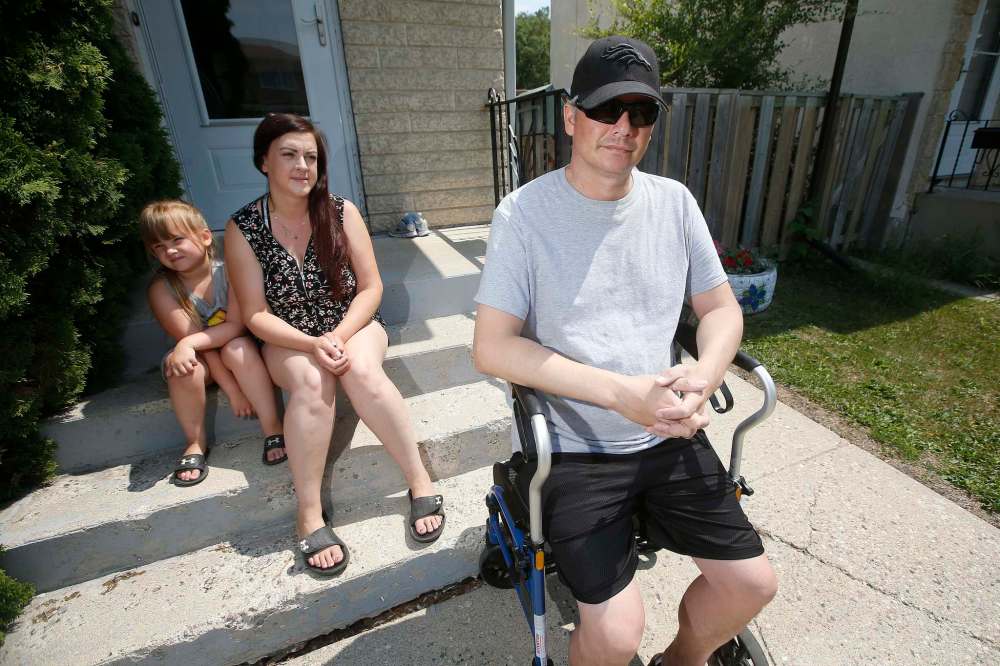
He later learned health-care workers had kept constant contact with his family, updating on his condition.
“It was fantastic in Ontario. I was beyond grateful I was actually sent there,” Kasprick said. “I believe that I wouldn’t be alive today if I wasn’t.”
His gratitude goes beyond the platitudes of a Zoom call and comforting words. Kasprick said his treatment in Manitoba was so poor he now fears for those in the province hospitalized with COVID-19.
“I worry about everybody else that has COVID and has to go in the ICU, and I think about them every day,” he said. “I worry that they’re not going to make it because we don’t have the ability to save them.”
As of Wednesday, 57 Manitobans have been transported to different provinces for COVID-19 treatment since May 18; 40 have returned to continued care. Six Manitobans are currently receiving out-of-province care, all in Ontario; 12 have died in facilities in other provinces.
“It was fantastic in Ontario. I was beyond grateful I was actually sent there. I believe that I wouldn’t be alive today if I wasn’t.” — Miles Kasprick
Kasprick believes he contracted COVID-19 at his job. He later infected his entire family, including his daughter, who has Type 1 diabetes.
He was taken to Grace Hospital by his wife on May 23, where he learned his oxygen levels were dangerously low; he was later put into a coma. He was sent to Ontario May 26 and woke up June 9, where he was treated until he was given the green light to return to Winnipeg.
On June 12, he was moved to St. Boniface Hospital. On June 16, he was transferred to Concordia Hospital. On June 20, Father’s Day, he was sent home.
Kasprick said he was initially hopeful when he returned to Winnipeg. However, that turned into what he called a deep depression, after it became apparent he wouldn’t be getting the same care as in St. Thomas.
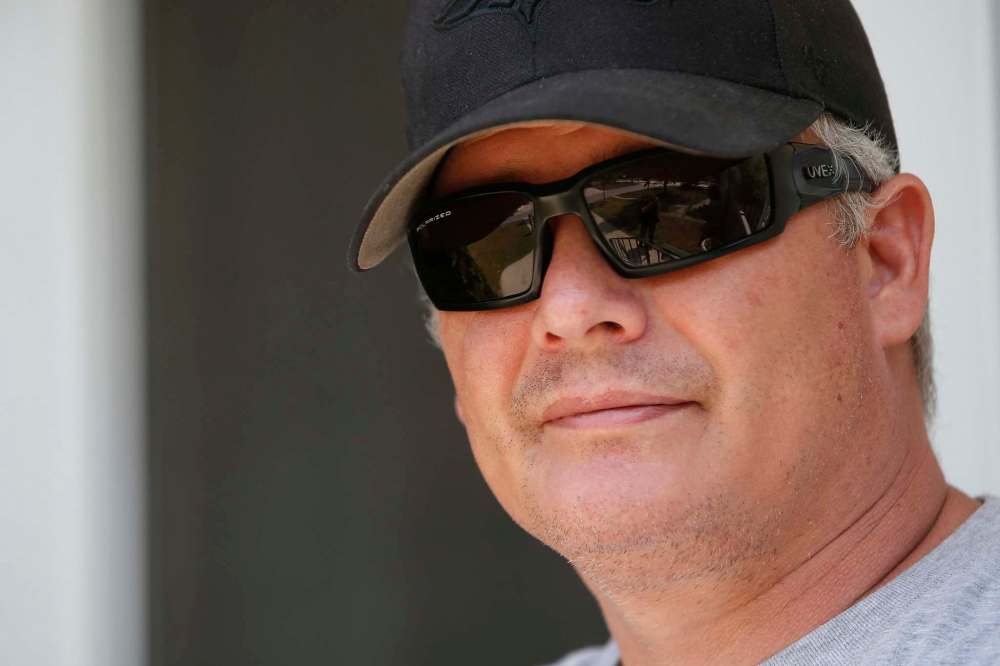
“In Ontario, they had lots of nurses, lots of doctors; they were around caring for me 24-7 that I was there,” he said. “But when they shipped me back here to Winnipeg, I arrived at St. Boniface Hospital and it was back to square one.”
By the end of his stay in Ontario, Kasprick said, he was considered no longer infectious and was allowed to eat solid food and use a wheelchair to get around.
In Manitoba, Kasprick said, he wasn’t listened to, and was forced to be bed-bound and put on a feeding tube Ontario staff said he didn’t need.
The staff he encountered in Winnipeg weren’t less competent than those in Ontario, Kasprick said, but they were more obviously overworked. At both St. Boniface and Concordia, he said he witnessed one or two nurses and health-care workers who had worked long, harrowing hours, in charge of floors of more than 30 severely ill people.
“I feel sorry for the doctors and nurses here in Manitoba, how they’re overworked,” he said. “Our core hospitals here in Manitoba are overwhelmed.”
Manitoba Nurses Union president Darlene Jackson extended sympathies for Kasprick and said the situation underlined the consequences of four years without a fair contract.
“It is always disheartening to hear of patients who have endured difficult situations,” she said. “Manitoba nurses are trying the very best they can to manage patient loads, in spite of our province’s critical nursing shortage.
“It’s true nurses are working short, exhausted, and even giving up vacation to try. But what is also true is that significant efforts have not been made to acknowledge how grave the situation has become.”
Kasprick is 43. He had no prior health conditions, save for high blood pressure he had under control. He doesn’t smoke, tries to eat healthy, was consistently active. He played baseball in the summers.
Today, weeks after being sent home, his days are spent on a couch, and his nights are spent in bed after a long and difficult journey up the stairs using a walker. There is a optimistic slant when he brings up just how deeply COVID-19 has impacted his body.“I feel sorry for the doctors and nurses here in Manitoba, how they’re overworked. Our core hospitals here in Manitoba are overwhelmed.” — Miles Kasprick
“I have issues that I have to deal with now, with walking and stuff, because I have nerve damage in my legs… but that’s just something I’m going to have to work through, and, hopefully, it’s not a lifetime thing,” he said.
He had never been skeptical of the virus and took every precaution to keep his family safe, but “wasn’t quick” to get vaccinated. (He had an appointment to get his first dose booked just before he was hospitalized.)
Kasprick was inspired to tell his story after watching the “propaganda” spread by COVID-19 deniers on social media.
“I do believe that if I had been vaccinated, I wouldn’t be in the situation I’m in today. I wouldn’t be learning how to walk,” he said. “I hope that my story could help other people, and I hope my story could somehow get to government officials who could help our nurses and doctors.”
Kasprick said he’ll never forget the feeling the province was “playing with people’s lives” in the midst of a pandemic.
“I’ve seen it firsthand… It’s unreal. I can’t blame the doctors and nurses, I blame our government for taking all the cutbacks they’ve taken.”
malak.abas@freepress.mb.ca
Twitter: malakabas_

Malak Abas is a city reporter at the Free Press. Born and raised in Winnipeg’s North End, she led the campus paper at the University of Manitoba before joining the Free Press in 2020. Read more about Malak.
Every piece of reporting Malak produces is reviewed by an editing team before it is posted online or published in print — part of the Free Press‘s tradition, since 1872, of producing reliable independent journalism. Read more about Free Press’s history and mandate, and learn how our newsroom operates.
Our newsroom depends on a growing audience of readers to power our journalism. If you are not a paid reader, please consider becoming a subscriber.
Our newsroom depends on its audience of readers to power our journalism. Thank you for your support.
History
Updated on Thursday, July 8, 2021 8:45 AM CDT: Corrects that Kasprick was sent to Ontario May 26 and woke up June 9
Updated on Thursday, July 8, 2021 9:13 AM CDT: Removes reference to industry


