‘Somebody stole her’ Cherisse Houle spent years trying to reconnect with family but was slain at 17 before she got the chance
Read this article for free:
or
Already have an account? Log in here »
To continue reading, please subscribe:
Digital Subscription
One year of digital access for only $1.44 a week*
- Enjoy unlimited reading on winnipegfreepress.com
- Read the E-Edition, our digital replica newspaper
- Access News Break, our award-winning app
- Play interactive puzzles
*Billed as $5.77 plus GST every four weeks. After 52 weeks, price increases to the regular rate of $19.95 plus GST every four weeks. Offer available to new and qualified returning subscribers only. Cancel any time.
To continue reading, please subscribe:
Add Free Press access to your Brandon Sun subscription for only an additional
$1 for the first 4 weeks*
- Enjoy unlimited reading on winnipegfreepress.com
- Read the E-Edition, our digital replica newspaper
- Access News Break, our award-winning app
- Play interactive puzzles
*Your next Brandon Sun subscription payment will increase by $1.00 and you will be charged $17.95 plus GST for four weeks. After four weeks, your payment will increase to $24.95 plus GST every four weeks.
Read unlimited articles for free today:
or
Already have an account? Log in here »
Hey there, time traveller!
This article was published 07/07/2023 (1205 days ago), so information in it may no longer be current.
Cherisse Diane Marie Houle, born July 7, 1991, was Barb Houle’s fourth child.
She was an easygoing baby with twinkly dark brown eyes who loved to play and laugh. She was especially fond of her sister Jessica, who was a year-and-a-half older.
“She loved bananas,” Houle said.
One time, Houle was eating a banana and carrying Cherisse. Out of nowhere, the baby’s chubby hands snatched the snack.
NOT FORGOTTEN
Remembering missing and murdered Indigenous women and girls in Manitoba
“She ate that whole banana right out of my hand,” Houle said with a laugh peppered with sadness.
As a girl, Cherisse loved to play dress-up and put on makeup.
She was a bit of a diva, without being pretentious. These character traits carried on into her teen years, where she spent many Friday nights watching rom-com movies. Her favourite was Legally Blonde.
She aspired to one day to own a bubblegum pink suit and find her happily ever after, like the movie’s main character, Elle Woods.
“She used to do that thing… the bend and snap like they did in the movie,” Linda English said with a laugh. “She was so good at it.”
PHIL HOSSACK / WINNIPEG FREE PRESS FILES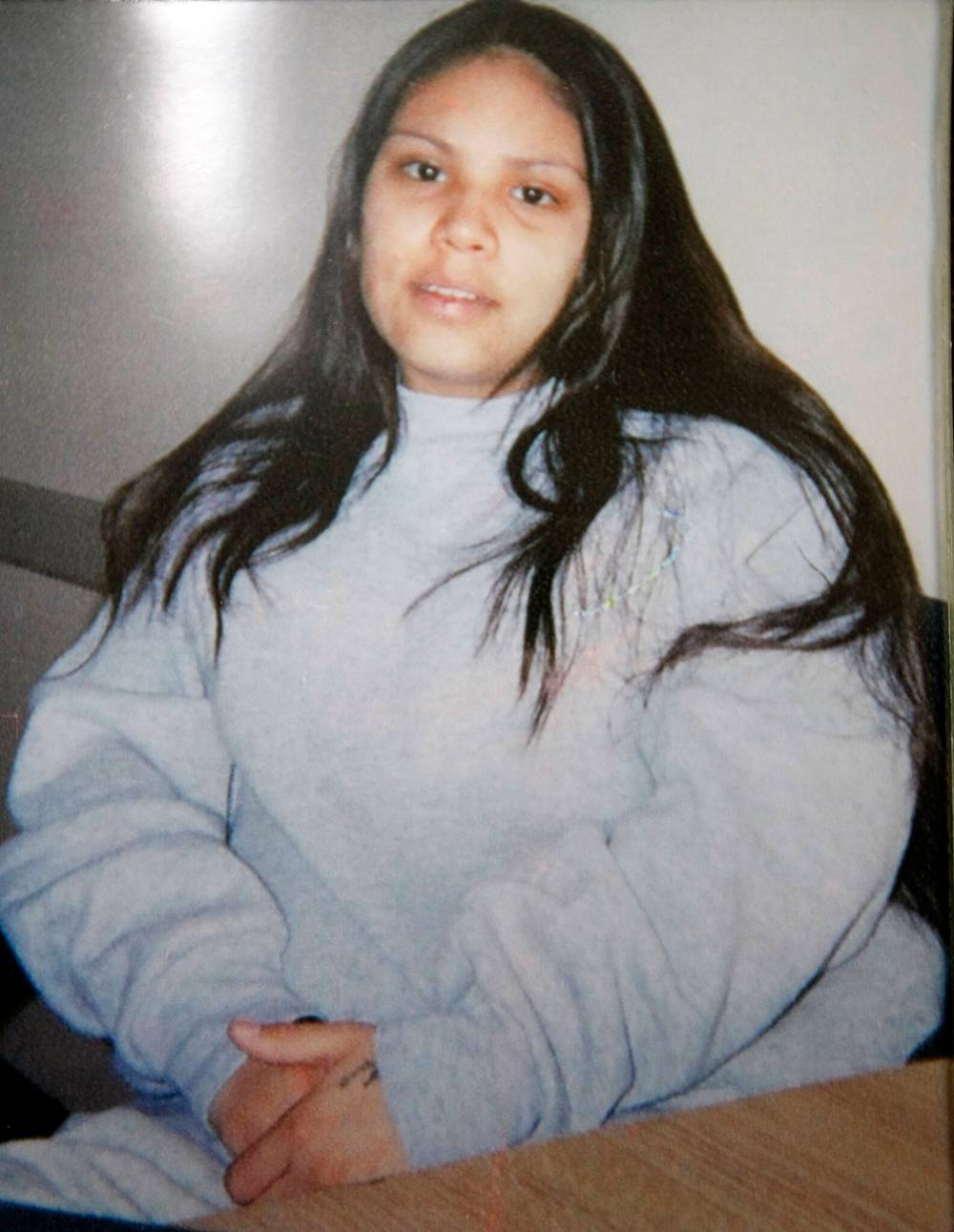
(English was Cherisse’s one-time foster mother, who Cherisse called “Linda-mom,” and dear family friend to the Houles.)
Cherisse loved swimming and took to the water like a fish. She loved roller skating. The entire family would go to Galaxy Skateland on Portage Avenue in Winnipeg every week.
“We started when we were super small. We’d go on Tuesdays or something, I can’t remember the night, but we’d walk down the street because we lived close by, and we’d go to Galaxy for the free night with my dad, my mom, and my brother,” Jessica said.
Cherisse made friends easily and had a way with animals. Her best friend, and other half, was Jessica.
The sisters had a deep connection and personalities that complemented one another.
Jessica was reserved and even a bit standoffish. Cherisse was free-spirited and outgoing. Both girls could be rebellious, and their antics would sometimes get them into trouble.
Even so, the sisters had a way of charming people with their goodness, wit, and sense of humour that could and would laugh in the face of anything.
“Her and Jess were inseparable, if you saw one, you’d see the other,” said English. “They were always connected in a positive way, I would say.”
That connection was violently severed in the summer of 2009, when Cherisse’s lifeless body was found by a construction crew in the Rural Municipality of Rosser, northwest of Winnipeg, just days before her 18th birthday.
RUTH BONNEVILLE / WINNIPEG FREE PRESS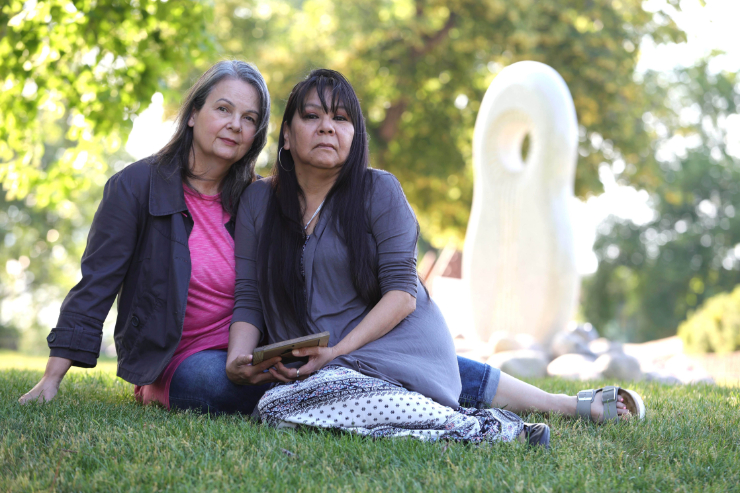
The homicide case remains unsolved, but the ripples of her tragic death, and the unthinkable abuse and exploitation she experienced late in her young life are still felt, like a raw ache that won’t go away, by family and friends left behind.
Cherisse is one of Canada’s estimated 4,000 missing and murdered Indigenous women and girls.
Cherisse and Jessica were placed into the care of Child and Family Services when they were eight and 10, respectively. The circumstances surrounding their introduction to the child welfare system are complex.
“They didn’t come from a broken home,” Houle said.
The sisters were split up and, over the years, had several different case workers.
Jessica said she can’t remember how many placements she had. Both she and Cherisse revolved through the system, bouncing around from one place to the next with little stability.
Cherisse was in and out of the Manitoba Youth Centre, and both sisters tended to run. They’d go AWOL, always trying to find their way back together.
PHIL HOSSACK / WINNIPEG FREE PRESS FILES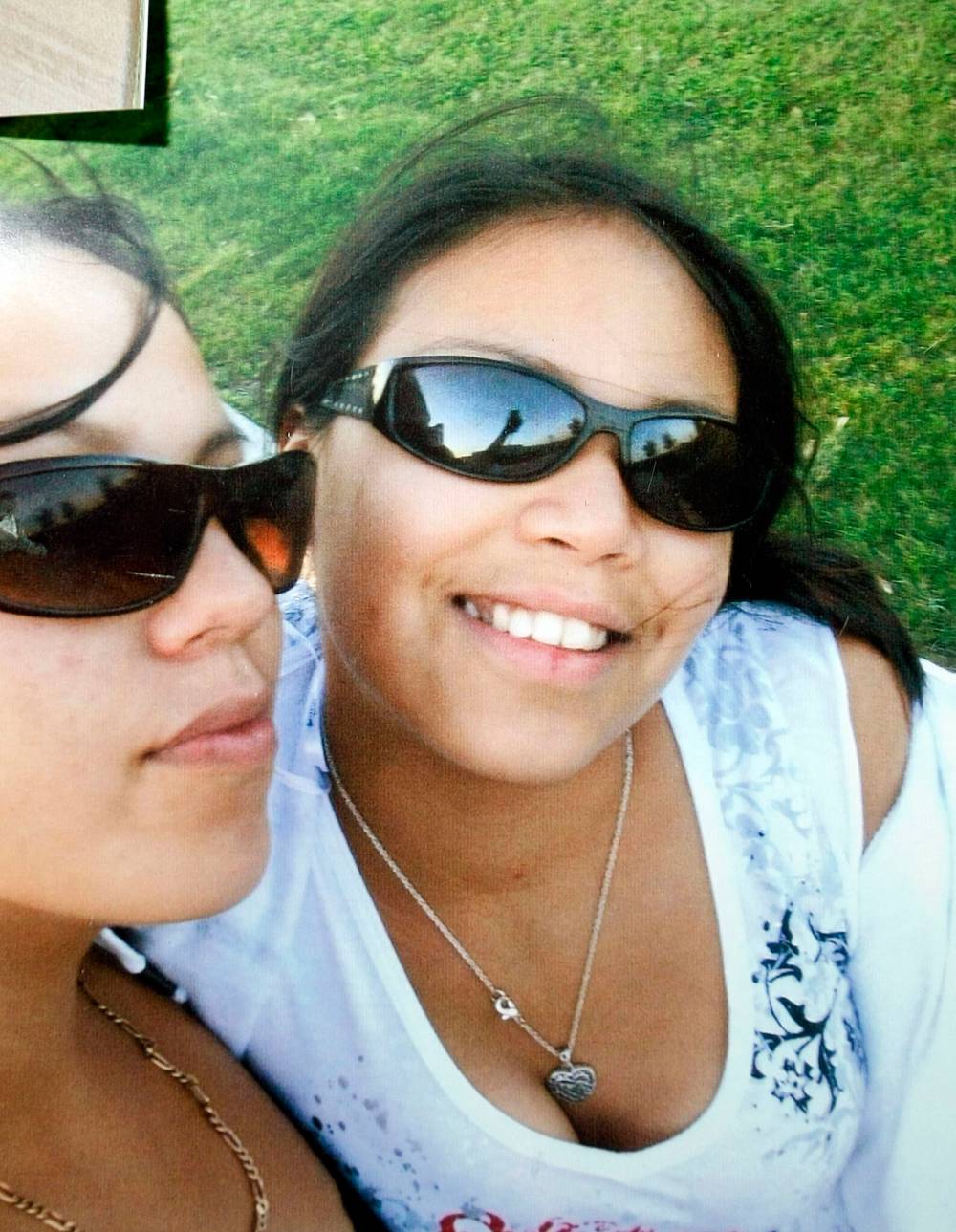
English said the sisters never ran away; they were running to each other.
The prospect, Jessica said, was dangled in front of their faces but never came to fruition.
“Every meeting that we had, like me and Cherisse, they would always promise us, promise us, promise us, and then we would try to be good and not go AWOL for awhile and then the next meeting would be the same s—t all the time and then we’d just give up,” Jessica said during a recent call from her home outside Manitoba.
“Like, the lengths we had to go through to see each other. They’d say, ‘Oh, you better act right or you ain’t gonna see each other.’”
At one point, English and another woman rented a four-bedroom house to try to keep and care for the sisters together.
“They gave us Cherisse, but they never gave us Jess. They always told us, ‘Until she (Cherisse) stabilizes,’ but I said she’ll stabilize when Jess is there, but they wouldn’t do it,” English said.
When they ran, the girls often turned up at their mom’s place or English’s or another family member’s home.
Cherisse sometimes went to be with her boyfriend, Kirby, who English and Jessica describe as a nice kid who really loved her. Other times, where they went to find a safe haven, they ended up in unsafe situations. They were vulnerable, using drugs, groomed and exploited.
“All the things that they say about her, it’s like ‘OK, those things happened, but it’s not her,’” echoed English.
When she was 16, Cherisse gave birth to a baby boy — her and Kirby’s son. She was in custody at the youth centre at the time, and Jessica recalled her sister’s leg was shackled to the bed while she was in labour.
RUTH BONNEVILLE / WINNIPEG FREE PRESS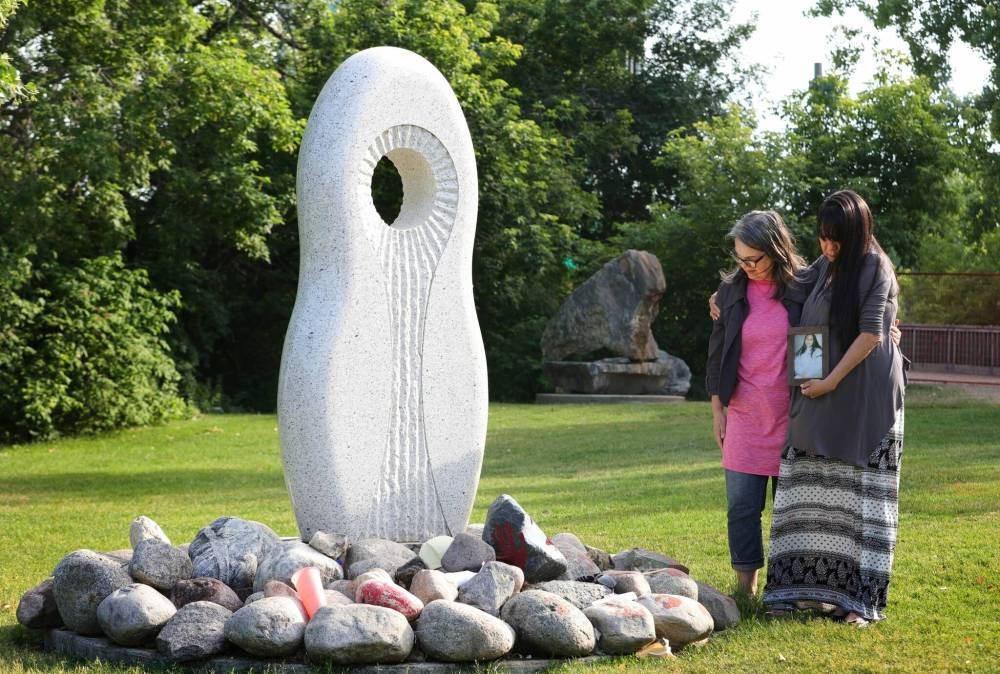
Cherisse was overjoyed when the baby was born. She loved her son and wanted so badly to be the mother he needed her to be. The child was taken from her and cared for by a family member.
Cherisse worked hard to clean up her life. She and her sister found healing in reconnecting to their culture and through ceremony. The girls got clean and were doing well until Cherisse slipped back into addiction.
Jessica said her sister begged her worker for a drug warrant — to send her to treatment for her addiction to crack cocaine. Jessica recalled there wasn’t any space available for her.
“We would always encourage her to get sober and she wanted to so bad.”
Just weeks away from aging out of care, Jessica said Cherisse was in a program through Ka Ni Kanichihk in Winnipeg. The last time anyone saw Cherisse was at the end of June 2009.
“I was at work… and they said her name, and I got up and I went to the bathroom and I threw up.”–Linda English, Cherisse’s foster mother
“I never heard from her, and I just remember I used to have a TV and when someone would call the number would show up on the screen… Someone called and the number said Ka Ni Kanichihk, and it was her number and I guess it was the staff. I picked up the phone and I thought it was my sister and I got mad at that lady on the other end,” Jessica said through tears.
English didn’t know Cherisse was missing, and only learned she was gone after hearing a news report identifying the body of a young girl.
“I was at work… and they said her name, and I got up and I went to the bathroom and I threw up,” she said.
“I went to my colleague, and I said, ‘I need a ride home,’ and the first thing I did was call Barb… And you know, this is how the family is treated? That’s how people find out? That is not OK.”
Houle was watching the news at her friend’s house, and one segment was a story about a body being found. Houle said she turned to her friend and said, “I know that’s Cherisse.”
RUTH BONNEVILLE / WINNIPEG FREE PRESS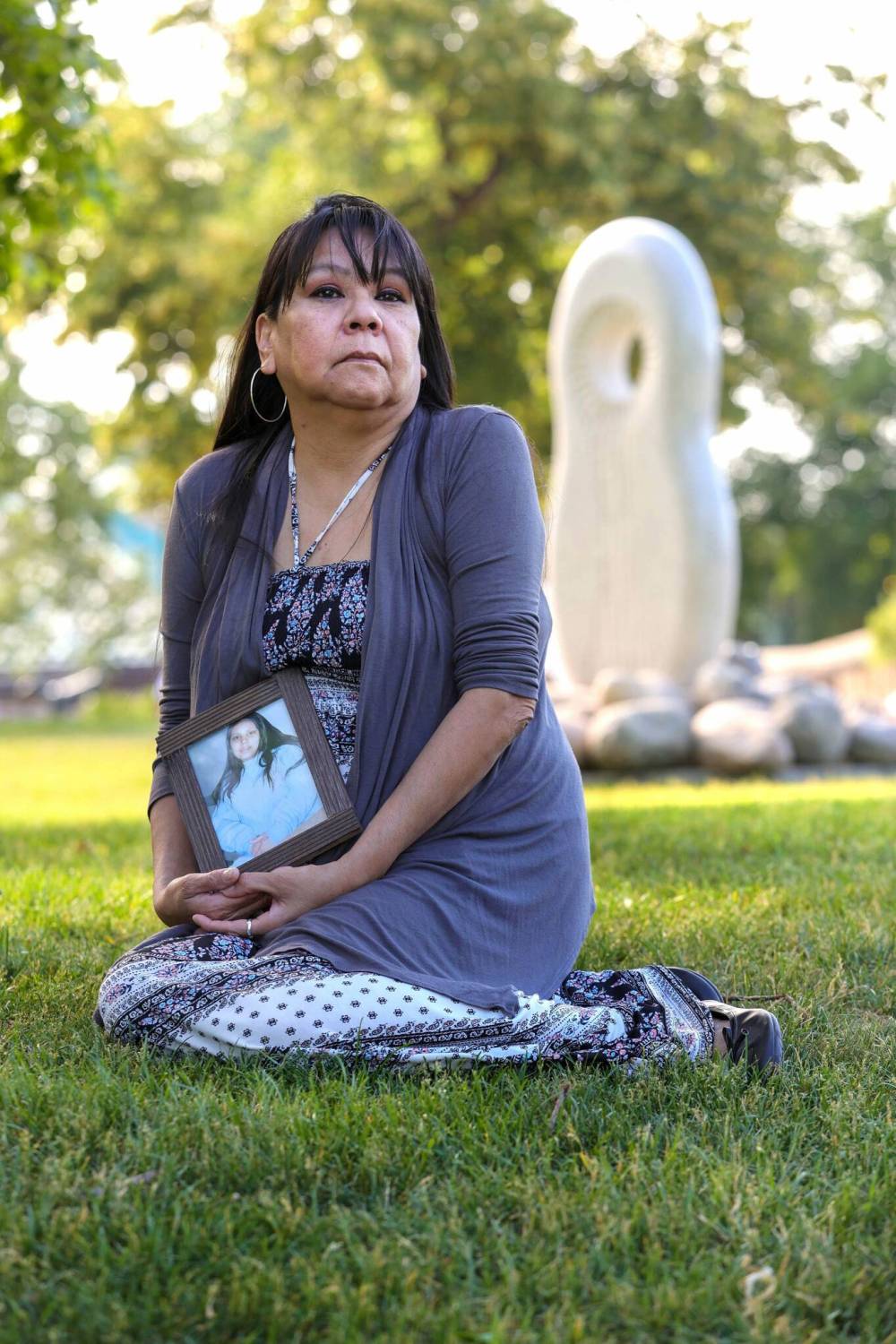
Her friend asked how she knew; Houle responded: “I just feel it.”
The next day, her gut feeling was confirmed when her sister, who works for a CFS agency, called and told Houle she needed to come see her.
“I already knew by the look on my sister’s face, and she said they found Cherisse’s body. That’s how I found out. My sister came and told me at my friend’s house.”
In the years since Cherisse’s death, there have been no suspects or leads. At least as far as Houle knows. Media attention has waned. The isolation and loneliness is suffocating.
“I don’t have support. I used to at the beginning, but they’re all gone. There are no more therapists, there’s no more nothing. They say to reach out, but reach out where?… Nobody at all has talked to me about Cherisse. Nobody,” Houle said, adding since police cold case-focused Project Devote has been disbanded there been no communication from the RCMP.
“I already knew by the look on my sister’s face, and she said they found Cherisse’s body. That’s how I found out. My sister came and told me at my friend’s house.”–Barb Houle, Cherisse’s mother
Cherisse was funny. Her mother remembers she was always smiling and laughing, and when they were together, Cherisse would always snuggle in close.
“She still called me ‘Mommy’ when she was 17,” Houle said. “She always said, ‘Mommy, I love you.’ She was my baby. Somebody stole her from me. Stole her from her son. Now, when I look at him sometimes, and he smiles, I see her face.”
For Jessica, the pain of losing her sister and best friend in such a horrific and inhumane manner will never subside. She is pursing education in the social services field, hoping to help children like her and Cherisse once were.
Life has moved on at a steady pace, but not a day goes by that she doesn’t mourn for the stolen life her sister was meant to have.
“Behind all that trauma and all the substance use, she was like a little kid who was caught in this life. She had hopes and dreams, and she was a good person who wanted to be a mother and raise her son,” she said.
RUTH BONNEVILLE / WINNIPEG FREE PRESS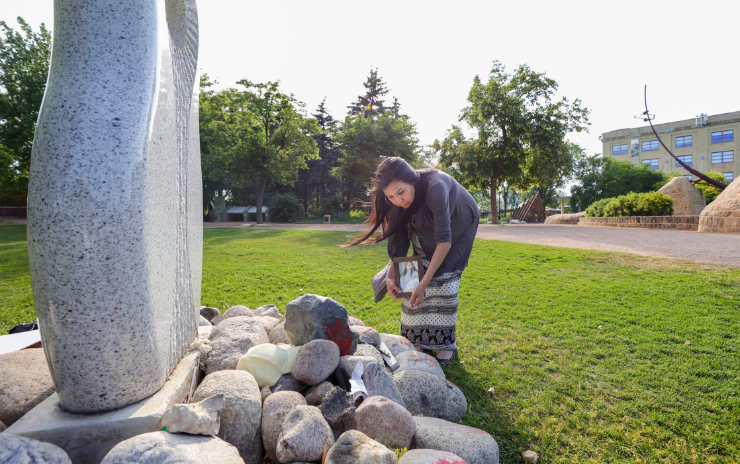
Cherisse Houle was 17 when she was killed in 2009. To this day, her homicide case remains unsolved.
She is loved and missed, and her family holds out hope that one day the guilty person or people will be caught.
Cherisse loved music, especially blasting tunes during long car rides. She always supersized her fries and Coke with her Big Mac meal (with light lettuce) at McDonald’s, and was happiest when swimming at the Oasis Beach.
She was counting down to the days until she’d be 18, and able to start her life outside of the CFS system.
fpcity@freepress.mb.ca