Ectoplasmic echoes 100 years on, the paranormal experimentation of a Winnipeg couple has come full-circle, garnering renewed attention in another era of pandemic and uncertainty
Read this article for free:
or
Already have an account? Log in here »
To continue reading, please subscribe:

Digital Subscription
One year of digital access for only $205*
- Enjoy unlimited reading on winnipegfreepress.com
- Read the E-Edition, our digital replica newspaper
- Access News Break, our award-winning app
- Play interactive puzzles
*First annual payment billed as $205.00 + GST for one year. This annual subscription will automatically renew at $233.00 + GST every 52 weeks (10% off the regular annual price of $259.35). Offer available to new and qualified returning subscribers only. Cancel any time.
To continue reading, please subscribe:
Add Free Press access to your Brandon Sun subscription for only an additional
$1 for the first 4 weeks*
- Enjoy unlimited reading on winnipegfreepress.com
- Read the E-Edition, our digital replica newspaper
- Access News Break, our award-winning app
- Play interactive puzzles
*Your next Brandon Sun subscription payment will increase by $1.00 and you will be charged $17.95 plus GST for four weeks. After four weeks, your payment will increase to $24.95 plus GST every four weeks.
Read unlimited articles for free today:
or
Already have an account? Log in here »
Hey there, time traveller!
This article was published 20/10/2023 (1010 days ago), so information in it may no longer be current.
Autumn is the season most folks set aside to indulge in, and celebrate all things paranormal.
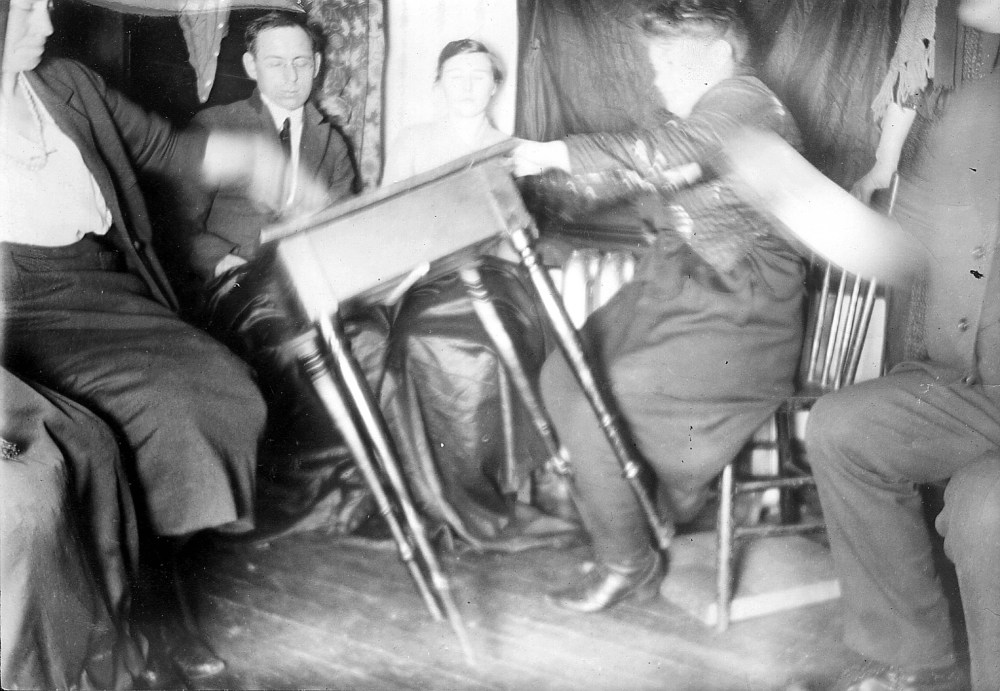
And in that spirit of celebration, consideration should be given to revisiting the images of psychic phenomena recorded between 1918 and 1945 by Winnipeg doctor and politician Thomas Glendenning (T.G.) Hamilton and his wife Lillian.
These images were part of a scientific investigation carried out by the Hamiltons in an attempt to determine if there was life after death.
UPCOMING EVENTS
BOOK LAUNCH:
The Art of Ectoplasm: Encounters with Winnipeg’s Ghost Photographs
Speaker: Serena Keshavjee, editor
McNally Robinson Booksellers, Grant Park
Wednesday, Nov. 1 at 7 p.m.
BOOK LAUNCH:
The Art of Ectoplasm: Encounters with Winnipeg’s Ghost Photographs
Speaker: Serena Keshavjee, editor
McNally Robinson Booksellers, Grant Park
Wednesday, Nov. 1 at 7 p.m.
SPEAKING EVENTS:
● Dalnavert Museum
Nov. 6 at 7 p.m. (Doors open at 6:30 p.m.)
● Millennium Library
Carol Shields Auditorium
Nov. 27, 6:30 p.m.
Conducted under conditions of a controlled ‘laboratory’ in their Henderson Highway home, the Hamiltons’ investigations resulted in more than 700 photographic images and more than 1,300 notes and documents, detailing various aspects of Spiritualism, such as telekinesis, teleplasm (or ectoplasm), and other psychic phenomena.
The results of this work became the Hamilton Family Fonds and is part of the Archives and Special Collections at the University of Manitoba (UMASC). The entire collection has been digitized and is available to the public for viewing online.
With a collection as rich as the Hamilton Family Fonds, the question becomes what kind of impact did these images have on the world over the last 100 years?
This question is explored in a new book, The Art of Ectoplasm: Encounters with Winnipeg’s Ghost Photographs, edited by University of Winnipeg art history professor Serena Keshavjee and in the art exhibition, The Undead Archive: 100 Years of Photographing Ghosts, also curated by Keshavjee and co-presented by the University of Winnipeg’s Gallery 1C03, UMASC, and the U of M’s School of Art Gallery.
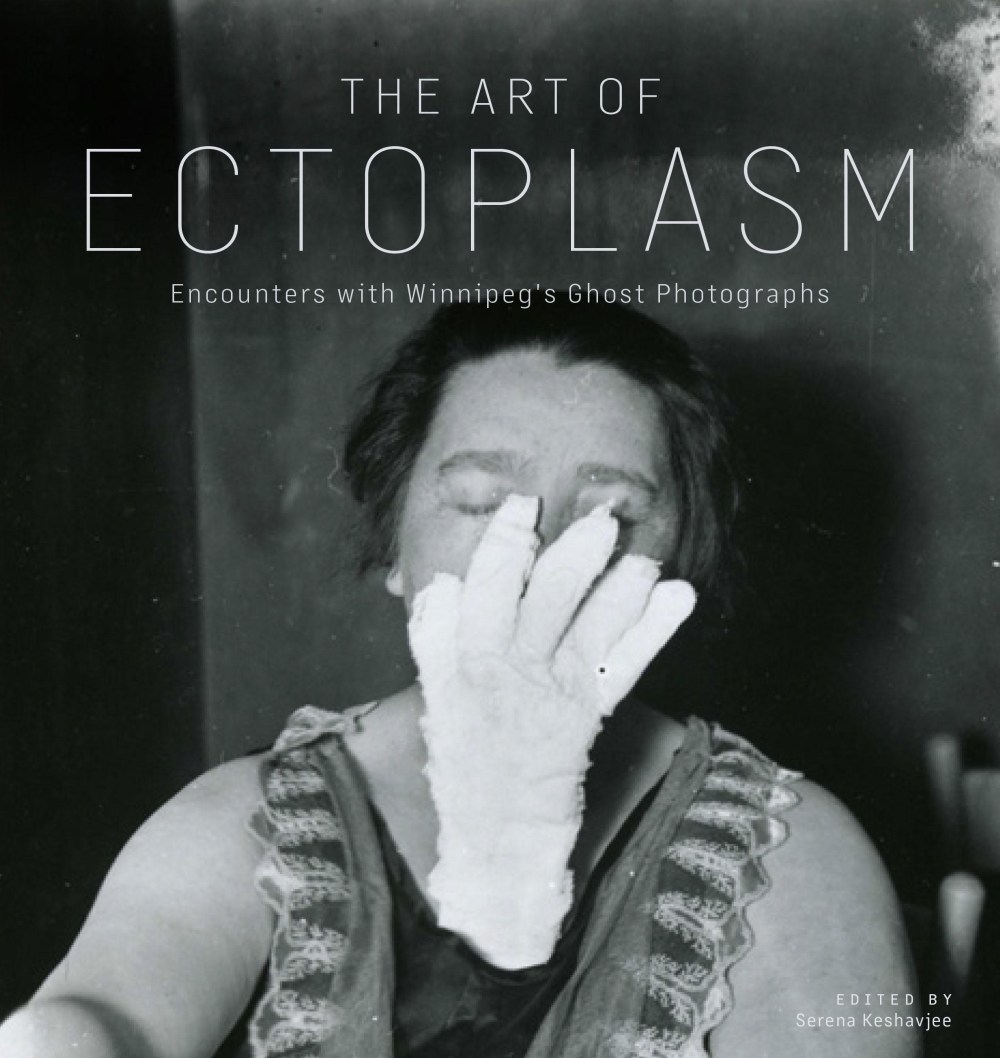
Through a collection of essays by Keshavjee, KC Adams, Brian Hubner, Esyllt Jones, Murray Leeder, Walter Meyer zu Erpen, Katie Oates and Shelley Sweeney, the book examines and contextualizes the influence and impact Hamilton’s ectoplasmic images have had and continue to have on the world.
The book is presented in three parts:
- Part 1 explores the historical context in which the images were created;
- Part 2 examines the legacy of the Hamilton collection and the ways researchers from around the world have utilized the collection for their own work; and
- Part 3 looks at how artists, interested in the paranormal, have been influenced by the images and how it has manifested in their artistic expression, exploration and commentary about society.
HISTORICAL CONTEXT
To understand why the Hamiltons began their investigation and experiments into psychic phenomena is to look at what was happening in the world during that time period.
During the Hamiltons’ paranormal investigations, notable international and local events had occurred: the First World War, the Spanish flu pandemic and the 1919 Winnipeg General Strike.
In 1919, one of the couple’s twin sons, Arthur, died from the Spanish flu. While scholars believed his death was the main reason for the Hamiltons’ dive into psychical research, co-founder of the Survival Research Institute of Canada (SRIC) Walter Meyer zu Erpen notes in his essay about the family that the couple never publicly stated their son’s death was the impetus for their scientific research.
But it was a way for the Hamiltons to process Arthur’s death. The psychical experiments and séances became part of the family’s daily life, which U of M history professor Esyllt Jones notes in her essay contextualizing the Hamiltons’ work during the flu pandemic.

In July 1923, the Hamiltons met Sherlock Holmes author Sir Arthur Conan Doyle while he was conducting a 40-city North American tour to promote Spiritualism, an unorthodox but popular religion at the time.
Spiritualism is based on the belief that spirits of the dead communicate with the living through a medium. Conan Doyle was interested in uncovering proof there was life after death.
This interest was what drew him to T.G. Hamilton’s scientific approach to psychical research. The séances he participated in at the Hamilton home left such a positive impression on him that he wrote about it in his book, Our Second American Adventure, published in 1924.
It drew attention to Hamilton’s research, which resulted in numerous public lectures between 1926 and 1934. Keshavjee believes he held roughly a 100 lectures during that period.
T.G. Hamilton passed away in 1935, leaving Lillian to continue the investigations until she ended the work in 1945.
The Undead Archive: 100 Years of Photographing Ghosts
Curated by Prof. Serena Keshavjee
Gallery 1C03
Until Nov. 10
1st Floor, Centennial Hall
515 Portage Ave., University of Winnipeg
Gallery 1C03
Until Nov. 10
1st Floor, Centennial Hall
515 Portage Ave., University of Winnipeg
Artists:
Teresa Burrows
Estelle Chaigne
Angela DeFreitas
Erika DeFreitas
Susan MacWilliam
Michael Pittmen
Shannon Taggart
Tricia Wasney
Grace A. Williams
UM Archives & Special Collections
Until April 21, 2024
Elizabeth Dafoe Library
25 Chancellor’s Circle, University of Manitoba
Artists:
Irene Bindi
Teresa Burrows
Aston Coles
Celia Coles
Erika DeFreitas
Lily Despic
Martin Finkenzeller
Evan Johnson
Galen Johnson
Guy Maddin
School of Art Gallery
Until Nov. 10
255 ARTlab
180 Dafoe Rd., University of Manitoba
Artists:
KC Adams
Teresa Burrows
Estelle Chaigne
Chris Dorosz
Sarah Hodges-Kolisnyk
Jodie Mack
Megan Moore
Susan MacWilliam
Paul Robles
Shannon Taggart
Wendt + Dufaux
An essay by Katie Oates explores Lillian’s contributions to her husband’s research at a time when few women were credited as investigators in the field of psychical research.
“In the Prairies, in the ’20s and ’30s, there were really limited things that women could do,” said Keshavjee.
“Lillian was a collaborator. She was doing the research. She was chaperoning the mediums. She was organizing everything. She was supporting her husband, but she didn’t author a lot of things.”
Lillian was also responsible for organizing the data from the experiments. Her handwritten annotations can be found next to the images in their photo albums. Her notes reflected her ability to blend the emotional with the scientific — she humanized the science.
Her contributions to the experiments were far greater than what recorded history has shown. Lillian and her husband approached their work as equals even though history has forgotten or omitted how invaluable she was.
Their daughter, Margaret Hamilton Bach, also played an important role in the preservation of her parents’ research.
Not only was she responsible for depositing her family’s records at the UMASC, she also established the T.G. Hamilton Research Grant Program.
“The way she organized her parents’ research, the way she contextualized it was very smart,” said Keshavjee.
“She was doing a history of science interpretation. It’s just that no one sees that or credits her with that, but she’s really an interesting figure.”
ARCHIVAL LEGACY
Once the Hamilton Family Fonds became part of UMASC, the question became how the archives could drive interest in the unique collection.
The unusual nature of the images certainly made it an appealing topic for the media to cover but it needed to move beyond something akin to a novelty.
A decision was made to start digitizing the fonds in 2001. The archives obtained funding and began scanning a selection of images. What happened as a result of that decision is recounted in an essay by retired UMASC head archivist Shelley Sweeney.
Museums and galleries from around the world discovered the photographs through internet searches and began contacting the archives to include some of them in exhibitions surrounding the paranormal.
To further promote the collection, a YouTube video highlighting some of Hamilton’s photographs was posted in February 2008. The video has since been viewed more than 367,000 times.
With this kind of reach, academics and artists from around the world travelled to Winnipeg to spend time at the archives to study the images and documents for their projects.
Sweeney notes in her essay how experiences with the collection deeply influenced the work of those who visited.
Before the digitization of the Hamilton Family Fonds, Meyer zu Erpen had spent countless hours doing his own research.
His interest in the possibility of the spiritual communication through a medium dates back to 1972 when his maternal grandfather died.
Eighteen years later, Meyer zu Erpen began his study of the Hamilton research experiments to determine whether or not the results were fraudulent.
Over decades, his research not only included examining the entire collection at UMASC, it also involved conducting interviews with the Hamilton children, grandchildren and the descendants of those close to the experiments.
In his essay, Meyer zu Erpen revisits the research he did on the Hamiltons, lifting a curtain to give the public a peek into the family responsible for some of the world’s most intriguing and celebrated images of paranormal phenomena.
After three decades of studying the Hamilton research, Meyer zu Erpen believes the integrity of Hamilton’s experiments were not fraudulently created. The images were indeed authentic.
Other researchers have come to similar conclusions, unable to determine how the images could have been fraudulently produced 100 years ago.
ARTISTIC REACTION
There is no doubt interest in ghosts and exploring possible reasons why things go bump in the night have sparked the imagination of those interested in the occult and the possibility of life after death.
The quality of Hamilton’s images leaves nothing, yet everything, to the imagination.
“His photographs are what made him really famous,” said Keshavjee. “They’re very clear. He had very good equipment. He was quite a good amateur photographer. His cropping was really good.
“They actually, to my mind, look a lot like surrealist photographs of the same period. They have an artistic flair about them. They’re very high quality. They’re very esthetically interesting. And they are the new version of ghost photographs of the 20th century.”
Once considered the Chicago of the North, Winnipeg’s economic status changed after the First World War. “All of a sudden, there’s this other status of being weird or supernatural or strange.
Guy Maddin’s film, My Winnipeg, hits that right on the head, like it’s this weird place,” said Keshavjee.
In his essay, U of M archivist Brian Hubner writes how the fonds made Winnipeg ‘weird’ to the rest of the world. He writes:
“The collection demonstrates how archives can shape a cultural resource of international renown, drawing in researchers and creators from many perspectives and attracting other paranormal collections.”
Maddin, a Winnipeg filmmaker, drew inspiration from the collection when he wrote and directed his 2007 film, My Winnipeg.
And it wasn’t the only film to draw inspiration from the fonds. Some of the photographs made an appearance in the 2009 film The Haunting in Connecticut, which was shot in Winnipeg and Teulon.
The collection has also been featured in television programs such as Creepy Canada, Manitoba Moments and Fact or Faked: Paranormal Files.
The Hamilton archive has also been the subject of numerous books and publications. Hubner lists a number of titles in his essay and makes note of one book he considers to be the most intriguing — The Hermetic Code: Unlocking One of Manitoba’s Greatest Secrets by former Winnipeg Free Press writers Carolin Vesley and Buzz Currie.
The Hamiltons’ paranormal investigations, along with Conan Doyle’s 1923 visit to the city, are discussed in one of the book’s addendums.
The addendum notes that Hamilton was an MLA at the time the current Manitoba Legislative Building was being constructed and also outlines a failed attempt that had been made to connect Hamilton with the Masonic and occult symbols found in the legislature.
Another contributor to The Art of Ectoplasm is Anishinaabe, Inninew and British artist KC Adams, who writes about her relationship with spirit and photography, and includes a poem expressing that relationship.
Her perspective offers a bit of a counter-narrative to the other chapters.
“It’s so much more poetic,” said Keshavjee, who also noted she loves how unique Adams’ contribution is.
Keshavjeee believes the Hamilton collection is experiencing a second renaissance that started after 2001, when artists discovered the images and were inspired by them.
The artists and creators participating in The Undead Archive: 100 Years of Photographing Ghosts exhibit are part of that renaissance.
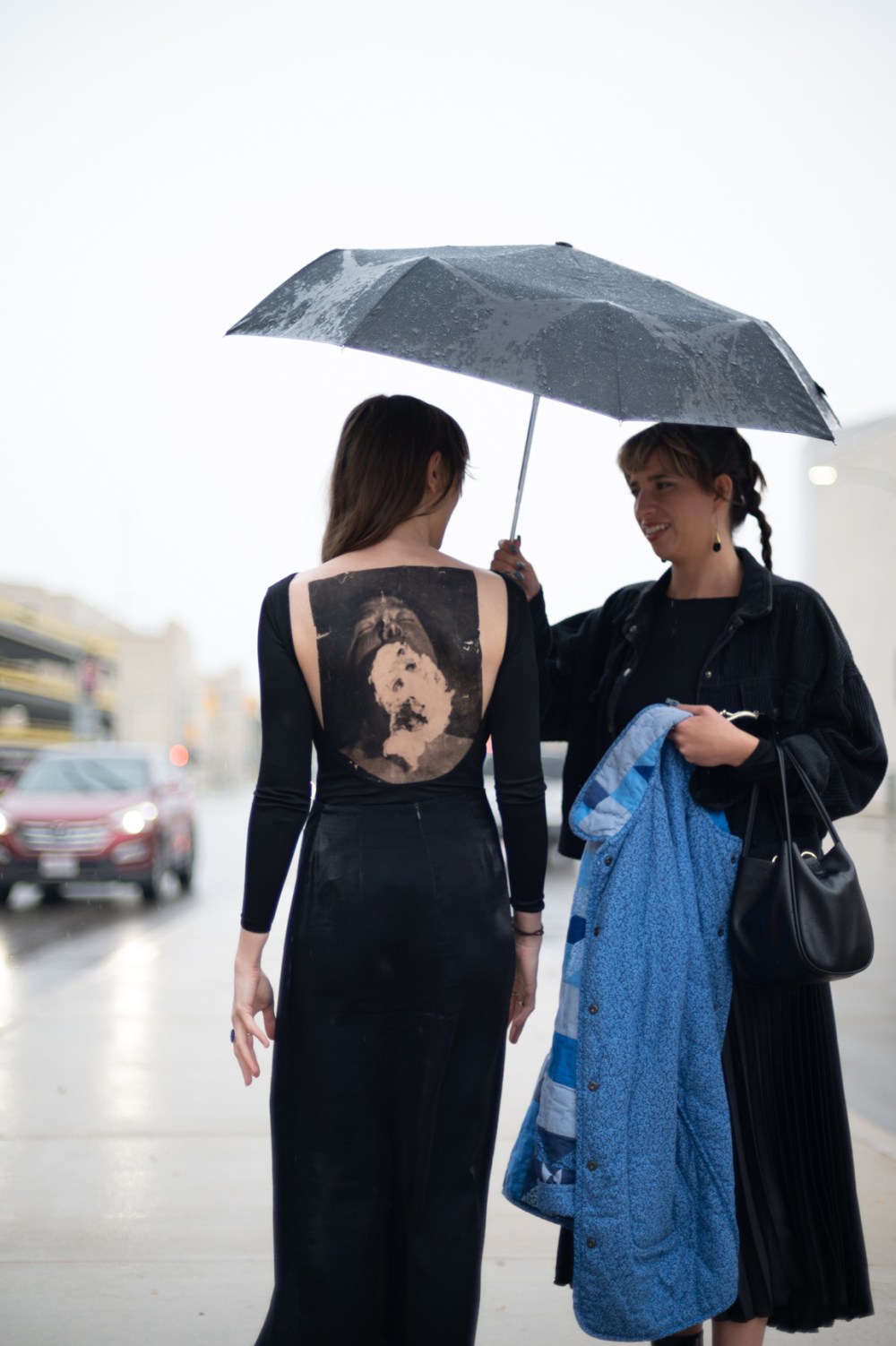
Some of the work in the exhibit includes Shannon Taggart’s images of medium Kai Muegge emitting an ectoplasmic hand from his mouth; Estelle Chaigne’s images of selected Hamilton photographs transferred onto the backs of women; and a high-definition, ASMR-filled four-minute video called Ectoplasmic Studies by Montreal-based artists Wendt + Dufaux.
Funded through provincial and national arts grants, the book and gallery exhibition is the culmination of the work Keshavjee started four years ago, before the COVID-19 pandemic shut down the world. However, Keshavjee had been working with the fonds for much longer.
She moved to Winnipeg from Toronto just before 2000 to work on her University of Toronto dissertation focusing on how 19th century French artists used marginal religious philosophy.
One of her chapters focused on Spiritualism, which was one of the numerous marginal philosophies that arose during that period. She had learned about the Hamilton collection and needed some photographs for her dissertation.
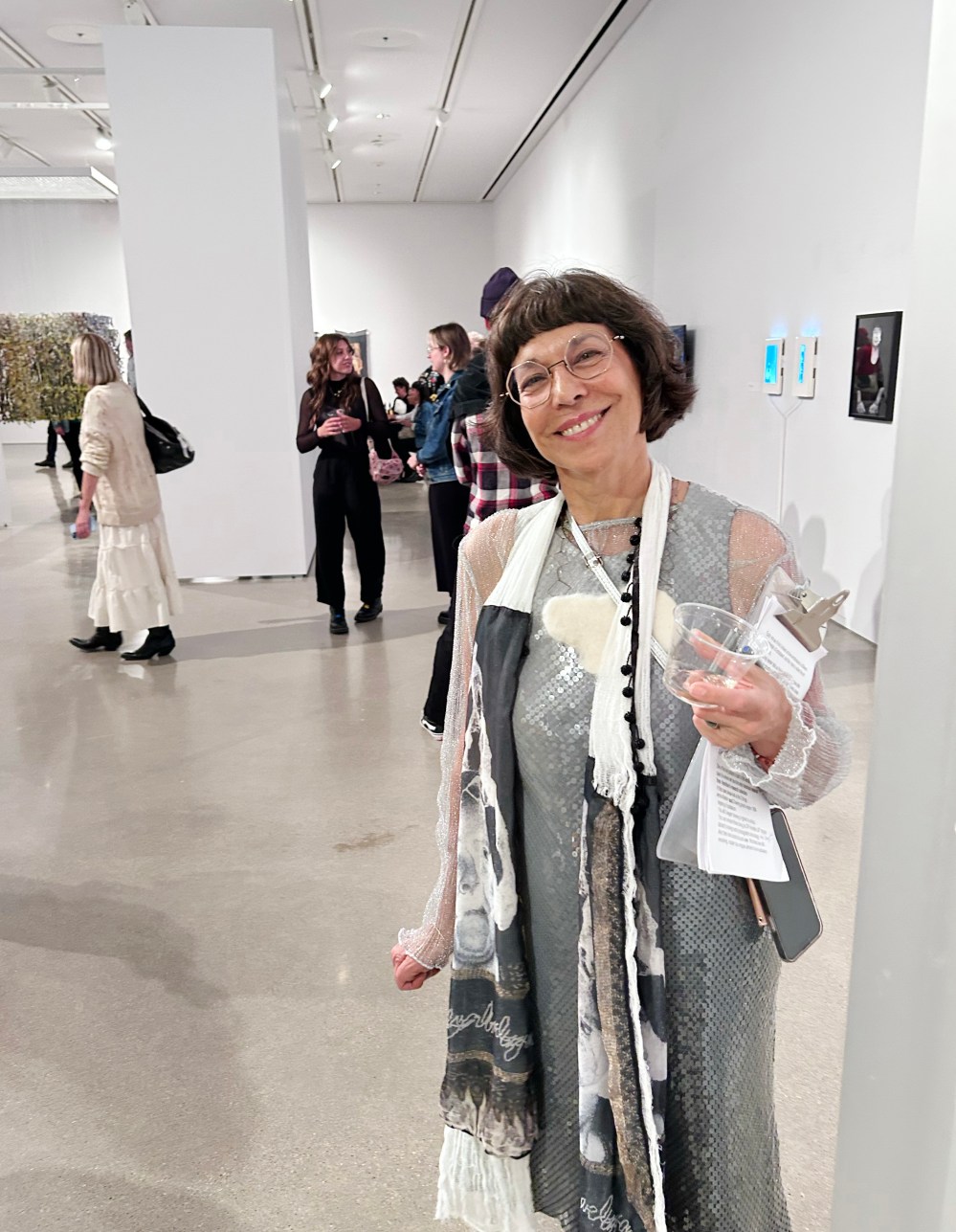
The collection captivated her. “It took me years to go through it page by page. I’ve seen every single page,” she said.
“I thought the book was going to be a little bit different. But the archives and libraries were closed for at least two years, and they were some of the slowest groups to re-open. So I had to change everything.”
Instead of being the author of a book, Keshavjee pivoted to become the editor of an anthology.
The book and the exhibit wouldn’t have come to fruition if Keshavjee didn’t have the years she already spent poring through the fonds. And when she had the idea for the book, she always knew she wanted an exhibit as well.
The exhibit is showing in three galleries, but that wasn’t the original plan.
“I thought I would do with one,” said Keshavjee, adding she was looking at larger galleries in the city, but it didn’t come together.
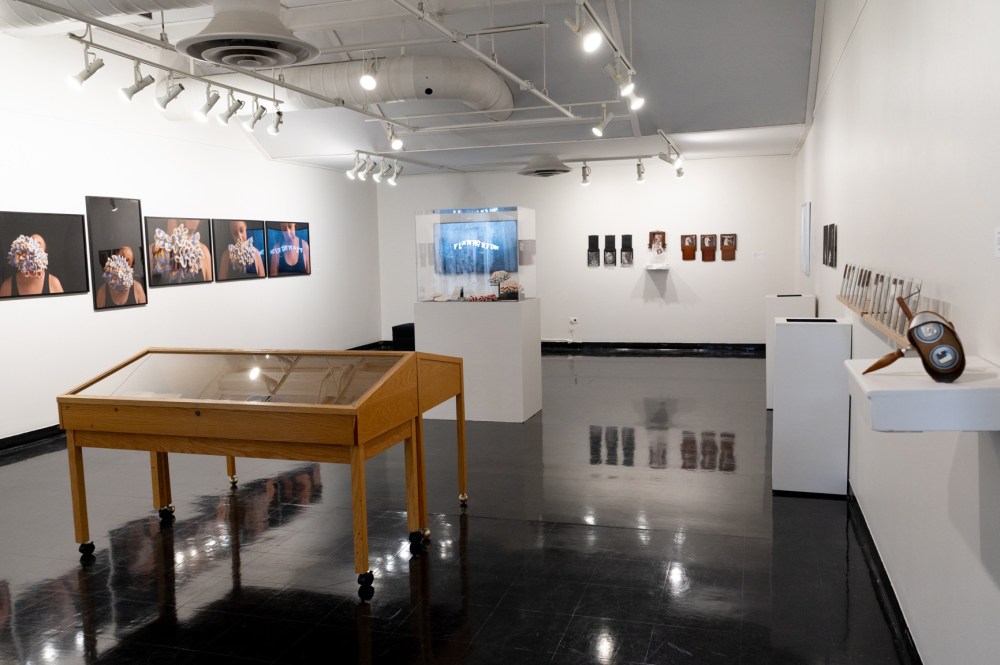
While she was pitching to have the exhibit in a large space, Keshavjee was also having conversations with 1C03 Gallery director Jennifer Gibson and School of Art Gallery director Blair Fornwald about her idea for an exhibit.
After larger galleries took a pass, Keshavjee pitched the idea of co-presenting the exhibit to Gibson and Fornwald, who were immediately onboard. Soon after that, UMASC was brought in to help bring the size of the exhibit to life.
Working on the book and the exhibit during the pandemic had been punctuated with spurts and stops for Keshavjee. She describes the book as a pandemic project.
“I know that it influenced me because I was thinking what was it like a hundred years ago.”
The Spanish flu and the COVID-19 pandemics have made Keshavjee think much more carefully about the Hamiltons and their bereavement over losing their son Arthur.
As a doctor and a nurse, the Hamiltons would have been tending to those who had fallen ill or died from the Spanish flu. They were surrounded by death.
The curiosity and desire to see if it was possible to communicate with a deceased loved one was not unexpected.
Spectral snapshots
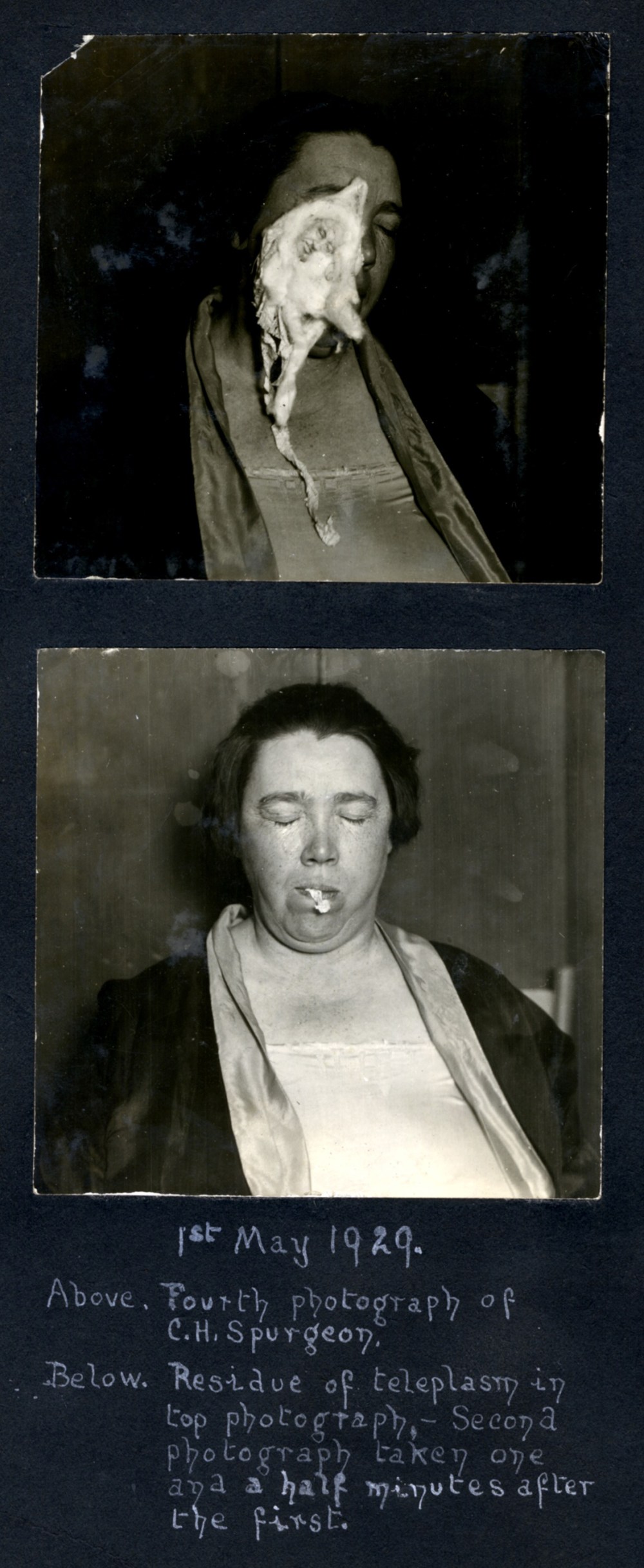
Looking at a photograph of ectoplasm from the Hamilton collection, the word ‘visceral’ easily comes to mind when trying to describe the fluffy, cloud-like material exiting the mouth and nose of the medium.
“We think of ghosts as something more de-materialized,” said University of Winnipeg art history professor Serena Keshavjee. “And I would say this is the 20th-century ghost. It’s not the materializing ghost of the 19th century.”
Looking at a photograph of ectoplasm from the Hamilton collection, the word ‘visceral’ easily comes to mind when trying to describe the fluffy, cloud-like material exiting the mouth and nose of the medium.
“We think of ghosts as something more de-materialized,” said University of Winnipeg art history professor Serena Keshavjee. “And I would say this is the 20th-century ghost. It’s not the materializing ghost of the 19th century.”
T.G. Hamilton believed he needed the most up-to-date camera equipment for the psychical experiments, which he treated as scientific experiments.
“(The cameras) were imported. They came from the Kodak factory in Rochester, N.Y. There were all these German lenses. This was an investment,” Keshavjee noted.
She considers Hamilton an early adopter of technology. He believed new technologies would be able to reveal this invisible force, and then everyone could share in the knowledge there was life after death.
“With the (camera) flash, with the change of technology, you see a change in how the ghost is portrayed. And also I will say that the important science at this time is biology and the rise of biology totally changes how they understand ghosts,” said Keshavjee.
“So for Dr. Hamilton, this was the plasma of the cells being emitted out of the body, like a pseudopod, like a hand that you can’t see. That’s what lifted the table. He used biology, and he used photography, and he had to change the way he described them to make them fit in the science of the day.”
In a way, the images the Hamiltons produced from their scientific investigations could represent, as a whole, how they processed what happened when the Spanish flu pandemic, the fallout from the upheaval of the First World War and the discontent of the 1919 General Strike descended upon the city.
A hundred years later, the artists in The Undead Archive exhibit are not only exploring the concepts of ectoplasm, life after death, spirit and gender bias in paranormal investigations, they’re also reacting to the impact COVID has had on the world.
“This is not the only show on supernatural art,” said Keshavjee.
“There’s a whole bunch of shows happening around the world on this, and I’m like — is this a pandemic response? Do we need some kind of spirituality?
“We don’t know what the post-pandemic scene is likely going to be. We are still emerging from the pandemic. We are not through it. So, it’s going to be years before we process it.”
She also ponders the ways people might consider processing grief today. She thinks in a post-pandemic society, artificial intelligence could play a role.
“People are talking about how you can get your son’s voice to come back to you or your grandma’s voice to come back to you. Maybe we’ll ask Alexa to get our grandma to tell us a story,” Keshavjee pondered.
Throughout the process of assembling and organizing the exhibit, Keshavjee has met a lot people and has been privy to some of their thoughts and beliefs about the after-life. The most obvious question to ask is — does she believe in ghosts?
“I have not had an experience that makes me believe in ghosts,” replied Keshavjee. “But I’m surrounded by people who are open to it.
“My own mom, who’s Irish, I would say when her mom died, she said to me her mom was coming back as that bird on the balcony. There was a bird that came every day. And she thought that was her mom.
“I accept that people have different experiences. I’m totally open to hopeful, utopian thinking.
“I personally have not had an experience, but I do not discount other people’s experiences.”
kittie.wong@freepress.mb.ca

Kittie Wong is page designer and web editor at the Free Press. A graduate of Loyalist College’s photojournalism program, she worked at The Canadian Press’ picture desk before joining the Free Press in 1994. Read more about Kittie.
Every piece of reporting Kittie produces is reviewed by an editing team before it is posted online or published in print — part of the Free Press‘s tradition, since 1872, of producing reliable independent journalism. Read more about Free Press’s history and mandate, and learn how our newsroom operates.
Our newsroom depends on a growing audience of readers to power our journalism. If you are not a paid reader, please consider becoming a subscriber.
Our newsroom depends on its audience of readers to power our journalism. Thank you for your support.
Related Articles
Podcast tells tales of the supernatural from all over Manitoba



History
Updated on Monday, October 23, 2023 9:00 AM CDT: Corrects headline