‘Charming, even cosy, brutalism’ New book shines spotlight on RMTC’s architectural history
Read this article for free:
or
Already have an account? Log in here »
To continue reading, please subscribe:

Digital Subscription
One year of digital access for only $205*
- Enjoy unlimited reading on winnipegfreepress.com
- Read the E-Edition, our digital replica newspaper
- Access News Break, our award-winning app
- Play interactive puzzles
*First annual payment billed as $205.00 + GST for one year. This annual subscription will automatically renew at $233.00 + GST every 52 weeks (10% off the regular annual price of $259.35). Offer available to new and qualified returning subscribers only. Cancel any time.
To continue reading, please subscribe:
Add Free Press access to your Brandon Sun subscription for only an additional
$1 for the first 4 weeks*
- Enjoy unlimited reading on winnipegfreepress.com
- Read the E-Edition, our digital replica newspaper
- Access News Break, our award-winning app
- Play interactive puzzles
*Your next Brandon Sun subscription payment will increase by $1.00 and you will be charged $17.95 plus GST for four weeks. After four weeks, your payment will increase to $24.95 plus GST every four weeks.
Read unlimited articles for free today:
or
Already have an account? Log in here »
Hey there, time traveller!
This article was published 04/01/2024 (1009 days ago), so information in it may no longer be current.
When the Manitoba Theatre Centre opened its doors to the public in the fall of 1970, the reviews of the production onstage — Bertolt Brecht’s A Man’s A Man, directed by John Hirsch — were solid.
Reviews of the building itself? A few put the brutal in brutalist.
“The lobby is dead, menaced in every way, physically, emotionally and socially, by the dead weight of naked and ugly concrete,” wrote Free Press columnist Shaun Herron, who just might have been having a bad day while on deadline.
Jerry Grejewski The brutalist architecture of the Royal Manitoba Theatre Centre earned its share of critics but is cast in a more positive light in a new book by the Winnipeg Architecture Foundation.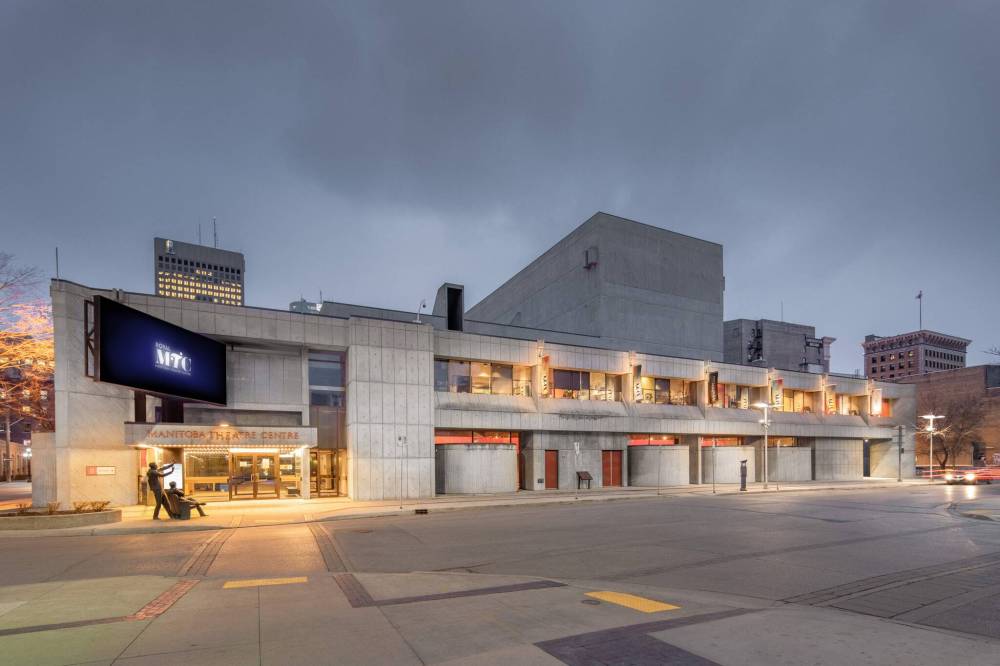
The latest book published by the Winnipeg Architecture Foundation offers a more supportive view. Featuring a foreword from ex-MTC producer Laurie Lam and contributions from arts critic Alison Gillmor, architectural historian Jeffrey Thorsteinson and the architecture foundation’s executive director Susan Algie, Royal Manitoba Theatre Centre is a soft-cover tribute to cold, hard concrete ($30 at shop.winnipegarchitecture.ca).
At 65 pages, the book is slim, yet substantive and informative, featuring original architectural drawings and stunning hand-drawn renderings, showcasing the colourful audiences the theatre centre anticipated hosting. Archival interviews with the involved architects give the book the feel of an abbreviated oral history.
SUPPLIED The book features photos, sketches.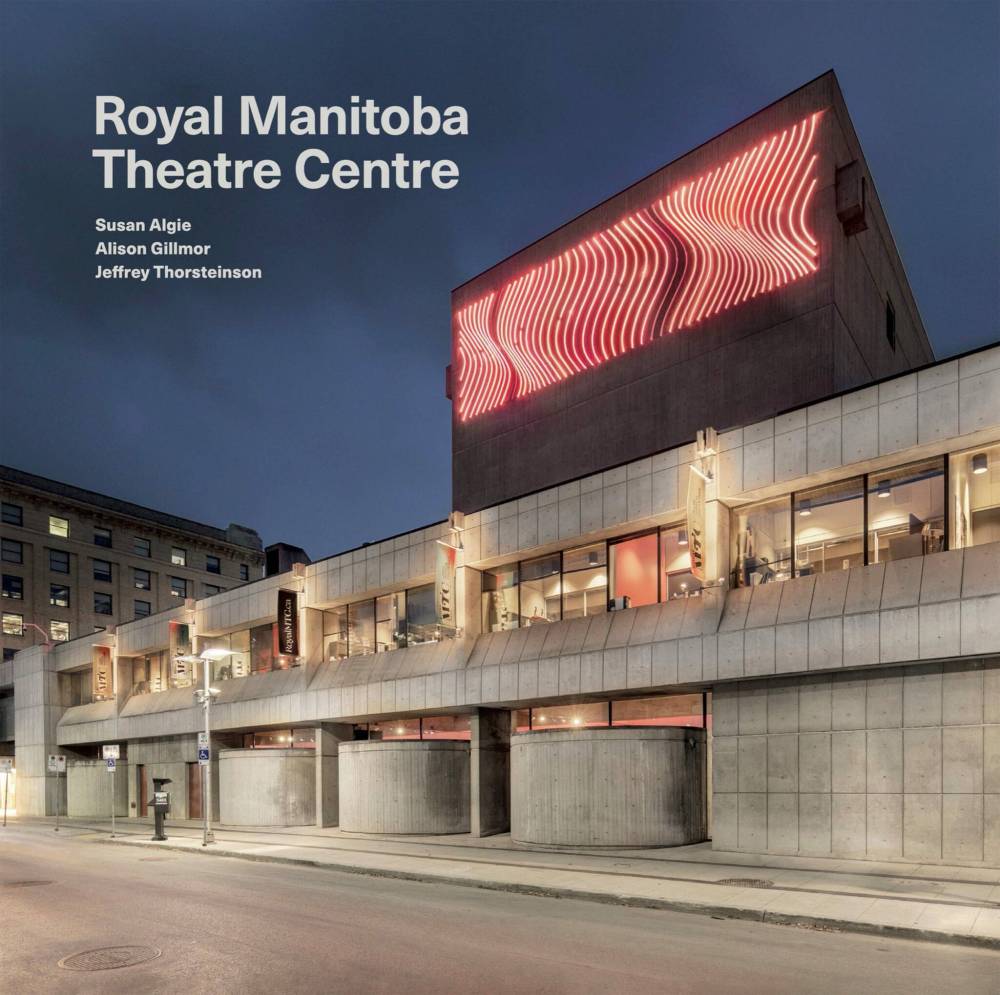
Gillmor, a Free Press critic whose father was a partner in the architectural firm Waisman Ross Blankstein Coop Gillmor Hanna, since shortened to Number TEN, behind the centre’s design, calls the theatre centre “striking but modest, sheltering but open, absolutely of its time but flexible enough to adapt to decades of change.”
Thorsteinson, who previously wrote a book for the architecture foundation on iconic firm GBR & Associates, compliments the building’s “remarkable candour” in revealing its materials to the city around it. Drawing a direct line to Le Corbusier and delivering a brief history of brutalist design, Thorsteinson describes the building as an oxymoron, “an example of charming, even cosy, brutalism.”
Algie, who first visited the theatre in the 1980s after moving to Winnipeg from Ottawa, was quickly charmed by the centre’s rough exterior, unvarnished and exposed to the elements. The lobby flowed out to the street level, a flattened entryway to a new world, visible through massive windows to passersby on the Market Street sidewalk.
“The architects and designers didn’t want to make it a palace for the elite,” she says. Architect Allan Waisman said there would be “no grand staircases, marble or chintz.” He wanted people to feel “as comfortable in jeans as they might be in a tuxedo.”
SUPPLIED The building cost $2.8 million in its day.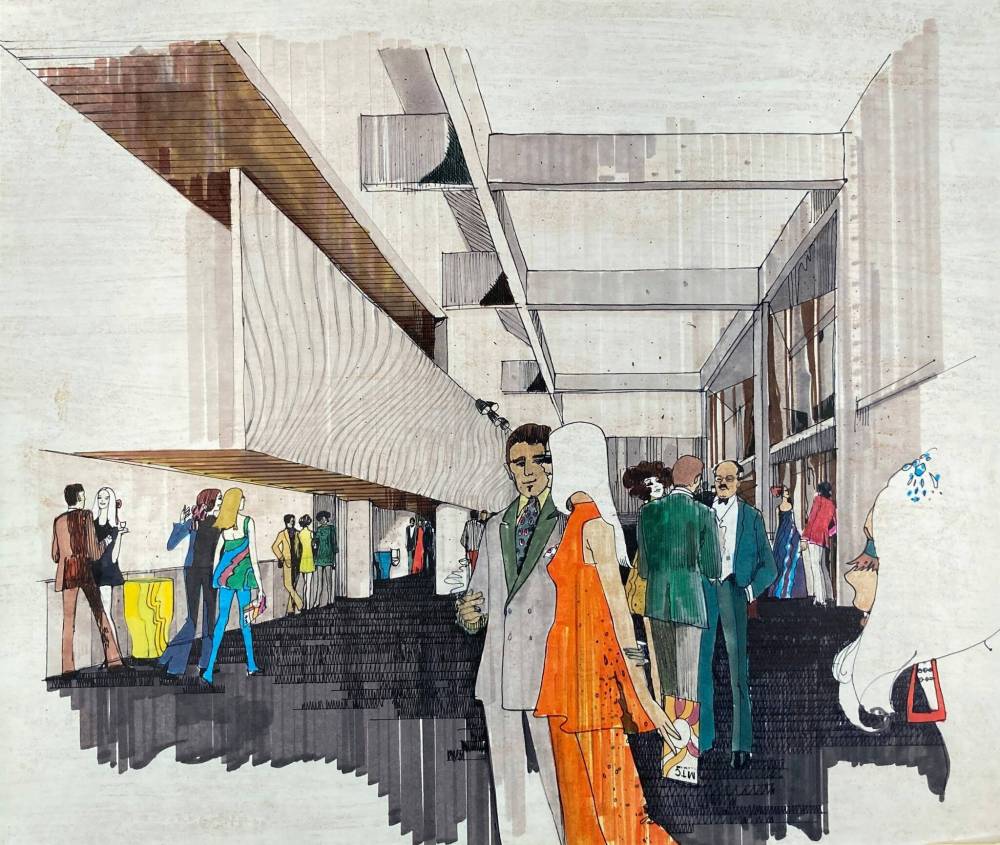
Before the theatre centre was built, the MTC — designated as “Royal” by Queen Elizabeth in 2010 — had operated out of the Dominion Theatre, later demolished to make way for the Richardson Building. The new home of MTC, its staff hoped, would establish the company as a national leader in the theatrical industry.
To that end, Waisman, and especially lead designer Robert Kirby, worked closely with MTC’s artistic director Eddie Gillbert, who was listed — possibly by mistake — as of December by Parks Canada as one of the national historic site’s architects.
During the design phase, Kirby built for Gilbert a one-eighth-scale model of the building nearly every day for a month in order to refine every last detail. It might seem like creative overreach, but the architects clearly appreciated Gilbert’s insights.
“It was really (Gilbert’s) vision for the building,” said Kirby, who designed the theatre centre while still studying at the Massachusetts Institute of Technology. “He had an extremely well-thought-out set of ideas as to what the building should do.”
MANITOBA ARCHIVES The design inside was meant to reduce the distinction between stage and audience.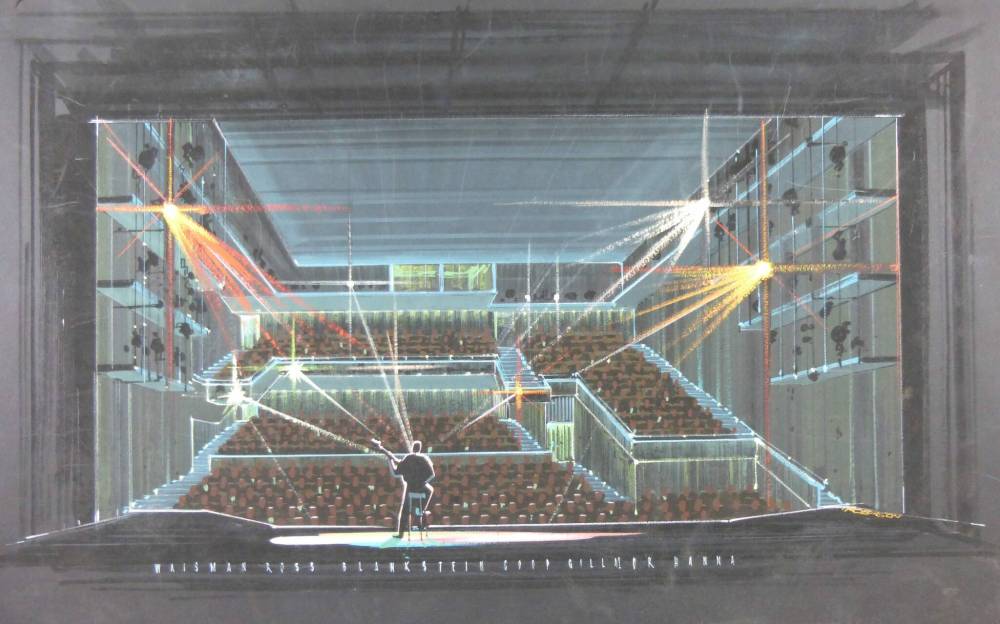
Gilbert was adamant about reducing the distinction between the stage and seating areas, the book notes.
“He wanted the audience to be vulnerable, the actor to get to the audience, to be able to influence the audience emotionally,” Kirby said. “He wanted the audience to be exposed,” much like in the cramped Dominion.
SUPPLIED Exposed concrete is seen throughout.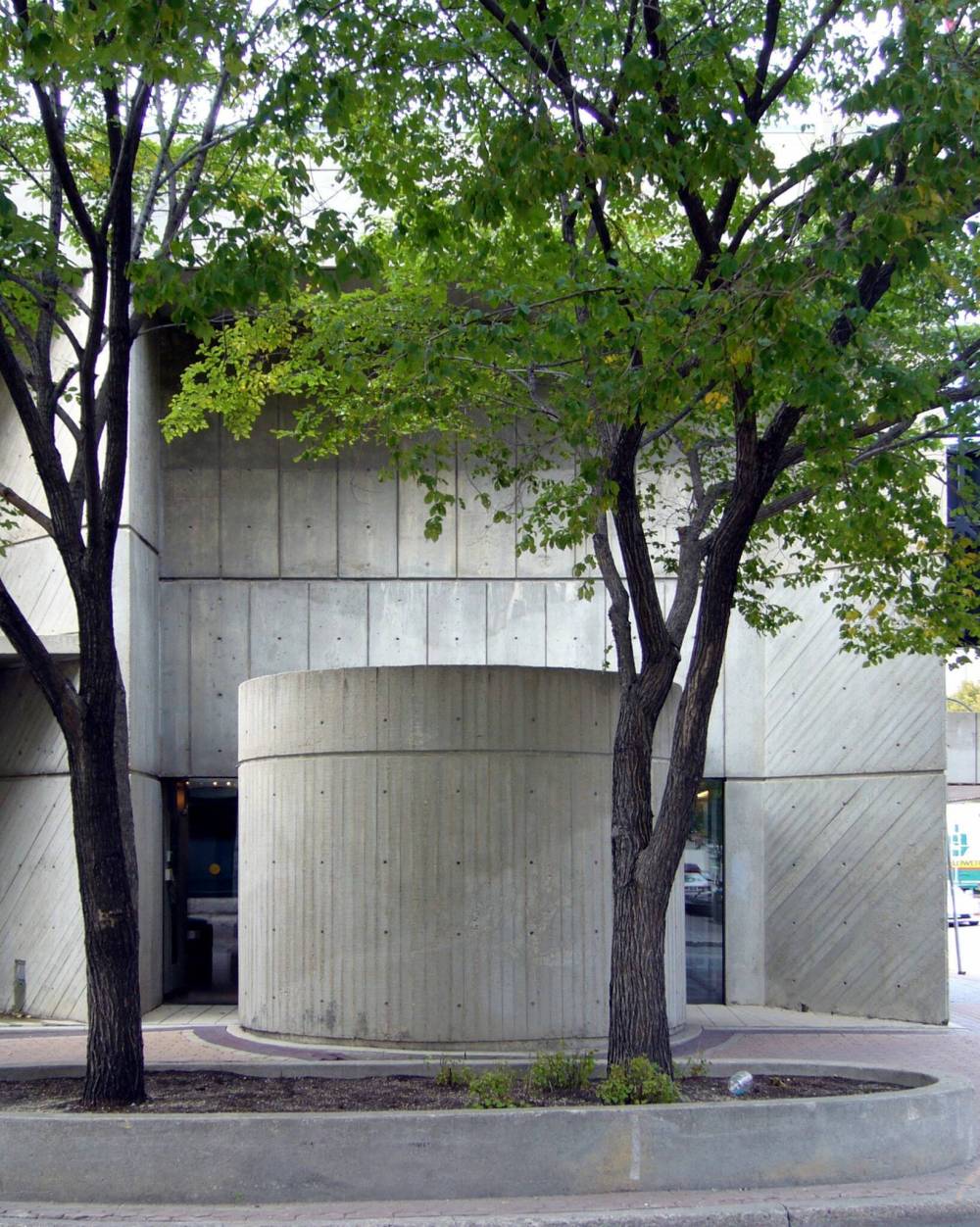
He also suggested paying homage to the Elizabethan tradition of raising a flag outside the theatre to signal to audiences that a show was on. This led to the development of the theatre’s neon “flag” overlooking Market Street, whose 56 curved tubes pulse with light whenever a production is taking place on the John Hirsch Mainstage.
At a cost of $2.8 million, or about $20 million in 2023, the building was completed in time for the 1970 MTC season.
When making the guest list for its opening reception, the company dreamed big, Gillmor writes. As anti-classist as the brutalist style was meant to be, MTC still sought some glitz and glamour.
Among those invited were Liza Minnelli, Cary Grant, Ingrid Bergman, Lauren Bacall, the Gabor sisters, and the Duke and Duchess of Windsor. Instead, the crowd featured then-premier Ed Schreyer, actor Darren McGavin (The Man With the Golden Arm, A Christmas Story) and future national treasure Leslie Nielsen.
Though it inspired mixed reviews when it opened, in the 53 years since, the theatre has been designated as a national historic site, and in 2019, received the prestigious Prix du XXe siecle from the Royal Architectural Institute of Canada.
“I think we’re very lucky here in Winnipeg to have major cultural institutions inside important buildings,” says Algie. “Brutalist architecture is a style people can love or hate. I happen to quite like it. For some of us, it’s quite beautiful. With this book, we might persuade others to see the value of it.”
Whether they’re wearing tuxedos or blue jeans.
SUPPLIED The neon flag facing Market Street pulses with light whenever a performance is underway.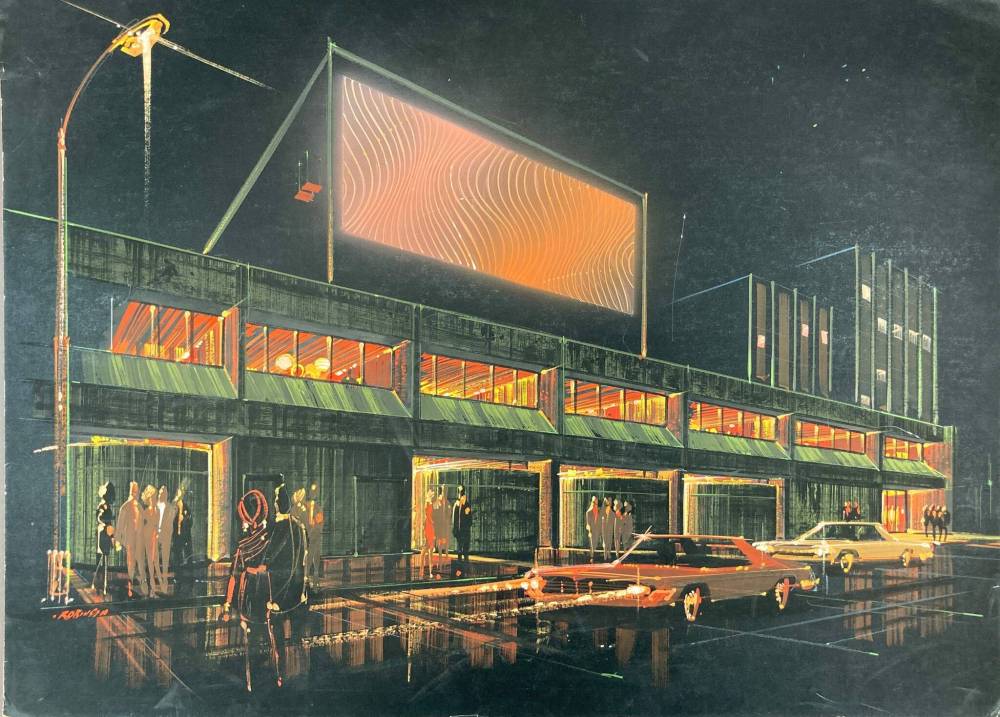
ben.waldman@winnipegfreepress.com

Ben Waldman is a National Newspaper Award-nominated reporter on the Arts & Life desk at the Free Press. Born and raised in Winnipeg, Ben completed three internships with the Free Press while earning his degree at Ryerson University’s (now Toronto Metropolitan University’s) School of Journalism before joining the newsroom full-time in 2019. Read more about Ben.
Every piece of reporting Ben produces is reviewed by an editing team before it is posted online or published in print — part of the Free Press‘s tradition, since 1872, of producing reliable independent journalism. Read more about Free Press’s history and mandate, and learn how our newsroom operates.
Our newsroom depends on a growing audience of readers to power our journalism. If you are not a paid reader, please consider becoming a subscriber.
Our newsroom depends on its audience of readers to power our journalism. Thank you for your support.
History
Updated on Thursday, January 4, 2024 11:09 AM CST: Corrects reference to Eddie Gillbert