Caring spirits Winnipeggers provide guidance and solace — or even just lend an ear — as hospital patients and their families navigate life-changing challenges
Read this article for free:
or
Already have an account? Log in here »
To continue reading, please subscribe:

Digital Subscription
One year of digital access for only $205*
- Enjoy unlimited reading on winnipegfreepress.com
- Read the E-Edition, our digital replica newspaper
- Access News Break, our award-winning app
- Play interactive puzzles
*First annual payment billed as $205.00 + GST for one year. This annual subscription will automatically renew at $233.00 + GST every 52 weeks (10% off the regular annual price of $259.35). Offer available to new and qualified returning subscribers only. Cancel any time.
To continue reading, please subscribe:
Add Free Press access to your Brandon Sun subscription for only an additional
$1 for the first 4 weeks*
- Enjoy unlimited reading on winnipegfreepress.com
- Read the E-Edition, our digital replica newspaper
- Access News Break, our award-winning app
- Play interactive puzzles
*Your next Brandon Sun subscription payment will increase by $1.00 and you will be charged $17.95 plus GST for four weeks. After four weeks, your payment will increase to $24.95 plus GST every four weeks.
Read unlimited articles for free today:
or
Already have an account? Log in here »
Hey there, time traveller!
This article was published 05/07/2024 (750 days ago), so information in it may no longer be current.
“Grief on the go.”
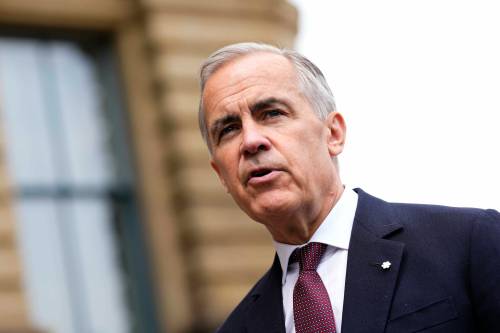
That’s how Doug Koop describes his work as a spiritual care provider at Health Sciences Centre.
On any given day, Koop, 68, can be in emergency, at the bedside of a dying patient or visiting with stressed out staff — there sometimes isn’t time to deal with all the emotions that can arise.
“As it rises, I just need to recognize it and keep going,” he said, noting the work can vary from some of the “most bleak situations” to the routine. “It’s central to longevity in my job.”
Koop is one of about 65 people in Winnipeg who serve in this way in hospitals, providing comfort, solace, guidance, prayer or just a listening ear for patients and their families facing some of the most emotional, traumatic and life-changing moments of their lives.
They are among the many people in the city — firefighters, police, health-care professionals and others — who are in danger of experiencing vicarious, or secondary, trauma due to their work. How do they cope? We asked a few of them to find out.
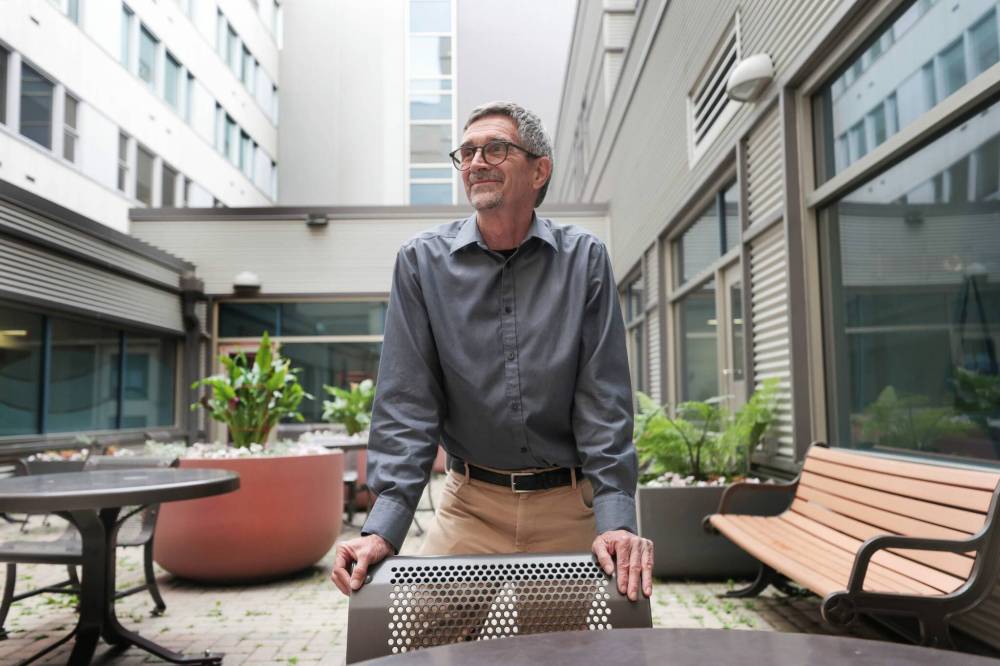
Doug Koop: Cultivating a healthy spirituality
For Koop, the challenge is to be totally present with a patient when he is their room — and then leave it there when he departs.
While with them, “I want to be as attuned to them as I can be,” he said, adding if that means being sad with them, then he is sad, and if happy, then he wants to share their joy. “I want to be totally with them in that moment,” he said.
When he leaves the room, he sanitizes his hands and, metaphorically, his heart and mind as he goes to see the next patient.
“If the previous patient was sad, my goal is to not bring that grief with me, but to leave it there,” he said.
Koop also finds ways to avoid taking that grief with him into his personal life after work. For him, that means “cultivating my own healthy spirituality, doing my own inner spiritual work.”
As a Christian, it’s about being “deeply anchored” in his own personal faith. Fortunately, he said, that is “not a journey without maps.” Through the Bible and Christian tradition, “I have access to the wisdom of the ages.”
“I want to be as attuned to them as I can be… I want to be totally with them in that moment.”– Doug Koop
Music is also helpful, as is writing. He bookends his workdays with quiet times of prayer and devotional reading. “That’s a key element,” he said, adding it’s a way to “breathe in, breathe out and let it go.”
Time spent with other members of the spiritual care team is also important. “I’m not a lone ranger,” he said. “I can’t do it alone. It’s key to be part of a supportive team to help me maintain my mental health in what can be a very intense environment.”
This includes regular informal gatherings with colleagues from various hospitals where they can share honestly and openly with each other. “What we say stays in the room,” he said. “It’s a time of encouragement and support.”
Colleagues can also help warn him when he’s getting in too deep with a patient or their family. “I have to remember not to take on their troubles, to maintain boundaries and know my limits,” he said.
And it’s about staying hopeful, no matter how challenging work might be. “Hope is like faith. It sees a possibility of something better beyond the current reality, no matter how bleak,” he said.
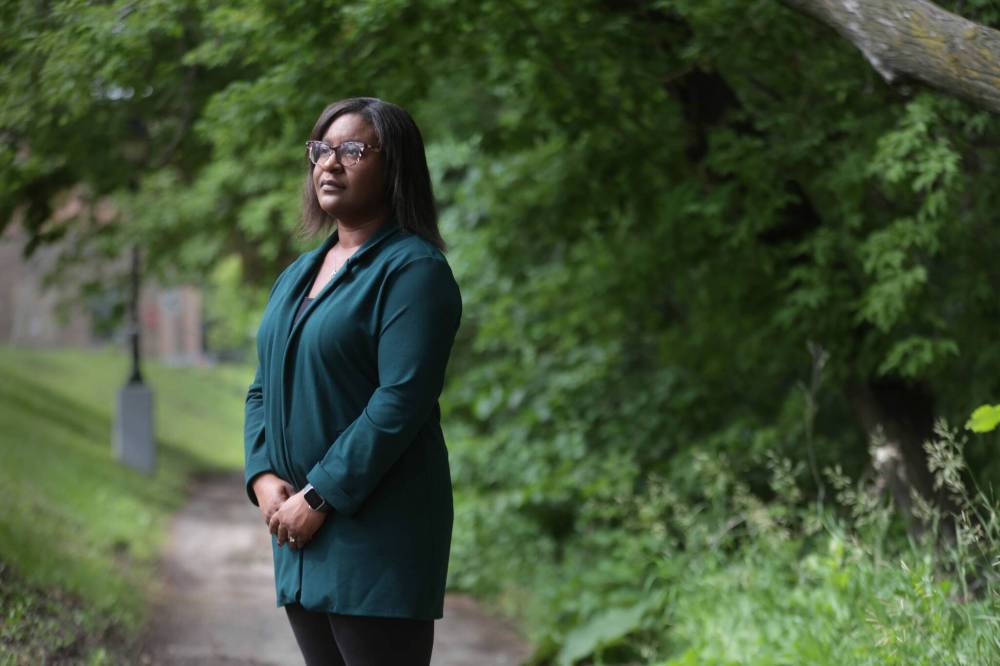
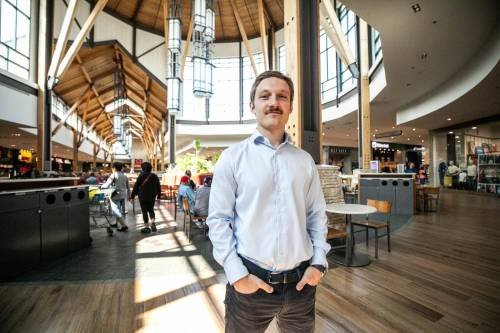
Chenene Layne: Put on your own oxygen mask first
Chenene Layne, 38, is the co-ordinator for spiritual care at St. Boniface Hospital. In her role, she often finds herself helping staff deal with tough situations involving life and death experiences with patients.
“We try to debrief as soon as possible, talk through how they are feeling, talk it out,” she said, adding the team meets every morning for a time of quiet and prayer and finishes each day the same way.
She encourages them to take time for themselves if they are feeling stressed — to go for a walk, to sit for a bit or listen to music.
Despite that, she knows they can experience secondhand trauma that can exhibit itself in worry, sleeplessness or inability to focus. “I tell them to pay attention to what is going on in their bodies, to anything that is disrupting their routines,” she said.
“I tell them to pay attention to what is going on in their bodies, to anything that is disrupting their routines.”– Chenene Layne
Sometimes, spiritual care providers don’t get time to refocus; emergencies can require them to suddenly shift to another patient before they have time to decompress. If it all gets to be too much, then they need to “tap out,” Layne said, leaning on others to fill in for them while they catch their breath.
Like on an airplane where passengers are instructed to put on their own oxygen mask before helping someone else, “You have to fill up your own cup before you can pour it out for others,” she said.
Layne herself finds prayer, meditation, getting out into nature and hobbies like making jewelry, drawing and painting to be a big help in dealing with her own stress. “I get a lot of strength from that,” she said. “It gives me balance.”
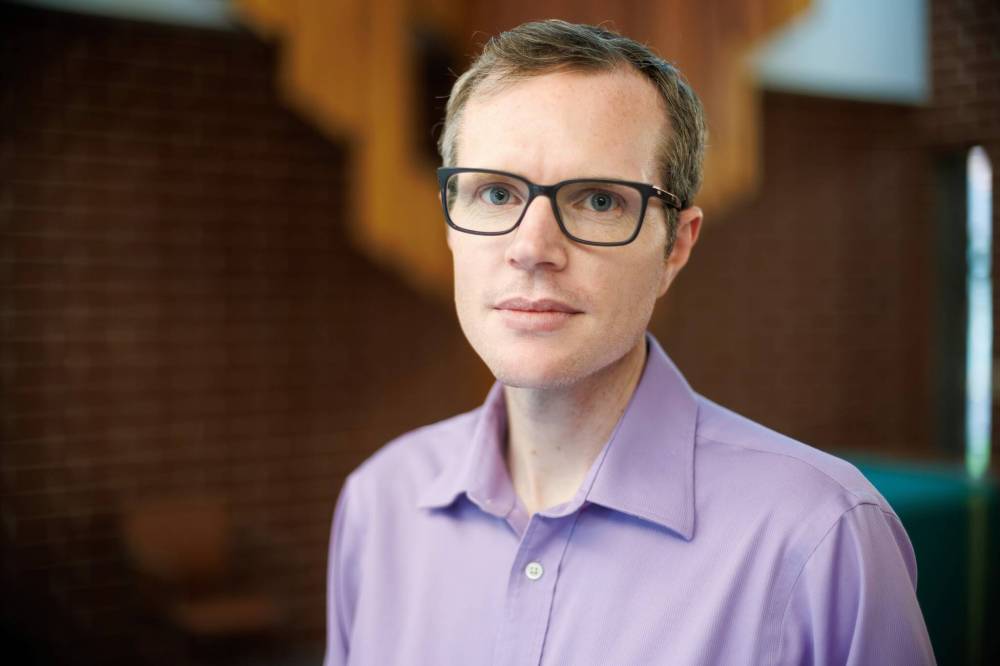
Jonathan Jandavs-Hedlin: Taking time for awe and gratitude
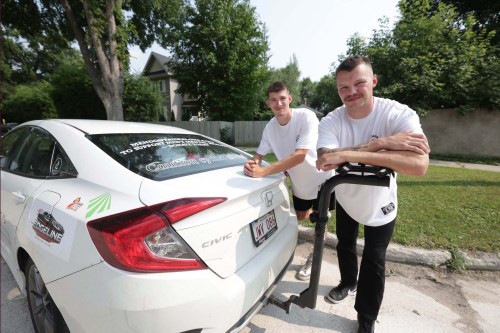
For Jonathan Jandavs-Hedlin, 42, a spiritual care practitioner at Riverview Health Centre, finding ways to leave the work at work is key.
“It’s not possible all the time,” he said, adding that’s when it’s important to find ways to “look after myself,” by taking time for reflection, silence, prayer, meditation and writing to cope with stress from the job.
Another thing that is important is being proactive by eating healthy and getting enough sleep, along with taking time for “awe and gratitude, things that inspire joy.”
Unplugging from the news and social media can also be crucial. “I don’t want to be surrounded by bad news all the time,” he said.
These strategies help with dealing with taxing situations at the hospital so he can be there for others, even when things are spiraling out of control. That’s when he tries to be “a calm, non-anxious presence, even if I feel the opposite in my own head and heart,” he said.
When a stressful or traumatic event occurs, “I pay close attention to how I am doing for the next 24 to 48 hours,” he said. “I try not to be surprised if I feel dysregulated.”
While processing the event, Jandavs-Hedlin tries to remember there are many things outside his control, things he can’t alleviate or fix. “I can’t take the weight of the world on my shoulders,” he said. “Their story is their story. I have my own life to live.”
If necessary, he will connect with a colleague to talk through things. “We can lean on each other,” he said.
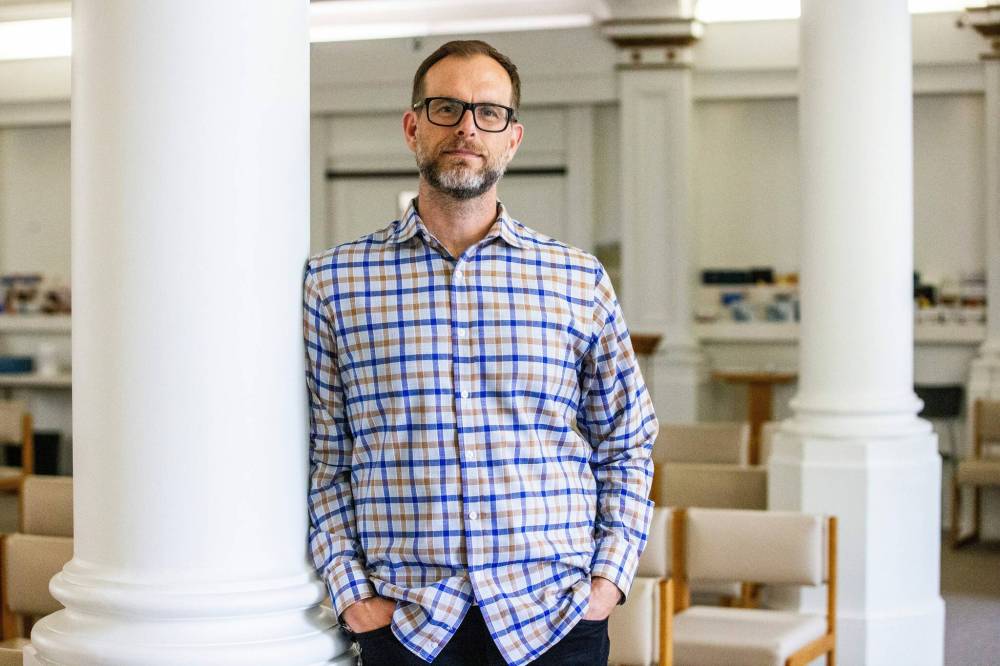
Justin Neufeld: Finding beauty and goodness in the work
“The first thing I have to say is that I love the work, it’s a gift,” said Justin Neufeld, 47, of his work as a spiritual care provider at St. Boniface Hospital.
“That’s not a platitude, it’s essential for my well-being,” he said. “I find a lot of beauty and goodness in it.”
At St. Boniface, Neufeld is responsible for emergency and the cardiac and acute medicine wards. Among other things, this means responding whenever there is a “Code Blue,” when someone has a cardiac or respiratory arrest anywhere in the hospital.
“I stop whatever I am doing to be there,” he said.
If the patient is coming by ambulance, it will find him visiting with any family who have come at the same time. “I try to see what they need, help with communication, make sure they don’t feel alone,” he said, adding these can be very tense and stressful situations.
He copes with the daily stress and trauma of the job by remembering his role is to be “a compassionate presence … I don’t have to have an answer for everything,” he said.
“[The hospital is] a place where the biggest hopes in life can turn to grief, where the big questions about life are raised.”– Justin Neufeld
Away from work, he makes sure to take time for himself, along with praying every morning alone and then later with other team members at the hospital. “We pray for ourselves, each other, patients, families and the staff,” he said.
A hospital is an intense place, he said of his work. “It’s a place where the biggest hopes in life can turn to grief, where the big questions about life are raised.”
Being present for people facing those situations can be nourishing, he said, but only if he can maintain a sense of inner calm and spirituality.
“There are times when I receive things from patients and their families to help keep me going,” he said. “I can be blessed by their humanity. It can be a holy moment.”
Not all days are like that, he acknowledged, like the time he responded to two Code Blues on one shift and saw two people come in suffering from drug overdoses. Then he has to find ways to let it go.
“I need to find ways to breathe in and breathe out and remember that, even when things are most difficult, it is still possible to find joy and inspiration and that it’s a gift to be able to serve people in this way, to offer kindness and love,” he said.
faith@freepress.mb.ca
The Free Press is committed to covering faith in Manitoba through our Religion in the News project. This reporting continues because readers like you step forward to fund it.
Donate now to support our reporting on religion.
Your donation is eligible for a charitable tax receipt.
BECOME A FAITH JOURNALISM SUPPORTER

Our newsroom depends on a growing audience of readers to power our journalism. If you are not a paid reader, please consider becoming a subscriber.
Our newsroom depends on its audience of readers to power our journalism. Thank you for your support.
The Free Press acknowledges the financial support it receives from members of the city’s faith community, which makes our coverage of religion possible.