Justice minister declares province’s security rebate ‘massive success’ 8,800 applications received for the $2-M fund
Read this article for free:
or
Already have an account? Log in here »
To continue reading, please subscribe:

Digital Subscription
One year of digital access for only $205*
- Enjoy unlimited reading on winnipegfreepress.com
- Read the E-Edition, our digital replica newspaper
- Access News Break, our award-winning app
- Play interactive puzzles
*First annual payment billed as $205.00 + GST for one year. This annual subscription will automatically renew at $233.00 + GST every 52 weeks (10% off the regular annual price of $259.35). Offer available to new and qualified returning subscribers only. Cancel any time.
To continue reading, please subscribe:
Add Free Press access to your Brandon Sun subscription for only an additional
$1 for the first 4 weeks*
- Enjoy unlimited reading on winnipegfreepress.com
- Read the E-Edition, our digital replica newspaper
- Access News Break, our award-winning app
- Play interactive puzzles
*Your next Brandon Sun subscription payment will increase by $1.00 and you will be charged $17.95 plus GST for four weeks. After four weeks, your payment will increase to $24.95 plus GST every four weeks.
Read unlimited articles for free today:
or
Already have an account? Log in here »
Hey there, time traveller!
This article was published 27/08/2024 (762 days ago), so information in it may no longer be current.
Manitobans snapped up an extra $1.5 million in provincial funding for home and small-business security rebates in days, bringing at least a temporary close to the program.
Winnipeg resident Terry Lutomsky was out of luck Sunday when he tried to apply for a rebate for new home security cameras he had just purchased and installed. Applications are no longer being accepted.
“I opened up the application (webpage), and it did not exist,” the Waverley Heights homeowner said. “I wasn’t thrilled. It’s an out-of-pocket expense now.”
JOHN WOODS / FREE PRESS Terry Lutomsky found applications were no longer being accepted when he tried to apply for the security rebate.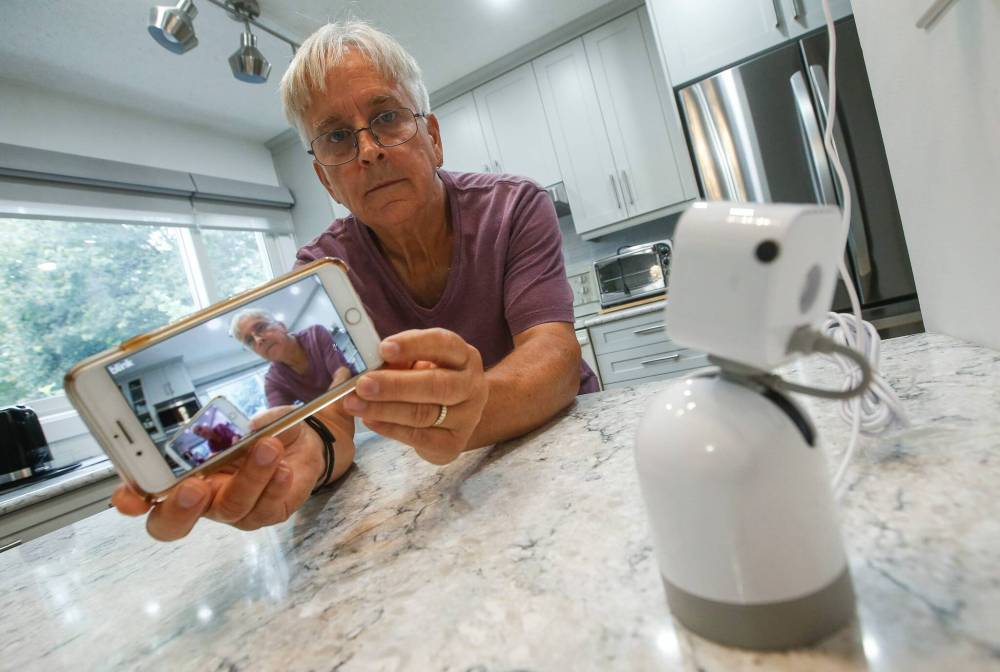
The province launched the program at the end of June, offering a maximum $300 rebate on a first-come, first-served basis to homeowners, renters and small-business owners who’ve purchased and installed qualifying security equipment since Sept. 1, 2023. The initial budget was $500,000.
The program was oversubscribed within days, resulting in the budget being quadrupled to $2 million on Aug. 16. By then, more than 7,500 Manitobans had applied for a rebate, Justice Minister Matt Wiebe said at the time.
A provincial spokesperson said Tuesday rebates began to be distributed that day, and the expanded program was “fully subscribed” last Friday.
“The program was able to accept close to 8,800 applications and it is expected the full $2 million in rebates will be distributed,” the spokesperson wrote in an email.
Wiebe called the program a “massive success” Tuesday. He said the program will now be evaluated, but he wouldn’t say if it will be extended with additional funding.
“We’re very happy with how the program was received,” he said. “The effect that it is having is making whole communities safe.”
“We’re very happy with how the program was received.”–Justice Minister Matt Wiebe
Wiebe said the province knew the additional $1.5 million would “go out the door quick” when announced, given the demand at that time.
As for whether the NDP could have done anything differently prior to the June launch, Wiebe said it was a new program in Manitoba and the government hoped it would be well-received.
Lutomsky, 62, ordered security cameras after seeing the government’s Aug. 16 announcement of additional funding. He installed them Saturday, two days after they were delivered, and tried to apply for a rebate Sunday, only to find the application form no longer available.
“My assumption was they’ve gone through the backlog of applications they had the first time,” he said.
JOHN WOODS / FREE PRESS Terry Lutomsky described the rebate program as a “great plan,” but said the optics “look terrible.”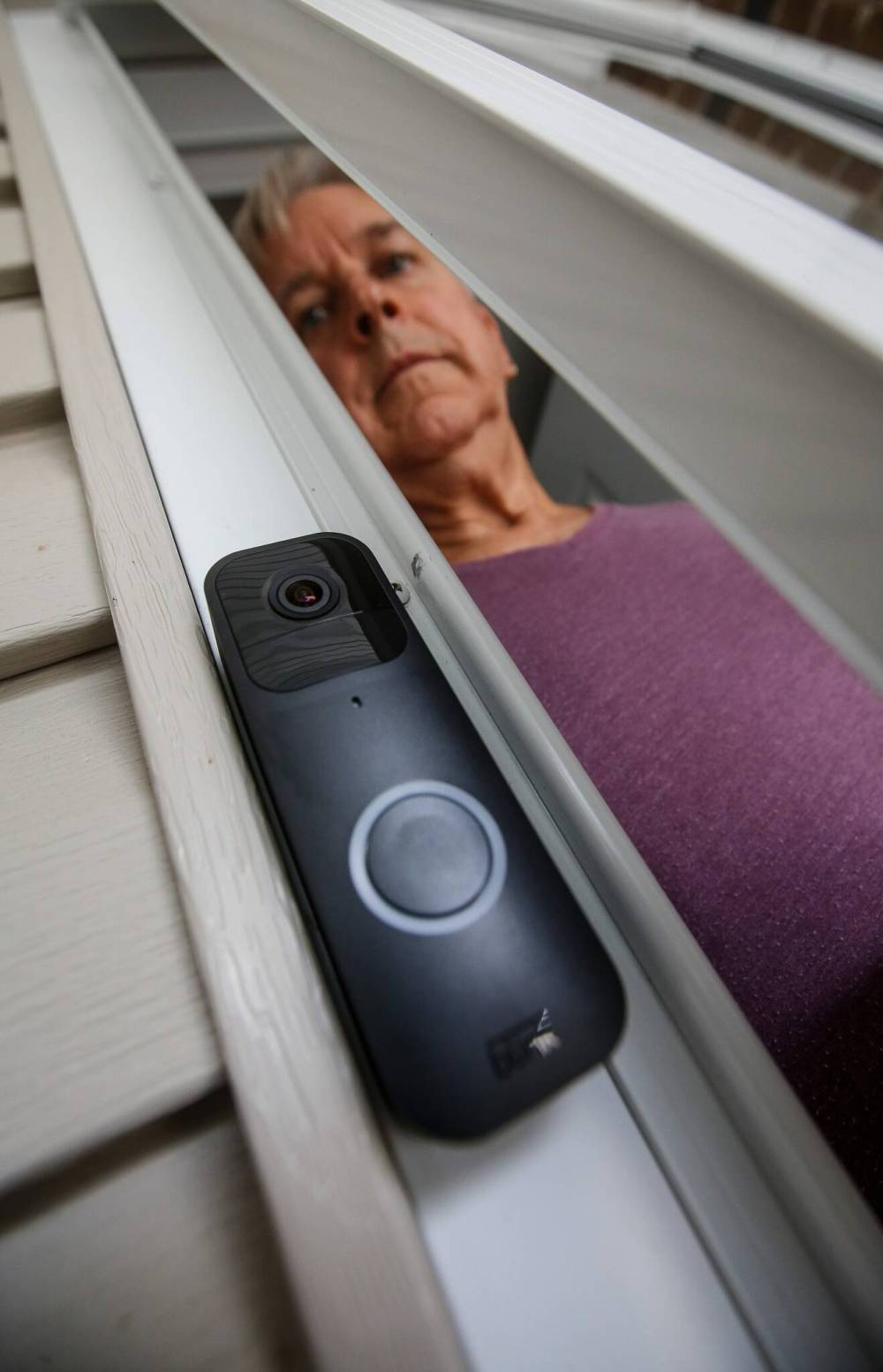
The application form, when available, required applicants to submit several documents, including a receipt and photo proof of installation, according to the government’s website.
Lutomsky described the rebate program as a “great plan,” but said the optics “look terrible.”
“This is something they should continue,” he said. “I think they have to go a little further than what they did.”
The government should have budgeted more and covered purchases up to a specific deadline to allow more Manitobans to participate, he said.
The retiree said he can afford the cost of the cameras — almost $300 before taxes — but some Manitobans, including seniors, who purchased equipment and now cannot get a rebate could be on tight budgets.
The Canadian Federation of Independent Business wants Manitoba to continue the program with higher rebates for small businesses.
Small-business owners are spending into the tens of thousands of dollars on security, said Brianna Solberg, CFIB’s director of provincial affairs for the Prairies.
Prior to the program’s launch, a survey of CFIB’s roughly 4,000 members in Manitoba found 29 per cent intended to apply for a rebate, while 37 per cent said the maximum amount of $300 was not sufficient.
“These are Band-Aid solutions to the problem,” she said, noting cameras or other equipment will not put an end to thefts or vandalism.
CFIB will conduct another survey to find out how many members applied for a rebate. The organization has requested a total from the province.
CFIB also wants Manitoba to introduce a rebate to help offset the cost of commercial vandalism repairs.

A new B.C. government program for small businesses provides a one-time reparative rebate of up to $2,000, and a one-time preventative rebate of up to $1,000 to those who meet eligibility criteria. B.C. has budgeted $10.5 million for rebates.
Interim Progressive Conservative leader Wayne Ewasko said only a small fraction of Manitobans will receive a rebate, even with the top-up.
“The NDP promised $2.5 million in their election campaign and have yet to even commit to spending that full amount,” he said in a statement. “We have heard from businesses and individuals that this program does not go far enough.”
Crime has forced “countless” rural and urban businesses to shut their doors, he said, while accusing the NDP of standing by idly.
“Instances of residential and retail crime have skyrocketed under the NDP and this government has failed to take serious action on addressing the issues Manitobans are facing,” he said. “Manitobans deserve real action from their government to combat crime and ensure public safety.”
“Manitobans deserve real action from their government to combat crime and ensure public safety.”–Interim Tory leader Wayne Ewasko
Doorbell cameras, alarm systems, motion detectors, reinforced doors and windows and anti-graffiti paint were among the security equipment eligible for rebates in Manitoba.
The program was beneficial for online and brick-and-mortar retailers.
“We did see an uptick (in sales),” said Don Cairns, who owns EyeSee Computers and Security Cameras on St. Mary’s Road.
Some customers who recently purchased cameras were not aware of the program, he noted.
Cairns said $300 doesn’t go very far when purchasing security cameras, hardware for video storage and accessories.
“I think they should have another program with a larger amount of money and a longer term,” he said.
Manitobans were allowed to apply once for one property, location or rental unit. The province said it could take several weeks for an application to be reviewed due to the high volume of online submissions.
chris.kitching@freepress.mb.ca

Chris Kitching is a general assignment reporter at the Free Press. He began his newspaper career in 2001, with stops in Winnipeg, Toronto and London, England, along the way. After returning to Winnipeg, he joined the Free Press in 2021, and now covers a little bit of everything for the newspaper. Read more about Chris.
Every piece of reporting Chris produces is reviewed by an editing team before it is posted online or published in print — part of the Free Press‘s tradition, since 1872, of producing reliable independent journalism. Read more about Free Press’s history and mandate, and learn how our newsroom operates.
Our newsroom depends on a growing audience of readers to power our journalism. If you are not a paid reader, please consider becoming a subscriber.
Our newsroom depends on its audience of readers to power our journalism. Thank you for your support.
Related Articles
Province adds $1.5M — quadrupling cap — for well-received security rebate program




History
Updated on Tuesday, August 27, 2024 5:16 PM CDT: Full write thru with comments, quotes, new pictures.