Shifting sounds New Music Festival always morphing and evolving with the times and tastes
Read this article for free:
or
Already have an account? Log in here »
To continue reading, please subscribe:

Digital Subscription
One year of digital access for only $205*
- Enjoy unlimited reading on winnipegfreepress.com
- Read the E-Edition, our digital replica newspaper
- Access News Break, our award-winning app
- Play interactive puzzles
*First annual payment billed as $205.00 + GST for one year. This annual subscription will automatically renew at $233.00 + GST every 52 weeks (10% off the regular annual price of $259.35). Offer available to new and qualified returning subscribers only. Cancel any time.
To continue reading, please subscribe:
Add Free Press access to your Brandon Sun subscription for only an additional
$1 for the first 4 weeks*
- Enjoy unlimited reading on winnipegfreepress.com
- Read the E-Edition, our digital replica newspaper
- Access News Break, our award-winning app
- Play interactive puzzles
*Your next Brandon Sun subscription payment will increase by $1.00 and you will be charged $17.95 plus GST for four weeks. After four weeks, your payment will increase to $24.95 plus GST every four weeks.
Read unlimited articles for free today:
or
Already have an account? Log in here »
Hey there, time traveller!
This article was published 17/01/2025 (613 days ago), so information in it may no longer be current.
Harry Stafylakis, the Winnipeg Symphony Orchestra’s composer-in-residence, sounds like a geologist when he describes the Winnipeg New Music Festival’s 34-year history.
He thinks in terms of epochs and tectonic shifts.
SUPPLIED Harry Stafylakis, WSO composer-in-residence and co-programmer of the New Music Festival, says classical music’s future depends on a solid relationship with popular music.
“It was music that was meant to be advanced and challenging in a way that we’d be familiar with from 20th-century modernism,” he says over the phone from New York about the festival’s early years.
“It was more, for lack of a better word, academic.”
It was a reflection of contemporary classical music’s culture in the 1990s more than the aims of early programmers before the festival evolved, he says.
There was “a gradual shift towards more of a postmodernist and, eventually, populist strain,” he says.
Looking at this year’s program, he points to the Grammy-winning New York ensemble Attacca Quartet — whose eclectic repertoire and metropolitan verve recall groups like the Kronos Quartet — as embodying this new spirit.
“I think they’re pretty indicative of the playfulness and the fusing of genres,” says Stafylakis, who programs the festival with the symphony’s music director and conductor Daniel Raiskin.
The quartet performs at two of the four concerts in this year’s series, which begins Saturday at the Centennial Concert Hall.
A festival highlight will be their performance next Saturday of Absolute Jest by John Adams, one of the biggest names in concert music after Philip Glass.
SUPPLIED Attacca Quartet will perform Absolute Jest by John Adams at the Winnipeg New Music Festival on Saturday.
The concert also features young Canadian luminaries Keiko Devaux and Nic Bray of Manitoba.
“I’m not so much interested in pursuing kind of older ideas of what fine music and concert music is, but really just what sounds awesome,” says Stafylakis.
Classical composers, such as Stafylakis, tend to have a sharp sense of their context within musical history since the tradition stretches back hundreds of years.
About a 100 years ago, that tradition went on a radical adventure into modernism, the pioneering works of which were often met with boos, aggressive interruptions and even violence at premières.
These dissonant and experimental new styles won over many university music departments for decades to come. They did not win over the masses as a source of concert music, even if their mark on Hollywood scores was and remains strong.
Within a couple decades, popular music became a synonym for American songs — and an antonym, seemingly, with new classical music.
“Even speaking in terms of high and low art is irrelevant and overly binary.”–Harry Stafylakis
As a budding composer at McGill University in the late aughts, Stafylakis says his efforts to bring popular music into his pieces presented a constant ideological battle with his professors — an apparent reflection of the old avant-garde’s enduring power within new classical music and academia.
So, when he says classical music’s future will entirely depend on a strong relationship with popular music, he’s contending against a weighty legacy.
Stafylakis has more in mind than orchestras doing live renditions of Harry Potter and Star Wars scores or occasional multicultural programming.
“I grew up as a classical musician, but also with traditional Greek music and as a metal musician, so even speaking in terms of high and low art is irrelevant and overly binary,” he says.
If these distinctions are now moot, what’s left of classical music, long considered the musical “high art” par excellence?
“It’s an aspiration for the elite, and I use that term self-consciously, in that I would consider classical musicians to be top athletes of music-making,” he says.
One such “elite” is Samy Moussa, an acclaimed Canadian conductor and composer who lives in Berlin.
SUPPLIED Samy Moussa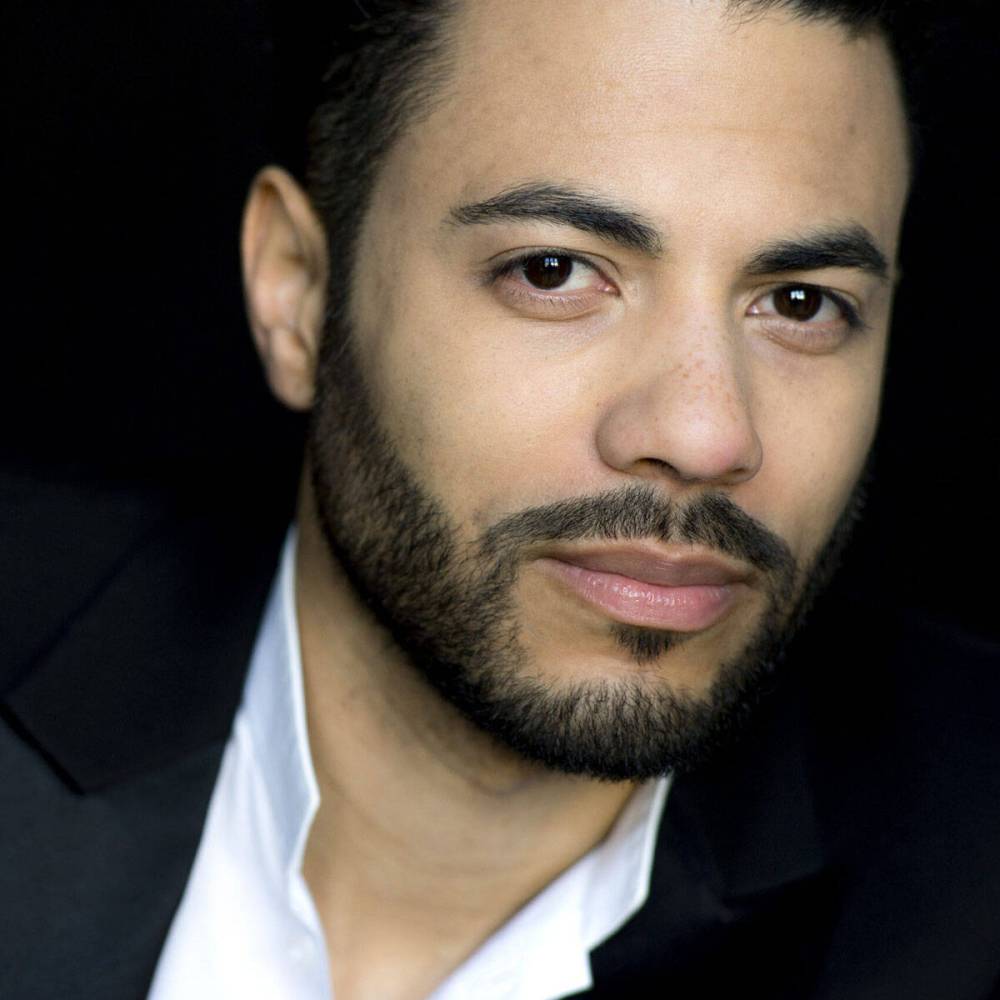
Daniel Raiskin, speaking over the phone from Europe, calls Moussa “one of the foremost current, younger generation of Canadian composers who has established himself very, very strongly on the international stage.”
On Tuesday, the 40-year-old Moussa conducts two of his compositions: the early Nocturne (2014) and his monumental Symphony No. 2 (2022).
Moussa’s orchestral music makes bold use of the big instrument at his disposal, revving the orchestra like a sports car before kicking it into overdrive.
“And another work that is very, very dear to me is the Canadian première of the sixth symphony by Christopher Rouse, who didn’t live long enough to hear its first performance,” Raiskin says of the American composer, who died in 2019.
Raiskin, who considers Rouse one of the most important composers of his time, conducts the première on Thursday in a concert also featuring Greek composer Konstantia Gourzi’s Ypsilon.
SUPPLIED WSO conductor Daniel Raiskin is co-programmer of the Winnipeg New Music Festival.
Most new compositions have program notes attached to them; a place for the composer to wax philosophical about the work’s deeper meaning.
Rouse’s note elusively states: “I know the ‘meaning’ of this work in my own mind but wish to leave it to each listener to decide for him or herself what this could be. My main hope is that it will communicate something sincere in meaning to those who hear it.”
Stafylakis considers Symphony No. 6, written as the composer knew he was dying, “an epitaph to himself (on) the theme of death and transcendence.”
conrad.sweatman@freepress.mb.ca

Concert Preview
Winnipeg New Music Festival
Jan. 18 to 25
Tickets $15-$89; passes $49-$89 at wnmf.ca
Jan. 18: New Music Emerging: 2 p.m., Millennium Library (Free)
Jan. 21: Samy Moussa, 7 p.m., Centennial Concert Hall
Jan. 22: Every Freeze is Different, 7:30 p.m., Millennium Library (Free)
Jan. 23: Raiskin Conducts Rouse & Gourzi, 7 p.m., Centennial Concert Hall
Jan. 24: Attacca Quartet, 7 p.m., Desautels Concert Hall
Jan. 25: Absolute Jest, 7 p.m., Centennial Concert Hall

Conrad Sweatman is an arts reporter and feature writer. Before joining the Free Press full-time in 2024, he worked in the U.K. and Canadian cultural sectors and freelanced for outlets including The Walrus, VICE and Prairie Fire. Read more about Conrad.
Our newsroom depends on a growing audience of readers to power our journalism. If you are not a paid reader, please consider becoming a subscriber.
Our newsroom depends on its audience of readers to power our journalism. Thank you for your support.