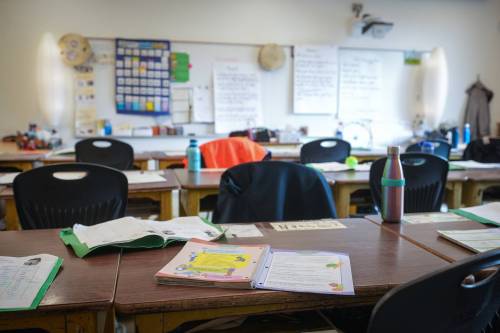
Losing with purpose Running for office with no chance to win is an exercise in electoral futility, but doomed candidates see a higher purpose for democracy

Read this article for free:
or
Already have an account? Log in here »
To continue reading, please subscribe:
Digital Subscription
One year of digital access for only $1.44 a week*
- Enjoy unlimited reading on winnipegfreepress.com
- Read the E-Edition, our digital replica newspaper
- Access News Break, our award-winning app
- Play interactive puzzles
*Billed as $5.77 plus GST every four weeks. After 52 weeks, price increases to the regular rate of $19.95 plus GST every four weeks. Offer available to new and qualified returning subscribers only. Cancel any time.
To continue reading, please subscribe:
Add Free Press access to your Brandon Sun subscription for only an additional
$1 for the first 4 weeks*
- Enjoy unlimited reading on winnipegfreepress.com
- Read the E-Edition, our digital replica newspaper
- Access News Break, our award-winning app
- Play interactive puzzles
*Your next Brandon Sun subscription payment will increase by $1.00 and you will be charged $17.95 plus GST for four weeks. After four weeks, your payment will increase to $24.95 plus GST every four weeks.
Read unlimited articles for free today:
or
Already have an account? Log in here »
Hey there, time traveller!
This article was published 04/04/2025 (564 days ago), so information in it may no longer be current.
How — or, rather, why — does someone run in a federal election when they know they aren’t going to win?
If you ask Dennis Bayomi, the Green Party of Canada’s candidate in the competitive Winnipeg West riding, he’ll take it in stride and, maybe, even crack a joke or two.
“As far as I’m concerned, I’m not out here to get votes at all,” he says, before pausing and breaking out into laughter.
“I want to make sure we get at least one vote because then it will prove that at least I probably voted for myself.”
RUTH BONNEVILLE / FREE PRESS Green Party candidate for Winnipeg West, Dennis Bayomi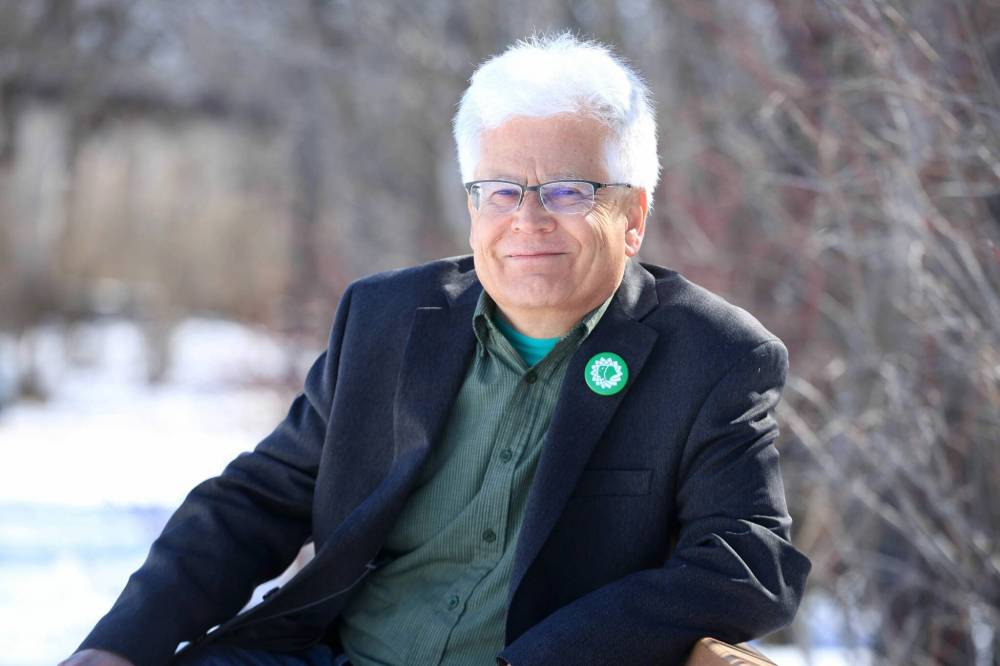
Bayomi, the current president and deputy leader of the Green party’s provincial arm, isn’t naive to the fact that in a riding seen as a battle between Liberal red and Tory blue, green regularly comes in fourth or fifth.
In 2021, the party’s candidate got just 947 votes, 2.1 per cent of Winnipeg West’s ballot, and was beaten by the three major parties and the People’s Party of Canada, which received 1,594 votes. In comparison, winning Conservative candidate Marty Morantz received more than 18,100 votes.
In some ways, Bayomi’s campaign is a lot like those of Morantz or Liberal candidate Dr. Doug Eyolfson — he’s knocking on doors, taking part in town halls and meeting as many of the people in the riding as he can.
But in other ways, it’s different. No one in the riding has a “Vote Bayomi” lawn sign — not only is printing out stacks of signs not eco-friendly, he said, but he’s worried about what he described as “divisiveness in neighbourhoods” that lawn signs can cause.
“In fact, I would hate to see votes to our candidate — myself — split the vote and maybe be the difference, like a referee in a hockey game making a bad call and then affecting the outcome of the game,” he said.
“So it’s not about votes, in my case; it may be for the other parties… but we want to get ideas out there and hopefully build some support for longer term.”
“So it’s not about votes, in my case; it may be for the other parties… but we want to get ideas out there and hopefully build some support for longer term.”–Dennis Bayomi
When he knocks on doors or participates in town halls, he talks about issues that have fallen by the wayside during this election and encourages particularly interested constituents to look into getting involved with the party at either the provincial or federal level.
U.S. President Donald Trump’s trade war and repeated musings about making Canada the 51st state are the focus for many constituents in the election; Bayomi said he wants to ensure climate change is kept in the conversation.
“The climate emergency is the No. 1 issue, but you’re not going to hear much about that at all in the next 3 1/2 weeks,” he said.
“The Green party will be speaking on that and tying that in to the current crisis that we’re in due to what’s going on south of the border … We should be recruiting scientists, engineers, artists, writers, from the U.S. who currently are under threat, bring them here and increase our capacity as one of the most knowledge-based countries in the world.”
A vegan since 1993, he plans to bring that up, too. His is not an especially popular practice, he said with another laugh, but what the heck — it’s not like most of them will be voting for him, anyway.
In a world of strategic candidates and voters, there are still constituents who will put platform before party, a stance University of Winnipeg political science professor Malcolm Bird said he knows all too well.
“My entire life, I’ve voted for loser candidates,” he said. “But it doesn’t affect my voting. I vote for who I believe in.”
Young, hungry candidates will run in “hopeless” ridings and work their way up to ridings with better chances for their party, he said. Parties smaller than Green is will push to build as full of a slate as possible, knowing they have no chance.
“They do that because they want to show people that they’re a viable party, that they’re organized and coherent,” Bird said.
A ballot with all kinds of candidates — popular, unpopular, eclectic and otherwise — and voters supporting all of them is a sign of a healthy democracy, he said.
“You watch everyone coming into the voting booth, and you’ve got different sizes and colours and types, everybody and their dog is coming in to vote, and there’s such diversity in the people coming in,” he said.
“And then when you look at the ballots, they’re completely and totally uniform.”
In Winnipeg South Centre, Jorge Requena Ramos’s resumé might look a little different than those of his opponents.
RUTH BONNEVILLE / FREE PRESS NDP candidate for Winnipeg South Centre, Jorge Requena Ramos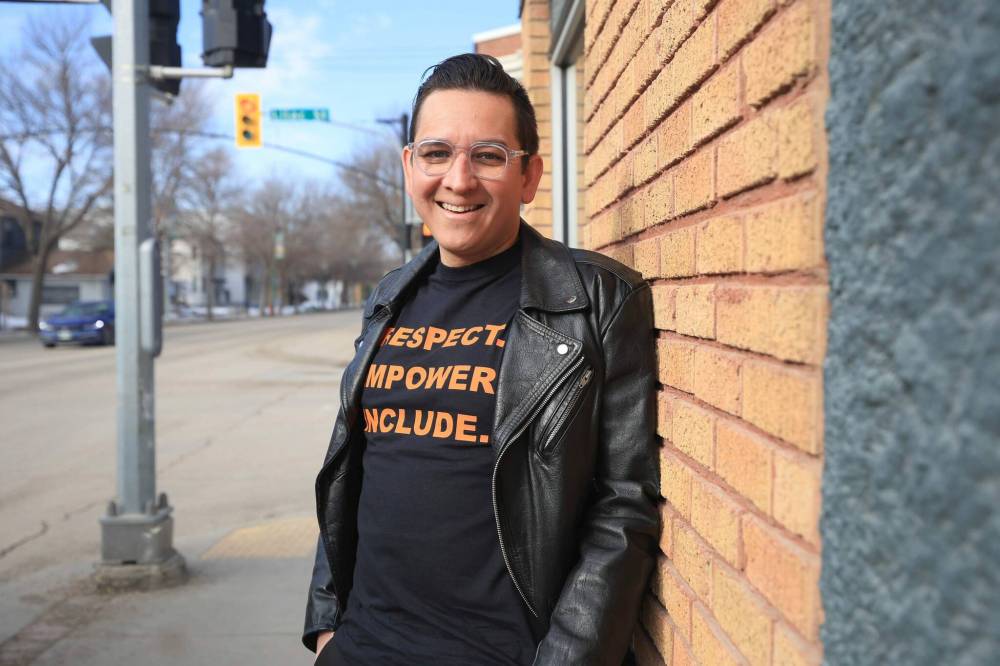
The NDP candidate has a long history of work with the West End Cultural Centre, leading local rock group The Mariachi Ghost, and in the world of filmmaking.
The 42-year-old first-generation immigrant from Mexico City recognizes the riding has never had NDP representation and has remained largely Liberal for decades.
“It’s a lottery ticket, sliver of a chance,” he said with a laugh. “But I think I do have a sliver of a chance.”
What inspired him to run, he said, was watching voters in the riding cast ballots for a party despite overall dissatisfaction — a sizable number “are more anti-Conservative than they are Liberal” — and knowing many young people are choosing not to participate in the democratic process at all.
“My biggest thing is trying to engage with young people to vote,” he said.
“They don’t have to vote for me, I just want them to vote, in general. I want them to have an opinion.”
“My biggest thing is trying to engage with young people to vote. They don’t have to vote for me, I just want them to vote, in general. I want them to have an opinion.”–Jorge Requena Ramos
In his time campaigning, he said it appears issues young people care about — climate protection, Indigenous rights and reconciliation, affordability for people at the edge of poverty — aren’t being addressed by either of the Liberal or Tory candidates.
“I’m calling for national rent control, and I’m calling for a basic basket of goods… but young people are telling me, ‘Holy s—t, why isn’t anybody talking about that?” he said.
He knows he’s operating at a disadvantage in the riding, noting that not only has his party never taken the seat, but the Liberals and Conservatives historically outspend the NDP campaign by a wide margin.
Nonetheless, he said he believes there’s more at stake than winning or losing.
“I just want to talk to young people about engaging in the political system, and I feel like that already will be a victory for me.”
malak.abas@freepress.mb.ca

Malak Abas is a city reporter at the Free Press. Born and raised in Winnipeg’s North End, she led the campus paper at the University of Manitoba before joining the Free Press in 2020. Read more about Malak.
Every piece of reporting Malak produces is reviewed by an editing team before it is posted online or published in print — part of the Free Press‘s tradition, since 1872, of producing reliable independent journalism. Read more about Free Press’s history and mandate, and learn how our newsroom operates.
Our newsroom depends on a growing audience of readers to power our journalism. If you are not a paid reader, please consider becoming a subscriber.
Our newsroom depends on its audience of readers to power our journalism. Thank you for your support.
Related Articles
Liberals win 4th mandate as NDP vote collapses and Singh announces he will resign