City to remove parking pay stations, cash no longer an option
Read this article for free:
or
Already have an account? Log in here »
To continue reading, please subscribe:
Digital Subscription
One year of digital access for only $1.44 a week*
- Enjoy unlimited reading on winnipegfreepress.com
- Read the E-Edition, our digital replica newspaper
- Access News Break, our award-winning app
- Play interactive puzzles
*Billed as $5.77 plus GST every four weeks. After 52 weeks, price increases to the regular rate of $19.95 plus GST every four weeks. Offer available to new and qualified returning subscribers only. Cancel any time.
To continue reading, please subscribe:
Add Free Press access to your Brandon Sun subscription for only an additional
$1 for the first 4 weeks*
- Enjoy unlimited reading on winnipegfreepress.com
- Read the E-Edition, our digital replica newspaper
- Access News Break, our award-winning app
- Play interactive puzzles
*Your next Brandon Sun subscription payment will increase by $1.00 and you will be charged $17.95 plus GST for four weeks. After four weeks, your payment will increase to $24.95 plus GST every four weeks.
Read unlimited articles for free today:
or
Already have an account? Log in here »
Hey there, time traveller!
This article was published 21/05/2025 (521 days ago), so information in it may no longer be current.
When 76-year-old Terry Bailey learned the city will be removing its parking pay stations across the city this summer, making it impossible to pay while parking on the street with cash, it felt like Winnipeg was leaving him behind.
The retiree doesn’t own a smartphone, and regularly uses cash or a credit card to park at the pay stations dotted around downtown while visiting The Forks, attending baseball games and going to concerts. He uses a landline to make calls, so the city’s pay-by-phone support, which could let him use his credit card, is closed off to him.
“Basically, they’re locking me out of downtown Winnipeg,” he told the Free Press Wednesday.
The city said Wednesday it will remove its parking pay stations between July 2 and Aug. 31. Drivers will have to use their phone to pay, either through an app or by calling 1-888-680-7275, or using a computer. The PayByPhone service accepts debit and credit card payments.
The only remaining option to pay with cash will be buying prepaid parking booklets, which include notices that can be torn off and placed on your dashboard after parking. Drivers can also use debit or credit cards to purchase the booklets at the Parking Store at 495 Portage Ave. They will also be sold at 311 counters at 510 Main St. and 170 Goulet St. starting July 2.
RUTH BONNEVILLE / FREE PRESS Terry Bailey doesn’t own a smartphone and regularly uses cash or a credit card to park at the pay stations dotted around downtown.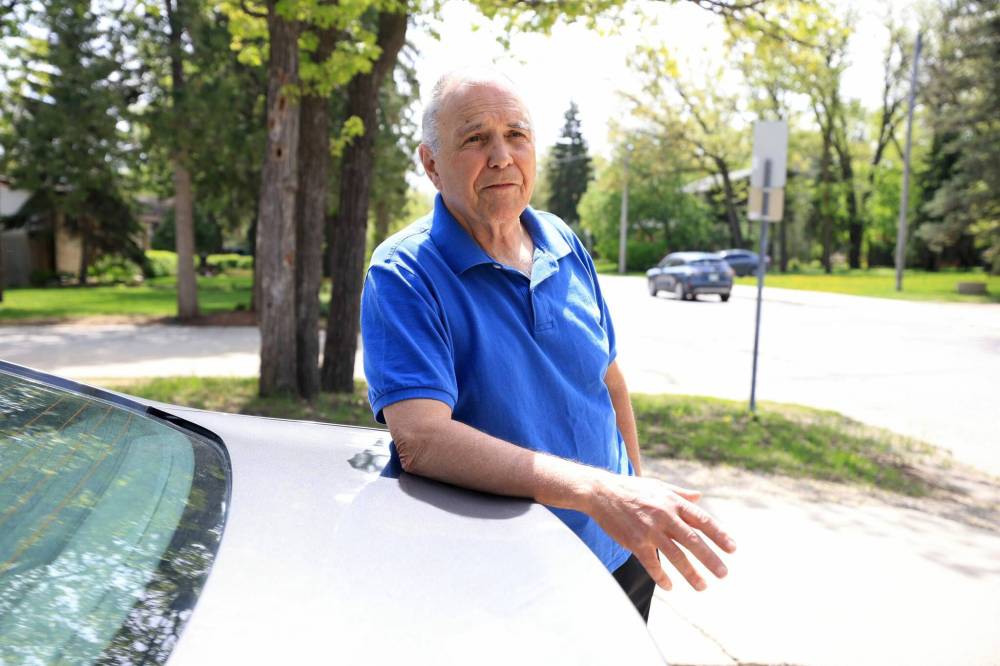
Pay stations in private lots are not affected by the change, and pay stations in the Millennium Library parkade will remain.
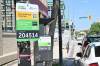
Some pay stations already feature stickers warning of their upcoming removal and providing a QR code to download the PayByPhone app.
It’s a big change for Bailey, and for friends and family his age, many of whom don’t own smartphones themselves or aren’t app-savvy. He has no plans to buy a phone just to be able to park more easily downtown.
“Hey, you can tell them this — if the city wants me to have a cellphone, then they can buy me a cellphone,” he joked.
The current system uses outdated 3G technology being phased out across Canada, and replacing the 250 stations still in operation would cost $3.6 million. Removing them will save $1 million in yearly operating costs, along with a small processing fee for every credit card payment.
“We have to pay an additional fee on top of every credit card transaction to process the payments securely, and then, of course, we’ve been hit with some vandalism and theft for over the last six months or so, so there’s a few reasons why the pay stations are being removed,” said Lisa Patterson, the manager of operations and facilities at the Winnipeg Parking Authority.
“Hey, you can tell them this — if the city wants me to have a cellphone, then they can buy me a cellphone.”–Terry Bailey
According to PayByPhone’s website, the parking service operates in more than 1,300 cities around the world.
When asked about the possibility of app glitches putting the brakes on parking citywide, Patterson said PayByPhone is a “fairly secure and reliable app.”
“The app doesn’t ever go down,” she said. “It’s a technology company, so all of their maintenance for the app is always done overnight to not impact the parking customers during the day.”
In 2024, 74 per cent of on-street and city-operated surface lot parking was paid for using the PayByPhone app, creating about $4.7 million in revenue.
Another 14 per cent of payments equalling $921,856 were done using a credit card, and $757,056 of the year’s parking revenue came from drivers using cash to park at pay stations.
The first quarter of 2025 shows the number of people using an app to pay for parking jump to 81 per cent.
“To continue on with the parking meters is like using VHS tapes in a Netflix world.”–Mayor Scott Gillingham
Mayor Scott Gillingham said the cost, along with data showing the majority of people using parking stations are paying using the PayByPhone app, made the decision to axe the machines a no-brainer.
“To continue on with the parking meters is like using VHS tapes in a Netflix world,” he said.
“Technology’s changing so quickly…. All of those parking meters have to be replaced with something that eventually will be out of date, as well.”
Coun. Evan Duncan, the chair of city council’s property and development council, said he would like to see the city explore the possibility of generating extra revenue for the city through the change.
“With technology, you can do anything,” he said. “If there’s nobody parking downtown, then maybe (we can offer) parking for free. If there’s a mass influx of people that are parking and the private vendors are charging $20 for parking, and we’re charging $2.50 for parking, maybe we look at opportunities to generate more revenue.”
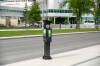
BROOK JONES / FREE PRESS The city will remove its parking pay stations between July 2 and Aug. 31. 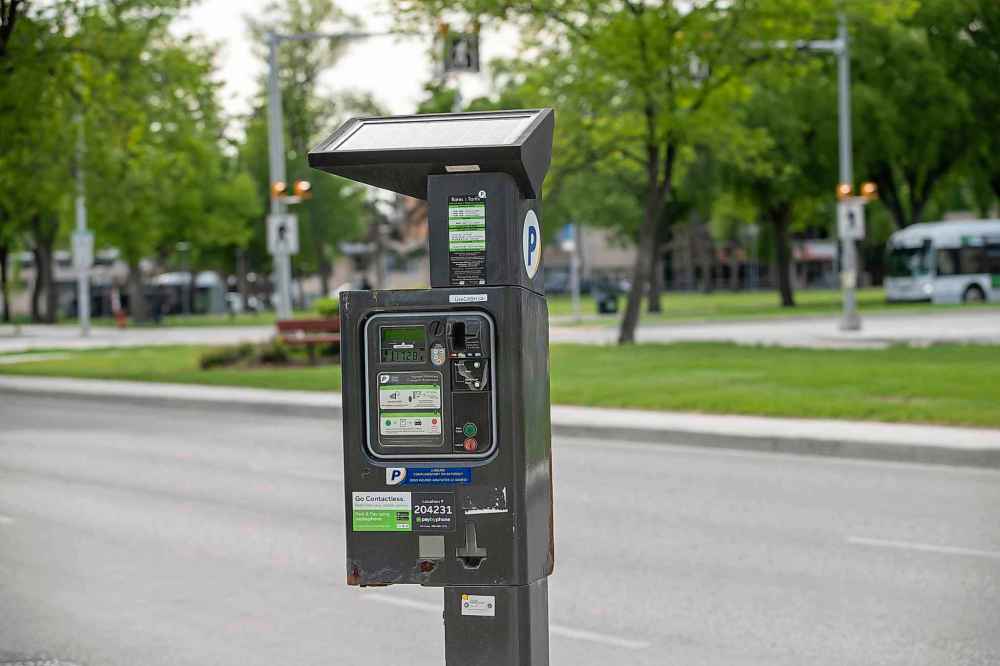
The Exchange District BIZ was part of early conversations having to do with eliminating on-street paid parking in 2018, and raised concerns then, said executive director David Pensato.
He said the organization was told that a comprehensive strategy that included a plan for the aging parking infrastructure would come in the next few years, but the BIZ was not consulted ahead of Wednesday’s announcement.
“To have this announcement come out so abruptly that the parking meters were just simply going to be removed was quite shocking,” Pensato said.

He noted that the City of Edmonton began attempting a similar approach to removing physical parking payment options in April, but has already faced pushback from some residents and a wave of requests to delay the change.
“Maybe the (Winnipeg) Parking Authority should have begun replacing this infrastructure 10 years ago, when they knew that the infrastructure was starting to age out, and then it wouldn’t be ($3.6 million) to replace it,” he said.
“To me, this is just really poor asset management, poor expectation management and really not thinking beyond just an immediate decision.”
The slow reduction in the number of parking meters in Winnipeg over the years from nearly 600 to 250 was already a “compromise” for seniors, people with disabilities and people without access to debit and credit cards, and this change will further isolate vulnerable people, said Carmen Nedohin, the president of the Winnipeg chapter of the Canadian Association of Retired Persons.
malak.abas@freepress.mb.ca

Malak Abas is a city reporter at the Free Press. Born and raised in Winnipeg’s North End, she led the campus paper at the University of Manitoba before joining the Free Press in 2020. Read more about Malak.
Every piece of reporting Malak produces is reviewed by an editing team before it is posted online or published in print — part of the Free Press‘s tradition, since 1872, of producing reliable independent journalism. Read more about Free Press’s history and mandate, and learn how our newsroom operates.
Our newsroom depends on a growing audience of readers to power our journalism. If you are not a paid reader, please consider becoming a subscriber.
Our newsroom depends on its audience of readers to power our journalism. Thank you for your support.
Related Articles
Cash-strapped city cracking down on parking-ticket, bylaw-fine deadbeats







History
Updated on Wednesday, May 21, 2025 5:41 PM CDT: Adds details, quotes, new photo.