Tunnel vision Manitoba’s lack of effective police oversight only serves to perpetuate scapegoating of individuals and avoid systemic scrutiny of biased law-enforcement practices, say advocates for change
Read this article for free:
or
Already have an account? Log in here »
To continue reading, please subscribe:

Digital Subscription
One year of digital access for only $205*
- Enjoy unlimited reading on winnipegfreepress.com
- Read the E-Edition, our digital replica newspaper
- Access News Break, our award-winning app
- Play interactive puzzles
*First annual payment billed as $205.00 + GST for one year. This annual subscription will automatically renew at $233.00 + GST every 52 weeks (10% off the regular annual price of $259.35). Offer available to new and qualified returning subscribers only. Cancel any time.
To continue reading, please subscribe:
Add Free Press access to your Brandon Sun subscription for only an additional
$1 for the first 4 weeks*
- Enjoy unlimited reading on winnipegfreepress.com
- Read the E-Edition, our digital replica newspaper
- Access News Break, our award-winning app
- Play interactive puzzles
*Your next Brandon Sun subscription payment will increase by $1.00 and you will be charged $17.95 plus GST for four weeks. After four weeks, your payment will increase to $24.95 plus GST every four weeks.
Read unlimited articles for free today:
or
Already have an account? Log in here »
Hey there, time traveller!
This article was published 13/06/2025 (486 days ago), so information in it may no longer be current.
Nearly a decade ago, the death of a 41-year-old Anishinaabe man named Stacy DeBungee ignited a reckoning in Thunder Bay around long-simmering suspicions that municipal police officers were not adequately investigating the deaths of Indigenous people.
Within hours of DeBungee’s body being pulled from the McIntyre River, the Thunder Bay Police Service had publicly stated his death appeared non-suspicious.
There was no autopsy, no formal witness statements, no real investigation completed. A police officer suggested to his brother, Brad DeBungee, that Stacy had perhaps passed out, rolled into the river and drowned.
“The failure to conduct adequate investigations and the premature conclusions drawn in these cases is, at least in part, attributable to racist attitudes and racial stereotyping.”–Gerry McNeilly, author of the Broken Trust report
In response, Brad and the then-chief of his community of Rainy River First Nations filed a complaint against the northwestern Ontario police service, requesting a systemic review of its investigative practices.
Their complaint led to an investigation into the service’s handling of the deaths and disappearances of Indigenous people and the release of a damning report that found systemic racism within the force. The 2018 report recommended that at least nine sudden deaths of Indigenous people be re-investigated due to substandard initial investigations.
Yet in Manitoba, there isn’t a dedicated avenue to make this kind of complaint. Of the province’s police oversight agencies, none are empowered to investigate what are known as “systemic complaints” — complaints that go beyond a single incident to allege patterns of behaviour from a police service around a particular issue.
This is in contrast to Ontario, as well as British Columbia, and, as of later this year, Alberta, which have such avenues. The Civilian Review and Complaints Commission for the RCMP, an independent agency separate from the national force, also has the power to initiate systemic investigations.
There is a group trying to change that. In an October 2024 letter, the Coalition of Families Affected by Police Violence wrote to Premier Wab Kinew and Justice Minister Matt Wiebe, calling for the creation of a public complaint body with the power to investigate systemic complaints.
The group would want to submit such a complaint alleging the presence of systemic racism in the Winnipeg Police Service, and in particular, in the context of the number of Indigenous people who’ve been fatally shot or otherwise died in an altercation with members of the service.
And they’re not the only group to raise the concern. In a 2021 survey by the Southern Chiefs Organization, 88 per cent of the roughly 750 First Nation respondents said they agreed with the statement that racism is a problem in policing in Manitoba.
In March, meanwhile, the National Family and Survivors Circle, which was formed to guide action around the recommendations of the National Inquiry into MMIWG, called for an inquiry into how systemic racism may have shaped the Winnipeg Police Service’s response to cases involving missing and murdered Indigenous women, girls and Two-Spirit people.
In a statement, Winnipeg police Chief Gene Bowers, who was sworn in earlier this year, said he wants the service to be a “leader in reconciliation.”
He cited several steps he’s taking towards that goal, including having discussions with Indigenous leaders and some family members impacted by the service’s decision not to proceed with a landfill search for the bodies of women slain by a then suspected serial killer, as well as creating an Indigenous Advisory Circle and hiring a consultant on Indigenous relations and communications.
Stacy DeBungee’s death came at a tense time in Thunder Bay. A long-awaited inquest had just begun into the deaths of seven Indigenous youth who had come to Thunder Bay from remote First Nations to attend high school. Like DeBungee, most of the students’ bodies had been found in the city’s waterways.
After the discovery of DeBungee’s body, on Oct. 19, 2015, his brother and their community’s then-chief filed their complaint with what was then called the Office of the Independent Police Review Director. It culminated in the report, Broken Trust: Indigenous People and the Thunder Bay Police Service, under the leadership of then OIPRD director Gerry McNeilly.
“I said loudly what the Indigenous community in Thunder Bay and other areas have been saying for decades,” recalled McNeilly, a longtime lawyer who served as the OIPRD’s inaugural director from 2008-19 and had previously been the executive director of Legal Aid Manitoba.
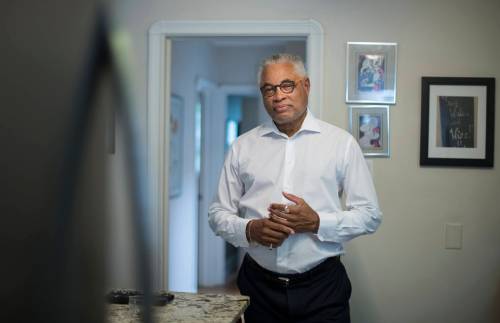
FRED LUM / THE GLOBE AND MAIL FILES Gerry McNeilly, who oversaw a damning review of the Thunder Bay Police Service, says a mechanism that allows for systemic reviews is needed in Manitoba, given its demographic makeup.
In addition to his probe of the Thunder Bay Police Service, McNeilly also conducted systemic reviews of other issues and services, including into the use of strip searches by police across Ontario; into the broad canvassing of DNA samples from migrant workers by the Ontario Provincial Police; and into the response of police to the G20 protests in Toronto in 2010.
Reflecting on this work, McNeilly encouraged Premier Kinew to make legislative changes to create an avenue for systemic reviews to be undertaken around policing in Manitoba.
“Manitoba could, in fact, be a leader,” he said. “I highly recommend and encourage them to pursue setting up a systemic review complaint process.”
He said the province could take the legislation behind Ontario’s Law Enforcement Complaints Agency (LECA, formerly OIPRD) and the newly formed Inspectorate of Policing to augment Manitoba’s own Law Enforcement Review Agency (LERA) — and “give it some teeth.”
“It’s needed in a place like Manitoba, given the makeup of the population, it’s absolutely needed to make the police more effective and efficient,” McNeilly said.
McNeilly said the ability to conduct systemic reviews is something every province and territory should have the ability to do. Having a police commission — “that doesn’t do much or rubber stamp(s) things” — does not erase the need for a systemic review process, he said.
“Manitoba could, in fact, be a leader… I highly recommend and encourage them to pursue setting up a systemic review complaint process.”–Gerry McNeilly
Julian Falconer, a lawyer in Ontario who represented Brad DeBungee and Rainy River First Nations in the complaint process and has long worked on cases surrounding police accountability, including the Seven Youth inquest, recalled giving a speech earlier this year at training day for LECA’s employees.
“I had the Broken Trust report sitting on the table,” Falconer said. “I told them that their single most important tool in attempting to create credibility and confidence in any investigations they did for Indigenous people is that Broken Trust report.”
He added: “In my view, what Broken Trust represents is a very damning finding of systemic racism in respect of an entire police service, and it represents the first such finding in Canadian history that I’m familiar with — and I’ve been at this for 34 years.”
The “level of embracing” of the final report and of McNeilly by Indigenous people in Thunder Bay remains embedded in his mind, he said. But seven years later, the report’s harsh criticism of the police remains relevant.

“Time has completely stood still since December 2018,” Falconer said. “The Thunder Bay police have literally stumbled, stuttered and utterly dodged accountability — and it is an exercise in what I would call the ‘war of attrition,’ where they simply seek to outlast their critics.”
In 2024, Falconer worked with the families of Corey Belesky and Jenna Ostberg to file complaints against the Thunder Bay police with Ontario’s Inspectorate of Policing, which was created that year, alleging failures to properly investigate their deaths.
Falconer said systemic complaints are a tool for telling the truth.
“If you’re unable to access any tool whatsoever for dealing with systemic issues, then obviously you’ve doomed these police interactions with Indigenous people to keep repeating themselves,” he said.
“You have an Indigenous premier in the province of Manitoba. I mean, isn’t this the time to expect an actual sense of response? If Ontario can do it, why can’t Manitoba?”
The Coalition of Families Affected by Police Violence — and its call for change — came out of the death of James Wood, a 35-year-old man from O-Pipon-Na-Piwin Cree Nation in early 2024, following an interaction with members of the Winnipeg Police Service. The Independent Investigation Unit of Manitoba is still investigating the incident.
After Wood’s death, his family began building the coalition and reached out to the Public Interest Law Centre seeking opinions on how to address what they saw as systemic racism in the Winnipeg Police Service.
The law centre, which is a division of Manitoba Legal Aid, in turn, hired Meaghan Daniel, a Montreal-based lawyer who focuses on police accountability and inquests.
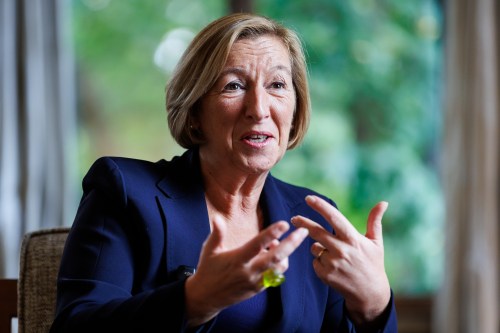
ANDREJ IVANOV / FREE PRESS FILES Lawyer Meaghan Daniel says the oversight structure in Manitoba focuses solely on the actions of individuals and avoids broader scrutiny.
In researching possible legal strategies, Manitoba’s lack of an avenue for filing a systemic complaint quickly caught her attention.
Daniel, who worked as an associate with Falconer’s law firm on the complaint against Thunder Bay police, knew that in this case, a systemic complaint is exactly what she’d want to suggest as a course of action.
She cited two reasons: without a systemic scope complaint, the remedy will also fail to be systemic. And second, systemic complaints are a way to amass information about the functioning of a police service, leading to the ability to make extremely tailored, detailed recommendations.
“The state’s tactic to individualize things allows them to scapegoat a particular person and avoid the systemic scrutiny — the scrutiny of the policies and the procedures and the ways in which these structures are set up to benefit some of us and not others,” Daniel said.
Last fall, members of the coalition met with the province to flesh out the requests made in their letter, which, in addition to creating a new oversight body, also asked the province to review legislation that determines how inquests function.
“The state’s tactic to individualize things allows them to scapegoat a particular person and avoid the systemic scrutiny — the scrutiny of the policies and the procedures.”–Lawyer Meaghan Daniel
The Free Press asked the province if the creation of a systemic complaints body is a policy option being considered.
In a statement, Justice Minister Matt Wiebe did not answer that question but provided detail on other work his department is undertaking, including launching a strategy that will involve making police training more consistent across Manitoba and developing provincial standards for police services around certain operational matters, such as arrests, use of force and criminal investigations.
He said he expects these new standards to be in place in the coming months and that compliance will be monitored by the Manitoba Police Commission.
Ontario’s Inspectorate of Policing, which launched in 2024, could serve as a model for Manitoba.
With the inspectorate, the goal was to create an agency that would take a holistic look at the province’s policing system — to ensure effective and transparent policing. And for its oversight to be proactive, not just reactive, once a critical incident has already happened.
PHIL HOSSACK / FREE PRESS FILES There is a growing call for the creation of an oversight body with the power to conduct systemic reviews of Manitoba police forces.
In an interview, Ryan Teschner, a lawyer serving as the inaugural Inspector General of Policing, who previously served as the executor director of the Toronto Police Service Board, explained that the body’s mandate is to ensure police services, police service boards and special constable employers operate in compliance with the province’s policing laws and regulations.
The inspectorate independently monitors and assesses those entities and is empowered to provide both advice and support on governance and operational matters, he added.
If the body finds a service or board isn’t in compliance with Ontario’s laws, Teschner noted, they are empowered to do something about it, whether it’s issuing recommendations or directions, the latter of which carry a requirement to act.
In extreme cases, if change still isn’t made, steps such as the suspension of a police chief or a member of a police board, or even disbanding an entire service, are available.

The body has the mandate examine issues that are specific to an entire service or that are thematic, cutting across the province. While the inspectorate accepts certain complaints from the public, its goal is also to identify issues proactively, including through a centre for data intelligence that focuses on collecting information from police services and boards, as well as from researchers studying emerging issues.
Teschner said one of the inspectorate’s unique features is this ability to pinpoint systems-based issues, looking at the “entire landscape.” He added that “the whole purpose” is to work towards minimizing individual cases coming up in the future.
“As we look at themes, we may realize that something going on in one corner of the province may well be going on in another quarter,” Teschner said.
“The ability to tie all of that together through our inspections (and) being able to make recommendations, or if necessary, directions that apply to the system as a whole — that improves the strength of Ontario’s policing system.”
marsha.mcleod@freepress.mb.ca
Accountability systems in Manitoba
Independent Investigation Unit of Manitoba (IIU)
What: The IIU is mandated to investigate “serious incidents” involving police officers in Manitoba, whether on- or off-duty. This means the agency investigates whenever a police officer has caused — or may have caused — a death or serious injury, or is alleged to have broken a law. The agency decides whether charges should follow. It has jurisdiction over all police services in the province, including the RCMP. The agency does not receive complaints from the public and instead, begins investigations after being notified by the relevant police service.
Who: It is currently being led by acting civilian director Bruce Sychuk, who was previously a senior supervising attorney in the Crown prosecutions domestic violence unit.
The results: Since the IIU’s creation in 2015, it has completed 24 investigations into cases where police have fatally shot someone. Of those cases, one has led to criminal charges.
Law Enforcement Review Agency (LERA)
What: LERA accepts complaints from the public about municipal police officers in Manitoba. (It does not have authority over RCMP officers). The agency looks into what are known as conduct complaints, such as an officer abusing their authority or making a false statement. It does not look into complaints that are criminal in nature. The majority of complaints to the agency involve Winnipeg police officers.
Like the IIU, LERA does not have a mandate to conduct systemic reviews.
Who: The current commissioner, Harmen Wouda, is a former Winnipeg police detective, which as CBC News reported last year, made Manitoba the only province to hire a former police officer in such a role. Wouda was appointed in 2024 by the current NDP government, drawing criticism from the Assembly of Manitoba Chiefs. In an email, Wouda noted he retired from his role with the service more than six years ago.
The results: According to LERA’s latest annual report, which is for 2023, 97 per cent of complaints dealt with that year were either dismissed by the commissioner or abandoned/withdrawn by the complainant. Two per cent were resolved informally and one per cent — representing a single complaint — went before a judge at a public hearing. Disciplinary action can be meted out through a public hearing, or, if an officer willingly admits to a disciplinary default.
Four public hearings or judicial reviews were held in 2024, Wouda said in his email.
Manitoba Police Commission (MPC)
What: The mission of the MPC, which was created in 2010, is to “ensure effective civilian oversight and a high standard of policing in Manitoba,” according to its website. Its duties are to provide advice to the province’s director of policing on law enforcement standards; consulting with the public; and developing policy and arranging trainings for police boards. In an email, its executive director, Andrew Minor, noted: “The duties of the MPC are very concise and do not involve any direct link, responsibility or involvement with respect to the operations of the police officer conduct oversight system per se.” The MPC does not receive complaints from the public.
Who: According to its website, the commission has seven commissioners. Lawyer David Asper is the chair.
The results: The body has not published a report since 2019 and also has not issued a news release in six years.
Asked about the commission’s work over the past six years, Minor cited consultations around public safety and community wellbeing done in 2020, as well as development of the terms of reference for the Independent Review of the Manitoba Police Services Act, completed the same year. He said the commission has since assisted Manitoba Justice in implementing changes recommended by that report, in addition to its regular legislated duties.
Professional Standards Units (PSUs)
What: PSUs are a form of oversight that operates within a particular police service. In Manitoba, they investigate complaints that don’t involve potential criminal wrongdoing. These types of bodies accept complaints from the public, as well as those that originate from within the service itself.
The results: According to City of Winnipeg regulations, disciplinary hearings for members of the Winnipeg Police Service must be held in camera, meaning that both the hearings — as well as the results — are not public. This is in contrast to practice in Ontario, where hearings are typically open to the public, as well as within the RCMP and the Edmonton Police Service.
Civilian Review and Complaints Commission for the RCMP (CRCC)
What: The CRCC is an independent agency of the federal government — separate from the RCMP. It accepts complaints from the public, most of which are referred to the RCMP. It also reviews the handling of complaints that were initially dealt with by the service itself.
Who: The CRCC’s chairperson position is currently vacant.
The results: The CRCC is able to conduct systemic reviews of RCMP activities. These reviews can be initiated by the commission itself, or at the request of the federal minister of public safety or a provincial minister responsible for policing. This has included an ongoing systemic review of the RCMP’s controversial Community-Industry Response Group or C-IRG, known for its policing of resource extraction protests in B.C., as well as a review of the RCMP’s handling of the complaint process in Nunavut.
Police service boards
Police boards in Manitoba don’t handle complaints and cannot be involved in the discipline of individual members of a police service. They do, however, act as an oversight mechanism of a service’s police chief, among other duties.
Court inquests
In Manitoba, deaths that come as a result of a police officer’s actions are subject to a mandatory inquest, held before a provincial court judge. Inquests cannot lay blame or dispense any disciplinary measures. A judge can issue recommendations, but according to Free Press reporting, over the past two decades, in inquests involving a fatal shooting by police, judges have often opted not to do so.
Manitoba Human Rights Commission
The commission accepts complaints pertaining to discrimination under Manitoba’s Human Rights Code, which includes both individual and systemic instances. Unlike some other provinces, it doesn’t have the power to convene a public inquiry, which would include, for instance, the power to compel documents.
Manitoba Ombudsman
Municipal police services are covered under the mandate of the provincial ombudsman. An individual can make a complaint to the body under the Ombudsman Act if they feel an administrative policy, law or bylaw was not adhered to. The body also has the ability to conduct systemic investigations.
Justice Minister
Under the Police Services Act, if the justice minister determines that a police service has failed to provide “adequate and effective” policing, they have substantial powers available, including suspending the service, in whole or in part; removing the police chief; or arranging for the RCMP to take over, if remediation is unsuccessful.

Marsha McLeod
Investigative reporter
Signal
Marsha McLeod is an investigative reporter at the Free Press. She joined the Free Press in 2023. Read more about Marsha.
Every piece of reporting Marsha produces is reviewed by an editing team before it is posted online or published in print — part of the Free Press‘s tradition, since 1872, of producing reliable independent journalism. Read more about Free Press’s history and mandate, and learn how our newsroom operates.
Our newsroom depends on a growing audience of readers to power our journalism. If you are not a paid reader, please consider becoming a subscriber.
Our newsroom depends on its audience of readers to power our journalism. Thank you for your support.
Related Articles
Fatal police shooting and subsequent IIU investigation leave trail of troubling questions in wake of teen’s death