Quarter-century of world cinema through a Gimli lens
Read this article for free:
or
Already have an account? Log in here »
To continue reading, please subscribe:

Digital Subscription
One year of digital access for only $205*
- Enjoy unlimited reading on winnipegfreepress.com
- Read the E-Edition, our digital replica newspaper
- Access News Break, our award-winning app
- Play interactive puzzles
*First annual payment billed as $205.00 + GST for one year. This annual subscription will automatically renew at $233.00 + GST every 52 weeks (10% off the regular annual price of $259.35). Offer available to new and qualified returning subscribers only. Cancel any time.
To continue reading, please subscribe:
Add Free Press access to your Brandon Sun subscription for only an additional
$1 for the first 4 weeks*
- Enjoy unlimited reading on winnipegfreepress.com
- Read the E-Edition, our digital replica newspaper
- Access News Break, our award-winning app
- Play interactive puzzles
*Your next Brandon Sun subscription payment will increase by $1.00 and you will be charged $17.95 plus GST for four weeks. After four weeks, your payment will increase to $24.95 plus GST every four weeks.
Read unlimited articles for free today:
or
Already have an account? Log in here »
Hey there, time traveller!
This article was published 23/07/2025 (445 days ago), so information in it may no longer be current.
Although an “I” was inserted into the Gimli Film Festival’s acronym only three years ago — , (July 23-27)for now and forever, it is pronounced GIFF — there’s no question that the largest rural festival of its kind in Canada has been an international affair since the start.
After all, the festival, which celebrates its 25th edition starting today, did begin with some pan-Atlantic diplomacy and a few long-distance calls.
Festival preview
Gimli International Film Festival
● Various locations, Gimli
● Opens today, runs to Sunday
● Tickets and info at gimlifilm.com
In the year 2000, Janis Johnson was calling as many numbers as she could that began with 642 — a phone prefix that for Gimli denizens always rings of home.
The daughter of former lieutenant governor and Gimli MLA Dr. George Johnson and Doris Blondal, who helped found Gimli’s first kindergarten, the longtime Canadian senator had eagerly volunteered to help Winnipeg’s Icelandic Consulate with its latest mission: an Icelandic Canadian film festival on the shores of Lake Winnipeg.
When filmmaker Jon Einarsson Gustafsson called Johnson, she got to work to co-ordinate funding for a film fest to coincide with the Islendingadagurinn heritage celebrations, which have been held in Manitoba since 1890 and in Gimli since 1932.
The Icelandic government had already committed to funding the film program, and it was up to Johnson to convince Telefilm to get on board.
LAINA BROWN PHOTO A hotel booking during Gimli International Film Festival is now best sought a year in advance, says founder Janis Johnson.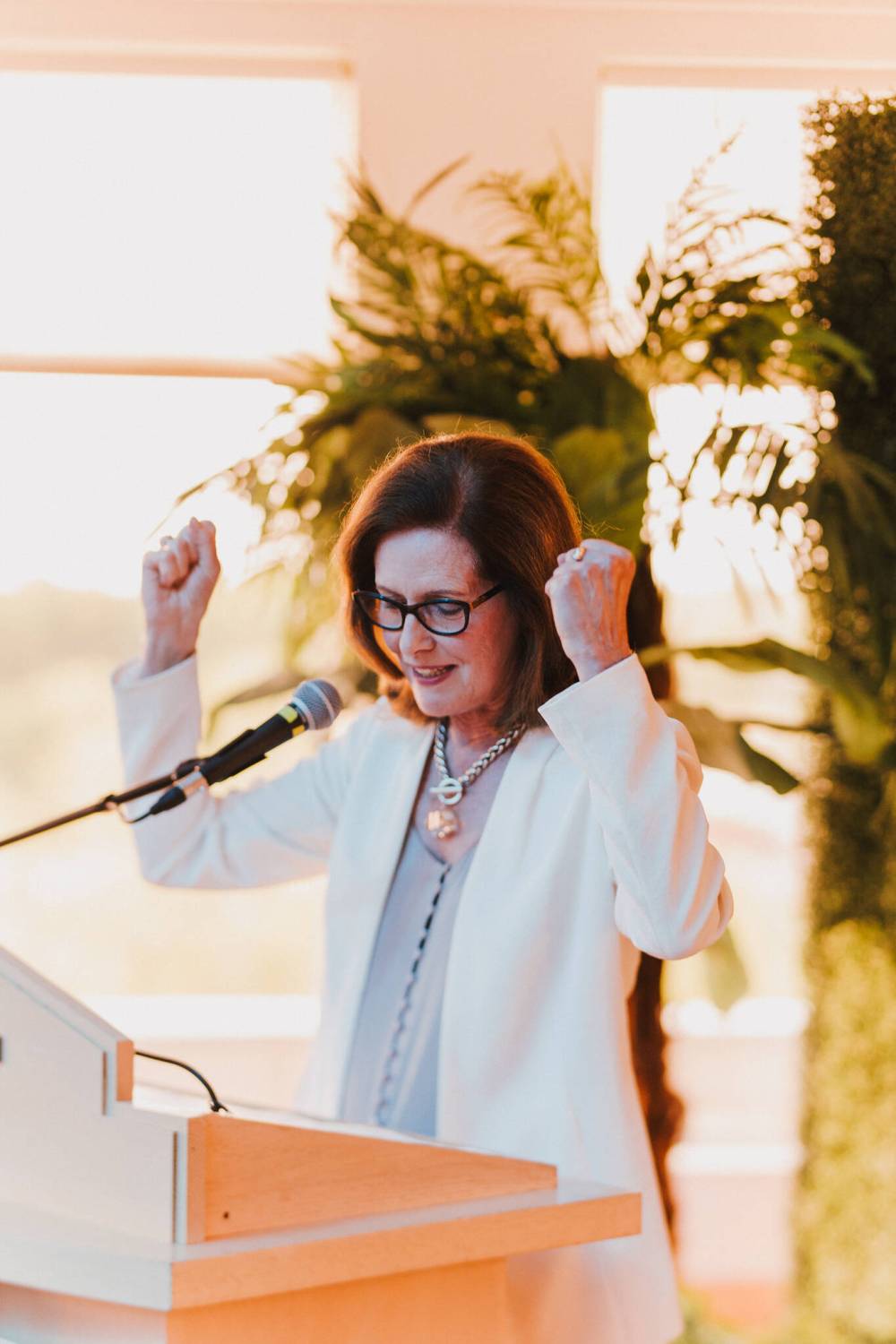
Johnson — a member of both the Order of Canada and Iceland’s Order of the Falcon — made a successful pitch, and on the first weekend of August 2001, the Gimli Film Festival called action for the first time, bolstered by Icelandic Festival president Harley Jonasson and his board, who offered enthusiastic support while sharing dates with the film fest’s earliest edition.
The first program included work by Canadian directors of Icelandic descent, as well as domestic Icelandic filmmakers, bringing together features by Fridrik Thor Fridrikson, Baltasar Kormakur, Sturla Gunnarsson, Caelum Vatnsdal, Gustafsson and Guy Maddin, whose Tales from the Gimli Hospital was the festival’s first-ever beach screening.
“Films shown outdoors in Gimli were not entirely new to many of us who spent our summers at the lake,” Johnson wrote in 2015. “Guy Maddin and his pals often filmed scenes from Loni Beach life and entertained us with screenings of the footage on a sheet in his or a neighbour’s backyard. We were most impressed.”
Though the festival hasn’t lost its grassroots spirit, those early years were marked by a distinctly any-hands-on-deck approach: Johnson’s teenage nieces designed the now-vintage sweatshirts.
Beginning in 2007, the film festival grew to the point that it commanded its own weekend. Why the third week in July?
“I know Gimli, and that week is the most reliable for good weather,” says Johnson, who grew up in town watching Saturday morning cartoons at the Gimli Theatre, still operating after 78 years, and on day trips to Winnipeg’s Rose Theatre with her amma.
Supplied The nightly sunset screenings are a fan favourite at the Gimli International Film Festival.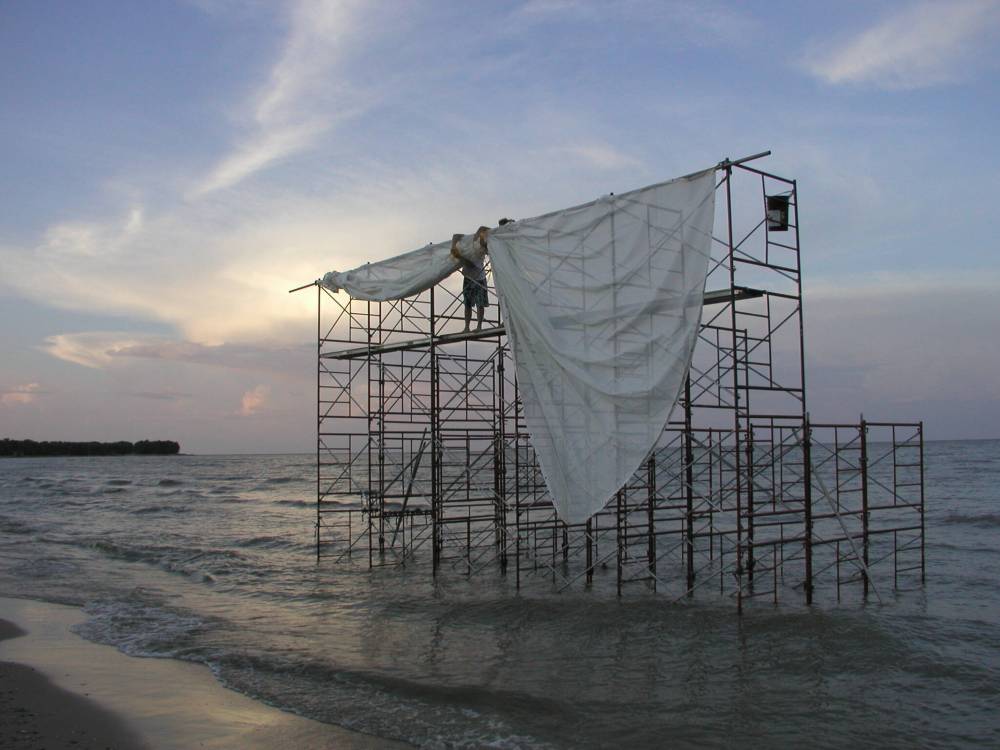
Once they built it, and as the film program expanded its focus, audiences came. In 2007, about 1,500 people attended; in 2009, 4,000. In 2019, GIFF welcomed a record 13,000 guests.
The onset of the COVID-19 pandemic spoiled 20th anniversary plans. But after three pandemic-adjusted festivals, last year, a crowd of 8,000 returned, with organizers and executive director Teya Zuzek hoping attendance continues to trend upward this week.
Just like Islendingadagurinn, the festival has become a key cultural event in the Interlake, drawing visitors from all over. A hotel booking during GIFF is now best sought well over a year in advance, Johnson says.
While most are charmed by the festival’s and the town’s charms, Johnson does remember at least one snooty filmmaker turning up his nose at Gimli’s temporary population of malodorous mayflies.
“He got in his car and his windshield was covered by fishflies, and without sweeping it off he turned on his wipers,” laughs Johnson. “He said he’d never come back.”
More popcorn and sunshine for the rest of us.
ben.waldman@freepress.mb.ca
SUPPLIED Beach screenings at the Gimli International Film Festival are a popular draw.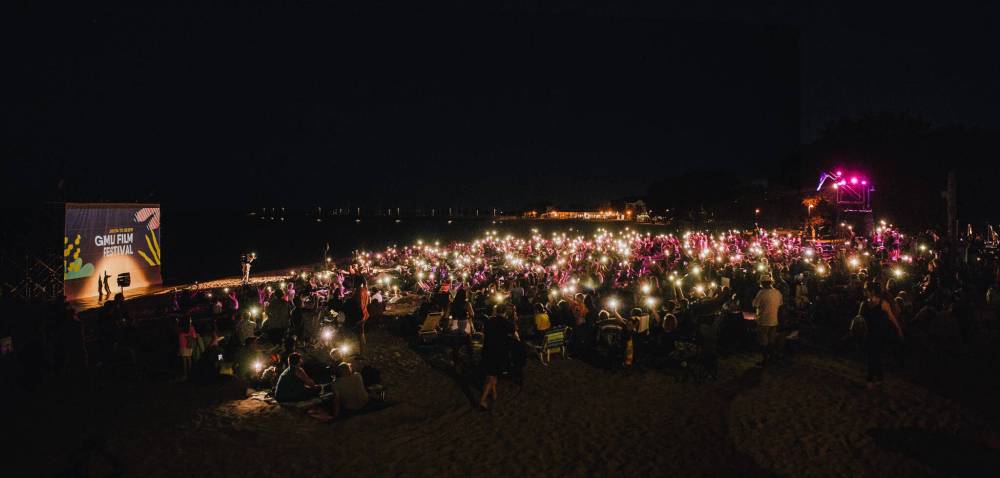
Making a theatre town
Until July 27, venues across town are transformed into movie houses, presenting opportunities to hop from the Gimli Theatre to the Lady of the Lake to the Asper Theatre and back again.
Matthew Rankin’s Universal Language, Ryan Cooper and Eva Thomas’s Aberdeen, and Peter and Seth Scriver’s Endless Cookie screen alongside acclaimed international fare such as Don’t Let’s Go to the Dogs Tonight, a story of racially divided childhoods in the aftermath of the Rhodesian Bush War; and the mesmerizing Janet Planet, a portrait of lakeside bloom and gloom that marks the directorial debut of Pulitzer-winning playwright Annie Baker (The Antipodes).
But the screen that’s defined the festival for thousands of devotees since GIFF’s first edition in 2001 is planted nearly five metres back of the shoreline.
After Year 1, Gimli handyman Don Steinmetz took over installation duties; founder Janis Johnson asked him if he was interested in helping out while he was doing construction at her cottage.
“I said, ‘Not a problem as long as I know what it’s supposed to look like,’” recalls Steinmetz, 64, who moved to Gimli from Southern Ontario in 1982.
After receiving the scaffolding schematics, Steinmetz installed the porous nylon screen — 7.6 metres wide and six metres high — in the water. For the last decade, Steinmetz has been assisted by a crew that features his son Justin.
“As I get older, he does more and I do less,” says Steinmetz, whose daughter Rochelle was the festival’s volunteer co-ordinator for two years.
Though the installation takes only five to six hours, Steinmetz is prone to sticking around to admire the art that graces his crew’s handiwork.
“I’m here every night to make sure everything’s up and running, and then I sit back and watch a movie,” says the handyman, whose favourite free beach screenings have included Dirty Dancing and Jaws.
This year’s sunset screenings include Christopher Guest’s kennel club mockumentary Best in Show (tonight, 9:45 p.m.); the 1990s NBA-Looney Tunes crossover Space Jam (Thursday, 9:45 p.m.); the Talking Heads concert film Stop Making Sense (Friday, 9:45 p.m.); Cameron Crowe’s rock flick Almost Famous (Saturday, 9:45 p.m.); and John Carpenter’s The Thing on Sunday.

Ben Waldman is a National Newspaper Award-nominated reporter on the Arts & Life desk at the Free Press. Born and raised in Winnipeg, Ben completed three internships with the Free Press while earning his degree at Ryerson University’s (now Toronto Metropolitan University’s) School of Journalism before joining the newsroom full-time in 2019. Read more about Ben.
Every piece of reporting Ben produces is reviewed by an editing team before it is posted online or published in print — part of the Free Press‘s tradition, since 1872, of producing reliable independent journalism. Read more about Free Press’s history and mandate, and learn how our newsroom operates.
Our newsroom depends on a growing audience of readers to power our journalism. If you are not a paid reader, please consider becoming a subscriber.
Our newsroom depends on its audience of readers to power our journalism. Thank you for your support.