Polar bears share their prey U of M research underscores importance of species to future of Arctic

Polar bears are generous hunters whose leftovers feed many other animals, new research shows, casting the protected species as a major provider, not just a vulnerable predator in a province that attracts thousands of polar bear watchers every fall.

Read this article for free:


or

Already have an account? Log in here »

To continue reading, please subscribe:

Subscribe and receive a limited-edition Free Press branded hat or tote.

Digital Subscription

One year of digital access for only $205*

  • Enjoy unlimited reading on winnipegfreepress.com
  • Read the E-Edition, our digital replica newspaper
  • Access News Break, our award-winning app
  • Play interactive puzzles

*First annual payment billed as $205.00 + GST for one year. This annual subscription will automatically renew at $233.00 + GST every 52 weeks (10% off the regular annual price of $259.35). Offer available to new and qualified returning subscribers only. Cancel any time.

To continue reading, please subscribe:

Add Free Press access to your Brandon Sun subscription for only an additional

$1 for the first 4 weeks*

  • Enjoy unlimited reading on winnipegfreepress.com
  • Read the E-Edition, our digital replica newspaper
  • Access News Break, our award-winning app
  • Play interactive puzzles
Start now

*Your next Brandon Sun subscription payment will increase by $1.00 and you will be charged $17.95 plus GST for four weeks. After four weeks, your payment will increase to $24.95 plus GST every four weeks.

Hey there, time traveller!
This article was published 28/10/2025 (291 days ago), so information in it may no longer be current.

Polar bears are generous hunters whose leftovers feed many other animals, new research shows, casting the protected species as a major provider, not just a vulnerable predator in a province that attracts thousands of polar bear watchers every fall.

Arctic foxes, wolverines, eagles, hawks, gulls and even younger bears are among at least 11 species who feast on the prey left behind by polar bears. The latest study calculates the leftovers: 7.6 million kilograms per year in picked-over seal carcasses left on sea ice.

That’s a conservative estimate, said biologist and University of Manitoba PhD candidate Holly Gamblin, lead author of the study published Tuesday in the journal Oikos from the Nordic Ecological Society.
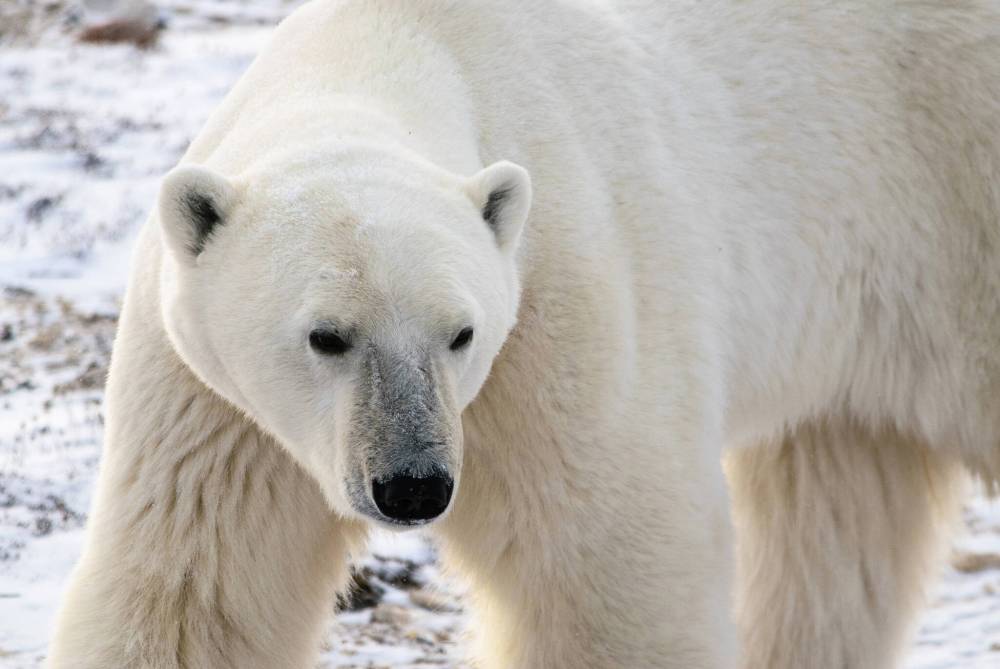
San Diego Zoo Wildlife Alliance
                                New research shows at least 11 species feast on the prey left behind by polar bears suggesting they play a key role in supporting their subarctic and Arctic ecosystems.

San Diego Zoo Wildlife Alliance

New research shows at least 11 species feast on the prey left behind by polar bears suggesting they play a key role in supporting their subarctic and Arctic ecosystems.

“A bunch of my co-authors are in that polar bear research world and have been thinking about investigating (this issue), knowing that it’s this really under-represented and under-studied component of the story, when we think about polar bears as apex predators,” said Gamblin, who has studied Arctic foxes. “They had had this idea for a while and I was just sort of in the right place at the right time.”

The research, a collaboration between the U of M and the San Diego Zoo Alliance, with contributions from the University of Alberta and Environment and Climate Change Canada, lays the foundation for fieldwork to document how polar bears support the subarctic and Arctic ecosystems in Churchill and Pond Inlet, NT.

The study used data modelling to estimate how much the bears leave behind after they feast on ringed seals.

Because they are “blubber specialists,” Gamblin said, the bears eat much of the seal fat, but unlike some other carnivores, they don’t guard or hoard their prey. Dragging their prey — seals or even narwhals — up onto the sea ice helps scavengers survive.

“What our research group is interested in doing is showing that when we lose sea ice, we’re losing this energy source for all kinds of different species.”

Even rare scavengers, such as grizzly bears and snowy owls, have come to the table for the spoils of a polar bear’s hunt, the study found. Previous research from Gamblin’s lab at U of M has found the Arctic fox population is directly linked to polar bears’ “hunting success.”

This study points to the importance of conservation efforts.

“This just highlights one other potential impact of climate change, but it really comes down to making changes on a global scale that will reduce the loss of sea ice,” Gamblin said.

The ecological benefits provided by the bears are irreplaceable, she said.

“We already know how the Arctic is warming at a rate of four times the rest of the world, and we know that we’re experiencing loss of sea ice, and so what our research group is interested in doing is showing that when we lose sea ice, we’re losing this energy source for all kinds of different species,” she said.

“It has the potential to impact much further down into the food web.”

The issue of climate change hits home in the polar bear capital of the world.
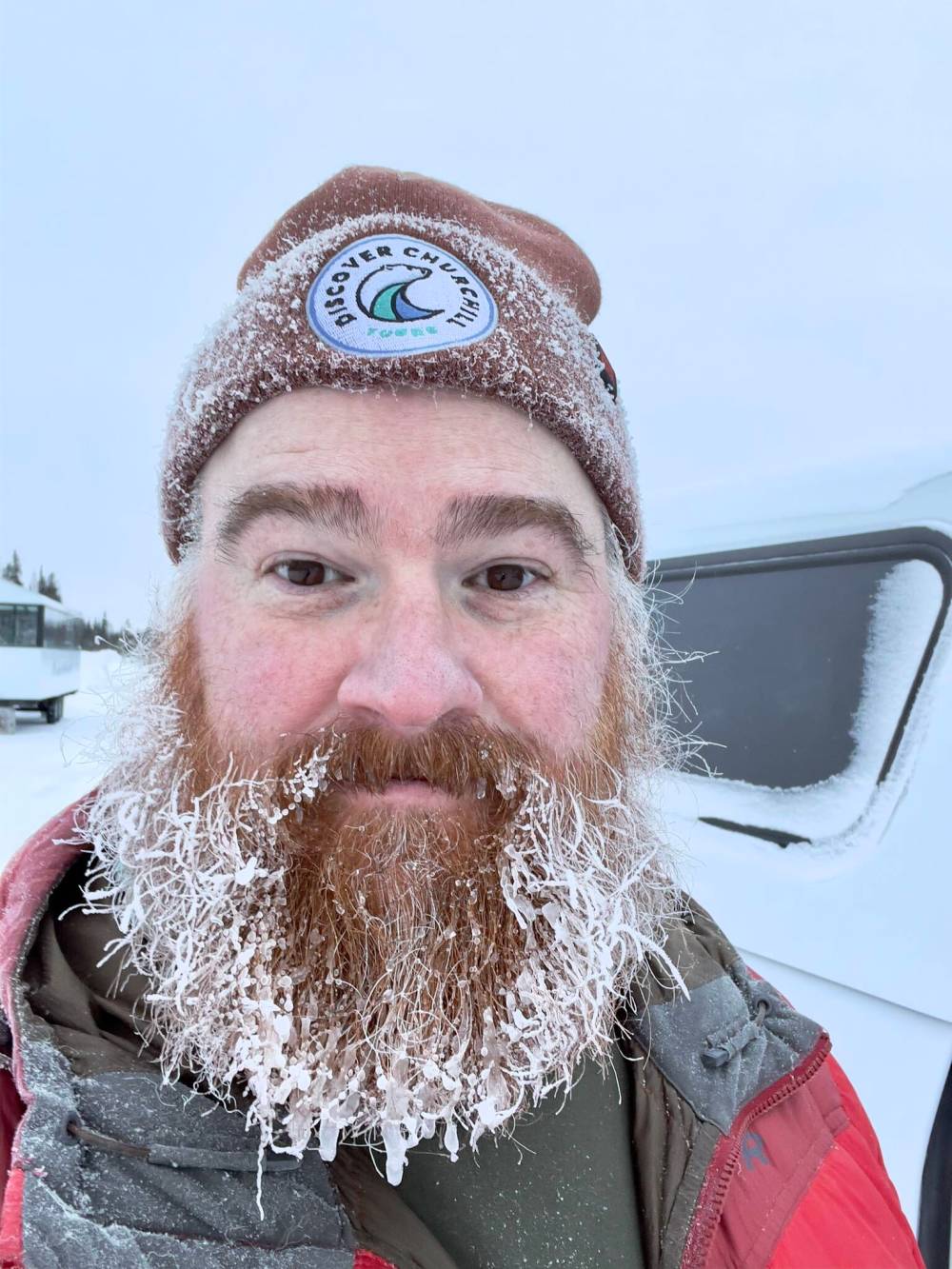
Supplied
                                Drew Hamilton, a co-owner of Discover Churchill Tours.

Supplied

Drew Hamilton, a co-owner of Discover Churchill Tours.

There are fewer polar bears in and around Churchill: one study, published in 2022, estimated there are roughly 600 — half of the number of polar bears that roamed the area 35 years earlier, according to Polar Bears International. The bears attract thousands of tourists to Churchill each year: more than 25,000 travellers visited in 2023. Tourism in Churchill contributes $99.8 million to Manitoba’s economy, a 2024 economic impact study shows.

“It’s always good to see knowledge like this formalized, but I think it will come as no surprise to anyone who’s spent some time watching bears that they have a very important role in supporting ecosystems and everything that lives around them,” said Drew Hamilton, co-owner of Discover Churchill Tours.

Polar bear season in the northern town, traditionally in October and November, has recorded above-seasonal temperatures this year.

When Hamilton looked out his window Tuesday, it was raining, not snowing.

“It’s the talk of the town; everybody’s wondering what the next couple of months are going to hold… as the sea ice comes or it doesn’t, these bears stick around. The tourists all leave, but the bears stick around. So then, you have to take a hard look at what it takes to co-exist with polar bears,” Hamilton said, pointing to practical concerns such as the need for a bear-proof trash management system in town.

Hamilton, who has worked in Churchill for about a decade and said he’s “been in the bear business” since the late ’90s in Alaska and other areas, said he and other Churchill residents are witnessing the realities of climate change, and they need systems in place to protect the bears, both for the environment and the economy.

“This is changing before our eyes, and hopefully that sparks some urgency in both looking at polar bear conservation and confronting climate change,” he said.

katie.may@freepress.mb.ca

Katie May

Katie May
Multimedia producer

Katie May is a multimedia producer for the Free Press.

Our newsroom depends on a growing audience of readers to power our journalism. If you are not a paid reader, please consider becoming a subscriber.

Our newsroom depends on its audience of readers to power our journalism. Thank you for your support.

Report Error Submit a Tip

More Stories

Impaired driving victim honoured

Morgan Modjeski 5 minute read Preview

Impaired driving victim honoured

Morgan Modjeski 5 minute read 6:16 PM CDT

Ten years after he was killed in a collision involving an impaired driver in 2016, Robbie Anderson’s name has been added to MADD Canada’s Manitoba Memorial honouring those killed in drunk and drug-impaired-related crashes.

His older brother Chris Anderson, was one of two dozen people who gathered at the Glen Eden Funeral Home and Cemetery in West St. Paul Saturday to remember their loved ones, 86 victims whose names are etched into the granite monument near the heart of the graveyard.

“It’s heavy,” said Anderson when asked what it was like to be part of the ceremony and see his brother’s name added. “It’s been something I’ve been thinking about for a while.”

Grateful for MADD’s work and its efforts to honour Robbie, who was 27 when he died, Anderson said his brother, represented the “absolute best of us.”

Read
6:16 PM CDT

Big Loser’s latest a winning mix of country, folk

Ben Waldman 5 minute read Preview

Big Loser’s latest a winning mix of country, folk

Ben Waldman 5 minute read 6:00 AM CDT

The yellow trucker hat for sale on Facebook Marketplace said “Selkirk Lumber,” so Adam Wayne Brown knew he had to hammer home a deal.

Like the other millennial members of Winnipeg folk-country band Big Loser, the bassist has an affinity for the nostalgic, taking every opportunity — through music, through lyrics and through wardrobe — to recall the unique circumstances of growing up in a changing Interlake.

“I remember the matte yellow trucks driving around — the lumber trucks — and so I’ve had this strange memory of something disappearing from my youth and then persisting,” says Brown, who, like the band’s frontman Alex Paradoski, moved to Winnipeg more than a decade ago.

“I have a photo of the Lockport Bridge in my dining room,” chimes in Paradoski, whose first job as a teenager was bunning wieners and chopping fries at Skinner’s, a drive-in mainstay since 1929 along Highway 44.

Read
6:00 AM CDT

August in the kitchen garden

Colleen Zacharias 7 minute read Preview

August in the kitchen garden

Colleen Zacharias 7 minute read 3:00 AM CDT

Lynne Hermiston is passionate about growing her own food. Her backyard food garden in south Winnipeg is an amazing example of the abundance and diversity of food that can be grown in a relatively small space. But it’s also a prime example of how a zest for learning innovative methods can make food gardening more fun.

Hermiston’s backyard is approximately 10 metres wide and 15 metres deep. The growing area consisting of raised beds and a couple of in-ground beds between her deck and back fence is about nine metres deep. There is not a single blade of turf grass in sight. The design for this attractive and productive space was created by Classic Landscaping four years ago. A series of raised wooden beds mulched with straw are neatly arranged on a light grey, slate-like surface. An inviting centre arbor acts as a focal point and supports climbing plants. The square-shaped raised-bed area receives eight to nine hours of sun daily. It is flanked on one side by a long, linear-shaped bed, planted with flowering perennials that attract and support pollinators.

The food plants Hermiston is growing this summer include tomatoes, cucumbers, squash, beets, chickpeas, beans, onions, sweet potatoes, horseradish, garlic, peppers, carrots, pumpkin and cauliflower. She is growing Chinese Pink celery, an heirloom variety with bubblegum-pink stems, for the first time, as well as eggplant.

She also grows salad greens and herbs, which have made delicious additions to her summer recipes this year. Only a few harvests remain of the spinach she planted. But, compared to last year’s growing season, some food plants are taking their time, Hermiston says.

Read
3:00 AM CDT

Foster mom pleads guilty to assault that left six-year-old-girl paralyzed

Dean Pritchard 4 minute read Preview

Foster mom pleads guilty to assault that left six-year-old-girl paralyzed

Dean Pritchard 4 minute read Updated: Yesterday at 6:27 PM CDT

A Winnipeg foster mother has admitted to violently assaulting her ill foster daughter and leaving her paralyzed after the girl resisted the woman’s efforts to provide her with medication, a court has heard.

Marilyn Keno, 26, pleaded guilty Friday to one count of aggravated assault.

Keno remains in custody and will be sentenced at a later date following the completion of a court-ordered pre-sentence report.

The maximum sentence for aggravated assault is 14 years in prison. Crown attorney Alanna Littman and defence lawyer Jeremy Kostiuk did not disclose what sentences they will be recommending.

Read
Updated: Yesterday at 6:27 PM CDT

Don’t be a big loser — check out Real Love Summer Fest ReunionBig Loser takes the stage at 8:20 p.m. tonight as part of the Real Love Summer Fest Reunion, a one-day event put on by the indie promotion company, which ran the festival in the Interlake area for a decade until last summer’s final edition near Teulon.

Bookers Gil Carroll and Adam Soloway have programmed a full day of music at Blue Note Park (220 Main St.), the outdoor venue adjacent to Times Change(d) High and Lonesome Club.

First up at 4 p.m. is folk-rock songwriter tofusmell, followed at 5 p.m. with a rare performance by indie-songwriting darlings Animal Teeth, a group with several summer fest bills under its belt. Up-and-coming pop-rockers Synthetic Friend take the stage at 6, followed at 7 by the fun electronic dance pop of French Class.

After playing with his full band at last month’s Winnipeg Folk Festival, Amos the Kid will perform a solo set at 8 p.m. Sans band, the performer shows off his affable roots as a Gord Downie acolyte with catchy earworms to match.

Proposed Transcona development — which could add 20,000 people — gets thumbs down from residents

Joyanne Pursaga 5 minute read Preview

Proposed Transcona development — which could add 20,000 people — gets thumbs down from residents

Joyanne Pursaga 5 minute read Yesterday at 6:15 PM CDT

Dozens of Winnipeggers fear plans to make way for up to 20,000 more people to live in south Transcona would dramatically alter their neighbourhood and tie hefty fees for new services to their property titles.

If city council adopts the proposed South Transcona secondary plan, all future development applications would need to conform to its goals. The affected area is located south of Dugald Road, north of St. Boniface Road, east of Plessis Road and west of Murdock Road.

Homeowner Virginia Page Jähne fears the plan could add a massive tab to the title of her 4.3-acre property to cover services required for the development.

“My main concern is that they are wanting to put $1.4 million onto my title to pay for this. Now, they say that I will not have to pay it unless I subdivide. But if a person comes by and wants to buy from me … and they see that $1.4 million … what’s the first thing (they’re) going to do?” said Page Jähne, in an interview.

Read
Yesterday at 6:15 PM CDT