Generative AI puts squeeze on creative community Fewer commission jobs, content theft among new technology wave of worries for writers, artists, designers
Read this article for free:
or
Already have an account? Log in here »
To continue reading, please subscribe:

Digital Subscription
One year of digital access for only $205*
- Enjoy unlimited reading on winnipegfreepress.com
- Read the E-Edition, our digital replica newspaper
- Access News Break, our award-winning app
- Play interactive puzzles
*First annual payment billed as $205.00 + GST for one year. This annual subscription will automatically renew at $233.00 + GST every 52 weeks (10% off the regular annual price of $259.35). Offer available to new and qualified returning subscribers only. Cancel any time.
To continue reading, please subscribe:
Add Free Press access to your Brandon Sun subscription for only an additional
$1 for the first 4 weeks*
- Enjoy unlimited reading on winnipegfreepress.com
- Read the E-Edition, our digital replica newspaper
- Access News Break, our award-winning app
- Play interactive puzzles
*Your next Brandon Sun subscription payment will increase by $1.00 and you will be charged $17.95 plus GST for four weeks. After four weeks, your payment will increase to $24.95 plus GST every four weeks.
Read unlimited articles for free today:
or
Already have an account? Log in here »
Hey there, time traveller!
This article was published 05/12/2025 (287 days ago), so information in it may no longer be current.
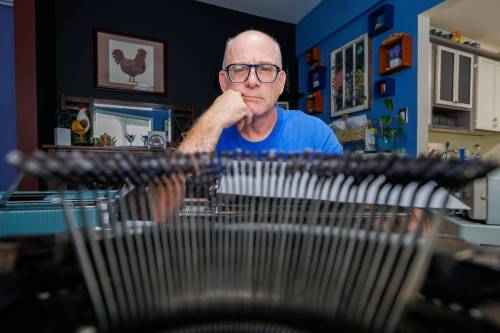
For Samantha Mary Beiko, it’s a typewriter.
For Alex Plante, it’s a sign: a faux parking sign with letters whited out, “No AI Anytime” glaring in red.
The Manitoba artisans bring the objects to markets, placing them at booths near books and prints they’ve created.
“I invite everyone to come touch the typewriter and press the keys,” Beiko said. “Remember that art is a physical thing that we do with our bodies.”
She feels it’s a necessary reminder. As artificial intelligence-generated words, videos and images populate the internet, Manitoba artists are feeling the impact.
Some, like Plante, have seen fewer commission jobs. Others — including Beiko — have had their work scraped for databases used to train AI.
There’s no hard data showing the impact of generative AI on local artists and authors. A 2025 World Economic Forum “Future of Jobs” report listed graphic designers among the fastest declining jobs; it pointed to artificial intelligence and broader digital access.
MIKAELA MACKENZIE / FREE PRESS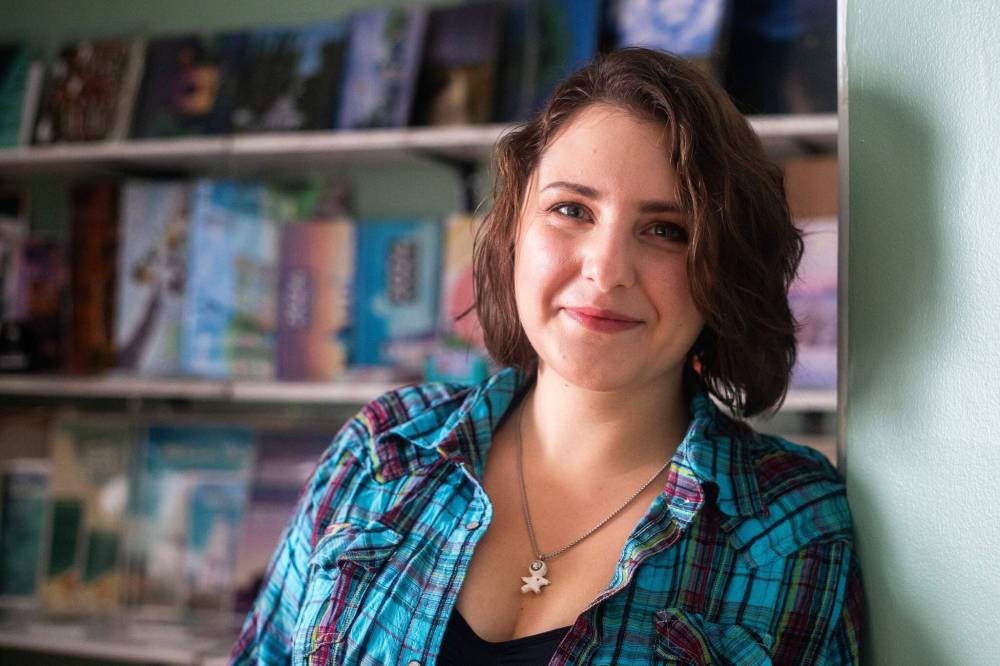
Plante, a digital artist, is booking more markets this holiday season.
“I’m making most of my money in markets now,” she said. “Hardly anything online, and not a whole lot from commissions either.”
It’s a shift from past years, when revenue was more evenly distributed. Smaller contracts — such as website illustrations and business card designs — still seem to be plentiful. Larger jobs like advertising work are scarcer, from Plante’s view.
“As an indirect result of AI, I did have to kind of restructure my whole business,” she said, adding she believes higher shipping costs have lessened online demand.
The new “No AI” sign follows repeated questions from market-goers. Many customers are seeking art untouched by AI, Plante said: “The joy of art is both in the process and the choices the artist made.”
“The joy of art is both in the process and the choices the artist made.”
It’s a sentiment shared by Avery Helm, a graphic designer in Winnipeg. Helm’s website now includes a disclaimer the business is an AI-free zone.
“People are paying me for my skills and my knowledge,” Helm said. “I’d much rather make connections with other people — sharing artwork, sharing things that I’ve made.”
Environmental impact, misinformation spread and chatbots built on “stolen material” are reasons Helm says she’s wary of AI. (She and some other designers hadn’t noticed a drop in commission work.)
Beiko, a young adult fantasy author, learned her novels were used in a pirated-books database through a data search embedded on The Atlantic’s website. Her words were likely used to train Meta’s AI tool without her consent.
“I don’t have an endless litigation budget,” Beiko said. “My way of dealing with it is just raising awareness.”
MIKAELA MACKENZIE / FREE PRESS Author and artist Samantha Mary Beiko says her work has been fed into Meta’s system to be used for generative AI.
Some of that awareness comes at markets, where Beiko promotes works like Scion of the Fox. Booth visitors often remark they’re writing books using AI.
“It feels like all of my years of experience working in the literary field — my training, my education — has basically been distilled down into product generation,” Beiko said. “It does make me incandescently furious.”
Generative AI is feeding users’ “instant gratification,” Beiko said: “They want to get there without having to do the 12, 15 years of creating something (and) not being very good.”
Something is lost by skipping the process, she added. She’ll have 10 published titles next year.
“It does make me incandescently furious.”
Illustrator Nyco Rudolph said his workload doubles when clients arrive with AI-generated mock-ups.
“From a design perspective, they’re kind of a mess,” Rudolph said of the pictures. “I have to not only draw it from scratch, but I have to convince (customers) to forget about what they’ve seen.”
It’s a small complaint compared to artists whose incomes have been “decimated” by generative AI, Rudolph said.
Sam Posnick hesitates before sharing her graphic design work on social media, a vital platform to draw sales. She runs her photos through a filter first, attempting to shield them from being used in AI datasets.
SUPPLIED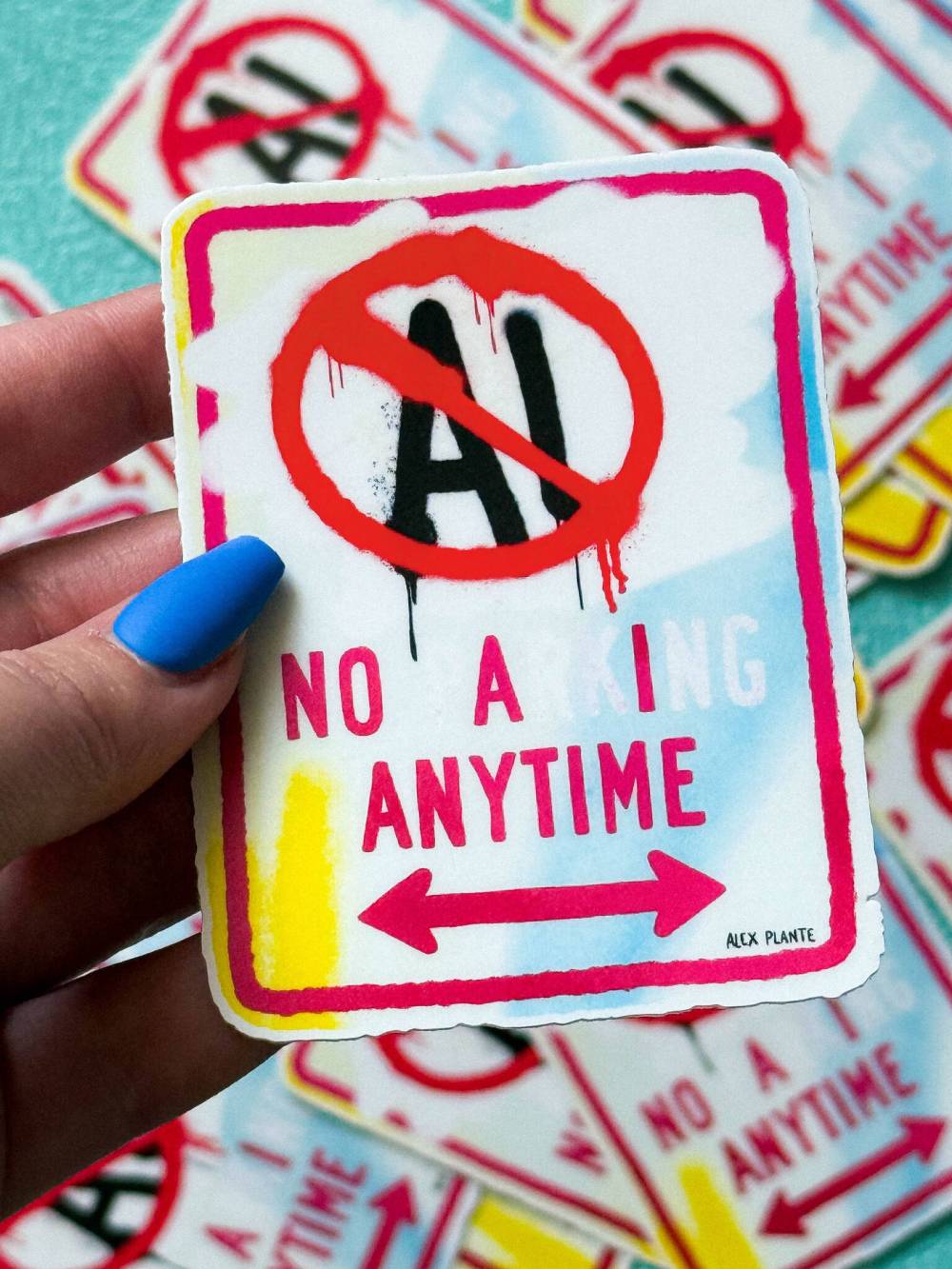
Book authors and media outlets have launched lawsuits against artificial intelligence companies over pirated work used for chatbot training. In September, Anthropic agreed to pay US$1.5 billion to settle a class-action lawsuit; it’s considered a landmark settlement.
Meanwhile, around 30 voice actors have signed with Voice.com’s AI studio. Their cloned voices can be used by company clients, The Canadian Press reported in March.
More artists, from actors to illustrators, may sign deals to have their work used in AI products in the future, said Harry Roy McLaughlin, co-founder of the Manitoba Association of AI Professionals. He’s heard of generative AI costing people their jobs: “It’s serious.”
The technology is used for “quick turnaround” tasks more often than projects requiring significant artist input, McLaughlin said.
He gave the example of a calculator: the invention didn’t make mathematicians extinct, but it changed the profession. AI can change creative sectors, Roy said, adding there will always be an appetite for human-made art.
Rudolph is among the local artists worried about the future: “(We’re) flooded with all of this content.”
“All the things we value about humanity and creativity … I feel like those are slowly going to erode.”
“All the things we value about humanity and creativity … I feel like those are slowly going to erode.”
Some artists are waiting for generative AI services to charge high fees or for the AI “bubble” to burst, weakening AI output.
“We’re so early in this game,” said Mike Shekhtman, a senior regional director with Robert Half, an HR consulting firm.
Some graphic designers use AI in their process, he said, adding there’s a common adage: “People that leverage technology will replace individuals that are not using generative AI.”
It boosts companies’ productivity and efficiency, Shekhtman said, noting it’s used to create reports, emails and content. Workplaces tend to lack AI policies and training for data protection.
“Human oversight is going to be critical,” Shekhtman said.
Companies facing tight budgets or uncertainty — perhaps because of tariffs or inflation — may be pulling back on hiring, he added.
gabrielle.piche@winnipegfreepress.com

Gabrielle Piché reports on business for the Free Press. She interned at the Free Press and worked for its sister outlet, Canstar Community News, before entering the business beat in 2021. Read more about Gabrielle.
Every piece of reporting Gabrielle produces is reviewed by an editing team before it is posted online or published in print — part of the Free Press‘s tradition, since 1872, of producing reliable independent journalism. Read more about Free Press’s history and mandate, and learn how our newsroom operates.
Our newsroom depends on a growing audience of readers to power our journalism. If you are not a paid reader, please consider becoming a subscriber.
Our newsroom depends on its audience of readers to power our journalism. Thank you for your support.
Related Articles
New Brunswick government pulls AI-generated ad amid backlash from arts community