Ball begins to roll on World Cup boycott Movement gaining ground in Italy fuelled by spectre of ICE at Olympics
Read this article for free:
or
Already have an account? Log in here »
To continue reading, please subscribe:

Digital Subscription
One year of digital access for only $205*
- Enjoy unlimited reading on winnipegfreepress.com
- Read the E-Edition, our digital replica newspaper
- Access News Break, our award-winning app
- Play interactive puzzles
*First annual payment billed as $205.00 + GST for one year. This annual subscription will automatically renew at $233.00 + GST every 52 weeks (10% off the regular annual price of $259.35). Offer available to new and qualified returning subscribers only. Cancel any time.
To continue reading, please subscribe:
Add Free Press access to your Brandon Sun subscription for only an additional
$1 for the first 4 weeks*
- Enjoy unlimited reading on winnipegfreepress.com
- Read the E-Edition, our digital replica newspaper
- Access News Break, our award-winning app
- Play interactive puzzles
*Your next Brandon Sun subscription payment will increase by $1.00 and you will be charged $17.95 plus GST for four weeks. After four weeks, your payment will increase to $24.95 plus GST every four weeks.
Read unlimited articles for free today:
or
Already have an account? Log in here »
Hey there, time traveller!
This article was published 30/01/2026 (220 days ago), so information in it may no longer be current.
ROME — How far does one have to go to put meaningful distance between themselves and ICE? Further than Italy, apparently.
Earlier this week, the interior ministry confirmed that members of U.S. Immigration and Customs Enforcement would be accompanying the American delegation to the Olympics in Milan and Cortina d’Ampezzo.
Let’s just say this development has not been welcomed. What it has done, albeit indirectly, is introduce this country to the broadening dialogue concerning a prospective World Cup boycott. But more on that in a moment.
Chatter
Through much of last autumn, online chatter about a still unlikely boycott remained exactly that — chatter, and limited to the fringes of social media.
Then came the deployment surge of ICE agents to Minneapolis on January 6th. By day’s end, a UK House of Commons motion, which also cited the Americans’ “kidnapping” of Venezuelan president Nicolas Maduro, called on FIFA “to consider the exclusion of the United States from the World Cup.”
Markus Schreiber / The Associated Press Files U.S. President Donald Trump speaks at the annual meeting of the World Economic Forum in Davos, Switzerland, Jan. 21, 2026.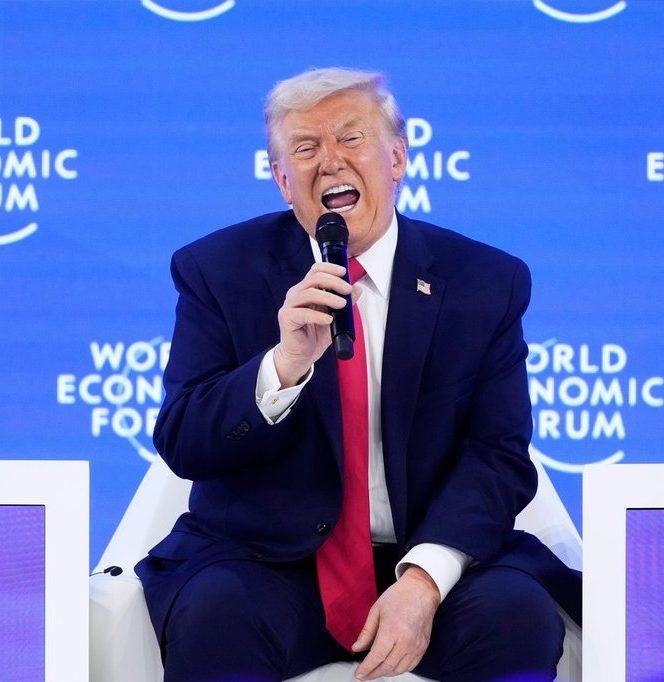
A further 10 signatures were added to the motion on the 7th, following the killing of Renee Good by ICE agent Jonathan Ross. The motion has been endorsed by MPs representing Labour, the Greens and Plaid Cymru.
By mid-January, U.S. President Donald Trump’s escalating threats regarding Greenland were setting off alarm bells at NATO members and their football associations. On the 16th, Jürgen Hardt, a foreign policy spokesperson for Germany’s governing CDU party, became the first European politician to openly endorse a World Cup boycott.
In the 48 hours on either side of Trump’s meandering speech at Davos, European boycott talk blew out into the open, and a seemingly emboldened press brought the chatter-turned-discussion into the mainstream.
Notably, The Guardian reported that up to 20 European football leaders had met on January 20th to discuss a number of World Cup scenarios, including a boycott, and that some senior executives held that further U.S. aggression toward Greenland would be “the tipping point.”
UEFA’s Executive Committee will next convene in Brussels on February 11th, when the matter will no doubt generate further debate.
Climbdown
The subsequent climbdown by the Trump administration, which was thoroughly embarrassed in Switzerland, has at least temporarily taken the edge off a possible Greenland-specific World Cup boycott. But in the meantime, the execution-style killing of Alex Pretti by masked ICE agents in Minneapolis has repositioned the boycott discourse to the state violence on the American home front.
Dmitry Serebryakov / THE ASSOCIATED PRESS FILES Former FIFA President Sepp Blatter is even among the growing list of public figures, politicians and organizations calling for a boycott of the 2026 World Cup.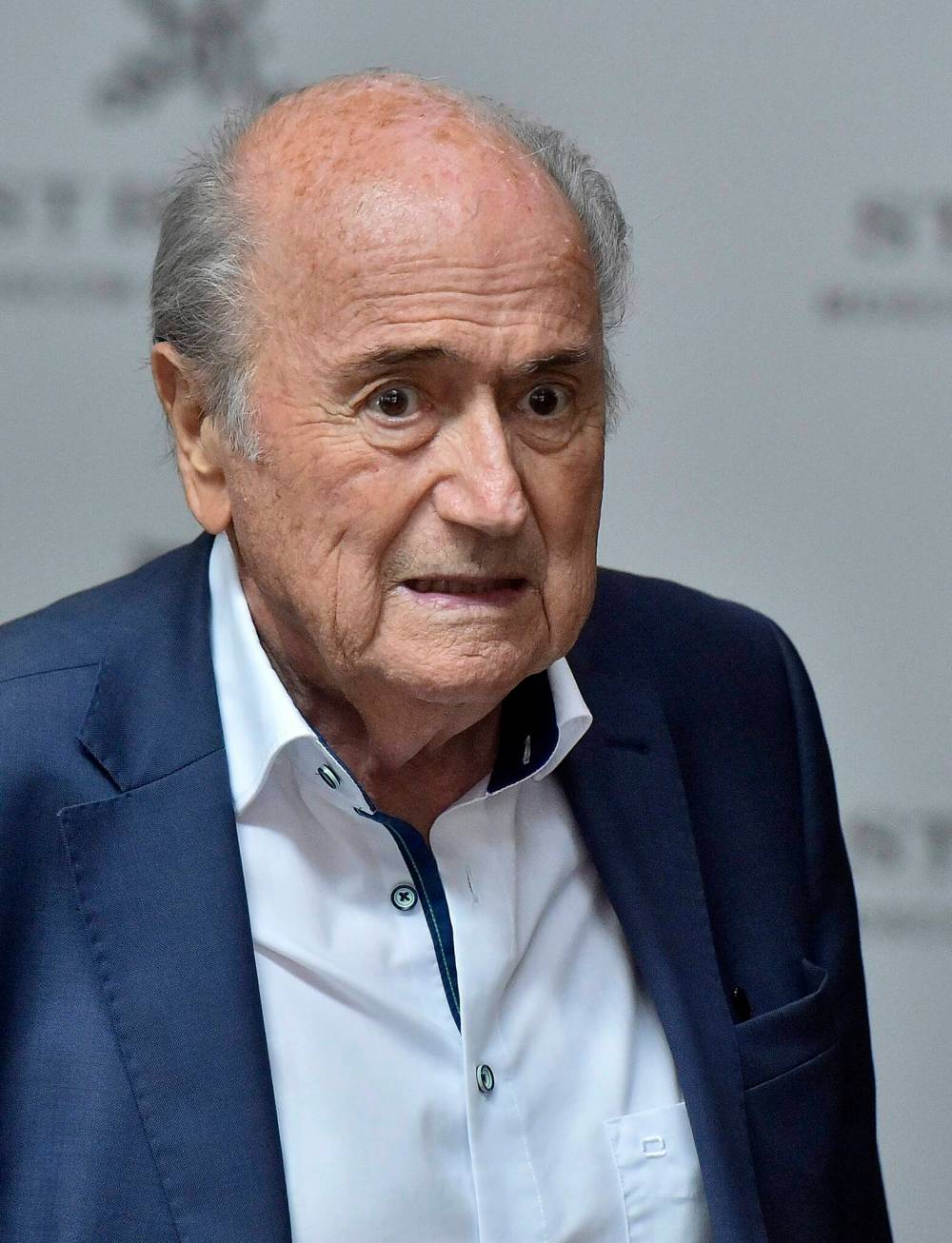
A column in The Minnesota Star Tribune has urged participants to “boycott the 2026 World Cup,” as countries “that terrorize their citizens shouldn’t be allowed to host international events.”
Former FIFA president Sepp Blatter is now among the growing list of public figures, politicians and organizations calling for a boycott of the 2026 World Cup, which the United States will co-host with Canada and Mexico.
It’s worth underlining, however, that such calls have not been accompanied by proposed alternatives of any feasibility. These are sentiments driven by emotion as much as principle, and a straightforward withdrawal by a bloc of nations would kick off a series of lawsuits that would see FIFA tied up in court for years, possibly bankrupting it (which, to some, is the point).
In comments posted to social media last week and reported by Le Figaro, French MP Eric Coquerel (LFI), chairman of the National Assembly Finance Committee, wondered if the tournament could be held in Canada and Mexico exclusively.
He also asked if it was acceptable to “play the World Cup in a country that attacks its neighbours, threatens to invade Greenland, destroys international law, wants to undermine the UN, establishes a fascist and racist militia in its country, attacks the opposition… etc.”
Concerns
Oke Gӧttlich, president of Bundesliga club St. Pauli and a vice-president of the German Football Association, has voiced similar concerns.
Last week he told Hamburger Morgenpost that he believes “the potential threat is greater now” than in 1980, when the U.S. led a boycott of the Summer Olympics in Moscow. He added: “We need to have this discussion.”
His remarks have since featured in reporting by The New York Times, Forbes, Politico, Time magazine and other major American outlets. They’ve also been cited by publications throughout Europe as well as in Japan, Dubai, South Africa, Brazil, India and a host of other countries, and newswires have brought his quotes to readers of countless newspapers around the world, including this one.
At least in Germany, Gӧttlich would seem to have some impressive support.
Even before the Greenland escalation, a Bild poll found 47 per cent of respondents to “significantly” support a German boycott of the 2026 World Cup. In the Netherlands, a petition for Dutch non-involvement has gained more than 150,000 signatures.
Nonexistent
Here in Italy, meanwhile, commentary and coverage surrounding the boycott debate in fellow EU countries has been next to nonexistent.
There are any number of reasons for that, foremost among them the positioning of Prime Minister Giorgia Meloni’s hard-right government and its shared sympathies with some Trump policies.
Then there’s the simple fact that the Azzurri, which will compete in a qualification play-off in March, has yet to punch its World Cup ticket. The four-time champion hasn’t played a World Cup match since 2014, and fans are desperate to end the humiliation of omission.
Antonio Calanni / THE ASSOCIATED PRESS FILES Italy’s Marco Parolo controls a ball against Uruguay at the 2014 FIFA World Cup in Brazil. The country hasn’t qualified since for the tournament and has yet to punch a ticket to the 2026 edition.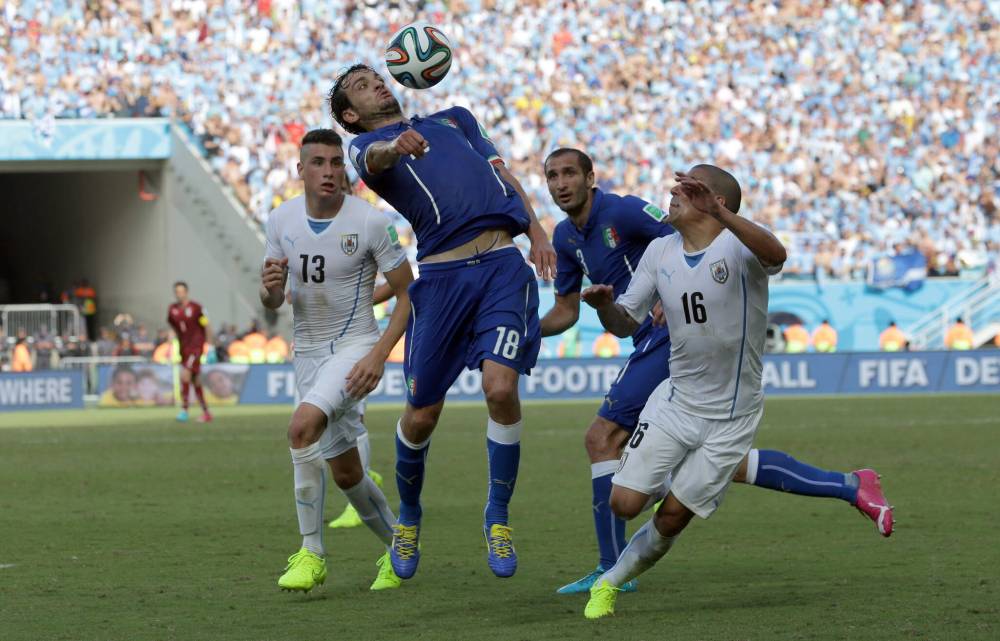
And yet, the spectre of ICE at the Olympics (the American embassy in Rome has insisted the agents’ role will be solely administrative) has, unsurprisingly, become the connecting dot between this country and a still hypothetical boycott.
On Tuesday, the ICE presence was confirmed by the interior ministry. Within hours, columnists at La Repubblica and Corriere della Sera were questioning the “unequal relationship” between Italy and the United States, decrying the “servitude” implied by U.S. military bases and noting that Trump’s authoritarian rhetoric echoes characteristics that Italy “has not seen since the fascist regime.”
The Vatican, too, has voiced its opinion — something that still carries weight around here. While visiting the King of Denmark this week, Cardinal Secretary of State Pietro Parolin remarked that the Americans’ international posturing was “not acceptable.”
Whispers
With the political and spiritual groundwork laid, calcio commentary has begun to address the whispers of “boicottiamo i Mondiali,” or “let’s boycott the World Cup.”
A major feature appeared in Tuesday’s Corriere della Sera, and on Wednesday the anti-establishment Il Fatto Quotidiano proclaimed a World Cup boycott “front” — an assertion that, to date, remains a sizable exaggeration.
But what really caught the attention was a Tuesday story in the popular La Gazzetta dello Sport.
The idea of a boycott was “gaining ground,” it read, adding that the World Cup “has never been so risky.” Less than 24 hours after the article was posted to La Gazzetta’s official Instagram account, it had received more than 11,000 likes.

Something has to have gone very, very wrong for even 11,000 Italians — and readers of one of Europe’s most influential sports dailies — to be souring on the World Cup.
Generally speaking, and much like the broader political narrative, this is a story that can lose or gain momentum in a matter of hours. Even so, the likelihood of a Europe-led boycott is slim to none.
At the same time, it would be naive to think that all the cards aren’t on the table, that the framework of a boycott hasn’t been drawn up.
After all, if the concept can gain traction here, anything is possible.
winnipegfreepress.com/jerradpeters
Our newsroom depends on a growing audience of readers to power our journalism. If you are not a paid reader, please consider becoming a subscriber.
Our newsroom depends on its audience of readers to power our journalism. Thank you for your support.
Related Articles
Pisa fires coach Alberto Gilardino after dismal run of 1 win in 23 games