Milan Cortina Games prove home ice matters Canada needs to harness momentum for next Olympic push
Read this article for free:
or
Already have an account? Log in here »
To continue reading, please subscribe:

Digital Subscription
One year of digital access for only $205*
- Enjoy unlimited reading on winnipegfreepress.com
- Read the E-Edition, our digital replica newspaper
- Access News Break, our award-winning app
- Play interactive puzzles
*First annual payment billed as $205.00 + GST for one year. This annual subscription will automatically renew at $233.00 + GST every 52 weeks (10% off the regular annual price of $259.35). Offer available to new and qualified returning subscribers only. Cancel any time.
To continue reading, please subscribe:
Add Free Press access to your Brandon Sun subscription for only an additional
$1 for the first 4 weeks*
- Enjoy unlimited reading on winnipegfreepress.com
- Read the E-Edition, our digital replica newspaper
- Access News Break, our award-winning app
- Play interactive puzzles
*Your next Brandon Sun subscription payment will increase by $1.00 and you will be charged $17.95 plus GST for four weeks. After four weeks, your payment will increase to $24.95 plus GST every four weeks.
Read unlimited articles for free today:
or
Already have an account? Log in here »
Hey there, time traveller!
This article was published 23/02/2026 (210 days ago), so information in it may no longer be current.
MILAN — The Games are over. Now let the debate back home begin.
As the curtain closed on the Milan Cortina 2026 Olympic Winter Games, leaders of the Canadian Olympic Committee were sounding the alarm.
Yes, there were highlights and memorable moments over the past two-and-a-half weeks. But should 21 medals — Canada’s lowest Winter Games haul since Salt Lake City 2002 and good for eighth place in total medals (11th by the gold-medal standard) — be cause for concern?
NATHAN DENETTE / THE CANADIAN PRESS
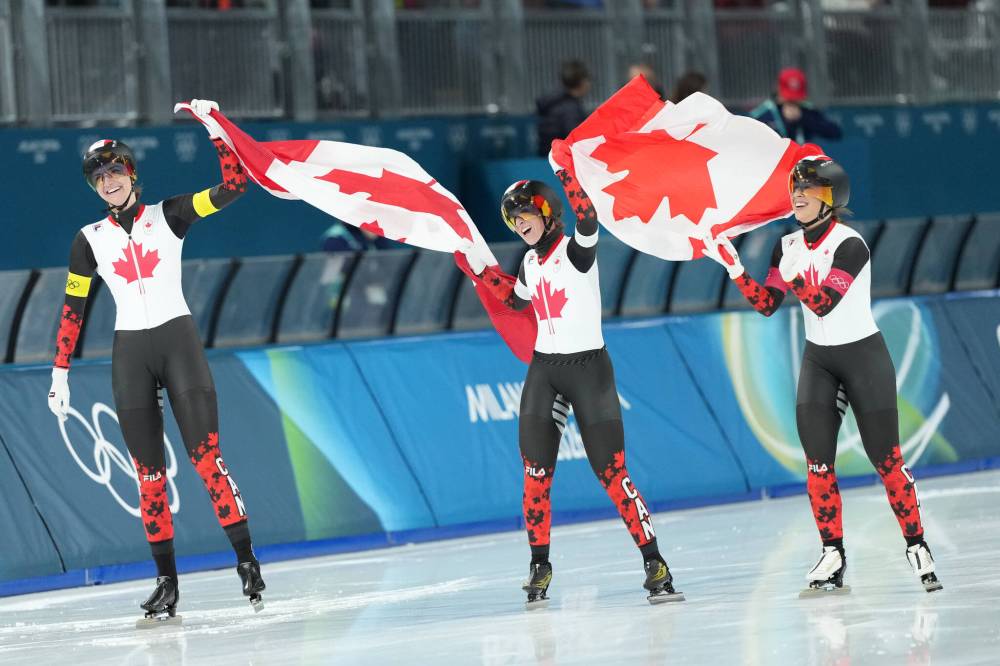
From left: speedskaters Isabelle Weidemann, Ivanie Blondin and Valérie Maltais. The trio repeated as back-to-back Olympic gold medallists in the women’s team pursuit.
Those on the front lines believe the country’s high-performance sport system is under growing strain — and that what unfolded in Italy could be a troubling sign of things to come without a significant boost in federal funding.
“We have a difficult question in front of us: where do we go from here?” Eric Myles, the Chief Sport Officer of the COC, said during Sunday’s final media conference in Milan.
“Our system is in decline. National sports organizations are having to cut training camps. Staff with PhDs in sports science wonder if they will have a job next year. Our athletes’ pool is shrinking. And promising athletes are leaving high-performance sport because they can’t afford the costs.”
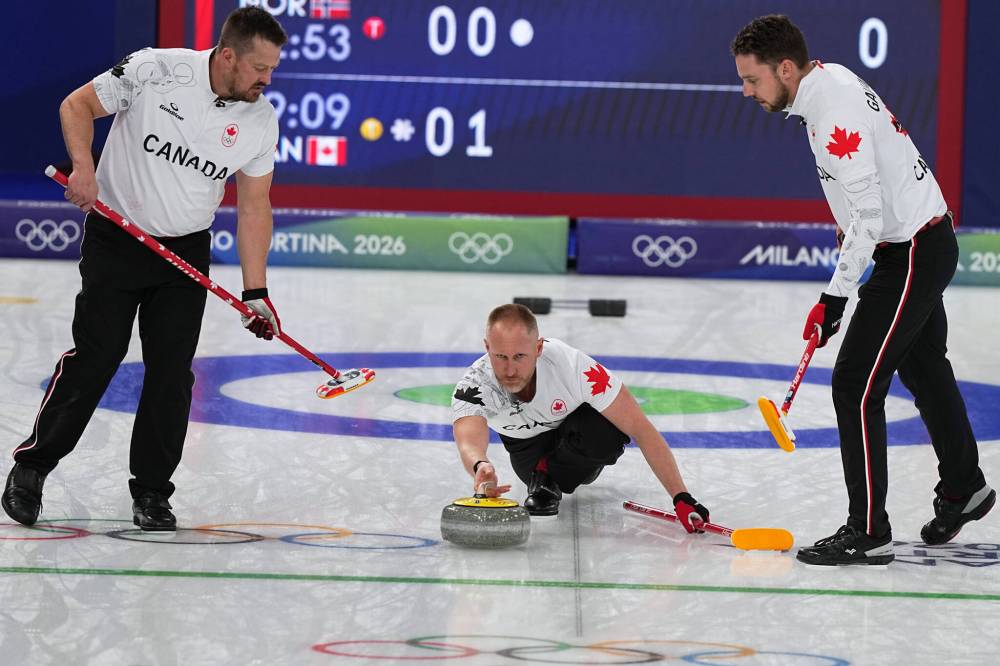
Hockey and curling remain in relatively good hands — even if Canada managed just one gold medal, courtesy of Brad Jacobs’ much-maligned men’s curling team. Rachel Homan rebounded from a bumpy round-robin to win bronze, while both men’s and women’s hockey teams had to settle for silver following heartbreaking overtime losses to the United States.
Getting all four teams onto the podium in two sports that have exploded globally is nothing to sneeze at. Of course, that won’t stop the armchair quarterbacking over roster decisions and omissions. It’s just what we do.
Jacobs and his teammates also found themselves at the centre of a firestorm after allegations they were touching rocks beyond the hog line. That controversy boiled over in a heated confrontation against Sweden, during which third Marc Kennedy was caught telling an opponent to “f—- off.”
Unfortunate? Yes. Cheating? Not a chance, according to the COC.
“For me, it’s like a foot fault in tennis or travelling in basketball. If LeBron James takes four steps on the way to the hoop, no one says LeBron is a cheater. It’s a turnover, and they give the ball to the other side,” said David Shoemaker, the CEO and Secretary General of the COC.
“I understand the furor on social media, but that part isn’t fair. Hopefully, we’ll see that go away. (Kennedy) probably regrets his choice of words. He’ll find the time and place to express that sentiment, beyond what he has already privately shared with his teammates, family and the rest of us.”
FATIMA SHBAIR / THE ASSOCIATED PRESS
From left: lead Ben Hebert, skip Brad Jacobs and second Brett Gallant. The Canadian men’s curling team captured their first gold medal since the 2014 Sochi Games and Jacobs became the first men’s skip to win two Olympic golds.
Canada again flexed its muscle on the speedskating oval with a combined 10 medals in both the long- and short-track events.
New Brunswick’s Courtney Sarault led the way with four medals (silver in the mixed relay and 1,000 metres, bronze in the 500 metres and women’s 3,000-metre relay) — one medal shy of Winnipegger Cindy Klassen’s single Olympic best five medals at the 2006 Turin Games.
Quebec’s Valérie Maltais captured a gold and two bronzes — taking gold alongside Ottawa teammates Isabelle Weidemann and Ivanie Blondin (who added silver in the mass start) in the team pursuit. The three became the first Canadians to defend gold on the oval since Catriona Le May Doan repeated her 500-metre 1998 Nagano Games gold at the 2002 Salt Lake City Games.
And fellow Quebecer Steven Dubois added a gold and a silver — the silver shared with his 3,000-metre mixed relay teammates.
On Sunday, Maltais and Dubois carried the Canadian flag into the closing ceremony in Verona.
But it’s in the less-heralded sports where the performance drop-off is most noticeable — and where calls for help grow louder.
“We are creating a pay-to-play system in Canada where wealth and luck determine who gets to stand on a podium,” said Jennifer Heil, Canada’s Chef de Mission.
“Our system is starting to be misaligned with our Canadian values. I want to live in a Canada where every kid has an equitable chance. A pay-to-play system is not one of Canadian values. I want all kids to dream of excellence. Sport brings connectivity and pride, and allows us to move forward as a country. Sport is hard to measure, but it is a critical factor.”

Canada's Courtney Sarault bites her silver medal from the women's 1,000 metre short track speedskating.
Athletes in sports such as bobsleigh and skeleton reported paying tens of thousands of dollars out of pocket — or scrambling for private sponsorship — just to get to Italy.
That reality stood in stark contrast to the men’s hockey team, whose multimillion-dollar NHL players were housed in luxury hotel accommodations funded by their union rather than staying in the athletes’ village with the rest of Team Canada. Apples and oranges, sure. But the optics aren’t great.
“Canadians deserve a sports system that is properly funded,” said Shoemaker.
“National sports organizations are stretched unbearably thin. They are forced to make impossible choices. They have to choose between athletes competing here and now in Italy, and the next generation. The money is drying up. The bench is not deep.”
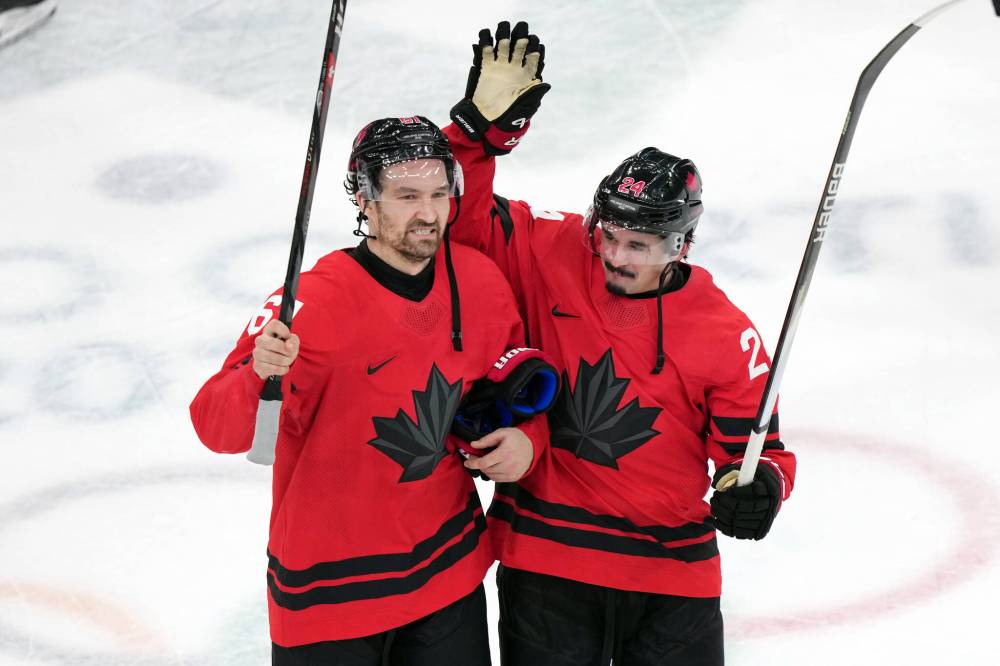
That hits close to home in Manitoba. Just five Manitobans made the trip to Italy — all hockey players. The original number was four, before Seth Jarvis was added late to the men’s roster alongside Mark Stone and Travis Sanheim, while Jocelyne Larocque and Kati Tabin represented the province on the women’s side.
All five are bringing shiny silver souvenirs back home, and deservedly so.
But there were no curlers. No speedskaters. No alpine skiers. (OK, that last one may be a stretch.) With Canada’s overall delegation numbering 207 athletes, Manitoba accounted for just 2.4 per cent.
One bad cycle for the Keystone Province — or a canary in the coal mine?
DARREN CALABRESE / THE CANADIAN PRESS
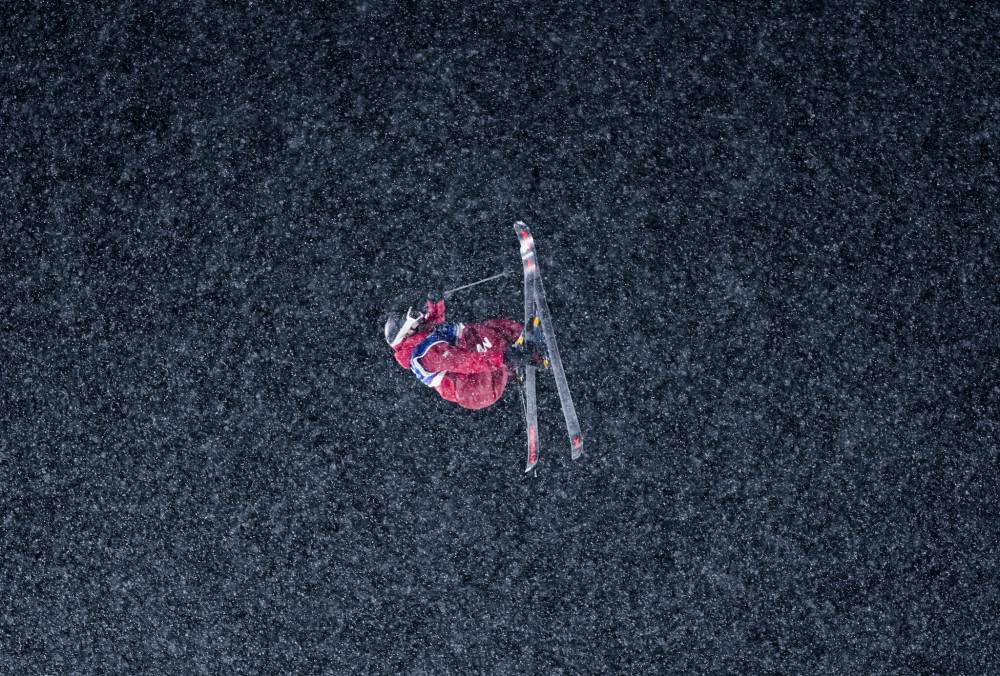
After falling short of the podium at the 2022 Beijing Games, Canada’s Megan Oldham took freestyle ski big air gold. The skier from Parry Sound, Ont., also took bronze in freestyle ski slopestyle.
One potential reason for optimism is Adam van Koeverden, who has spent the past year serving as Secretary of State for Sport in Prime Minister Mark Carney’s cabinet. The four-time Olympian was in Milan and told the Free Press earlier that investing in sport is a top priority.
“We’re going to do it as a team,” he said, while also calling on more provincial and private support as well.
“I’ll be the first person to advocate for more funding for sports,” he said. “That’s actually one of the reasons I decided to get involved in politics (as an MP starting in 2019). I thought, ‘Hey, maybe I can contribute to Team Canada in a different way from a governance and leadership perspective.’”
Another long-term focus is hosting another Olympics. Canada hasn’t done so since Vancouver 2010, and as Italy demonstrated, home ice matters. The host nation shattered its previous Winter Games medal high (20) by winning 30, trailing only Norway and the United States.
The French Alps host in 2030, Salt Lake City follows in 2034 — and Canada appears to have its eye on 2038.
“These Games brought us together and, in return, they provided an opportunity to ask ourselves how we want to show up on the world stage,” said Shoemaker.
“The current funding range is in the region of $220 million today, and we are asking for $144 million on top of that. To this point, we have not been successful. We are going to remain optimistic and continue to push. Our athletes deserve that from us. We are not going to stop until we see movement.”
These were the most geographically spread-out Olympics in history, with four clusters located as much as 400 kilometres apart. Yet the Games also offered a reminder of their unique power to bring people together.
CAROLYN KASTER / THE ASSOCIATED PRESS
Winnipeg’s Seth Jarvis (right) was a late — and fifth — Manitoban on Canada’s overall Olympic roster. All five Manitobans were hockey players, including Winnipegger’s Mark Stone (left) and Kati Tabin, Ste. Anne’s Jocelyne Larocque and Elkhorn’s Travis Sanheim.
CBC and NBC reported outstanding viewership, up sharply from recent Olympics, and the energy was palpable — on the streets of Milan, inside packed venues, and across Canada as fans cheered from afar.
The next challenge will be finding a way to harness that momentum and keep it alive now that the Olympic torch has been extinguished.
Game on.
winnipegfreepress.com/mikemcintyre


Mike McIntyre is a sports reporter whose primary role is covering the Winnipeg Jets. After graduating from the Creative Communications program at Red River College in 1995, he spent two years gaining experience at the Winnipeg Sun before joining the Free Press in 1997, where he served on the crime and justice beat until 2016. Read more about Mike.
Every piece of reporting Mike produces is reviewed by an editing team before it is posted online or published in print — part of the Free Press‘s tradition, since 1872, of producing reliable independent journalism. Read more about Free Press’s history and mandate, and learn how our newsroom operates.
Our newsroom depends on a growing audience of readers to power our journalism. If you are not a paid reader, please consider becoming a subscriber.
Our newsroom depends on its audience of readers to power our journalism. Thank you for your support.
Related Articles
8.7 million Canadians watched end of men's gold-medal hockey game at Olympics



History
Updated on Monday, February 23, 2026 1:53 PM CST: Clarifies medal standings.