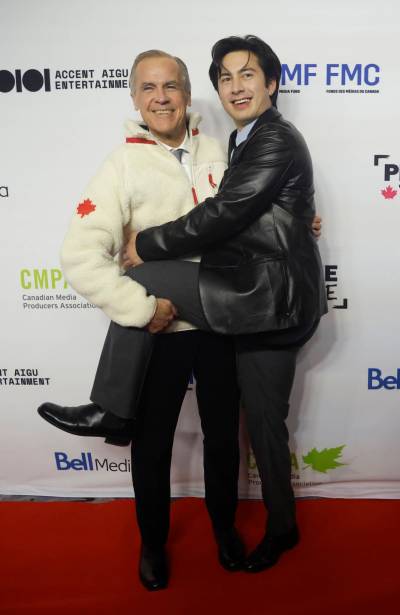
Elbows up, culture sideways Canadian sovereignty is not just about borders, but culture too. What is its future amid East-West polarization, struggling arts organizations and encroaching American media?
Read this article for free:
or
Already have an account? Log in here »
To continue reading, please subscribe:
Digital Subscription
One year of digital access for only $1.44 a week*
- Enjoy unlimited reading on winnipegfreepress.com
- Read the E-Edition, our digital replica newspaper
- Access News Break, our award-winning app
- Play interactive puzzles
*Billed as $5.77 plus GST every four weeks. After 52 weeks, price increases to the regular rate of $19.95 plus GST every four weeks. Offer available to new and qualified returning subscribers only. Cancel any time.
To continue reading, please subscribe:
Add Free Press access to your Brandon Sun subscription for only an additional
$1 for the first 4 weeks*
- Enjoy unlimited reading on winnipegfreepress.com
- Read the E-Edition, our digital replica newspaper
- Access News Break, our award-winning app
- Play interactive puzzles
*Your next Brandon Sun subscription payment will increase by $1.00 and you will be charged $17.95 plus GST for four weeks. After four weeks, your payment will increase to $24.95 plus GST every four weeks.
Read unlimited articles for free today:
or
Already have an account? Log in here »
Hey there, time traveller!
This article was published 28/02/2026 (241 days ago), so information in it may no longer be current.
It was “elbows up” in Davos — then came “leg up” in Ottawa.
The bawdy moment between Prime Minister Mark Carney and actor Hudson Williams happened in late January when both were at a gala celebrating the country’s film and TV successes.
“Do the leg thing,” Carney instructed Williams, one star of Heated Rivalry, the Canadian-made gay love story about hockey rivals and overnight international smash hit. Williams swung one leg up onto the prime minister while photographers captured the viral moment tossed into their lap.
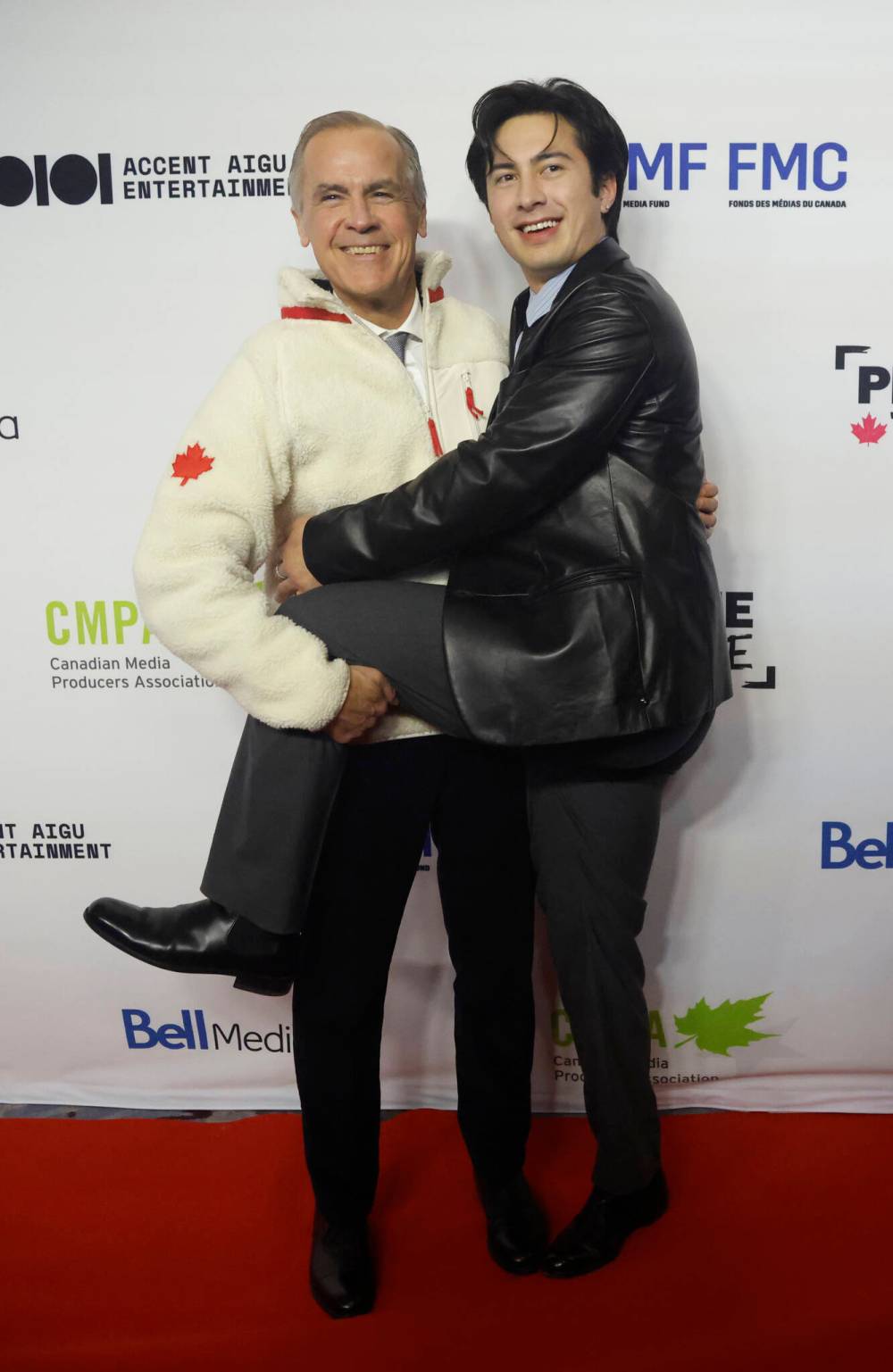
Whether or not Carney has seen Heated Rivalry, it’s hard to imagine a sleeker image for elbows-up nationalism: loudly Canadian but still cosmopolitan, pro-hockey but not exactly hoser-ish — and eager for international markets.
Later, Carney thumbed his nose at studios “south of the border” for wanting to tone down Heated Rivalry’s racy content, adding, “We live in an increasingly dangerous, divided and intolerant world and the hard-fought rights of the 2SLGBTQI+ community are under threat.”
The swipes dovetailed with the themes of his celebrated speech at the World Economic Forum the week before. There, he acknowledged the old “rules-based” liberal international order is crumbling, with implied blame clearly directed at the U.S.
As he presented it, realism and national self-interest now dominate global affairs. But he concluded there’s still room for “middle powers” like Canada to participate in global networks of trade and diplomacy, whether the old hegemon, America, wants to play nice.
Carney hinted this may sometimes mean co-operating and trading with countries that don’t share liberal-democratic values. Case in point: Canada’s controversial preliminary trade deal with China, a country that still heavily restricts civil and political rights.
Such pragmatism goes to the core of elbows-up nationalism: a project as concerned with strategic co-operation and self-interest as with the lofty values and rights it’s supposed to defend at home and abroad.
It’s in this light we should also evaluate Carney’s somewhat awkward approach to the cultural sector.
He may pose with Heated Rivalry stars and chat with SNL alum Mike Myers about Mr. Dressup and the Tragically Hip in front of a hockey rink while the cameras roll. But otherwise his approach feels restrained, conservative even, compared especially to his predecessor Justin Trudeau, who doubled the Canada Council for the Arts’ base budget in 2017.
A nation is defined by its culture, not just its borders.
In Canada, the impulse historically has been to guard the former with almost more zeal than the latter.
No English-speaking country has as powerful a neighbour as we do, and largely for this reason our cultural sector is highly protected and subsidized. The state also transmits official values to the sector by embedding bilingualism, reconciliation and multiculturalism into supports cultural institutions Radio Canada and the CBC receive.
Call it top-down, ineffectual or woke if you like, but this is key to how the state has striven to resist Americanization not just in our media and art, but our values and identity.
November’s federal budget was greeted with polite thanks from the sector — and some grumbling Canada was straying from its mission.
Its biggest winners were predictable — defence and core economic areas largely tied to trade and primary industries. CBC/Radio Canada and Telefilm Canada also saw moderate multi-year funding increases.
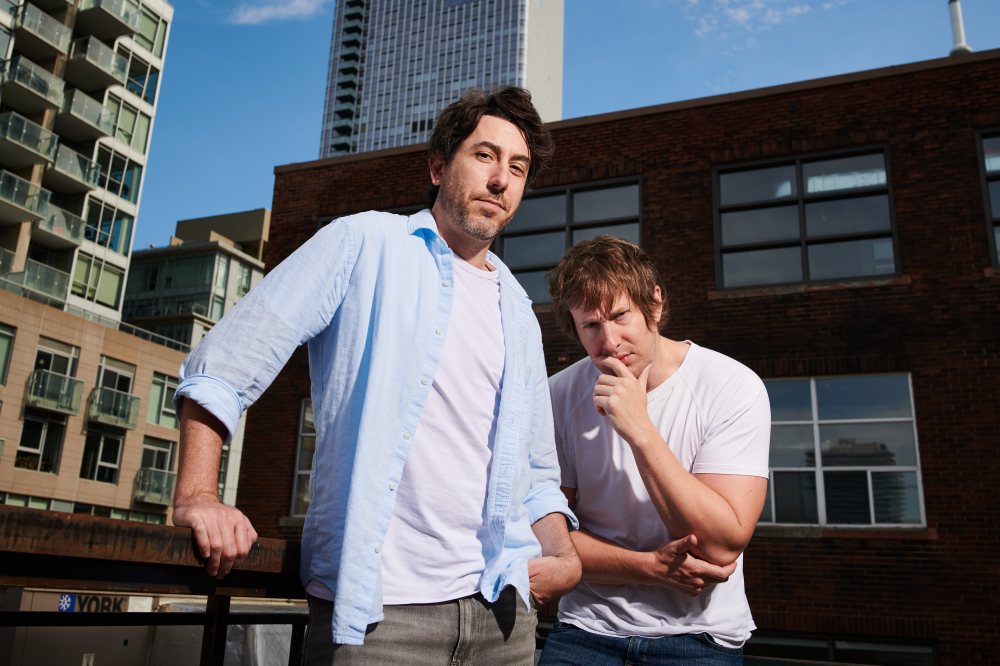
Given sudden recent Canadian screen successes, like the film Nirvanna the Band the Show the Movie and Heated Rivalry, strategic investments in film and TV CanCon look to be paying dividends.
But the situation was less optimistic elsewhere: the Canada Council for the Arts received a modest top-up of $6 million over three years, the latter temporarily saved from planned multi-year reductions, which were sustained in the case of Canadian Heritage.
The budget wasn’t the disastrous boon to “American imperialism” some sector executives complained in op-eds but added context sheds light on such anxieties.
Canadian performing arts organizations are generally seen as suffering from a sort of long-COVID, with audiences slow to return, while inflation eats into real revenue.
Some will point out Carney and his cabinet have much bigger priorities… butter and guns before, say, bread and circuses
Manitoba’s cultural sector’s impact on GDP has also been on the decline — 12 per cent between 2019 and 2023, the second biggest drop among provinces — and numerous arts organizations have faced sizeable deficits, closures and downsizing.
The Liberal government is also criticized by media and cultural advocates for spending more on social media ads than in local newspapers — at a time when Meta blocks Canadian news on Instagram and Facebook — and for dragging its heels on fully implementing Bill C-11.
This bill compels major American-centric streaming companies like Spotify and Netflix to contribute financially to Canadian content and production.
Some will point out Carney and his cabinet have much bigger priorities — butter and guns before, say, bread and circuses.
There’s another strategic calculation at work here too.
Canada’s standoff over questions of basic values isn’t just international, but domestic. The sharpest conflict is East-West and the fault line cuts roughly through Manitoba. The primary focus may be material: taxation, equalization payments, pipelines, energy corridors, environmental regulation, land rights.
But the culture wars are still brewing. It’s often in this struggle — where lifestyle, taste, values and identity are contested — that Canadian polarization is most visible.
While commentators remarked on re-anointed CPC leader Pierre Poilievre’s calm, statesman-like demeanour at the party’s recent convention, he still played his greatest hits albeit in a softer key: mocking Toronto snobbery, lamenting “identity politics,” “cancel culture” and “political correctness” and blasting the Liberal Party for its overspending, handouts and inflationary deficits.
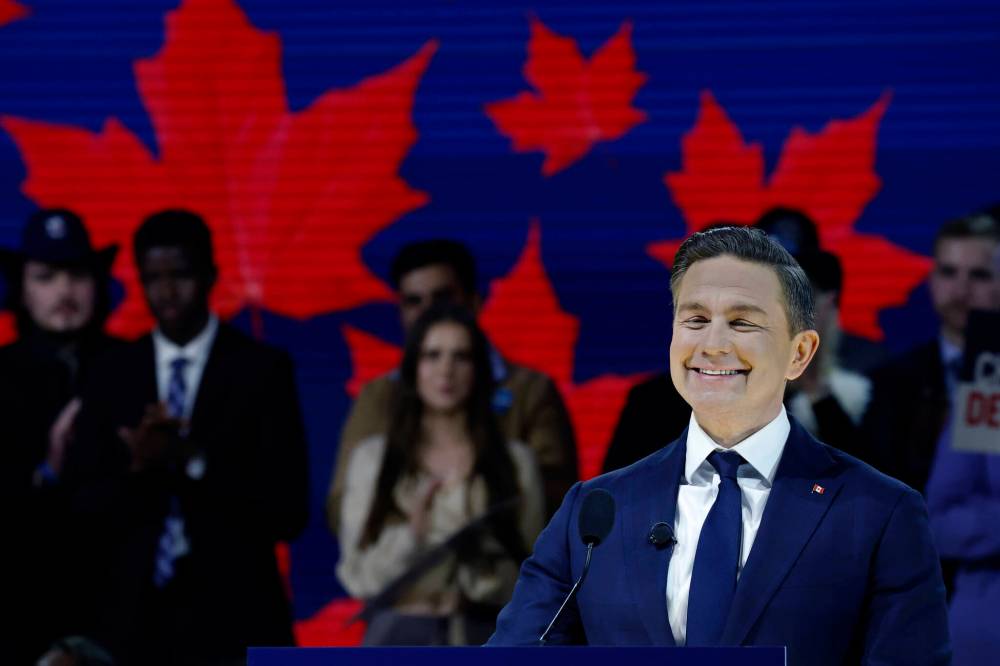
This time, he didn’t go after the “cultural elites” but there’s no doubt it would have landed just fine with his base, if he had.
He made vague overtures to Canadian sovereignty without mentioning Trump, though he knows pro-Trump and Western Canadian separatist sentiment runs strong within his base.
In view of this dynamic, it’s even more unsurprising Carney is governing from the centre and largely bypasses cultural politics, avoiding the fatal mistakes of “cultural warrior” Trudeau.
But if Canada is to be authentically sovereign, can we afford to play fast and loose when it comes to Canadian culture and media? Or, by demanding greater state meddling to foster common senses of cultural identity and public consciousness, are we pursuing a fool’s errand?
In 1965, George Grant asked similar questions, which still resonate today, in his surprise hit Lament for a Nation. For all its flaws, it found an eager audience among many conservatives and left-leaning writers and artists.
Its protagonist is Progressive Conservative Prime Minister John Diefenbaker, who Grant casts as Canada’s last true nationalist hero. Its setting is the aftermath of his defeat in the 1963 federal election after a bitter struggle against the U.S. to assert fuller control over Canadian infrastructure, trade, cultural and, above all, nuclear policies.
For Grant, Diefenbaker’s loss marked the end of a distinct, sovereign Canada.
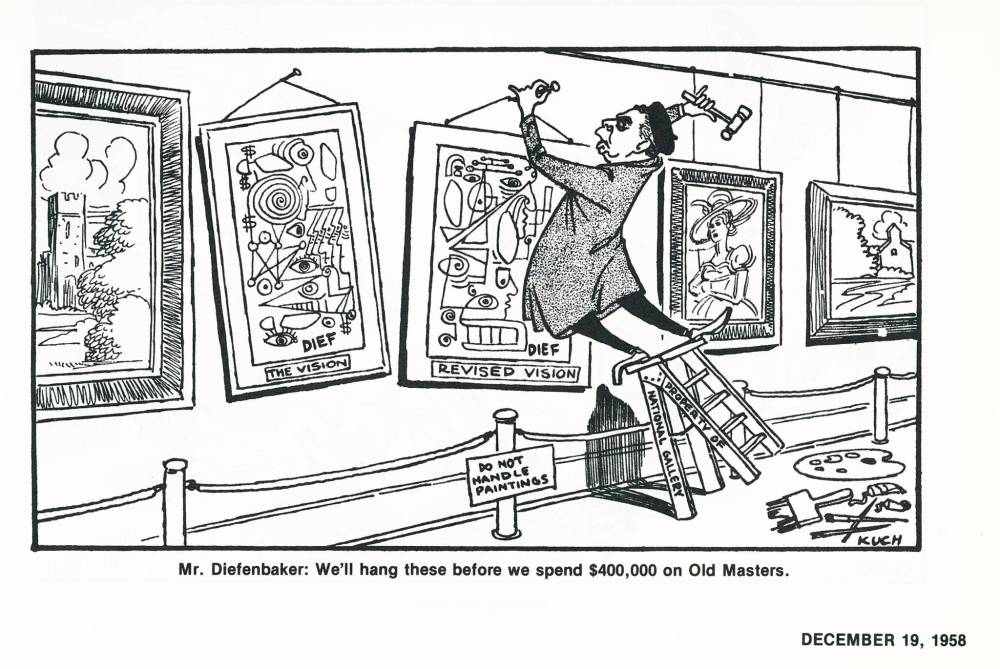
Grant saw him as representing an old-school Canadian conservativism, less enamoured with capitalism. This explains why Diefenbaker championed the NFB and CBC, created the Canadian Centennial Commission, which gave us Expo ’67 and Winnipeg’s Centennial Concert Hall, and threw his weight behind the still fragile Canada Council for the Arts when he came to office in 1957.
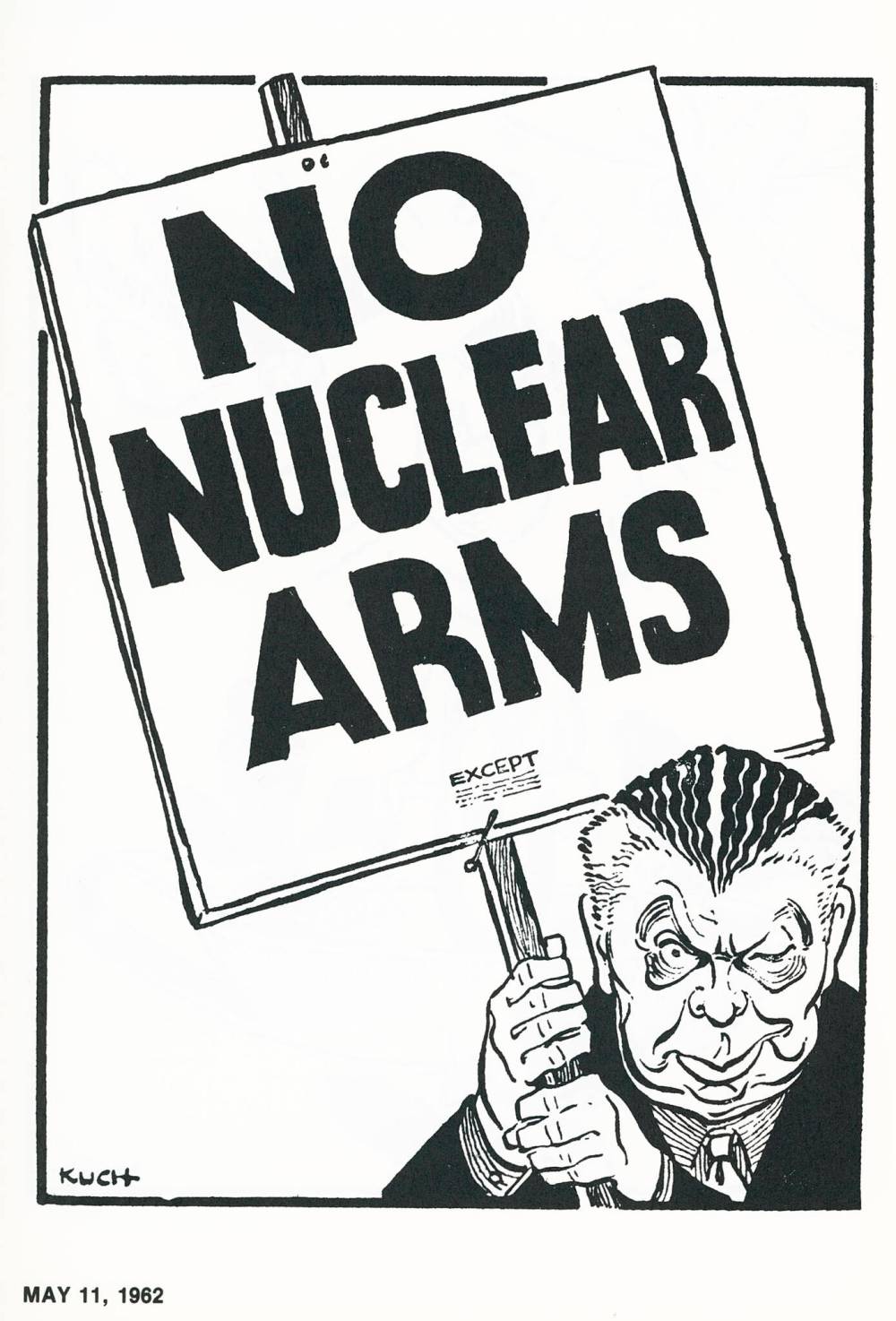
The name often given to this style of politics is “Red Toryism,” blending social traditionalism with belief in a strong state, with ample room to pursue “the good” of the community as it sees it.
It contrasts strongly with the American revolutionaries’ Lockean worldview, which is more about shielding individual rights from government.
These are the mythical roots of American classical liberalism, associated with neoliberalism today. Skeptical of the welfare state and championing free markets, it’s become a guiding light for conservatives on both sides of the border.
By the 1960s, Grant saw Canadian Toryism as nearly kaput in Upper Canada, its original home.
The Laurentian elites had given into Americanization. Investment flowed north into resource industries, lining the pockets of Eastern businessmen and bankers as they helped American corporations take control of industry here — and, as Grant saw it, forked over the country’s destiny.
It would take a Saskatchewan boy like Diefenbaker, fusing Toryism with a more populist Prairie style, to try to push the pendulum the other way. His renewed emphasis on sovereignty was about more than regional control and decision-making; Canada is a distinct society and its existence depends on preserving its values, traditions and culture.
At first, Diefenbaker went along with the continental defence push, signing on to Norad, which integrated Canadian and American air defence. But he resisted American pressure to arm U.S.-supplied BOMARC missiles on Canadian soil with atomic warheads. He felt Canada’s nuclear policies needed to be settled autonomously.
He would easily have been among those today who worry about Canada becoming overly accommodating to U.S. pressure to help fund ambitious continental defence upgrades, like the Golden Dome.
But Diefenbaker’s flip-flopping enraged Toronto businessmen, Liberal politicians and America’s military brass. Many sought to embarrass him as out of his depths — contributing significantly to his party’s loss in the 1963 election.
Does the health of Canadian sovereignty depend on a thick, shared cultural identity? Can nationalism live happily with multiculturalism? And did the fall of “Red Toryism” bring down authentic Canadian nationalism with it?
The questions Grant’s text evoke are provocative. And one needn’t agree to see that the political currents filling the void often wave the Maple Leaf a little awkwardly today.
For one thing, Prairie conservatism has changed dramatically since Diefenbaker’s era. Some see it as having become more American than the Laurentian culture it rebels against.
“The fact that anti-Albertanism is regularly couched in anti-American language is hardly surprising… Alberta is like America,” writes conservative American political scientist Richard Avramenko and co-editor of Canadian Conservative Political Thought.
Preston Manning and Stephen Harper gave passionate speeches only to be lampooned in a Free Press cartoon as a gang of religious zealots.
As the Prairies’ wealthiest, most populated province, it’s unsurprising Alberta has produced so many notable politicians, dominating conservative arguments about Western interests. Many draw inspiration from members of the now mostly retired “Calgary School” at the University of Calgary, leaning toward American classical liberalism — skepticism of state authority and championing growth, free trade and private control of natural resources — on economic matters.
The Calgary School cast these ideas in a new regional frame, lending prestige to longstanding frustrations about Eastern dominance. Its most famous member, Tom Flanagan, also criticized politically correct bureaucracy and statist approaches to multiculturalism; early echoes of the “diversity, equality and inclusion” atmosphere critics now find rampant in the cultural sector.
The Reform Party, which fiercely took up the critique of state multiculturalism, was formed at a conference in Winnipeg in 1987. Under the “The West Wants In” banner, leader Preston Manning and Stephen Harper gave passionate speeches only to be lampooned in a Free Press cartoon as a gang of religious zealots.
While reform, not revolution, was in their name, they might just as easily have been caricatured as a new Boston Tea Party, bellowing “no taxation without representation!”
The Reform Party was determined; its leaders were capable, prophetic even, and its fortunes on the rise.
When Harper sought party leadership in 2002, it had rebranded as the Canadian Alliance to broaden national appeal. While he would not act on many of the Calgary School’s boldest ideas, he represented a pragmatic, muscular new conservatism for the 21st century.
By 2003, the then marginal P.C.’s said “uncle,” merging with Alliance to form the Conservative Party of Canada, dropping “Progressive” from its name.
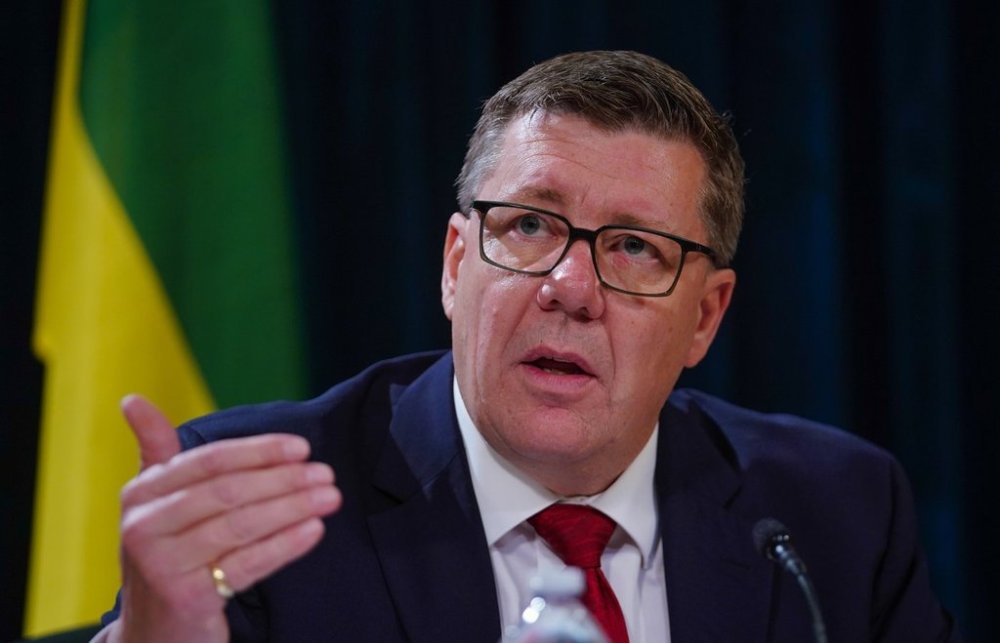
Prairie provincial politics underwent a similar realignment. Saskatchewan’s PCs have long been overtaken by the Saskatchewan Party, another extractivist conservative party flirting with separatist sentiment. It would take Alberta longer for its PCs to succumb to a party further to its right, which is what happened in 2017 when they merged with the Wildrose Party to form the UCP.
Manitoba, a conflicted child of Western and Eastern Canada, remains ambivalent. Power still swings between centre-left and right. Yet southern Manitoba, especially the Portage-Lisgar constituency, is one of Canada’s most conservative corners and was a hotbed during the 2022 Freedom Convoy.
If there were doubts about the American overtones of the convoy’s “freedom” sloganeering, recall organizer Dwayne Lich’s bail hearing. There, the one-time Manitoban invoked the U.S. Constitution, saying “I thought it was a peaceful protest and based on my First Amendment — I thought that was part of our rights.”
A December 2024 poll found about one-third of Prairie residents think joining the U.S. would benefit their province — the highest share in Canada — while Probe Research polls from the summer show slightly more than half of Manitoba’s conservative voters preferring to leaving Confederation.
Against this backdrop, is it naive to hope Canada’s cultural field — state-reliant, left-leaning and not known for its warmth toward Alberta’s conservatives — might rally national solidarity in the face of American aggression?
It’s notable that Canadian and Manitoba polls show NDPers expressing less patriotic sentiment than Carney supporters. It’s also notable that left-wing Canadians are often concentrated in the country’s universities, museums and arts groups, sectors deeply shaped by the rise of DEI.
In some ways, DEI is as Canadian as our stereotyped politeness. And it’s coloured by official values like multiculturalism and reconciliation, which are woven into the government supports these sectors receive.
But it gets complicated: the country’s left-wing academics and cultural workers are also among the most assertive advocates for decolonization. Unsurprisingly then, Canada’s left is as critical as the right of “elbows up” policies — focusing on how increased Arctic military presence and “nation-building” projects like Western Canadian pipelines and developing the Port of Churchill may ride roughshod over Indigenous consent and ruin the environment.
Pressing though these conversations, critics see a certain schizophrenia: academic and artistic events open with thanks to government and corporate funders, then we’re onto presentations that blast the capitalist-colonial state.
“I can’t recall the first time I heard the phrase “so-called Canada,” but I am quite sure it must have come from somebody paid by the government,” quips the liberal Stephen Marche in a polemical piece for the Literary Review of Canada in 2024.
Populist right-wing attacks on the “cultural elites” are edgier still: caricatures that prove effective yet are often prejudiced and deeply dorky.
But rolling one’s eyes every time a Facebook commenter calls CBC or an experimental artist “fake and gay”, however, won’t stop a crack up that may soon come.
Provincial separatism may be unlikely for a host of reasons, but Canada’s first-past-the-post system can’t keep an alienated West outside the gates forever. It’s inevitable voters will eventually carry a CPC leader into the prime minister’s office.
With only one conservative having called 24 Sussex Drive home in more than 30 years, a CPC government would likely be itching to settle a few scores.
Neoliberal policies, for all their air of scientific neutrality, can also be weaponized — becoming austerity bludgeons against welfare recipients, nonprofits, academia, First Nation bands, media and unions.
A shock therapy that, in the case of Canada’s cultural and media sectors, could surely further speed up Americanization — more American cable network like Fox and CNN, more of Mark Zuckerberg and Elon Musk’s control and more Marvel content everywhere we look.
Can we really believe in the long run Canadians could embrace such prospects?
And, the bigger question, can we really imagine most conservative Western Canadians welcoming separatism or welcoming Canada becoming the 51st state?
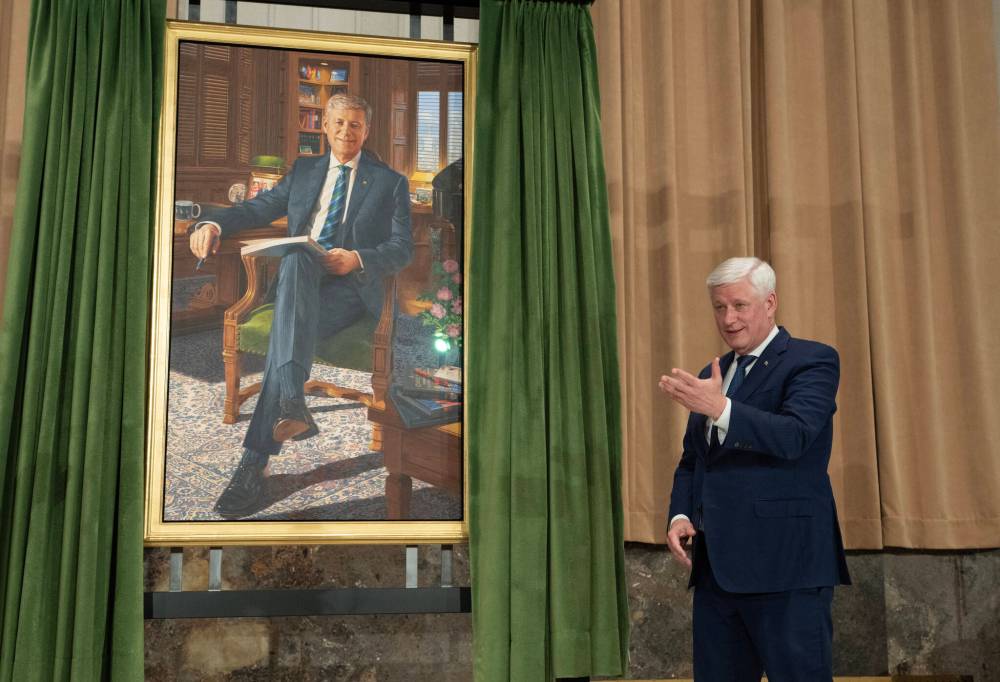
With an Alberta separatism referendum on the horizon, Harper takes the second concern seriously. Though a pioneer of modern Prairie populism, he waves the Maple Leaf and frames separatism and U.S. imperialism as twin existential threats to Canadian sovereignty.
“In these perilous times, both parties, whatever their other differences, must come together against external forces that threaten our independence and against domestic policies that threaten our unity,” he said in a recent bilingual speech on Parliament Hill where his official portrait was unveiled.
Talk of national unity is often met with suspicion, as an affront to Canadian pluralism and DEI.
And yet a “pluralism” that symbolically excludes and sneers at half the country that’s rural and Western is not pluralism either. Social justice is one thing; smugly policing the tastes and manners of perceived cultural lessers is another.
These tendencies shouldn’t be exaggerated. But they’re real and especially destructive during an era of heightened economic inequality, inflation and frozen median wages.
They accelerate the crack-up.
Of course, Canada’s survival depends on material security — not just for abstract entities like “Canada”, the “West” or “the Arctic” — but on the working- and middle-classes sidelined by the policies of the major parties.
It also depends on shared ways of being and sites of encountering. Not just negotiations over trade and grand nation-building projects, but on the ordinary people of Canada talking across their perennial differences.
It’s hard to name many recent national moments that serve this — though the Tumbler Ridge shooting and the 2026 Winter Olympics proved refreshingly uniting, from opposite ends of the emotional spectrum.
It’s easier to name things that do not.
The atomizing effects of more Canadians getting their interactions, information and entertainment from Instagram, Facebook and TikTok seem undeniable. The same goes for fewer people spending time, with friends and strangers, at youth hockey and soccer leagues, music festivals, bingos, worship gatherings, breweries, book clubs and amateur choirs.
These beacons of a vital, diverse civic life still exist and often thrive in Canada’s small towns and big cities.
Canadians should continue to debate what role the state has in propping them up, but their quiet deaths cut away at the country’s soul.
winnipegfreepress.com/conradsweatman

Conrad Sweatman is an arts reporter and feature writer. Before joining the Free Press full-time in 2024, he worked in the U.K. and Canadian cultural sectors and freelanced for outlets including The Walrus, VICE and Prairie Fire. Read more about Conrad.
Our newsroom depends on a growing audience of readers to power our journalism. If you are not a paid reader, please consider becoming a subscriber.
Our newsroom depends on its audience of readers to power our journalism. Thank you for your support.