Treadle to the metal For vintage sewing-machine aficionado, it’s all about seeing them stitch again
Read this article for free:
or
Already have an account? Log in here »
To continue reading, please subscribe:

Digital Subscription
One year of digital access for only $205*
- Enjoy unlimited reading on winnipegfreepress.com
- Read the E-Edition, our digital replica newspaper
- Access News Break, our award-winning app
- Play interactive puzzles
*First annual payment billed as $205.00 + GST for one year. This annual subscription will automatically renew at $233.00 + GST every 52 weeks (10% off the regular annual price of $259.35). Offer available to new and qualified returning subscribers only. Cancel any time.
To continue reading, please subscribe:
Add Free Press access to your Brandon Sun subscription for only an additional
$1 for the first 4 weeks*
- Enjoy unlimited reading on winnipegfreepress.com
- Read the E-Edition, our digital replica newspaper
- Access News Break, our award-winning app
- Play interactive puzzles
*Your next Brandon Sun subscription payment will increase by $1.00 and you will be charged $17.95 plus GST for four weeks. After four weeks, your payment will increase to $24.95 plus GST every four weeks.
Read unlimited articles for free today:
or
Already have an account? Log in here »
Father knows best.
During her senior year of high school, Sam Johnson approached her father Dave and mother Petra, explaining that she needed to sew a skirt from scratch for a practical-arts class.
She shared her teacher’s typed-out instructions with the two of them, wondering whether they had any additional advice to offer. Her dad studied her notes for a few minutes before uttering, “To begin with, what’s listed here as the first step is more like the third or fourth. And as for this next page… Well, here. Let me show you.”
MIKAELA MACKENZIE / FREE PRESS The machines in collection aren’t just for show. Johnson makes use of them on a regular basis. 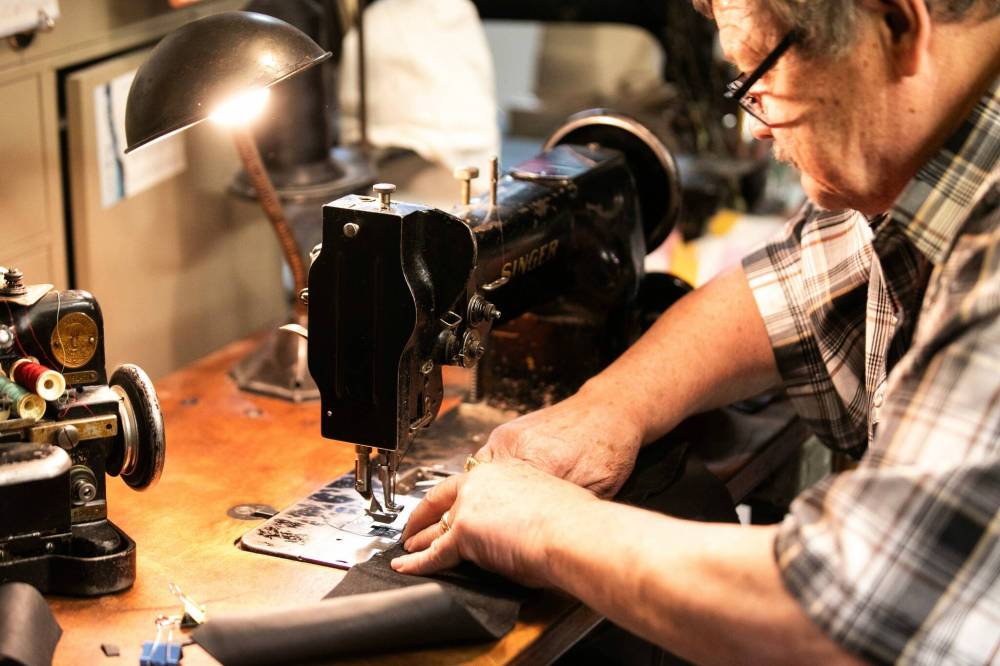
It probably didn’t come as a big surprise to Sam that her father was a wealth of knowledge. For a while already, he had been collecting and refurbishing antique sewing machines. Not just for their historical value and esthetic appeal, but so the utilitarian devices could be used for their intended purpose, whenever the need arose.
While he can’t recall what his daughter’s garment looked like in the end, he is fairly certain she received an A on the assignment, Dave Johnson details, playfully shushing Petra when she needles him by saying she can’t believe he’s actually escorting a visitor downstairs to view “that disaster of a room” where the bulk of his treasures are kept.
“Don’t mind her,” says the 67-year-old father of five, standing in the kitchen of their two-storey North End abode. “She’s only jealous because she doesn’t know how to sew. At least, not as good as me.”
Johnson, a semi-retired snowplow operator who also worked as a homebuilder, was born in Moncton, N.B. The second youngest of five siblings was mechanically inclined growing up, and was forever dogging his parents to demonstrate how this or that gadget functioned. One afternoon he inquired about a foot-powered treadle sewing machine — a table-set, cast-iron contraption built in the 1920s — that his mother inherited from her mom.
MIKAELA MACKENZIE / FREE PRESS Dave Johnson became fascinated with antique sewing machines at an early age. 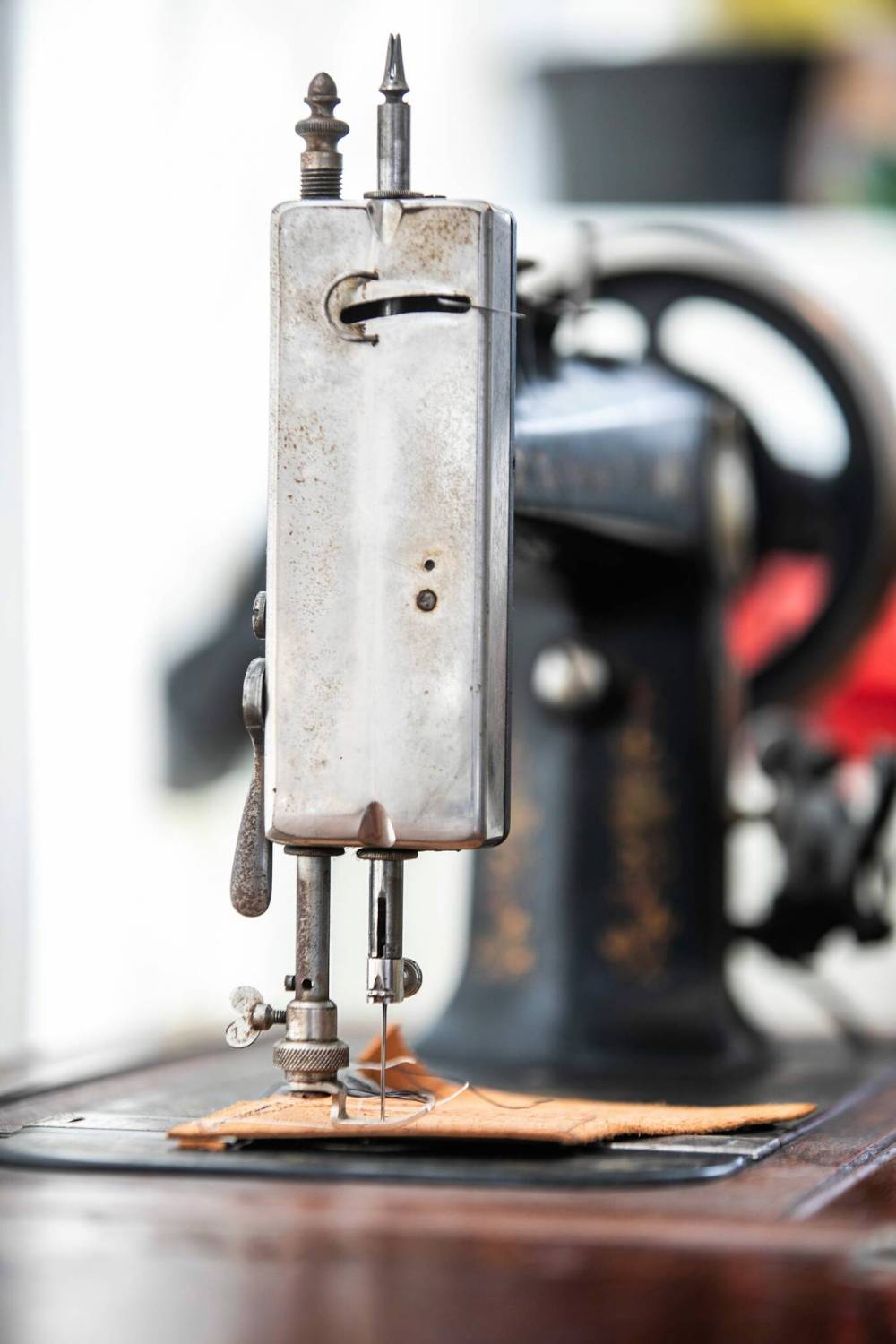
The reason he was interested was pretty straightforward. He had a sizable rip in his jeans and since it was his lone pair, he couldn’t wait until his mother got to it, around her other household duties.
“If I remember correctly, her machine was a Singer 15-88 and worked like a charm,” he says, admitting he probably could have fetched a needle and thread and repaired his jeans by hand. It’s just that the Singer — with its myriad moving parts along with the soothing, click-clack sound it emitted when it was in operation — was more fascinating to a 12-year-old.
(The Singer Manufacturing Company was founded in 1851 by American inventor Isaac M. Singer. The Singer name rapidly became synonymous with sewing machines built specifically for the home market. By the 1890s, the company, presently based in Nashville, was reportedly selling more units than all of its competitors combined.)
In 1990, six years after he and Petra were married, Johnson spotted a classified ad for a vintage sewing machine. Like his mother’s, it was a Singer manufactured in the early 1900s. So what if it wasn’t in working order, he told himself? The price was right, only $25.
Johnson spent a few weeks carefully disassembling the machine piece by piece. After soaking the individual parts in a combination of grease and oil, he put everything back together. “Like a kid on Christmas morning,” he says, describing the level of excitement he felt the first time he rotated the hand crank and observed the bobbin winder and thread take-up lever successfully springing into action.
MIKAELA MACKENZIE / FREE PRESS Johnson takes pride in taking 100-year-old machines and preserving them for another century.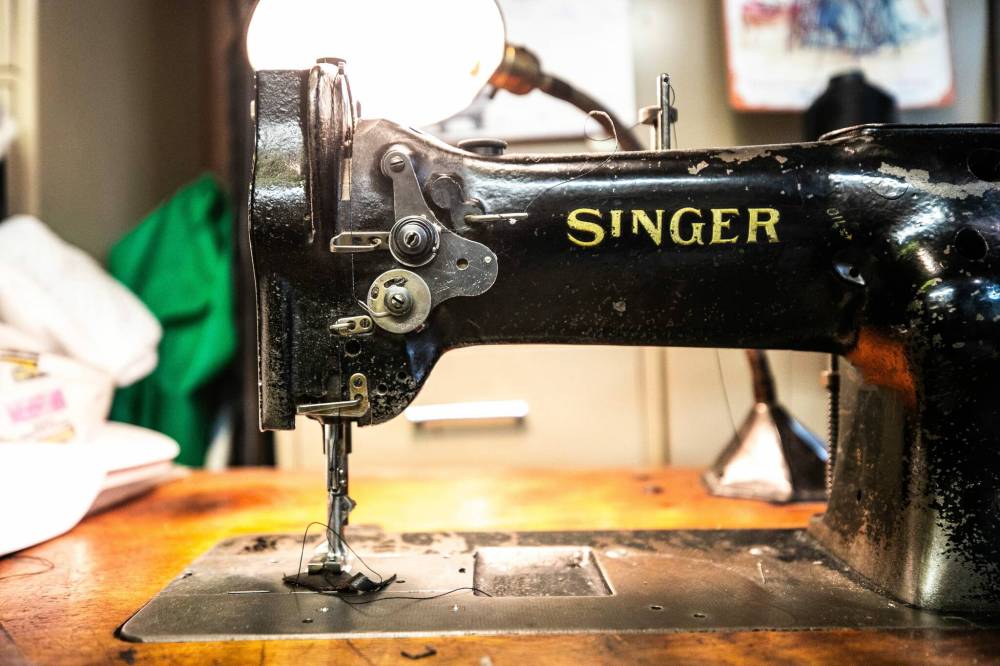
Five years passed before Johnson scooped up a second sewing machine. He was at Value Village and couldn’t believe his luck when he came across an Eldredge, so-named for Barnabas Eldredge, founder of the National Sewing Machine Company, one of Singer’s early rivals. He paid $50 for it. By the time he’d hauled it outside to his vehicle, somebody had offered him double that amount, he says.
Johnson hasn’t slowed down much since, as evidenced by the dozens of sewing machines resting in his crowded basement lair. He points them out one by one, using the same jargon a Star Wars enthusiast might employ when referencing battle-droids.
Singer 20U-13. Singer 111W155. Gritzner No. 5AS. Singer 411G.
Oh, that’s a Singer 48K, he says, when asked about an especially eye-catching black-and-gold specimen whose hand-painted floral adornments still look as stunning as they would have, when the 30-kilogram apparatus rolled off the assembly line 123 years ago. And that’s a Singer 81-7, he continues, running a hand over another heavy-duty number built specifically to stitch through carpeting and rugs.
“It goes like a bat out of hell, that one. Step on the pedal and make sure your fingers are out of the way ’cuz it’ll do up to 3,300 stitches per minute.”
MIKAELA MACKENZIE / FREE PRESS Dave Johnson has dozens of sewing machines resting in his crowded basement lair.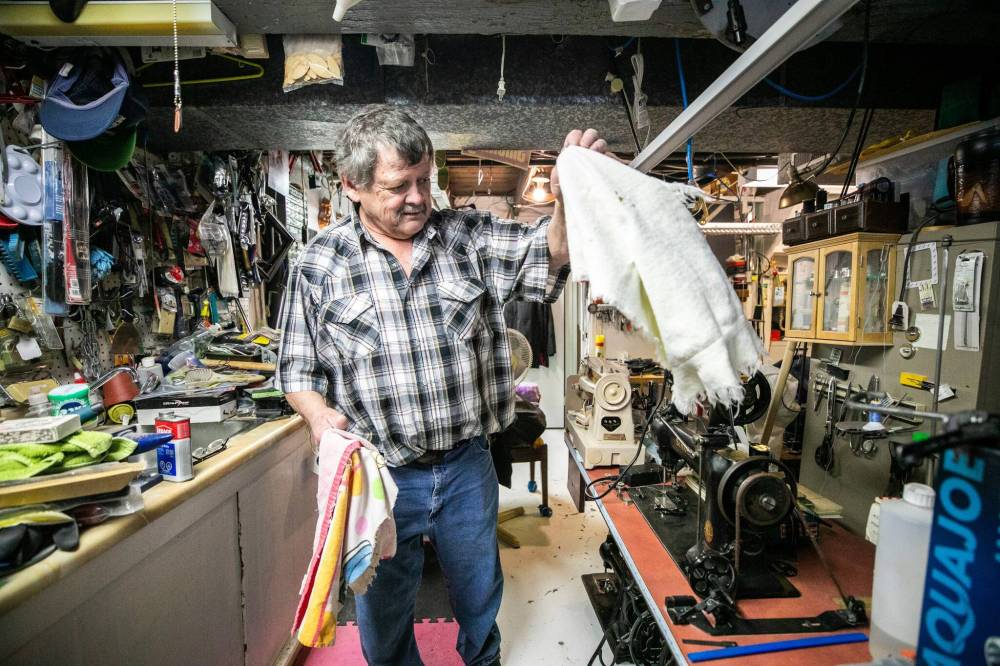
Lewis Austin is the CEO of the International Collectors Association, a body that answers buyers’ and sellers’ questions about a wide array of collectibles, including binoculars, licence plates, sports memorabilia… even bath-time rubber ducks.
Reached at home in Nashville, Austin says the ICA recently added sewing machines to its list of categories.
“Some collectors are in it for the nostalgia and antiquity of collecting, so make and model may have influence,” he says, citing the International Sewing Machine Collectors Society, with its headquarters in Great Britain, as another valuable resource for hobbyists who cleverly refer to themselves as ‘sewcialists.’ “For others, it may be the rarity of a piece. In the U.S.A., I would say the largest niche collectors would be for Singer (sewing machines).”
Austin says there are generally three camps of sewing-machine collectors. Some, like Johnson, maintain and make use of their machines on a regular basis. Others are familiar with how they function, but prefer to let them be, for fear of breakage. Still others treat vintage sewing machines almost like folk art, choosing to display theirs — often in glass cases — without a clue as to how to get them up and running.
(According to internet sources, the highest amount paid for a sewing machine was $13,500, for an 1856 Singer treadle machine when it came up for public auction in 2007.)
“If I can take something that’s 100 years old and get it so that it’s preserved for 100 more, I feel as if I’ve done my job.”
Johnson, who also holds onto era-specific thimbles, needles and spools of thread, allows that some of the machines he has amassed — besides the ones in their home, there are another 30 or so in various states of repair at a rural property they own — are worth a pretty penny. That includes a portable Singer Featherweight 221 he landed for $20 that routinely commands 50 times that price on websites such as eBay.
That said, he isn’t thinking about how much a certain machine is worth when he’s spending hours, sometimes days, holed up downstairs, trying to figure out how to bring it back to life. He laughs, recalling a Singer 21-27 he drove to Niagara Falls, Ont., to fetch, and how putrid it made his car smell on the ride home, owing to what he later discovered to be remnants of whale oil — “probably from the 1920s” — the original owner used as a lubricant.
“I’ve told the kids that when I’m gone, all this is theirs if they want it, but I don’t think they’re too interested in dad’s junk,” he says with a shrug. “Or maybe they’ll end up in a museum. Who knows? In my mind, I don’t own these machines, I’m more their curator. If I can take something that’s 100 years old and get it so that it’s preserved for 100 more, I feel as if I’ve done my job.”
winnipegfreepress.com/davidsanderson

Dave Sanderson was born in Regina but please, don’t hold that against him.
Our newsroom depends on a growing audience of readers to power our journalism. If you are not a paid reader, please consider becoming a subscriber.
Our newsroom depends on its audience of readers to power our journalism. Thank you for your support.